DbcultAccessing Vault...
6.9/10
Senior Film Conservator
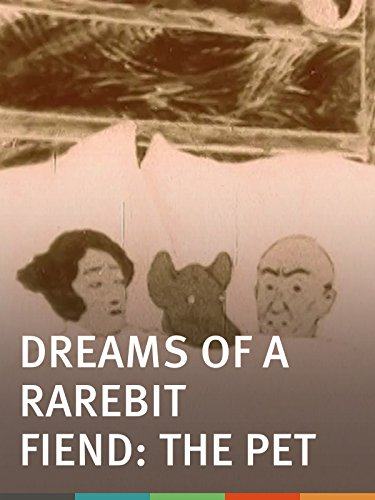
A definitive 6.9/10 rating for a film that redefined the boundaries of cult cinema. Dreams of the Rarebit Fiend: The Pet remains a cornerstone of transgressive art.
In the pantheon of early cinema, few figures loom as large or as ingeniously as Winsor McCay. While the contemporary viewer might be accustomed to the digital sheen of modern spectacles, returning to the hand-drawn anxieties of 1921’s Dreams of the Rarebit Fiend: The Pet offers a visceral reminder of animation's primal power. This isn't merely a cartoon; it is a manifestation of the id, a flickering projection of the digestive and existential terrors that haunted the post-Victorian psyche. McCay, already a legend for his comic strips and the groundbreaking 'Gertie the Dinosaur', pivots here toward something far more unsettling and surreal.
The premise is deceptively simple, rooted in the recurring motif of McCay’s 'Rarebit Fiend' series: the consumption of Welsh rarebit—a rich dish of melted cheese—leads to vivid, often terrifying dreams. However, The Pet elevates this trope beyond mere gag-work. We see a level of draftsmanship that rivals the fine arts of the era. The lines are not static; they breathe with a nervous energy that reflects the protagonist's own internal instability. Unlike the structured morality found in The Sign Invisible, McCay’s world is governed by the chaotic logic of the gut rather than the soul.
The transformation of the titular pet is a masterclass in pacing. Initially, the creature is an ambiguous blot of ink—part canine, part feline, part spectral anomaly. It shivers with a pathetic vulnerability that mirrors the domestic aspirations of the wife character. Yet, as it begins to feast, the animation takes on a predatory fluidity. The way the creature consumes a bottle of milk, then a table, then the very walls of the house, is rendered with a terrifying sense of volume. McCay understood the weight of his subjects, a technical feat that many of his contemporaries, such as those working on the more literal Rip & Stitch: Tailors, often struggled to convey.
It is impossible to watch The Pet without recognizing it as a foundational text for the giant monster genre. Long before Godzilla stepped onto the streets of Tokyo or King Kong scaled the Empire State Building, McCay’s creature was already perched atop skyscrapers, swatting at biplanes. The scale shift is handled with an audacious lack of transition that perfectly captures the telescoping nature of dreams. One moment the creature is under a chair; the next, it is straddling a city block. This sense of escalating stakes provides a fascinating contrast to the grounded social dramas of the time, such as The Girl of Today or the rigid hierarchies explored in The Climbers.
The creature itself serves as a metaphor for the insatiable appetite of the burgeoning American metropolis. In 1921, the world was expanding at a dizzying pace. The 'Pet' is the dark side of that expansion—a consumer that cannot be satiated, a growth that threatens to collapse the very system that nurtured it. It is a theme of reckless consumption that resonates even more loudly today than it did in the era of The Almighty Dollar.
McCay’s brilliance lay in his rejection of the assembly-line animation techniques that were beginning to dominate the industry. While others were looking for shortcuts to maximize profit—a struggle often mirrored in the narratives of films like Anything Once—McCay insisted on drawing every frame himself. This 'The Pet' benefits immensely from this singular vision. The cross-hatching and shading provide a texture that is almost tactile. You can feel the coarseness of the creature's fur and the cold stone of the buildings it destroys.
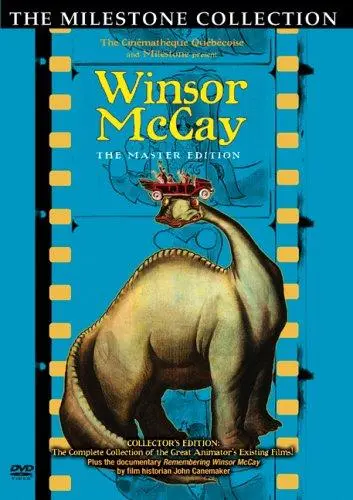
When comparing The Pet to other works of the era, the contrast is stark. Consider the claustrophobic tension of Fangen fra Erie Country Tugthus. Where that film finds drama in the physical and social walls of a prison, McCay finds it in the total absence of boundaries. The Pet is the ultimate escapee; it does not just break walls, it digests them. Similarly, while Sleeping Beauty (in its various early iterations) treats the dream world as a realm of enchantment and destiny, McCay treats it as a realm of biological horror and absurdity.
There is also a fascinating parallel to be drawn with Hustling for Health. Both films deal with the physical body—one through the lens of comedic wellness, the other through the lens of nightmarish gluttony. However, McCay’s work transcends the slapstick, tapping into a more profound, almost Lovecraftian sense of the 'Uncanny'. The Pet is 'other', yet it is welcomed into the home, suggesting a critique of domesticity that feels surprisingly modern. It reminds us that the things we take in to comfort us can often be the things that consume us, a sentiment echoed in the more somber The Secret Man.
The film’s climax—a sequence involving the creature standing over the city like a god of gluttony—remains one of the most iconic images in silent cinema. It captures a sense of 'the sublime' that is rarely seen in animation. The biplanes that attack the creature are tiny, buzzing gnats, emphasizing the utter insignificance of human technology in the face of a runaway subconscious. This isn't the heroic struggle of El grito de Dolores o La independencia de México; this is a surrender to the absurd.
Even the ending, where the dreamer awakes, feels less like a relief and more like a lingering threat. The rarebit is still there, the stomach is still churning, and the potential for the dream to return is ever-present. This psychological realism is what sets McCay apart from the more superficial entertainments of his day, such as Romance and Brass Tacks. He wasn't just making cartoons; he was mapping the dark corners of the human mind with an ink pen and a light box.
To watch Dreams of the Rarebit Fiend: The Pet today is to witness the birth of a visual language. It is a film that defies the constraints of its time, offering a lexical diversity of imagery that ranges from the mundane to the monstrous. McCay’s ability to weave together domestic comedy, urban horror, and technical innovation is unparalleled. While other films of the period, like King Charles, focused on the grandiosity of history, McCay focused on the grandiosity of the internal experience.
In the end, 'The Pet' is a testament to the enduring power of the hand-drawn line. It reminds us that cinema is at its best when it dares to be irrational, when it allows the cheese-induced nightmares of a single man to become the shared spectacles of a generation. It is a masterpiece of the grotesque, a pioneer of the kaiju, and a hauntingly beautiful exploration of what happens when our appetites finally outgrow our ability to control them. Whether viewed as a historical curiosity or a surrealist triumph, McCay’s work remains an essential chapter in the story of the moving image, standing tall—much like his gluttonous creature—over the landscape of film history.
© 1921/2024 - A Critical Retrospective on the McCay Legacy.

IMDb —
1934
Community
Log in to comment.