DbcultAccessing Vault...
6.8/10
Senior Film Conservator
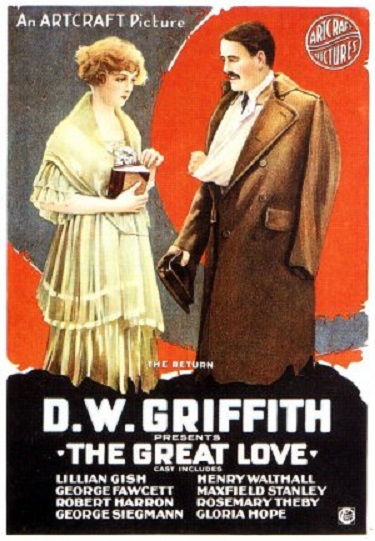
A definitive 6.8/10 rating for a film that redefined the boundaries of cult cinema. The Great Love remains a cornerstone of transgressive art.
To approach The Great Love (1918) is to confront the quintessential Griffithian paradox: a filmmaker whose technical virtuosity was frequently harnessed to serve the immediate, often blunt, demands of national sentiment. Captured during the director’s sojourn to the United Kingdom at the invitation of the British government, this work functions as a fascinating companion piece to his more widely recognized Hearts of the World. While the latter sought to depict the visceral terror of the occupied village, 'The Great Love' pivots toward the domestic and psychological repercussions of the war, grounding its grand geopolitical themes in the intimate fluctuations of the human heart.
The casting of Robert Harron as Jim Young provides the film with a grounded, relatable center. Harron, often overshadowed in historical memory by the more flamboyant stars of the era, possesses a subtle, nervous energy that perfectly encapsulates the American 'itch' to join the fray. Unlike the protagonist in The Better Woman, whose moral struggles are often internal and static, Harron’s Jim Young undergoes a visible physical and spiritual erosion. His journey to Canada and subsequent deployment to the French front is not merely a plot device but a stylistic odyssey through the evolving visual language of early cinema.
When the narrative shifts back to England, the film enters its most luminous phase. The introduction of Lillian Gish, playing the daughter of an Australian minister, elevates the proceedings from a military chronicle to a high-stakes romance. Gish, perhaps the most capable instrument in Griffith’s directorial toolkit, brings a translucent vulnerability to the role. Her interactions with the wounded Harron are filmed with a soft-focus reverie that contrasts sharply with the jagged, staccato editing of the trench sequences. This juxtaposition of the 'front' and the 'home' is a hallmark of Griffith’s structural philosophy, one that we see echoed in the thematic concerns of Akit ketten szeretnek, where the duality of affection is tested by external pressures.
The presence of George Siegmann and Rosemary Theby adds layers of intrigue that prevent the film from dissolving into pure sentimentality. Siegmann, often the go-to villain for Griffith, provides a necessary friction, reminding the audience that even within the sanctified halls of British high society, the 'enemy'—be it through espionage or moral decay—is never far away. This sense of pervasive threat, even in moments of peace, aligns the film with the atmospheric tension found in Trapped by the London Sharks, though Griffith handles the suspense with a far more sophisticated rhythmic pulse.
One cannot discuss 'The Great Love' without acknowledging its unique status as a semi-documentary artifact. Griffith’s access to the British aristocracy, including appearances by Queen Alexandra and other members of the royal household, lends the film a surreal, almost hagiographic quality. These are not merely cameos; they are ideological markers intended to cement the bond between the American viewer and the British Empire. This use of real-world figures to bolster a fictional narrative was a pioneering move, one that complicates the film's legacy. Is it art, or is it the most expensive recruitment poster ever devised? The answer, as with most of Griffith’s output, lies in the masterful execution of the medium.
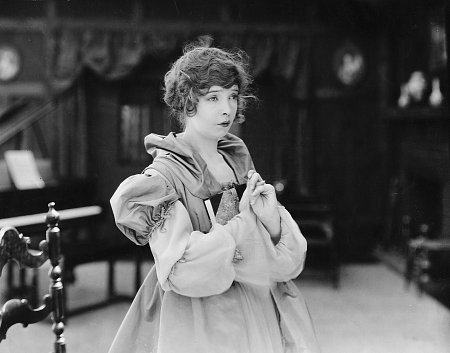
The cinematography by Billy Bitzer remains, as always, superlative. The way the camera captures the English mist, the filtered light through the hospital windows, and the terrifying glow of the Zeppelins over London demonstrates a level of craft that was years ahead of contemporary productions like The Painted Madonna. Bitzer and Griffith understood that the emotional resonance of the story depended on the texture of the image. The film doesn't just tell you about the war; it makes you feel the cold dampness of the earth and the brittle warmth of a recovery room.
Thematically, the film grapples with the concept of 'The Great Love' not just as a romantic entanglement, but as a devotion to a cause higher than the self. This altruistic fervor is a common trope in early 20th-century cinema, yet Griffith imbues it with a specific religious fervor, likely influenced by the clerical background of the female protagonist’s father. This religious dimension invites comparison to The Monk and the Woman, though Griffith is less concerned with the dogmatic and more with the spiritual manifestation of duty. The Australian minister represents a bridge between the colonies and the motherland, a symbolic unification that mirrors the film’s goal of uniting America and Britain.
However, the film is not without its flaws. The secondary plotlines occasionally feel cluttered, a result of the sprawling cast and the need to satisfy various political stakeholders. In comparison to a more tightly wound narrative like Diplomacy, 'The Great Love' can feel episodic. Yet, this sprawl is also its strength, providing a panoramic view of a world in transition. We see the crumbling of old social orders, the emergence of the 'New Woman' in Gish's proactive character, and the democratization of suffering.
In the broader context of 1918 cinema, where films like Hypocrisy or Should She Obey? were exploring social morality and the domestic sphere, 'The Great Love' stands out for its sheer scale and its attempt to synthesize global conflict with personal intimacy. It lacks the cynical edge of later war films, possessing instead a sincerity that can feel jarring to modern sensibilities. But to dismiss it as mere propaganda is to ignore the profound artistry at play. The sequence where the wounded soldiers are entertained in the grand gardens of an estate is a masterclass in composition and social commentary, highlighting the chasm between the elite and those who bleed for them.
The film also serves as a poignant reminder of the career of Robert Harron, whose tragic death shortly after the war’s end robbed cinema of one of its most expressive young actors. His chemistry with Gish is the film's beating heart, providing a sense of stakes that transcends the political messaging. When they look at each other, we see not just two characters, but the hopes of a generation that was being systematically dismantled on the battlefields of Europe. This level of intimacy is rarely achieved in the more stilted performances of films like The Master Hand.
Ultimately, The Great Love is a testament to the power of the moving image to shape national consciousness. It is a film of grand gestures and small, quiet moments—a Zeppelin in the sky and a hand held in a hospital ward. While some of its elements have dated, the core of its narrative remains a compelling study of the lengths to which an individual will go to find meaning in a world gone mad. It sits comfortably alongside other period explorations such as The Shepherd of the Southern Cross or the exoticized dramas like Die Lieblingsfrau des Maharadscha, yet it possesses a grounded reality that sets it apart. It is a vital, if complex, piece of the Griffith puzzle, demanding to be seen not just as a historical curiosity, but as a vibrant, breathing work of early cinematic art.
IMDb —
1926
Community
Log in to comment.