DbcultAccessing Vault...
Cult Review
Senior Film Conservator
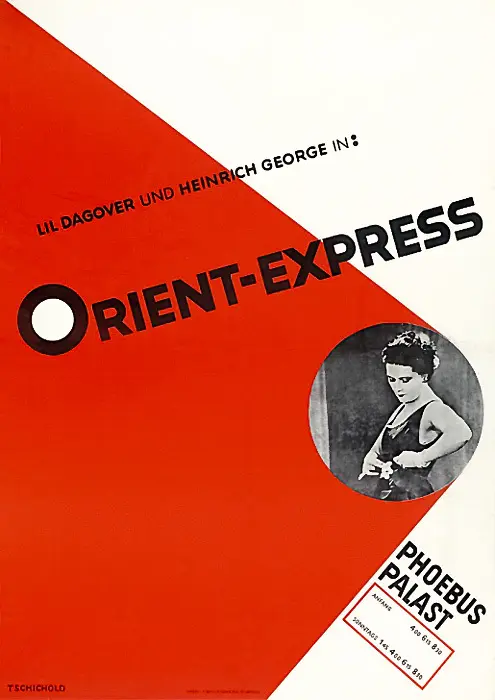
Is Orientexpress (1927) still a journey worth taking for the modern cinephile? Short answer: Yes, but only if you are willing to trade narrative speed for an intoxicating atmosphere of late-Weimar dread.
This film is specifically for those who find beauty in the mechanical rhythm of silent-era storytelling and the expressive faces of German expressionist veterans. It is certainly not for viewers who require the fast-paced, logic-driven plotting of a modern Agatha Christie adaptation.
What makes Orientexpress stand out in the crowded field of 1920s European cinema? It is the film's ability to turn a luxury locomotive into a haunting, shadow-drenched stage for human desperation.
Wilhelm Thiele, who would later find fame with musical comedies, approaches Orientexpress with a surprisingly dark, rhythmic sensibility. The film doesn't just take place on a train; it breathes with the train. The cinematography captures the flickering light of passing stations and the deep, ink-black shadows of the sleeping cars. It creates a visual experience that is both expansive and intensely claustrophobic.
Consider the scene where the camera lingers on the steam-choked platform before departure. It isn't just establishing a setting; it is establishing a mood of inevitable transition. Unlike the later, more lighthearted Der müde Theodor, this film treats the concept of travel as a dangerous crossing of moral boundaries. The train is a mechanical beast that doesn't care about the baggage—emotional or literal—that its passengers carry.
The technical achievement here is significant. Capturing the sense of motion in a studio-bound set was a challenge Thiele met with inventive lighting and camera angles. When the characters look out the windows, we feel the blur of a world they are leaving behind. It works. But it’s flawed. The reliance on intertitles to explain complex social nuances sometimes breaks the spell that the visuals work so hard to cast.
If there is one reason to seek out this film today, it is the performance of Heinrich George. George was a titan of the German stage and screen, and here he brings a physical gravity that anchors the entire production. His face is a landscape of shifting emotions. He doesn't just act; he consumes the frame. In a silent film, physical presence is everything, and George possesses it in spades.
Opposite him, Lil Dagover provides a sharp contrast. Where George is earthy and heavy, Dagover is ethereal and sharp. Their interactions are the highlight of the film, representing the clash between the old world of aristocratic grace and the new, more brutal reality of the post-war era. This dynamic is far more compelling than the somewhat standard thriller elements involving stolen documents or hidden identities.
Compared to the performances in Tseka komissar Mirostsenko, the acting in Orientexpress feels more nuanced and less tied to political archetypes. There is a human vulnerability in Dagover’s eyes that makes her character’s plight feel immediate, even a century later. The supporting cast, including Angelo Ferrari and Maria Paudler, fill out the train’s compartments with a variety of types that keep the social commentary biting and relevant.
Modern audiences often struggle with the pacing of silent films, and Orientexpress is no exception. There are moments where the narrative stalls in the dining car, focusing on minor character beats that don't necessarily propel the plot forward. However, for the patient viewer, these moments are where the film’s subtext lives. It’s in the way a character handles a wine glass or avoids eye contact with a porter.
The film lacks the frenetic energy of a Hollywood production like I'll Get Him Yet, but it replaces that energy with a slow-burn intensity. The tension isn't about whether the train will reach its destination, but who will be left standing when it does. This is a psychological thriller in the truest sense, even if the "thrills" are often internal rather than external.
One of the most surprising observations is how much the film anticipates the "noir" aesthetic. The use of high-contrast lighting and the theme of a man trapped by his circumstances are precursors to the American crime films of the 1940s. Thiele was experimenting with the grammar of suspense before the rules had even been written. It is a fascinating look at the evolution of cinema.
Orientexpress is absolutely worth watching if you have an interest in the history of the thriller genre or the height of Weimar cinema. It offers a unique window into a world that was about to disappear, captured with a technical sophistication that still impresses. While the plot may feel a bit thin in the middle, the atmosphere and the lead performances more than compensate for any narrative sagging.
For those who prefer their cinema with a bit more grit and less polish, this is a perfect choice. It’s a film that demands your full attention; you cannot scroll through your phone while watching this. To do so would be to miss the subtle shifts in expression that tell the real story. It is a rewarding experience for the disciplined viewer.
Pros:
Cons:
Orientexpress (1927) is a haunting piece of cinema that proves you don't need sound to create a deafening sense of tension. While it lacks the polish of modern blockbusters, it possesses a soul and a visual grit that many contemporary films lack. It is a flawed but vital piece of film history. If you are looking for a journey that takes you deep into the heart of human complexity, buy a ticket for this train. Just don't expect a smooth ride.
IMDb 5
1922
Community
Log in to comment.