DbcultAccessing Vault...
Cult Review
Senior Film Conservator
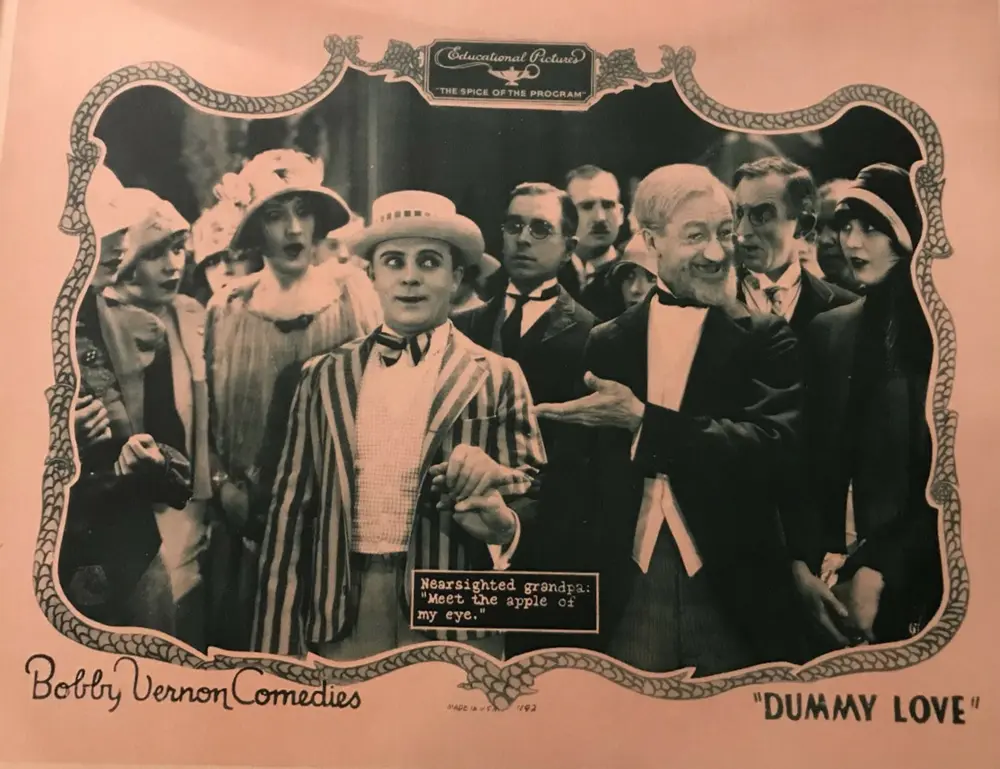
Is Dummy Love a relic worth unearthing for the modern viewer? Short answer: yes, but only if you have an appetite for the specific, frantic rhythm of 1920s slapstick and can forgive its thin narrative logic.
This film is for silent cinema enthusiasts and students of physical comedy who want to see the 'Christie Comedies' house style in full bloom; it is not for those who require character depth or a plot that survives a five-second logical interrogation.
1) This film works because Bobby Vernon’s kinetic energy and the sheer speed of the Christie Comedy production model turn a mundane elopement into a high-stakes athletic event.
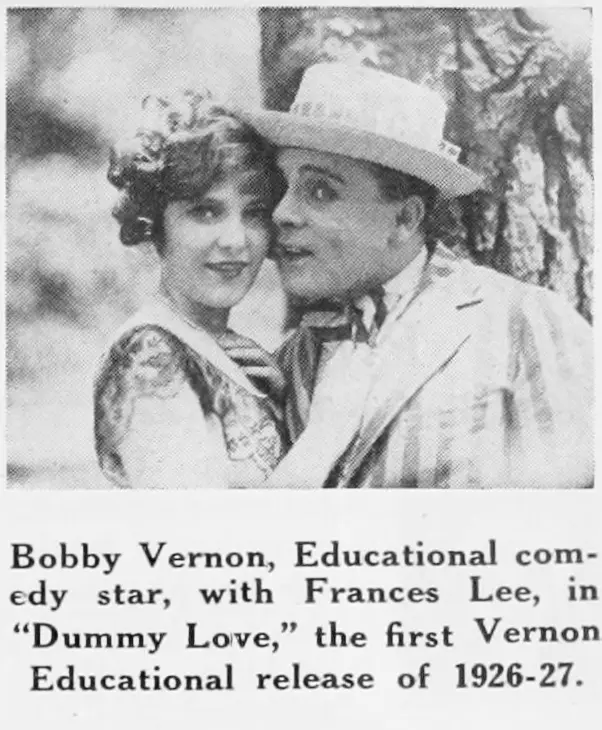
2) This film fails because the central misunderstanding—the sweetheart’s belief that Oscar’s friend is eloping—is so easily solvable that it feels like the characters are actively avoiding common sense to keep the movie running.
3) You should watch it if you want to understand the bridge between the pure chaos of Mack Sennett and the more refined, situational comedies of the late 1920s.
Dummy Love, directed under the Al Christie banner, represents a pivotal moment in silent short subjects. While many comedies of the era relied on random violence or non-sequitur gags, this film tries to ground its humor in the social anxiety of the 'approved suitor.' We see this trope explored with more gravity in films like Bonds of Love, but here, it is merely the fuel for a frantic engine.
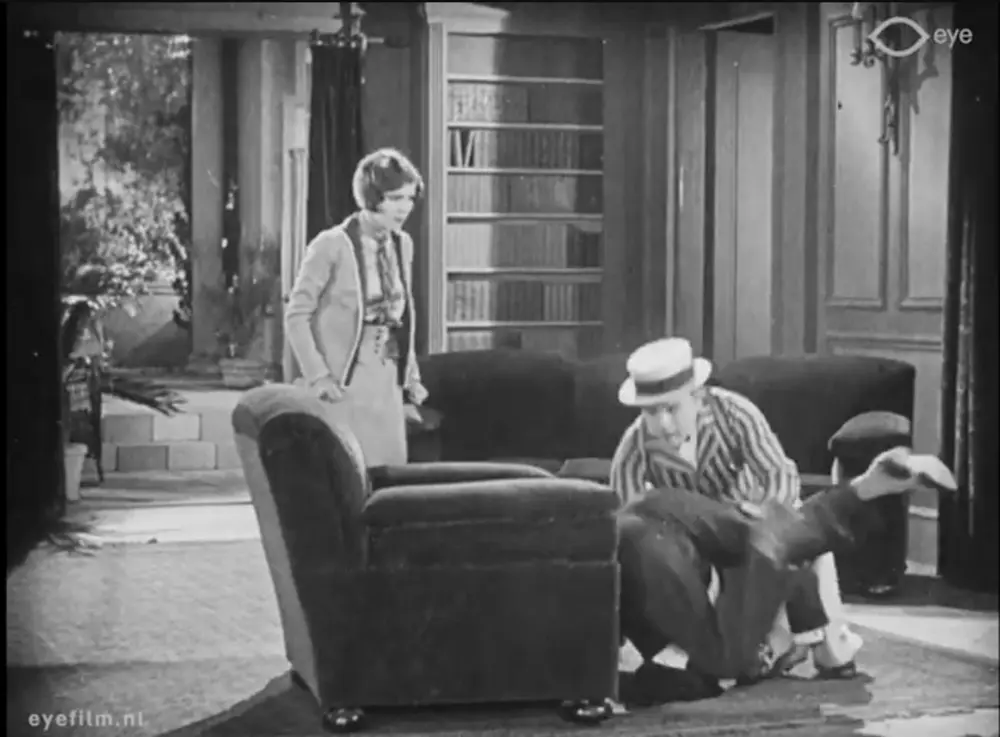
The film’s pacing is relentless. From the moment the uncle announces the engagement, the editing accelerates. There is a specific shot where Evelyn looks at the approved suitor with a mix of boredom and horror that perfectly encapsulates the film’s stance on forced marriage. It is cynical, fast-paced, and surprisingly modern in its rebellion against authority.
Bobby Vernon, playing Oscar, is the secret weapon here. Vernon wasn't a 'sad clown' like Keaton or a 'glass-wearing everyman' like Lloyd. He was a high-energy performer who used his small stature to navigate the screen like a pinball. In the scene where the elopement begins, his movements are so precise they feel choreographed by a clockmaker. It works. But it’s flawed.
The core of the film hinges on a prop: a dummy. In the 1920s, the use of a mannequin or 'dummy' to fool a pursuer was a staple of the genre, seen in various forms in shorts like The Agent. In Dummy Love, the dummy isn't just a decoy; it becomes a physical manifestation of the confusion that defines the second act.
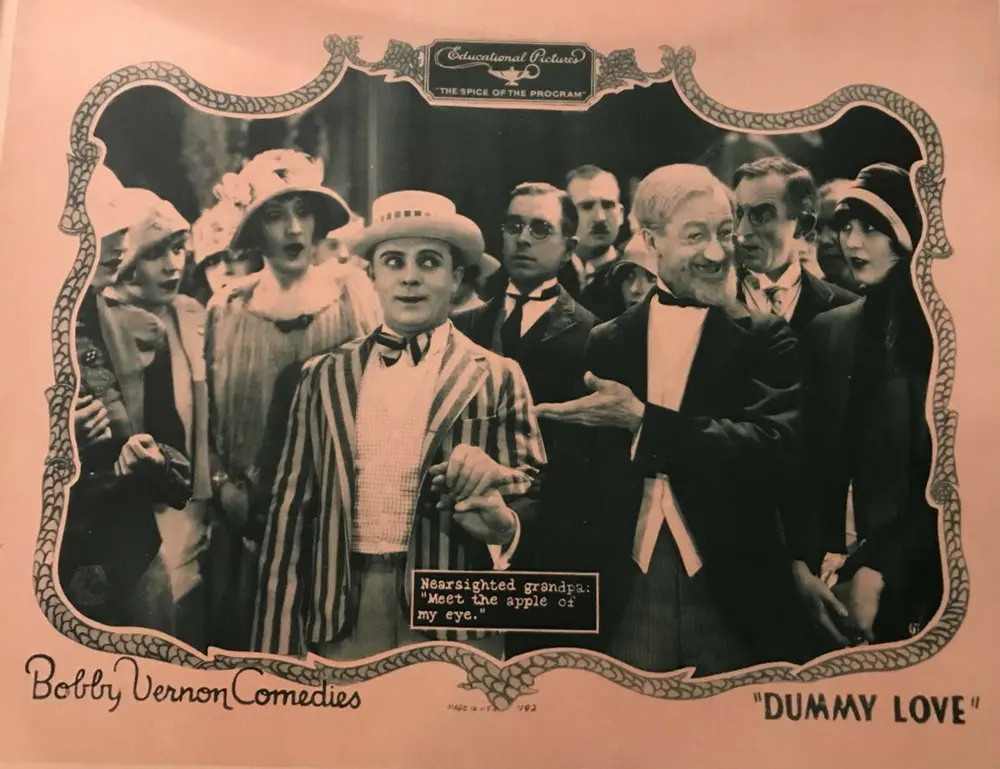
When Oscar’s friend helps with the ladder, the visual composition is intentional. The camera stays wide, allowing us to see the sweetheart watching from the shadows. This 'dramatic irony'—where we know she’s wrong, but she thinks she’s right—is the oldest trick in the book. However, the film leans into it with such aggressive sincerity that you can't help but laugh at the absurdity. It’s a bold stance to take. The film doesn't care if the plot is 'dumb.' It only cares if the movement is funny.
The cinematography by the Christie regulars is functional rather than artistic. Unlike the moody shadows found in The Pitfall, Dummy Love is shot in high-key lighting. Everything is bright, clear, and designed to ensure you don't miss a single facial contortion. This is 'meat and potatoes' filmmaking, and there is a certain honesty in that.
For the casual viewer, Dummy Love might feel like a repetitive exercise in sprinting. However, for those who appreciate the evolution of the sitcom, this is a foundational text. It establishes the 'misunderstood wingman' trope that would be reused for the next century. If you enjoy the frantic energy of Sherlock's Home, you will find much to love here.
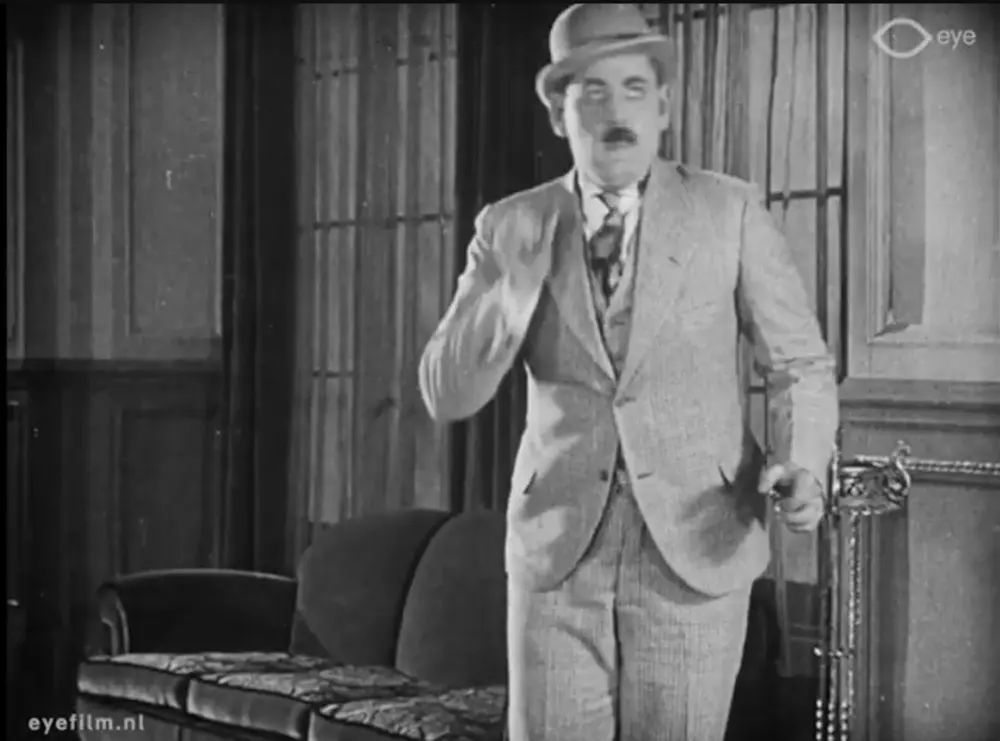
The film’s biggest strength is its lack of pretension. It doesn't try to be a 'cinematic journey.' It tries to be a twelve-minute distraction that leaves you breathless. In that specific goal, it succeeds wildly. The uncle, played with wonderful pomposity by Jack Duffy, is the perfect foil. His eventual realization that he has been duped is the most satisfying moment in the film.
Pros:
- Exceptional physical timing from the lead cast.
- A lean, no-fat runtime that respects the viewer's time.
- High production values for a 1921 comedy short.
- Genuine, laugh-out-loud moments of visual frustration.
Cons:
- The plot relies on characters being remarkably unobservant.
- Some of the 'dummy' gags feel dated compared to contemporary shorts like Andy's Lion Tale.
- The resolution is rushed, even by silent film standards.
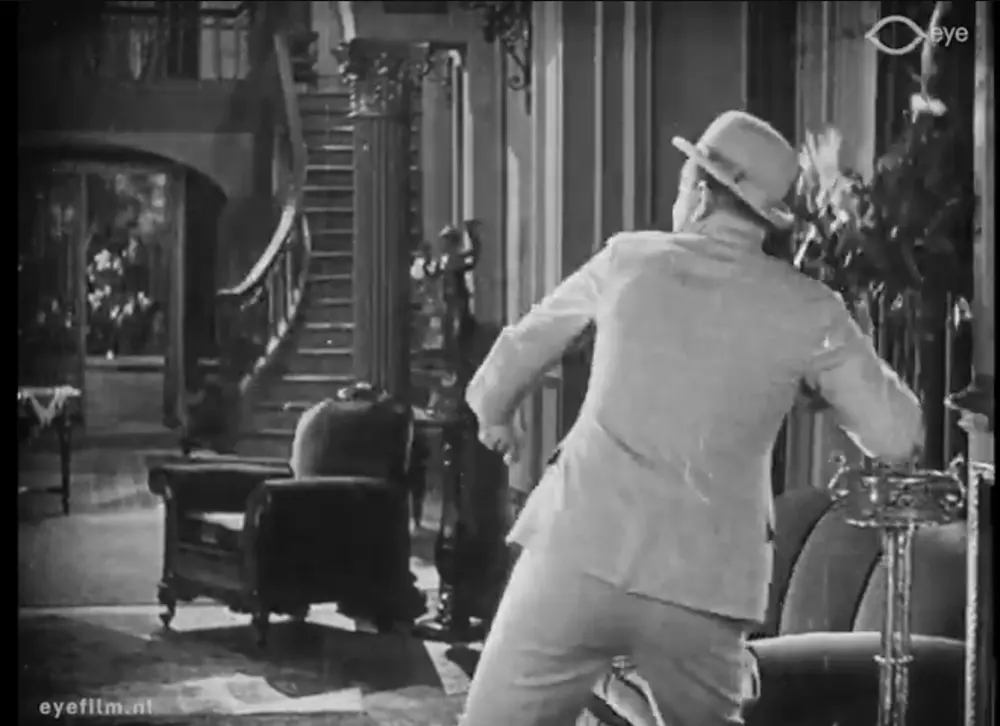
In 1921, the idea of a woman eloping was a common theme in 'rebellion' cinema, such as Daring Love. Dummy Love takes this serious social shift and turns it into a farce. This is a debatable point: is the film making light of women's autonomy, or is it celebrating it? I would argue it’s the latter. Evelyn is the smartest person in the room. She uses the men's incompetence to her advantage.
The uncle’s approved suitor is depicted as a stiff, lifeless drone—much like the dummy itself. This is a surprising observation: the film suggests that the 'proper' choice for a husband is no more human than a mannequin. It’s a cynical take hidden behind a curtain of pratfalls. It makes the film feel slightly more substantial than its 'slapstick' label suggests.
The pacing of Dummy Love is its most 'modern' attribute. While other 1921 films like Enemies of Women were exploring longer, more ponderous narratives, the Christie team was perfecting the 'gag-per-minute' ratio. Every scene serves a purpose. There is no wasted motion. When Oscar trips, it’s not just for a laugh; it’s to delay his arrival so the sweetheart can see him at the 'wrong' moment.
The tone is consistently light, even when the stakes (social ruin and heartbreak) should be high. This is where the film differs from the melodrama of The Master Key. In Dummy Love, everything is a game. The characters aren't people; they are chess pieces being moved around a very funny board. The joke lands. The plot doesn't. And that’s perfectly fine.
Dummy Love is a frantic, slightly brainless, but utterly charming piece of silent history. It doesn't have the emotional depth of a Chaplin feature or the architectural genius of a Keaton short, but it has heart and a lot of sweat. Bobby Vernon proves why he was a top-tier star of the era, and the film serves as a perfect entry point for anyone curious about the Christie Comedy style. It’s a loud, silent movie that deserves a look. Watch it for the history, stay for the dummies.
IMDb 5.2
1932
Community
Log in to comment.