DbcultAccessing Vault...
Cult Review
Senior Film Conservator
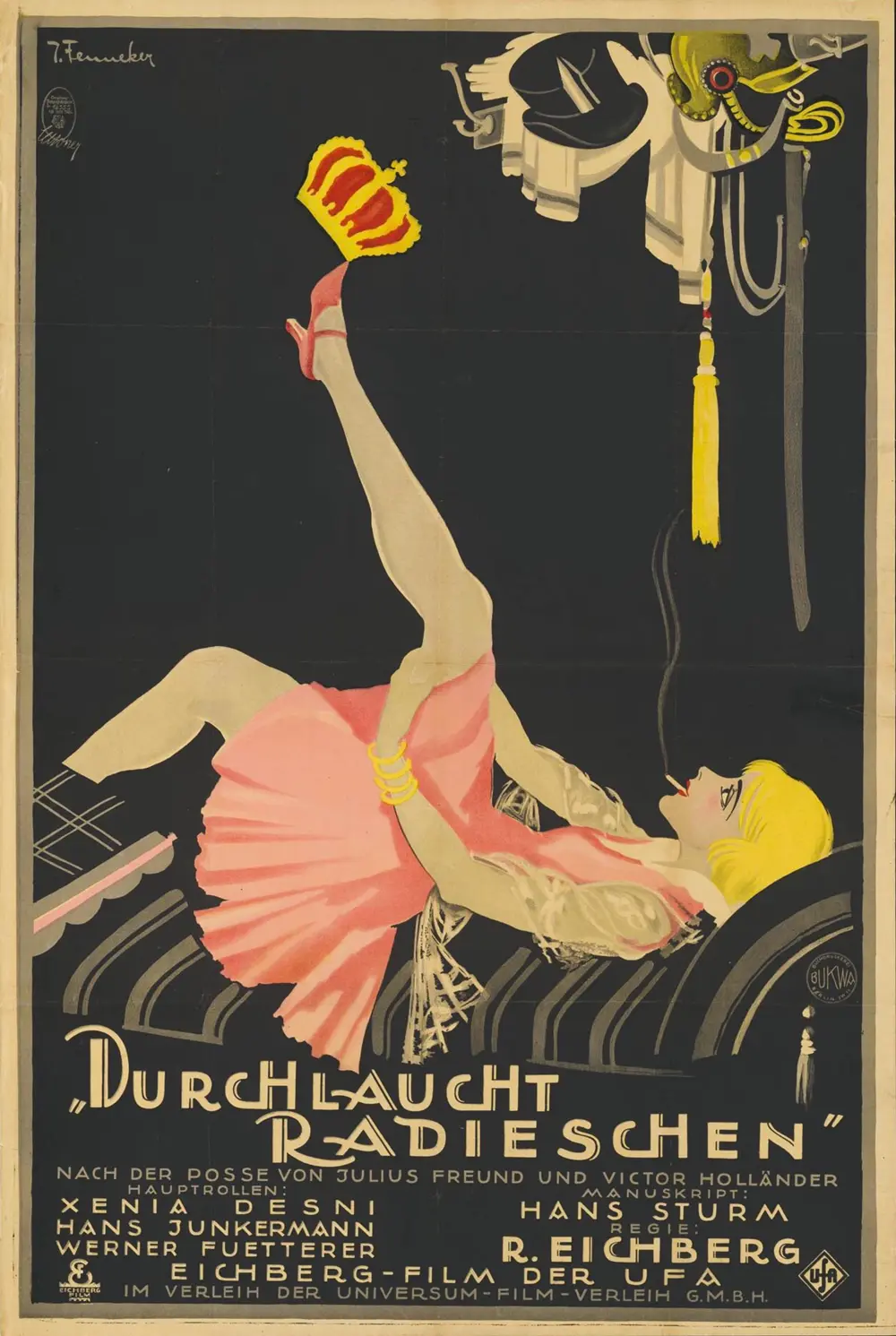
Is Durchlaucht Radieschen worth watching today? Short answer: yes, but with a few crucial caveats that temper its initial charm. This delightful, if somewhat uneven, silent-era comedy from Germany offers a fascinating glimpse into a bygone cinematic era, yet it demands a certain patience and appreciation for its historical context that not every modern viewer possesses.
This film is absolutely for those who cherish early European cinema, particularly German comedies, and anyone seeking a refreshing departure from contemporary narratives. It's a genuine find for cinephiles and historians. However, if your taste leans exclusively towards fast-paced, dialogue-heavy storytelling or visually spectacular blockbusters, then Durchlaucht Radieschen might prove a challenging watch.
From its very premise, Durchlaucht Radieschen establishes itself as a charming, if predictable, royal farce. The narrative centers on a prince, bored with his gilded cage and the suffocating weight of expectation, who orchestrates a grand deception to escape his fate. This trope, while familiar, is executed with a particular German sensibility that blends comedic timing with a subtle undercurrent of social commentary on class and duty.
The film works because of its surprisingly effective ensemble cast, particularly Werner Fuetterer's nuanced portrayal of Prince Radieschen, who manages to convey both aristocratic ennui and genuine longing for a simpler life without uttering a single word. Xenia Desni, as the commoner Lilli, is a revelation, her physical comedy and expressive face carrying much of the film's lighter moments. The direction, while not groundbreaking, is competent and allows the comedic situations to unfold naturally.
This film fails because of its occasionally languid pacing, a common characteristic of silent films that can test the patience of modern audiences. Some subplots feel underdeveloped, and the resolution, while satisfying, feels a touch too convenient. The technical limitations of the era are also apparent, with some scenes lacking the visual dynamism one might expect from more celebrated contemporaries.
You should watch it if you appreciate the artistry of silent cinema, enjoy character-driven comedies, and are willing to immerse yourself in a period piece that prioritizes charm and wit over special effects or rapid-fire dialogue.
The strength of Durchlaucht Radieschen lies undeniably in its cast. In an era where expression and physicality were paramount, Werner Fuetterer delivers a performance that transcends mere pantomime. As Prince Radieschen, he embodies the melancholic boredom of royalty with a subtle slump of the shoulders and a longing gaze that frequently turns towards the palace gardens. When he assumes his commoner disguise, a palpable lightness enters his movements, his smile becoming genuine rather than forced. It’s a masterclass in silent acting, conveying internal conflict and liberation through precise gestures.
Xenia Desni, a formidable presence in German silent cinema, truly shines as Lilli. Her comedic timing is impeccable. Consider the scene where she first attempts to mimic royal etiquette: her exaggerated curtsies, her bewildered attempts to wield a fan, and her wide-eyed reactions to courtly gossip are genuinely hilarious. She doesn't just play a role; she *becomes* the fish out of water, making her transformation believable and endearing. Her performance alone elevates the film from a simple farce to a genuinely engaging character study.
The supporting cast, while not as prominently featured, provides crucial texture. Margarete Kupfer, as the formidable Duchess, is the perfect foil, her stern expressions and rigid posture epitomizing the suffocating formality from which Radieschen seeks escape. Robert Garrison, as the bumbling valet, offers reliable comic relief, his frantic efforts to maintain the charade leading to some of the film's most memorable slapstick moments, such as his desperate attempts to cover Lilli's faux pas during a state dinner. These actors, through their exaggerated yet precise movements, paint a vivid picture of courtly life and its absurdities.
It’s a testament to their skill that even without spoken dialogue, the characters’ motivations, emotions, and personal journeys are crystal clear. They communicate volumes with a mere glance or a subtle shift in posture, a skill largely lost in today's dialogue-heavy productions. This film serves as a powerful reminder of the expressive power of the human body in storytelling.
The direction, helmed by an uncredited director (a common occurrence in early cinema, though often attributed to the writer Hans Stürm in this case), is largely functional, prioritizing clarity and comedic effect over stylistic flourishes. There's a deliberate simplicity to the camera work, often employing static shots that allow the actors’ performances and the meticulously designed sets to take center stage. This approach, while perhaps not as innovative as a Crainquebille or a Return to Reason, effectively serves the narrative.
The cinematography, while not groundbreaking, is competent for its time. The use of natural light, particularly in the garden scenes where Prince Radieschen finds solace, creates a sense of pastoral tranquility that starkly contrasts with the opulent, yet artificial, interiors of the palace. This visual dichotomy is subtle but effective, reinforcing the film's central theme of authenticity versus artifice. The framing often places characters within grand, ornate settings, emphasizing their smallness against the weight of their roles.
Pacing, as noted, is a hurdle for contemporary viewers. The film unfolds at a more deliberate rhythm, allowing scenes to breathe and emotions to register without the rush of modern editing. This can feel slow, especially during expositional sequences, but it also allows for a deeper appreciation of the comedic buildup. The tone maintains a consistent lightheartedness, even during moments of mild dramatic tension, ensuring the audience remains engaged in the farce rather than bogged down by melodrama.
One particularly charming directorial choice is the recurring motif of the radish, not just in the prince's name but subtly woven into the set dressing and even character gestures. It’s a whimsical detail that reinforces the film’s playful spirit and Radieschen’s unconventional nature, a quiet rebellion against the pomp and circumstance expected of him. This kind of subtle visual storytelling is a hallmark of good silent film direction, even if it goes unnoticed by casual viewers.
Absolutely. Durchlaucht Radieschen is a delightful, if imperfect, window into early German cinematic comedy. Its charm lies in its earnest performances and the timeless appeal of its mistaken identity plot. While it requires an appreciation for the silent film era's unique pacing and visual language, the payoff is a genuinely enjoyable and historically significant viewing experience. It's a film that reminds us of the universal nature of humor and the enduring power of simple, well-told stories.
For those who rarely venture into silent cinema, this could be an excellent, gentle introduction. It’s not as avant-garde as some of its contemporaries, nor as emotionally devastating as the great dramas. Instead, it offers a warm, accessible narrative that relies on the universal language of physical comedy and heartfelt expression. It works. But it’s flawed. The humor is broad, the plot straightforward, and the technical execution is of its time, but its heart is undeniably in the right place.
Comparing it to other films of its era, Durchlaucht Radieschen holds its own as a solid example of the light comedic fare popular at the time. It might not have the enduring legacy of a Buster Keaton or Charlie Chaplin film, but it certainly offers more depth and character than many forgotten quick productions like Pajamas or Hearts for Rent. It’s a film that deserves to be rediscovered, not just as a historical artifact, but as a source of genuine entertainment.
One of the most surprising observations about Durchlaucht Radieschen is its enduring relevance. Despite being nearly a century old, its themes of societal pressure, the search for identity, and the allure of a simpler life resonate even today. The humor, while relying on classic silent film tropes, often feels fresh because of the earnestness of the performances. It’s not just a period piece; it’s a commentary on universal human desires.
The film’s portrayal of aristocracy, while comedic, carries a subtle satirical edge. The court is depicted as a place of stifling formality and superficiality, a stark contrast to the genuine connections found outside its walls. This critique of the elite, wrapped in a charming romantic comedy, is a testament to the film's nuanced writing, often attributed to Julius Freund and Hans Stürm. They craft a world that is both fantastical and subtly critical, a delicate balance that few films manage to strike so effectively.
My strong, debatable opinion is that Durchlaucht Radieschen is significantly more sophisticated in its character work than many of its more widely celebrated contemporaries. While the plot is straightforward, the internal struggles of both Prince Radieschen and Lilli are depicted with a depth that often goes unacknowledged in silent comedies. They aren't just archetypes; they are individuals grappling with their circumstances, making their journey surprisingly compelling.
Another unconventional observation is how effectively the film uses silence itself as a character. The quiet moments, particularly those where Radieschen is alone in the garden, are not empty; they are filled with unspoken thoughts, desires, and the heavy weight of his royal burden. This intelligent use of the medium's inherent limitations transforms them into strengths, allowing the audience to project their own understanding onto the characters' internal worlds. It's a powerful technique often overlooked.
Durchlaucht Radieschen is a film that asks for a particular kind of engagement, and for those willing to give it, it offers a rich and rewarding experience. It’s not a groundbreaking work that redefined cinema, but it is a wonderfully crafted piece of entertainment from its era, brimming with heart and genuine humor. Its strength lies in its ability to tell a universal story with grace and wit, even without the aid of spoken dialogue.
While it may not appeal to everyone, particularly those uninitiated in the nuances of silent film, its charming performances, thoughtful characterizations, and lighthearted tone make it a worthwhile watch. It’s a testament to the enduring power of simple storytelling and the expressive capabilities of silent actors. Seek it out if you crave a cinematic journey that prioritizes character over spectacle, and you’ll find a surprisingly fresh and endearing experience waiting for you.
IMDb 5.2
1929
Community
Log in to comment.