DbcultAccessing Vault...
Cult Review
Senior Film Conservator
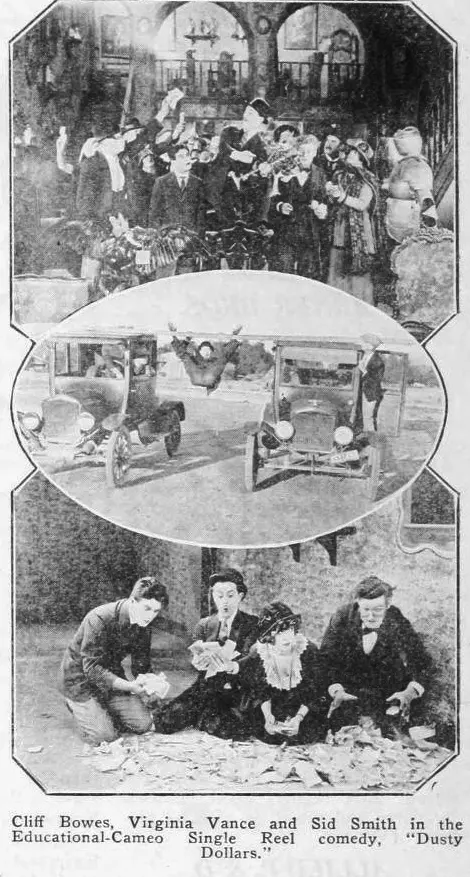
The 1922 cinematic landscape was a fertile ground for the exploration of the American Dream through a lens of slapstick and situational irony. Dusty Dollars stands as a testament to this era, a period when the 'get-rich-quick' ethos was frequently scrutinized through the frantic movements of early screen comedians. Unlike the moralistic weight found in contemporary dramas like The Victory of Virtue, this film opts for a lighter, albeit biting, commentary on the volatility of wealth and the arbitrary nature of fortune.
The film opens in the claustrophobic confines of a curiosity shop that serves as a physical manifestation of commercial decay. The set design is a marvel of silent-era clutter; every frame is packed with the detritus of history, reflecting a world that has stopped moving. Enter Sidney Smith, whose performance injects a necessary kinetic energy into this ossified environment. His character is not merely a romantic lead but a catalyst for chaos, bridging the gap between the shop’s dusty past and a speculative, profit-driven future. The contrast between the shop's gloom and the youthful exuberance of the protagonist creates a visual tension that drives the first act.
While The Summer Girl might rely on the brightness of outdoor pastoralism, Dusty Dollars thrives in the shadows of its interior sets. The cinematography utilizes the limited technology of 1922 to highlight the textures of the antiques, making the 'Number Five' jardinière stand out as a beacon of potential. This vessel becomes a MacGuffin of sorts, a physical object onto which the characters project their varying desires for security, love, and avarice.
The crux of the plot—the circulation of a false report to stimulate sales—is a fascinating precursor to modern marketing tactics. It speaks to a cynical understanding of human psychology: the idea that value is not inherent in an object but is a product of social consensus and scarcity. When Smith’s character lies about the treasure, he isn't just selling a pot; he is selling hope. This thematic thread is handled with a deftness that rivals the social critiques found in The City of Purple Dreams, where the pursuit of wealth often leads to unexpected moral crossroads.
The sequence involving the burning of the money is particularly harrowing for a comedy. It serves as a visceral reminder of the ephemeral nature of paper currency—a theme that would have resonated deeply with an audience living through post-war economic shifts. The sight of the proprietor watching his life's work vanish in a puff of cigarette smoke provides a moment of genuine pathos that elevates the film above standard slapstick. It is a cruel, almost nihilistic twist that suggests the universe has a perverse sense of humor, punishing the greed that the protagonist's lie initially stoked.
The chemistry between Sidney Smith and Virginia Vance provides the film's emotional anchor. Vance, often underutilized in the annals of silent history, brings a luminous sincerity to the role of the proprietor’s daughter. Her presence justifies the protagonist's extreme measures, grounding the farcical elements in a relatable human motivation. Meanwhile, Cliff Bowes delivers a performance of remarkable physical dexterity. His comedic timing during the shop's liquidation scenes is impeccable, utilizing the cramped space to execute gags that feel both spontaneous and meticulously choreographed.
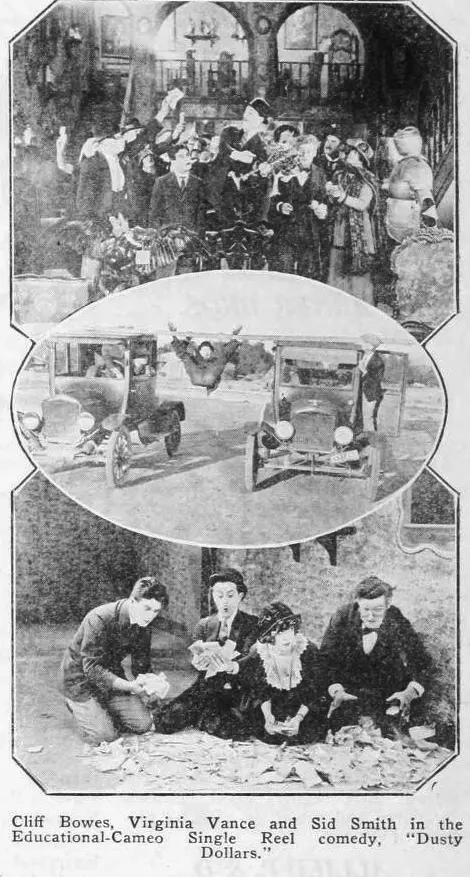
Comparisons could be drawn to the ensemble dynamics in Betty to the Rescue, yet Dusty Dollars possesses a darker edge. The desperation of the characters is palpable. The clerk, who eventually breaks the jardinière, represents the marginalized worker of the 1920s—undervalued and paid in 'junk.' His act of destruction, which inadvertently leads to the discovery of the real treasure, is a poetic resolution that suggests providence favors the downtrodden rather than the manipulative.
From a technical standpoint, the film manages to maintain a brisk pace despite its singular location. The editing is surprisingly tight for the period, avoiding the sluggish transitions that plague many early 20s featurettes. The director (though often uncredited in contemporary records, the stylistic fingerprints of the era are clear) understands the power of the close-up. The focus on the 'Number Five' label and the smoldering cigarette creates a sense of impending doom that contrasts sharply with the broader comedic beats.
The film’s resolution—the revelation of the actual fortune—is a masterstroke of narrative symmetry. It validates the grandmother’s bequest, transforming a seemingly useless heirloom into a literal life-saver. This trope of hidden inheritance is a staple of folk tales, echoing the structural simplicity of Jack and the Beanstalk, yet it is applied here with a modern, urban cynicism. The treasure isn't at the top of a beanstalk; it’s in a dusty pot in a failing shop, hidden in plain sight.
In the broader context of 1922 cinema, Dusty Dollars occupies a middle ground between the high-society intrigue of Mr. Barnes of New York and the gritty realism found in imports like Vor fælles Ven. It lacks the exoticism of The She Devil, but replaces it with a tangible, relatable anxiety about money and status. The film’s focus on a 'curiosity shop' might even remind astute viewers of the deductive logic required in A Scandal in Bohemia, where objects are rarely what they seem and every detail holds a secret.
Furthermore, the film’s exploration of deception and the 'fake' treasure mirrors the themes of identity and fraud found in The Deceiver. However, while The Deceiver leans into the thriller aspects of its premise, Dusty Dollars remains committed to the redemptive power of the 'happy accident.' The fact that the protagonist's lie turned out to be true suggests a world governed by a benevolent, if chaotic, fate.
Ultimately, Dusty Dollars is a film about the collision of tradition and modernity. The shop, filled with the 'dusty' relics of the past, is saved by a 'modern' lie, which is then validated by a 'traditional' hidden treasure. It is a complex loop of irony that rewards multiple viewings. The performances of Smith, Bowes, and Vance ensure that the film remains engaging, while the script’s clever subversions provide plenty of intellectual stimulation. For those interested in the evolution of the American comedy, this film is an essential artifact—a small, gleaming coin found in the vast, dusty shop of film history.
For more explorations of silent-era treasures, consider our reviews of The Light in the Clearing or the Prohibition-era satire The Sweet Dry and Dry.
IMDb —
1914
Community
Log in to comment.