DbcultAccessing Vault...
7.3/10
Senior Film Conservator
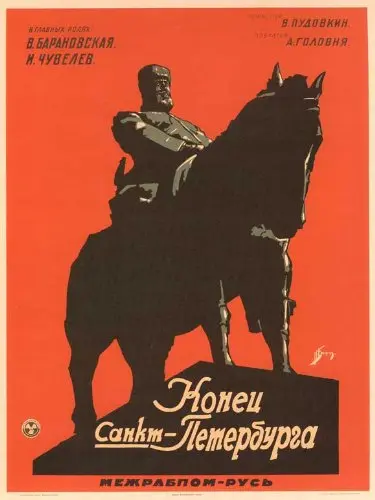
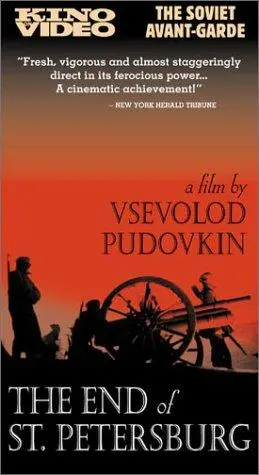
A definitive 7.3/10 rating for a film that redefined the boundaries of cult cinema. The End of St. Petersburg remains a cornerstone of transgressive art.
Is The End of St. Petersburg a film that still resonates in the age of digital blockbusters? Short answer: Yes, but only if you are willing to engage with a style of filmmaking that prioritizes rhythmic impact over dialogue-driven plot.
This film is for the cinephile who wants to see the raw blueprints of modern editing and the history buff who prefers sweat and grime over textbook dates. It is definitively not for those who require a clear hero-villain dynamic or a fast-paced, linear narrative structure.
1) This film works because of Pudovkin’s uncanny ability to link the psychological state of an individual to the massive, grinding gears of historical change through montage.
2) This film fails because its second half leans heavily into state-sanctioned messaging that can feel repetitive to a modern viewer who isn't invested in the specific political context.
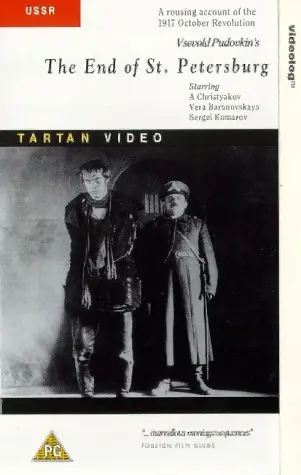
3) You should watch it if you want to understand how cinema transitioned from a novelty to a powerful psychological tool capable of manipulating time and emotion.
The End of St. Petersburg is absolutely worth watching if you value the evolution of visual language. It provides a masterclass in 'linkage' montage, where every shot is a building block that creates a cumulative emotional effect. While it lacks the frantic 'collision' of Eisenstein, it offers a more grounded, human perspective on the Russian Revolution. It is a foundational text of world cinema.
The film opens with a stark contrast between the rural landscape and the industrial behemoth of St. Petersburg. Pudovkin uses the camera to dwarf the protagonist. When Ivan Chuvelyov’s peasant character first enters the city, the buildings seem to lean in, suffocating him. This isn't just set design; it’s an emotional statement about the scale of the individual versus the state.
Consider the scene where the peasant is looking for work. The camera focuses on the rhythmic, mechanical movement of the factory machines. They are loud, even in a silent film. The human workers are framed as mere extensions of the iron. This visual metaphor sets the stage for the betrayal that follows. The peasant isn't evil; he is simply a man trying to survive in a machine that doesn't care if he lives or dies.
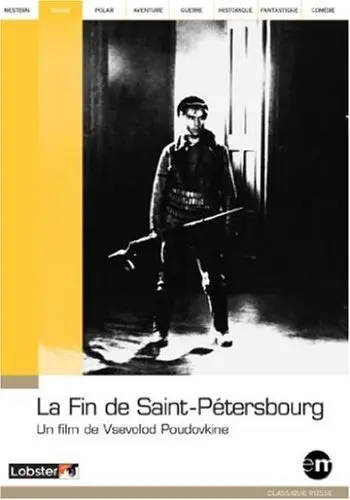
Unlike the lighter fare of the era, such as George the Winner, there is no whimsy here. The stakes are survival, and the cost is the protagonist’s soul. When he realizes he has betrayed his friend, the close-up on Chuvelyov’s face is haunting. It’s a moment of pure, unadulterated guilt that transcends the propaganda of the script.
The most famous sequence in the film is the intercutting between the stock exchange and the battlefields of World War I. It is a brutal, cynical piece of editing. While wealthy men in top hats scream and scramble over rising stock prices, soldiers are shown dying in the mud for the very interests those stocks represent. It’s a heavy-handed comparison, but it is executed with such rhythmic precision that it remains effective today.
The editing accelerates as the 'fever' of the market grows. The cuts become shorter, the movements more frantic. Then, Pudovkin cuts to a slow, agonizing shot of a soldier sinking into the mire. The silence of the film actually enhances the horror of this moment. It forces the viewer to fill in the screams and the explosions with their own imagination. It makes the violence feel more intimate and less like a spectacle.
This level of technical sophistication was unheard of in more conventional dramas like Miss Nobody. Pudovkin wasn't just telling a story; he was experimenting with the viewer's pulse. He understood that film is as much about timing as it is about imagery. The result is a sequence that feels like a physical assault on the senses.
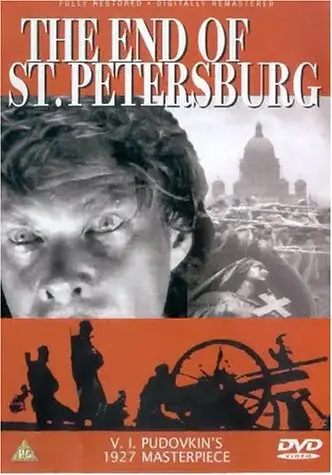
In the world of Soviet cinema, Pudovkin is often overshadowed by Sergei Eisenstein. While Eisenstein focused on the 'mass hero,' Pudovkin focused on the 'individual hero.' This choice makes The End of St. Petersburg much more accessible to a modern audience. We care about the peasant’s journey because we see his specific suffering, his specific mistakes, and his specific redemption.
The performance by Ivan Chuvelyov is remarkably restrained for 1927. He avoids the theatrical mugging common in silent films. Instead, he uses his eyes to convey a sense of bewilderment that eventually turns into a hard, cold resolve. By the time he returns from the war, he is a different man. The way he carries himself has changed. He is no longer a victim of the city; he is its conqueror.
This focus on character arc is what separates this film from a simple newsreel or a dry political tract. It has the soul of a tragedy. Even as the film celebrates the fall of the old order, it acknowledges the immense suffering required to get there. It is a dark, gritty experience that makes something like Rock Bottom look like a light-hearted romp in comparison.
One of the most striking aspects of the film is its depiction of poverty. Pudovkin doesn't shy away from the ugliness of the peasant’s life. The opening scenes in the village are shot with a harsh, naturalistic light. The dirt is real. The hunger is palpable. When the mother character gives up her last bit of food, it isn't played for melodrama; it’s presented as a cold, hard fact of life.
This realism extends to the factory scenes. The smoke, the grease, and the exhaustion are all captured with a documentary-like eye. This makes the later transition into the stylized, almost expressionistic scenes of the revolution even more powerful. The film moves from the real to the symbolic, mirroring the protagonist’s own awakening.
The cinematography by Anatoli Golovnya is exceptional. He uses low angles to make the factory owners look like giants and high angles to make the workers look like ants. It’s a simple technique, but it’s applied with such consistency that it builds a coherent visual world. You don't need intertitles to tell you who has the power in this world; the camera tells you everything you need to know.
Pros:
- Groundbreaking use of montage that still feels modern.
- A powerful, understated lead performance.
- Intense, gritty atmosphere that avoids silent-era clichés.
- A rare historical perspective that focuses on the individual rather than the crowd.
Cons:
- The propaganda elements can feel dated and heavy-handed.
- Some of the supporting characters are one-dimensional archetypes.
- The pacing in the middle section drags slightly as the war drags on.
The End of St. Petersburg is more than just a historical artifact. It is a reminder of a time when cinema was being invented in real-time. Every cut was a discovery. Every camera angle was a new way of seeing the world. While modern films like The Demon Rider might offer more traditional thrills, they owe a debt to the experiments conducted by Pudovkin and his peers.
The film’s influence can be seen in everything from the political thrillers of the 1970s to the fast-paced editing of modern action cinema. It taught filmmakers how to manipulate the audience's sense of time and space. It showed that a film could be a weapon, a poem, and a psychological profile all at once.
Ultimately, it is a film about the end of one world and the violent birth of another. It’s messy. It’s loud (in its own way). It’s vital. It doesn't ask for your permission to be intense; it simply is. It works. But it’s flawed. And those flaws are part of what makes it so fascinating to watch nearly a century later.
The End of St. Petersburg is a technical juggernaut that manages to keep its human heart beating amidst the gears of revolution. It is an essential watch for anyone who takes the medium of film seriously. It is a dark, demanding, and ultimately rewarding experience that proves that great cinema doesn't need words to speak volumes. It remains a towering achievement of the silent era.
IMDb —
1917
Community
Log in to comment.