DbcultAccessing Vault...
Cult Review
Senior Film Conservator
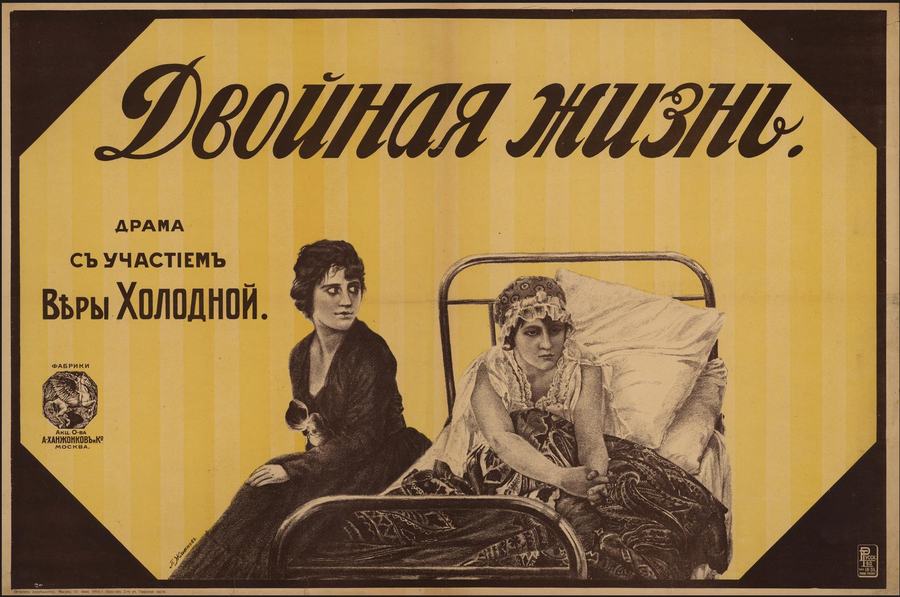
In the annals of early cinematic history, few figures command the ethereal presence and enduring mystique of Vera Kholodnaya. Her brief, incandescent career left an indelible mark, and films like “Dvoynaya zhizn” stand as monumental testaments to her unparalleled dramatic prowess. This silent Russian melodrama, a masterclass in psychological tension and tragic inevitability, beckons us into a world where public facade and private anguish collide with devastating force. It is not merely a story of deception, but a profound exploration of identity, societal hypocrisy, and the relentless grip of a past that refuses to remain buried. Kholodnaya's star power, even without the benefit of spoken dialogue, was immense, her expressive face and graceful movements communicating a universe of emotion, making her a true icon of the silver screen and a compelling reason for modern audiences to rediscover these cinematic treasures.
At its core, “Dvoynaya zhizn” (Double Life) plunges us into the exquisitely tortured existence of Elina, portrayed with breathtaking fragility and formidable resolve by Kholodnaya. We are introduced to her as the celebrated prima ballerina, a vision of grace whose every movement on stage is met with adulation. Her life off-stage mirrors this perfection: she is engaged to Victor, a distinguished industrialist (Konstantin Dhzemarov, embodying the stoic, well-meaning but ultimately obtuse pillar of society), a man of status and influence. This shimmering existence, however, is a meticulously constructed edifice, a fortress built upon the ashes of a former self. Elina is, in truth, Anya, a young woman from a less privileged past, whose youthful idealism led her into the dangerous embrace of a revolutionary cell. There, she fell deeply in love with Sergei (Andrey Gromov), a charismatic idealist believed to have perished in the throes of political turmoil. The film masterfully delineates this schism, presenting Elina’s public persona as a carefully choreographed performance, a silent scream against the specter of exposure. The psychological toll of maintaining such a profound deception is evident in Kholodnaya's every subtle gesture, a constant vigilance that gnaws at her peace, making her glittering world feel more like a gilded cage than a sanctuary.
The narrative’s genius lies in its slow, agonizing unraveling of Elina’s meticulously maintained deception. The catalyst for this impending tragedy is the unexpected reappearance of Sergei, alive but broken, a ghost from her past who threatens to shatter her carefully crafted present. His return is not merely a romantic complication; it is a moral reckoning, a stark reminder of the youthful idealism Anya once embraced. Elina is torn between the security and status offered by Victor and the rekindled, perilous passion for Sergei, who represents a forgotten authenticity and a dangerous, undeniable bond. Simultaneously, an ominous shadow begins to lengthen: Inspector Markov (Martha von Konssatzki, delivering a chilling portrayal of relentless pursuit), a sharp and unyielding investigator, begins to piece together fragments of the old revolutionary conspiracy, methodically drawing closer to Anya’s buried identity. Markov's presence is a constant, almost predatory threat, a symbol of society's unforgiving memory. Adding another layer of peril is Nadezhda Nelskaya, as Jeanne, a rival ballerina whose professional jealousy and keen intuition lead her to suspect Elina's fragility, subtly seeking to exploit any vulnerability for her own gain. The tension here is palpable, a slow-burning fuse leading to an inevitable explosion, as these external pressures converge on Elina's already fragile psyche, pushing her towards an inescapable fate.
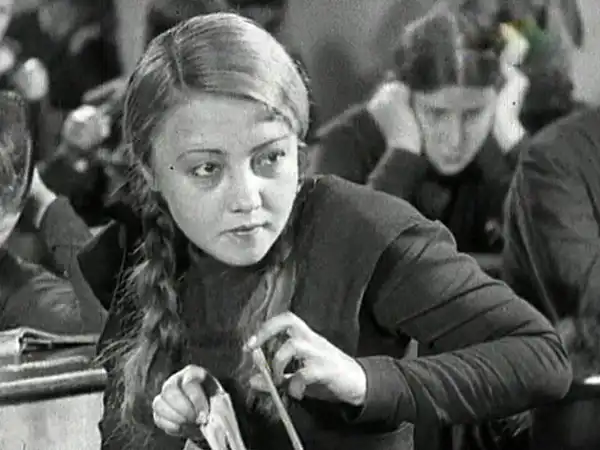
Vera Kholodnaya’s performance in “Dvoynaya zhizn” transcends mere acting; it is an immersive embodiment of human suffering and resilience. Her expressive eyes, often framed by a delicate sorrow, convey volumes without a single intertitle, speaking directly to the audience's soul. The subtle tremble of her hands, the slight downturn of her lips, the almost imperceptible flinching at a sudden sound – these are the brushstrokes of a master at work, revealing a profound internal turmoil. She makes us feel Elina’s internal conflict, the constant tightrope walk between her two identities. When she is on stage, her movements are fluid, confident, the epitome of her public persona, her posture radiating an untouchable grace. Yet, in moments of quiet reflection, or during clandestine meetings with Sergei, her face softens, her shoulders slump almost imperceptibly, revealing the vulnerable Anya beneath the polished exterior. This duality is not superficial; it is etched into her very being, a testament to Kholodnaya's profound understanding of her character's psychological landscape. Her ability to convey such complex emotions within the constraints of silent cinema, relying solely on physical expression and facial nuances, is nothing short of miraculous, cementing her status as an icon whose artistry continues to captivate and move viewers a century later.
The film’s visual aesthetic is quintessential silent Russian melodrama, utilizing stark contrasts and evocative symbolism to amplify its emotional impact. The opulent ballrooms and lavish theatrical sets where Elina performs stand in stark relief against the shadowy, clandestine meeting places of Sergei and his comrades, often depicted in grim, spartan surroundings. This visual dichotomy reinforces the central theme of “Dvoynaya zhizn” – the collision of light and shadow, public splendor and private squalor, artifice and harsh reality. The cinematography, while perhaps lacking the kinetic dynamism of some Western contemporaries, excels in its intimate close-ups, allowing Kholodnaya’s face to become the canvas for the narrative’s most poignant moments, capturing every flicker of emotion. The use of dramatic lighting to cast long, foreboding shadows or to highlight a single, tear-streaked face is particularly effective, drawing the audience deeper into Elina’s torment and foreshadowing her inevitable downfall. Costumes, too, play a crucial role, with Elina's extravagant gowns and ballet attire accentuating her public role, while simpler, almost stark clothing might hint at Anya's hidden self. The pacing, characteristic of the era, allows scenes to breathe, building suspense through lingering shots and deliberate gestures, rather than rapid-fire editing, inviting a contemplative engagement with the unfolding tragedy.
Beyond the personal tragedy, “Dvoynaya zhizn” offers subtle yet potent social commentary, reflecting the rigid societal structures and moral codes of pre-revolutionary Russia. It critiques the unforgiving nature of public opinion and the impossible expectations placed upon women, particularly those in the public eye. Elina's desperate attempt to build a new life is constantly undermined by a society unwilling to forgive or forget past transgressions, however minor or politically motivated her youthful actions may have been. The film implicitly questions the very notion of 'virtue' and 'vice,' asking whether a person's worth is defined solely by their past actions or by their present intentions and struggles. This thematic depth resonates with other films of the era exploring similar moral quandaries, though often from different cultural perspectives. For instance, while American films like “The Blindness of Virtue” or “The Victory of Virtue” might focus on the preservation of innocence and eventual moral triumph, “Dvoynaya zhizn” delves into the crushing weight of lost innocence and the perceived impossibility of true redemption in a judgmental world. There's a shared exploration of societal pressures, but the Russian sensibility here feels more fatalistic, less inclined towards a tidy, morally satisfying resolution, instead embracing a profound sense of predestined suffering and the enduring scars of the past. The societal hypocrisy it exposes, where outward appearances are paramount, feels timeless in its critique.
The film inexorably builds towards its devastating climax, set against the backdrop of one of Elina’s grandest performances. The dramatic irony is exquisite: as she embodies a character on stage, her own meticulously crafted persona is about to be violently torn asunder. The stage, once her sanctuary and the symbol of her new life, transforms into an arena where her two worlds violently collide. The revelation of her past, meticulously orchestrated by fate and perhaps a vengeful hand (Jeanne's subtle provocations reaching their apex), occurs with a brutal abruptness that shatters her fragile existence. Whether through a whispered accusation that carries across the hushed theatre, a damning piece of evidence publicly displayed, or a direct confrontation, Elina’s identity as Anya is laid bare for all to see. The ensuing scandal is swift and merciless, stripping her of her fame, her fiancé, and her carefully constructed future in a single, agonizing moment. Kholodnaya’s portrayal of this moment is heartbreaking, a descent from poised grace to utter despair that is almost unbearable to witness. It evokes the kind of public shaming and moral judgment seen in other melodramas of the era, where transgressions, once exposed, lead to inescapable ruin. One might draw a parallel to the inescapable societal traps explored in films like “The Lure”, though “Dvoynaya zhizn” imbues its tragedy with a distinct Russian soulfulness, a sense of predestined suffering and the profound weight of a past that can never truly be escaped. The roar of the crowd turning to gasps, then to condemnation, is a powerful, silent testament to her fall.
In its tragic denouement, “Dvoynaya zhizn” does not offer easy answers or convenient redemption. Instead, it leaves us with the profound, lingering sense of a life irrevocably altered, a soul forever scarred by the impossible demands of a double existence. Elina’s fate, whether it be self-sacrifice, forced exile, or a life of quiet desperation, serves as a powerful testament to the unforgiving nature of a society that prizes appearance over authenticity. The film’s lasting impact lies not just in its compelling narrative or its exquisite visual style, but in the indelible image of Vera Kholodnaya, whose luminous presence elevates the material into something truly transcendent. Her ability to convey such a complex emotional journey with such grace and conviction ensures that “Dvoynaya zhizn” remains a cornerstone of silent Russian cinema and a poignant reminder of the power of human drama. Like the fateful narratives in “Satana” or the moral dilemmas in “The Wrath of the Gods”, it explores the consequences of human choices, but with a unique emphasis on internal conflict and the devastating toll of societal judgment. It's a film that resonates across generations, a timeless meditation on the masks we wear and the truths we desperately try to conceal, a testament to the enduring power of silent storytelling.
For enthusiasts of early cinema and admirers of profound human drama, “Dvoynaya zhizn” is an essential viewing experience. It is a film that demands empathy, offering a glimpse into the internal struggles that transcend time and culture, proving that the human heart's complexities are universally understood. Vera Kholodnaya, in her tragically short but brilliant career, cemented her legacy with performances like this, proving that the silent screen could articulate the deepest human emotions with an eloquence that often eludes spoken dialogue. The film is a stark, beautiful, and ultimately heartbreaking exploration of what it means to live a life cleaved in two, forever caught between the person one pretends to be and the person one truly is. Its rich tapestry of themes – identity, love, betrayal, and the relentless march of fate – continues to captivate and provoke thought, solidifying its place as a truly significant work in the pantheon of world cinema. The enduring power of “Dvoynaya zhizn” lies in its universal appeal to the human condition, an appeal that remains undiminished by the passage of a century, inviting new audiences to ponder the true cost of a double life.
IMDb —
1922
Community
Log in to comment.