DbcultAccessing Vault...
Cult Review
Senior Film Conservator
No, not for most people. Dydsdragonen is a film for a very specific audience: those with a genuine interest in early Danish silent cinema and the subtle art of performance from an era long past. If you're looking for narrative propulsion or sophisticated character arcs, you will find it a tedious experience.
This film works because it offers a stark, unvarnished look at acting conventions and directorial choices from 1927, providing a direct contrast to later, more dynamic silent productions. It fails because its dramatic stakes are low, its pacing glacial, and its characterizations broad even by contemporary standards. You should watch it if you possess an academic curiosity for the mechanics of early filmmaking and a high tolerance for static camera work and theatrical gestures.
Watching Dydsdragonen is less like experiencing a story and more like observing a series of carefully composed tableaux. The camera, for the most part, remains fixed, observing scenes as if they were staged on a proscenium. This isn't necessarily a flaw in itself – early cinema often embraced such an approach – but here, it lends a suffocating stillness to the proceedings. Character entrances and exits are deliberate, almost ritualistic, and the emotional register is signaled through grand, often exaggerated gestures that struggle to translate genuine feeling across the decades.
The film’s central conflict, Else's struggle against Baron von Falk's machinations, unfolds with a slowness that tests patience. Valdemar Andersen, as writer, seems content to let scenes play out at length, often without advancing the plot significantly. A good example is the extended sequence where the Baron first attempts to charm Else at the village fair. The glances, the lingering smiles, the overly polite conversations via intertitles – it all stretches far beyond what is required to establish his intent or her initial reaction. We understand the dynamic quickly; the film doesn't.
Olga Jensen, as Else, embodies a kind of quiet resilience that feels genuinely rooted. She doesn't overplay her virtue; instead, it's a settled aspect of her demeanor. Her subtle shifts in expression, from initial flattered naiveté to a dawning suspicion, are among the film's most compelling elements. She manages to convey an inner life even when the script and direction offer little room for nuance. It's a stark contrast to Peter Malberg’s Baron, whose villainy is painted with a brush so broad it verges on caricature. His sneers and furtive glances become predictable quickly, robbing his character of any genuine menace.
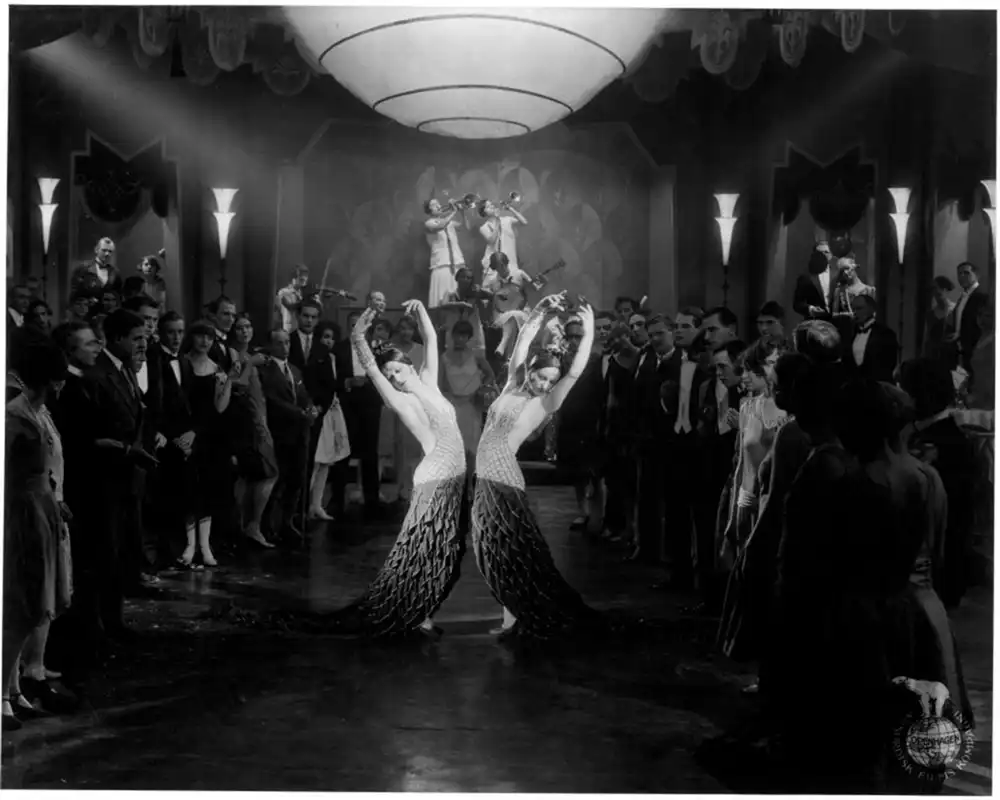
The film's commitment to its 'virtue' theme often feels more like a sermon than a drama, especially in its resolution. The Baron's downfall feels less earned by Else's agency and more like an inevitable moral lesson delivered by an unseen hand. It’s dramatically inert.
The supporting cast, particularly Rasmus Christiansen and Harry Komdrup, oscillate between serviceable and stiff. Their reactions to the central drama are often delayed, or so overtly theatrical they feel disconnected from the scene. The village gossips, a staple of such moral tales, are portrayed with an almost cartoonish glee, their whispers and pointing hands serving as blunt instruments to underscore societal judgment rather than organically contributing to the tension. This lack of organic integration is a consistent issue.
The cinematography, while technically competent for its era, rarely rises above functional. Shots are framed to capture the entire stage, as it were, with little experimentation in close-ups or dynamic angles. This contributes heavily to the film's static feel. We are observers, never truly immersed. There are moments, particularly in the exterior shots of the Danish countryside, where a certain rustic beauty shines through, but these are fleeting and don't contribute much to the narrative or emotional landscape.
Pacing is the film's most significant hurdle. It moves at a crawl. Scenes linger long after their point has been made, and the dramatic beats are spaced so far apart that any building tension dissipates. Modern viewers, accustomed to even moderately paced silent films like The Haunted House (1921) or the more dynamic European productions of the mid-20s, will struggle with this. The film expects a level of contemplative engagement that few contemporary audiences can muster for a story this thin.
The tonal shifts are also jarring. Moments intended for lightheartedness, like a village dance, feel strangely muted, almost somber, quickly transitioning back to the solemnity of Else's predicament. This unevenness prevents the film from establishing a consistent mood, leaving the viewer unsure whether to take the drama seriously or to view it as a quaint period piece. It never quite commits.
Dydsdragonen is a challenging watch. While it holds value for those deeply invested in silent cinema's evolution, particularly within a specific national context, it offers little to the casual viewer. Its narrative simplicity, coupled with a deliberate, almost ponderous pace, makes it feel less like a forgotten classic and more like a preserved artifact. It's a film to be studied, perhaps, but rarely enjoyed on its own merits as a piece of engaging storytelling. For most, an evening spent with a more dynamic contemporary like The Man with the Limp (1921) would be far more rewarding.
IMDb —
1931
Community
Log in to comment.