DbcultAccessing Vault...
Cult Review
Senior Film Conservator
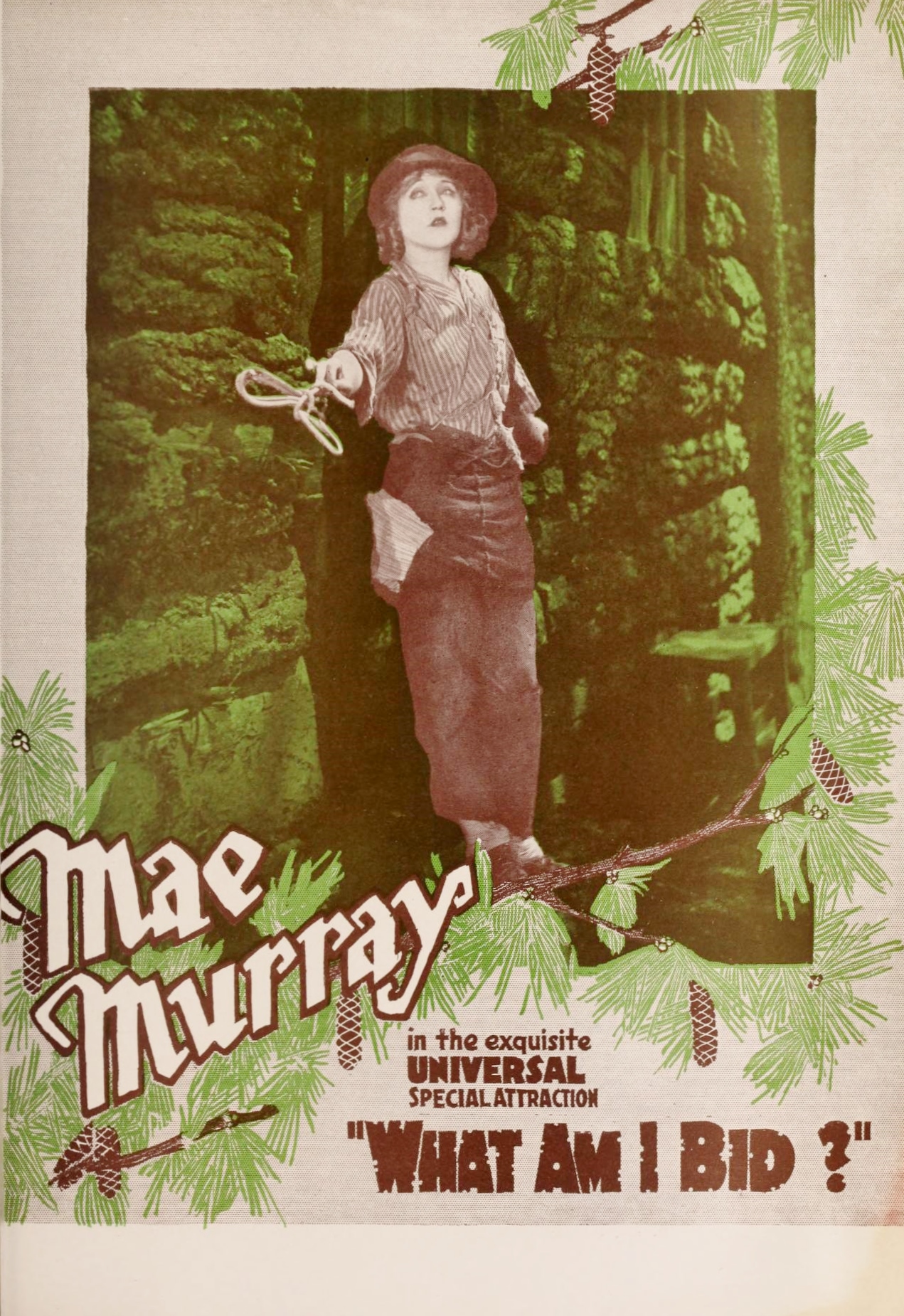
The North Woods mountains don't merely serve as backdrop in What Am I Bid?—they function as a suffocating psychological prison. Director John B. Clymer establishes this feral microcosm through lingering shots of gnarled pines clawing at leaden skies, the camera often framing Betty (Mae Murray) as a minuscule figure against vast, indifferent landscapes. This visual language creates an extraordinary tension between natural grandeur and human pettiness, where villagers' judgmental stares carry the weight of geological forces. Cinematographer Jacob Kull lenses the settlement as a claustrophobic cluster of leaning structures, their very architecture seeming to conspire against the Yarnell cabin perched precariously on society's edge. The saloon emerges as a den of predatory shadows, its smoky interiors contrasting violently with Betty's sun-dappled meadow where her lamb grazes—a sanctuary soon violated.
"Murray communicates entire soliloquies through vertebral tension alone—a straightened spine when facing villagers, a collapsed curvature when cradling her lamb—creating an embodied language of oppression."
Mae Murray's Betty operates as a study in contained devastation. Watch how her trembling fingers—visible even in medium shots—betray stoicism when entering the saloon, or how her eyes fixate slightly above villagers' shoulders to avoid their contempt. The lamb isn't mere prop but an extension of her psyche; their communion conveyed through nestling gestures that foreshadow unbearable sacrifice. Joseph W. Girard's Abner Grimp embodies capitalist rot, his oil-slick charm evaporating into reptilian entitlement when denied "property." His introduction—slowly wiping a glass while tracking Betty through the bar—establishes him as a spider in whiskey-stained webs. Ralph Graves' McGibbon brings unexpected nuance to the hero archetype, his initial bureaucratic stiffness melting during convalescence scenes where vulnerability surfaces through trembling hands reaching for broth.
Most chilling is John Cook's Dark Cloud, a character whose savage depiction reflects period bigotries yet fascinates through paradoxical autonomy. Cook invests the role with unsettling stillness—notice how he materializes at forest edges like an embodied nightmare, movements economical yet telegraphing lethal potential. His dynamic with Grimp suggests mercenary pragmatism rather than subservience, particularly when refusing to finish off McGibbon after the beating. The violence here isn't glamorized but clumsy and exhausting. McGibbon's rescue attempt devolves into a desperate scuffle where combatants stumble over roots, their brutality underscored by soundless gasps and the sickening thud of flesh against rock.
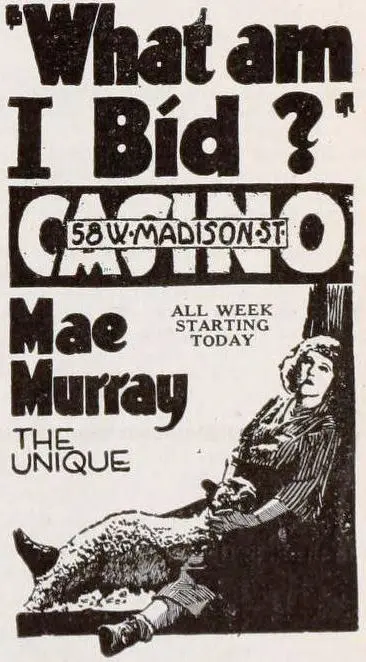
The film's most transgressive power emerges through its nested transactions. John Yarnell's signing away paternal rights with whiskey-stained fingers—framed in grotesque close-up—parodies contractual capitalism, reducing human value to liquid currency. The auction sequence weaponizes communal conformity, transforming neighbors into complicit bidders through chilling crowd shots where faces blur into a single hungry entity. Production designer William Haynes visualizes this moral decay through Betty's costuming: her simple dress progressively fraying while Grimp's garish waistcoats scream corruption. Yet the narrative pivots on Betty's counter-economy when she offers her lamb not for gain but healing. This sacrifice resonates beyond melodrama into mythic territory, paralleling The Secret of the Storm Country's maternal sacrifices while anticipating the gut-wrenching choices in V ognyakh shantazha.
Director Clymer stages the lamb slaughter with astonishing restraint. We see Betty's resolve solidify in a single tearless close-up, then the deed occurs offscreen—audience imagination conjuring horrors far beyond what 1919 cameras could show. The resulting broth scene becomes transcendent: McGibbon's comprehension dawning as steam rises between them, Murray's face reflecting both loss and fierce determination. This sequence dismantles the era's damsel-in-distress tropes, positioning Betty as active agent in her liberation narrative. Her nursing of McGibbon reconstructs his body as weapon against patriarchy, making the climactic fight an extension of her will.
Cinematographer Kull employs radical techniques for 1919, notably during McGibbon's near-fatal beating. The camera adopts his perspective—sky tilting violently, Dark Cloud's looming figure fragmenting into double exposure—years before German Expressionism popularized subjective distortion. Intertitles function as ironic counterpoint; Grimp's "The law says she's mine" appears over Betty's cage-like fingers gripping the auction block. Symbolic motifs accumulate power: the lamb's bell echoing in empty forests after death, shattered glass mirroring societal fracture during the final brawl. These techniques connect What Am I Bid? to European innovators like Die Herrin der Welt 4. Teil while anticipating the psychological rawness of The Gates of Doom.
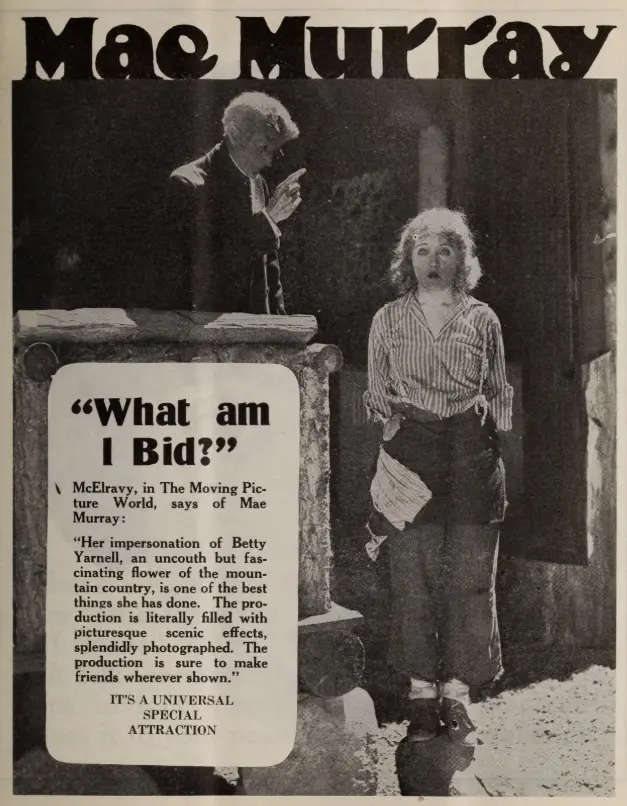
The North Woods themselves evolve through lighting transitions—dawn's hope crushed beneath storm-laden skies after Betty's auction announcement, then emerging triumphant in golden-hour climax. Restoration comparisons reveal how original tints deepened this symbolism: cooler blues for isolation sequences versus hellish amber during saloon scenes. Contemporary prints often flatten these choices, muting what was a chromatic narrative device rivaling The Spreading Dawn's visual poetry.
Modern eyes cannot ignore the regressive portrayal of Dark Cloud—a composite of period prejudices blending Noble Savage and Brutal Primitive tropes. Yet within this framework, Cook's performance hints at fascinating subtext. Observe how he lingers after Grimp's defeat, watching McGibbon and Betty depart with ambiguous stillness. Is it resentment? Recognition of another exploited soul? The film's refusal to kill or punish him suggests complexity beyond villainy. Such nuances connect to broader tensions in frontier narratives like Westward Ho! while clashing with the moral certainty of The Law's Outlaw.
Murray's performance transcends the era's gestural conventions. Her silent scream when discovering McGibbon's battered body—jaw clenched, neck tendons straining without sound—remains devastating. She weaponizes fragility, making Betty's resilience more shocking when she butchers her lamb or later spits in Grimp's face during the auction. This arc from victimhood to defiance critiques passive heroines flooding 1919 screens, particularly when contrasted against Gertrude Astor's wasted potential as a society woman reduced to decorative concern. The screenplay by Harvey F. Thew adapts frontier pulp into visceral emotional cartography, exploring debts that can't be repaid and sacrifices that rewrite destinies.
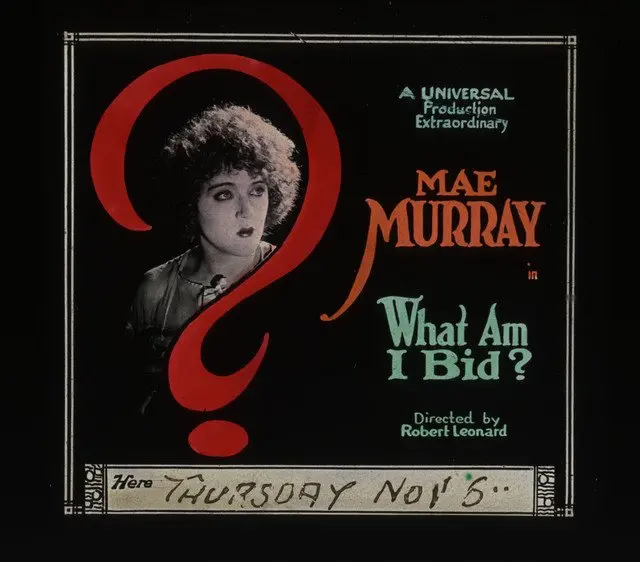
"The auction block becomes cinema's most chilling altar—where community sanctifies exploitation through collective silence."
While sharing DNA with damsel narratives like The Darling of Paris, the film subverts expectations through Betty's agency. Her nursing of McGibbon isn't romanticized domesticity but strategic rebuilding of an ally. The broth sacrifice operates on pagan levels of symbolism—innocence slaughtered to empower resistance—echoing later masterpieces like Dreyer's Day of Wrath. Even the resolution denies easy comfort; Betty and McGibbon's departure feels less like happy ending than desperate escape, their wagon swallowed by forests as shadows lengthen.
What Am I Bid? distinguishes itself from polished competitors through grubby authenticity. Saloon floors look authentically sticky, villagers' clothing bears visible mending, and even Murray's beauty gets deliberately obscured beneath dirt smudges. This tactile approach grounds the melodrama, making Betty's suffering feel less manufactured than in glossier productions like American Maid. Location shooting immerses actors in physical hardship—watch how Graves genuinely shivers during creek scenes, or how Murray's breath mists in dawn air. Such details accumulate into sensory storytelling that bypasses intellectual defenses.
The film's restoration history proves nearly as dramatic as its plot. Long considered lost aside from fragmented reels, a near-complete print surfaced in 1987 inside a Norwegian fisherman's trunk—water damage creating haunting veils across pivotal scenes. These imperfections now feel eerily appropriate, the decay mirroring Betty's tattered world. Modern viewers should seek the 2017 Library of Congress restoration where digital tools respectfully stabilize without erasing history's scars, preserving the grain structure that gives North Woods sequences their textural weight.
While lesser-known than Murray's flapper vehicles, What Am I Bid? represents silent melodrama at its most psychologically astute. Its exploration of transactional dehumanization anticipates Capra's The People vs. John Doe by decades, while Betty's lamb sacrifice finds disturbing resonance in Fate's Boomerang's moral compromises. The auction sequence's communal complicity directly influences later examinations of mob psychology like Love and Hate.
Ultimately, the film triumphs through Murray's metamorphic performance and Clymer's unflinching gaze at exploitation's mechanics. It asks uncomfortable questions about worth and belonging that still resonate: What debts bind us? When does sacrifice become empowerment? And in civilization's outermost edges, who determines human value? These queries linger like North Woods mist long after McGibbon's fists fall silent—a testament to cinema's power to haunt across centuries.
IMDb 6.5
1924
Community
Log in to comment.