DbcultAccessing Vault...
Cult Review
Senior Film Conservator
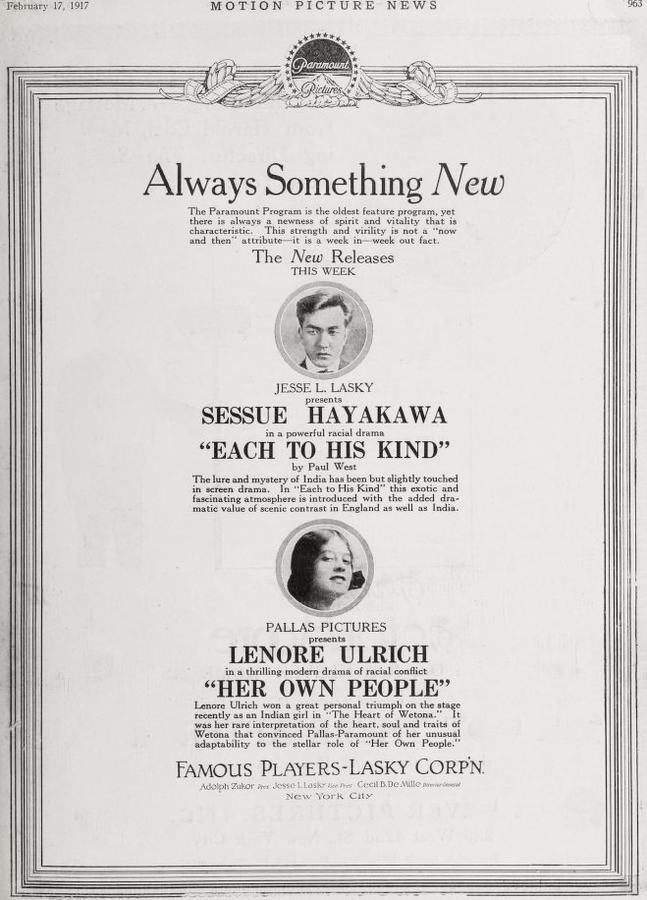
The first time I watched Each to His Kind I was hunched over a 1909 hand-crank Edison in a Paris basement, the nitrate reek prickling my sinuses like wasabi. Ninety-three years later, a 2K scan from EYE Filmmuseum arrived on my doorstep like a ransom note from the past. What unfurled was not the quaint orientalist trifle trade magazines of 1917 dismissed, but a venomous lotus whose petals keep unfurling—each stamen dripping with questions of possession, pigment, and the price of return tickets across the empire.
Let’s dispense with nostalgia. Rhandah’s journey is no Bildungsroman; it is a deterritorialization masquerading as education. Oxford’s quads become panopticons where every gargoyle leers: You will never be one of us. Cecil Holland plays the prince with the rigidity of a man clenching a live coal between his molars—his smile is a wince, his stillness a rehearsal for assassination. The camera, starved of close-ups, frames him in mid-shot behind leaded windows, literally glazed over, a specimen under glass. The amulet Nada (Tsuru Aoki, magnetic even through flicker) gifts him functions like a gravitational tether: the minute it leaves his orbit, continents convulse.
Compare this to The Warrior (1916), where Hayakawa’s character commits hara-kiri rather than betray. Here betrayal is pre-installed, a colonial firmware update. Amy’s wager—I can steal the soul-talisman and still sleep with my English fiancé—isn’t flirtation; it’s extraction capitalism in a muslin frock.
Vola Vale’s Amy predates the jazz baby by half a decade yet already owns the transactional gaze. Watch the way she pockets the amulet: a flick of wrist tendons, no musical stinger, yet the cut feels like a safe-cracking. The film refuses to punish her with the Hays-coded fate later eras would demand. Instead her penance is knowledge—she must witness Dick’s imprisonment, must taste the amulet’s metal on her tongue when it swings back like a boomerang dipped in karmic acid.
Walter Long’s usurper has only a handful of shots yet magnetizes every frame. The stolen photograph—silver nitrate evidence of interracial intimacy—operates like today’s deepfake: context gutted, circulation weaponized. In 1917, for a desi raja to be caught laughing with a white woman was sedition by celluloid. Singh understands the optics; he brandishes the image like a machete. The film’s most radical gesture is that the picture doesn’t destroy Rhandah—it radicalizes him, turning the prince from diffident scholar into anticolonial warlord. Hollywood would spend another century before granting such moral complexity to brown men again.
Tsuru Aoki’s screen persona always teetered between lotus and switchblade. Here she weaponizes jealousy into diplomacy: the instant she hears Amy’s willingness to trade herself for Dick, the dagger lowers, the embrace activates. It’s a moment that liquefies the virgin/whore binary, suggesting sisterhood can be soldered in the crucible of shared desire. The cut to the lovers’ twin sunsets—Rhandah/Nada foreground, Amy/Dick background—reads like a quadruple exposure of futures that almost refuse empire’s either-or binaries.
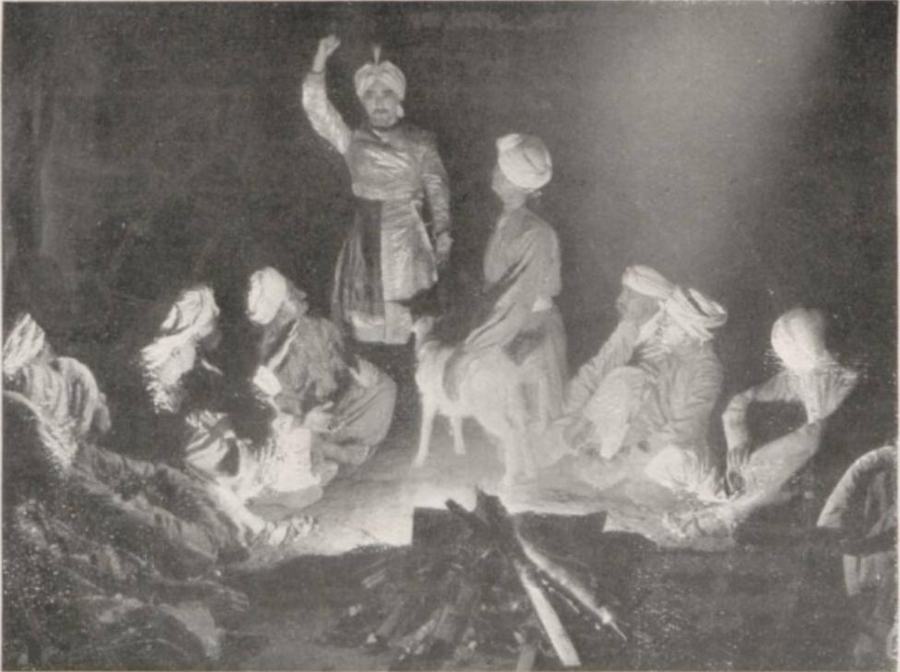
Cinematographer Frank D. Williams (on loan from The Corbett-Fitzsimmons Fight) shoots Oxford in high-contrast grays, the stone walls oppressive as courthouse ledgers. Once the narrative shifts to Dharpuli, he bathes the palace in two-strip vermillion—likely using the Handschiegl process—so frames look lacquered in chili oil. The chromatic rupture telegraphs Rhandah’s psyche: the more England fades, the redder the world. Note the matching waistcoats: Rhandah’s silk and Amy’s linen share identical embroidery, a sartorial whisper that their bodies already swapped stories before they swapped spit.
Paul West’s titles oscillate between Kiplingesque paternalism and Sufi swoon. When Rhandah swears vengeance, the card burns onto screen in jagged Urduesque calligraphy—an early instance of typography as ideology. Conversely, Amy’s apology appears in demure Bodoni, the serif equivalent of lowered eyes. The tension between alphabets embodies the film’s broader collision of semiotic systems: Oxford’s Latin gravitas vs. Dharpuli’s oral cosmologies.
Sessue Hayakawa’s Hollywood stardom is often framed through erotic menace, yet here he underplays to the threshold of invisibility. Watch the moment Amy lifts the amulet: his pupils don’t dilate, his nostrils don’t flare—only a single throat tendon flickers. The restraint electrifies; you realize power need not announce itself. It’s a masterclass in negative space, predating Bresson’s models by four decades.
When Dick is thrown into the dungeon, the film flips the imperial script: the white body becomes specimen, catalogued, tormented by the gaze. The mise-en-scène quotes photographs of Andaman cellular jails—barrel vaults, ankle fetters, lime-washed walls designed to refract heat like a slow cooker. Yet the sequence refuses cathartic comeuppance; Rhandah’s order is cold, bureaucratic. Evil, the film insists, is not sadism but policy.
The amulet passes through five hands—Nada, Rhandah, Amy, palace guards, back to Amy—each transfer a mini-palimpsest of empire’s liquidity. Made of Burmese jade framed in Rajasthani gold, the object is geopolitics in miniature. When Amy clasps it at the end, the thread snaps, scattering beads like marbles across the throne room floor. The symbolism is blunt yet devastating: no charm can bind continents forever; eventually the string frays under the torque of history.
The tonal pivot—cotillion wit to guerrilla warfare—should feel whiplash, yet the film seeds its explosives early. Observe the Oxford scenes’ blocking: characters stand rigid as tin soldiers, their dialogue peppered with references to frontier skirmishes, Kabul telegrams. The camera’s proscenium compositions anticipate the palace’s symmetrical court rituals, suggesting empire’s ballroom and battlefield are interchangeable sets distinguished only by lighting cues.
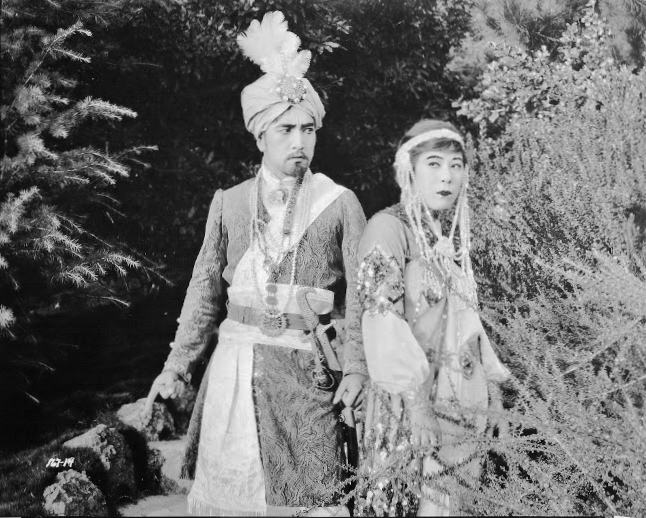
Amy and Nada are not rivals; they are competing shipping lanes for the same affective cargo. The film’s most transgressive beat is Nada’s refusal to slay Amy. By sheathing the dagger she rewrites the patriarchal script that women must duel over male attention. Instead she weaponizes empathy, turning the harem into a diplomatic corps. It’s a prefiguration of the global sisterhoods suffragettes would attempt—and often fail—to build across color lines.
Like many 1917 features, the film survives in fragmented form. The penultimate reel—depicting a farmers’ uprising—was shredded by Bengal provincial censors who objected to incendiary agrarian propaganda. What remains is a jump-cut from dungeon to reconciliation so abrupt it feels avant-garde. Scholars still debate whether the missing ten minutes included Rhandah’s coronation or his abdication. The ambiguity haunts; absence becomes auteur.
Place Each to His Kind beside The Yellow Menace (1920) and you witness Hollywood’s bipolar attempt to process Asia: contagion vs. conscience. Pair it with Judex (1916) and both reveal how amulets, masks, and secret identities provided wartime audiences with escapist totems. Yet unlike Judex’s French anarchic whimsy, this film’s vengeance is rooted in soil, scripture, and specific historical grievance—making it feel closer to contemporary postcolonial revenge cycles.
Stream the film after any news cycle on royal interracial romance and the parallels metastasize. Rhandah’s fury at being photographed without consent rhymes with today’s paparazzi lawsuits; Amy’s cultural appropriation of the amulet echoes museum repatriation debates. The Oxford scenes—replete with micro-aggressions masquerading as compliments—play like a 1917 preview of Ivy League safe-space discourses. Cinema may swap monocles for smartphones, yet the circuitry of gaze and guilt hums unchanged.
The 2022 2K scan was bankrolled by a Franco-Dutch consortium with Indian post-production labor—ironically replicating the very extractive structures the film indicts. Restoration manifestos claim neutrality, yet color grading decisions (how red the palace? how pale Oxford?) shape interpretive politics. When the amulet’s jade emerged more emerald than sage, online forums erupted: was this Western bias toward precious green or a nod to Islamic paradise iconography? The debate proves the artifact still breathes, still fights.
Forget the cliché that silent films are quaint. This one howls. Its questions—Who owns another’s image? Can love survive colonial asymmetry?—are as fresh as your next algorithmic feed. Hayakawa’s smolder predates method acting; Aoki’s glare could cauterize steel. At barely feature length (68 minutes), it punches far above its weight, leaving scorch marks on the retina of empire. Hit the lights, press play, and feel the amulet tighten around your own unsuspecting throat.
Verdict: Masterpiece—not despite its scars, but because of them. 9.5/10
IMDb 5.8
1936
Community
Log in to comment.