DbcultAccessing Vault...
5.1/10
Senior Film Conservator
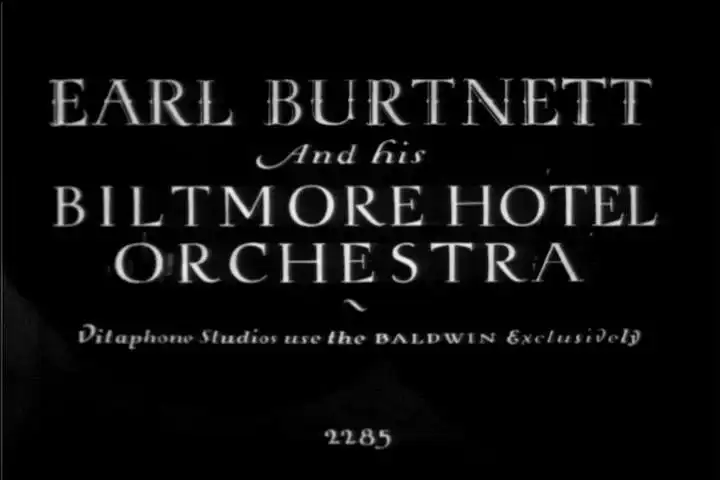
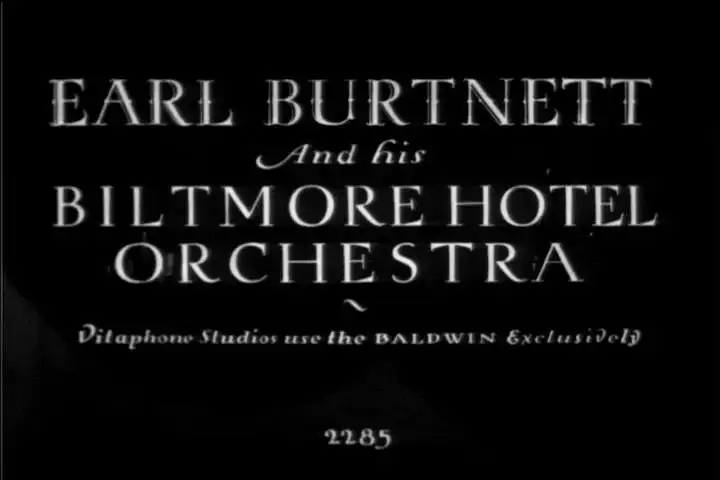
A definitive 5.1/10 rating for a film that redefined the boundaries of cult cinema. Earl Burtnett and His Biltmore Hotel Orchestra remains a cornerstone of transgressive art.
Okay, let's be real up front. If you're looking for a gripping plot or deep character arcs, you should probably skip Earl Burtnett and His Biltmore Hotel Orchestra. This isn't for a casual movie night. But for anyone fascinated by the very birth of sound in cinema, or just wants to peek into 1928, this short is a genuine curiosity. History buffs and music archaeologists, come on in. Everyone else? You'll probably be bored stiff. 😴
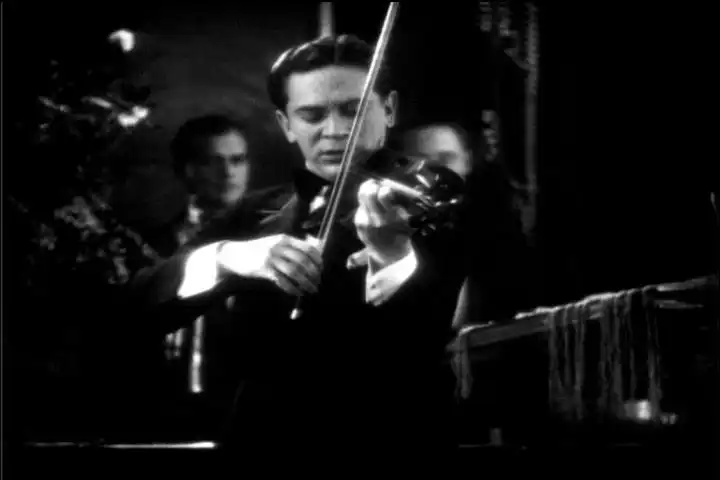
The print itself, well, it's seen better days, as you'd expect. Lots of grain, some flickering. But it all kinda adds to the antique charm, doesn't it? Like watching a really old home movie from a great-grandparent.
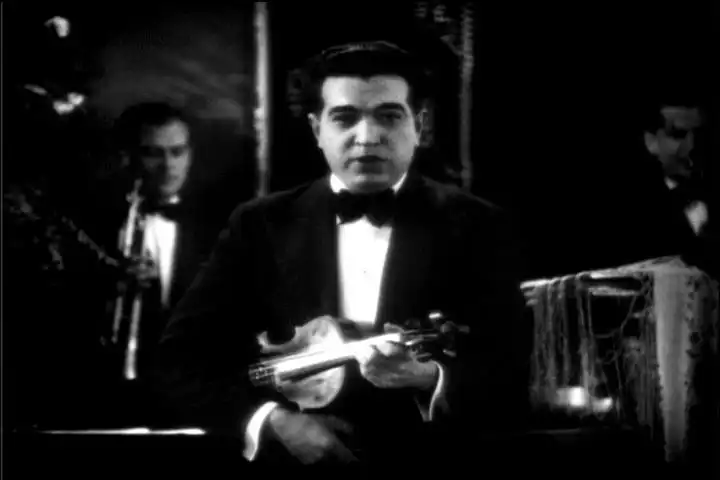
Burtnett himself, conducting, he's got this quiet energy. Not super showy, just focused. You see the musicians, all neatly dressed, doing their thing. They're not putting on a wild, expressive performance; it's very proper for the era, I guess.
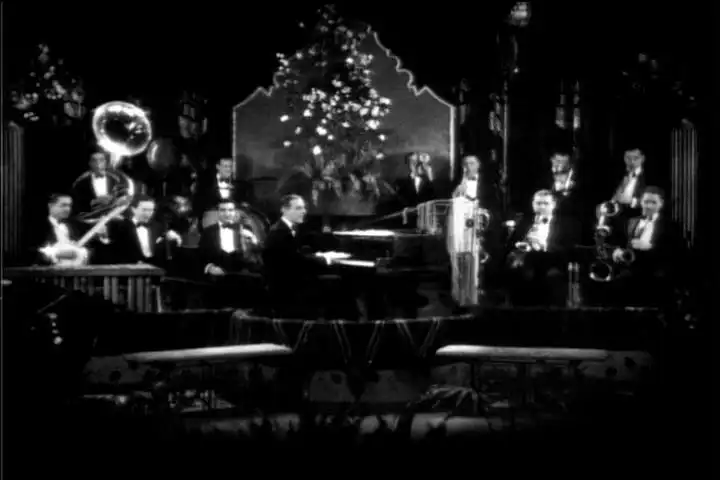
They kick off with 'Trees'. It’s a classic, sure, but hearing it played like this, by a big band, it just sounds different. More lush, somehow. Then 'Three O'Clock in the Morning' hits, and you can almost imagine people dancing to it in a ballroom, even if the picture itself is just a static shot of the band.
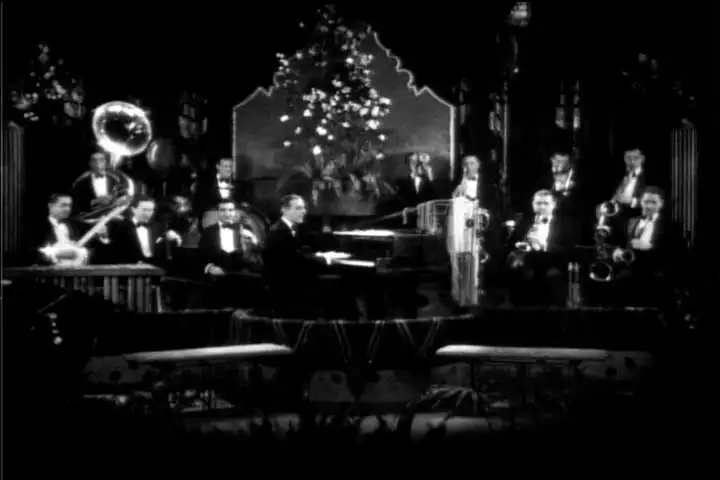
The sound itself is the real star here. It's a bit crackly, compressed, like you're listening through a very old radio. But it *is* sound! In 1928, that must have felt like magic. You hear the brass, the strings, the drums, all together. It's a miracle, really.
There’s a shot where the camera kinda pans a tiny bit. Just enough to catch a different section of the orchestra for a moment. It’s barely noticeable, but it’s there.
Also, the guy playing the banjo in the background, he’s just *so* into it. You see his face light up, a real joy there. Little moments like that make it feel human, not just a recording.
Each song just... plays out. No fancy cuts, no quick edits. It just lets the music breathe, maybe a little too much for modern tastes. Some of the silences between notes feel a tad long, you know? Like they were just letting the recording equipment catch up.
This isn't trying to be anything grand. It's just a performance. A direct, no-frills presentation of music. No story, no character drama, nothing. And in a way, that's what makes it kinda pure. It’s a snapshot.
You wonder what these musicians went on to do. Did they stay with Burtnett? Did they get famous? Or were they just working musicians, happy to be on screen for a moment? It kinda makes you think about all the unsung folks behind the scenes in early Hollywood. 🤔
Community
Log in to comment.