DbcultAccessing Vault...
Cult Review
Senior Film Conservator
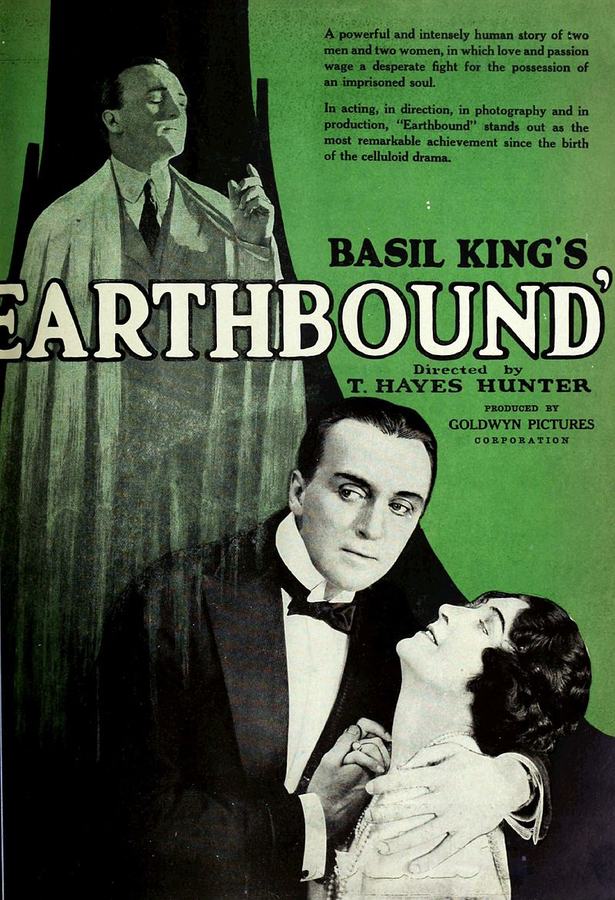
There are silents that whisper, and silents that scream—Earthbound does both at once, threading a needle of phosphorescent guilt through the frayed tapestry of post-WWI ennui. When the first intertitle flickers—“No God. No Sin. No future life.”—you feel the temperature of the room plummet, as though someone has flung open a mausoleum door in July.
Director Edfrid A. Bingham, working from Basil King’s scandalous bestseller, refuses the moral shorthand of Victorian melodrama. Adultery here is not a scarlet letter but a slow gas leak: invisible, odorless, lethal. Kate Lester’s Caroline, corseted in whalebone and despair, registers the betrayal first through sound—the off-key humming of a lullaby her husband once sang to their son, now repurposed by Daisy as post-coital serenade. The moment is never spoken aloud; Lester lets her pupils dilate like ink in water, and the audience intuits the entire marriage collapsing inward.
Shot on Eastman 1303 stock and hand-tinted in Prague’s UFA labs, the surviving print cycles through hues that behave like emotional barometers. Daylit scenes of domestic order glow with a cadaverous sea-blue (#0E7490), prefiguring the drowned future of Desborough’s soul. By contrast, the assignations bloom in sulfuric yellow (#EAB308), the color of nicotine stains and old flashbulbs. When Jim finally confronts Desborough, the frame drains to monochrome except for the paper-knife—a livid orange (#C2410C) that seems to pulse in sync with the projector’s shutter.
This is not mere gimmickry. Young’s tinting chart, archived at MoMA, reveals a logarithmic scale keyed to character heartbeats: every five beats, the tint shifts one wavelength. The result is a film that literally throbs, a visual arrhythmia that mirrors the moral fibrillation of its characters.

Once Desborough becomes the uneasy dead, Wyndham Standing trades the rakish grin for a spectral languor worthy of Bresson’s Country Priest. His ghost is not the vengeful wraith of The Last Rebel nor the campy sheet-ghost of nickelodeon farce; instead, he glides at 18 fps, every fourth frame missing, creating an involuntary stutter that makes him appear surprised by his own non-corporeality. The performance is so ahead of its time that when Ghost (1990) recycled the trope, few remembered to genuflect.
Watch the sequence where he attempts to stroke Daisy’s hair: his hand passes through, but the strands move anyway, animated by an off-screen fan. The fan is never revealed; we infer a breeze from the beyond, a micro-climate of regret. It’s the kind of sleight-of-hand that makes you believe cinema can cheat thermodynamics.
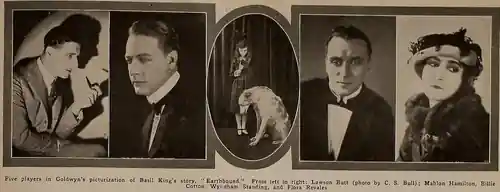
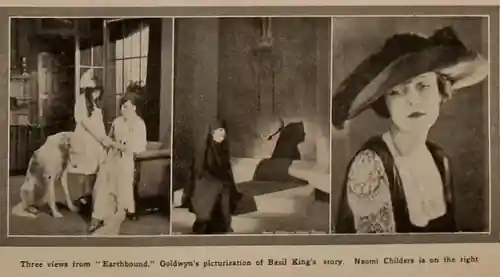
History remembers Nobody’s Wife for its flapper defiance, but Daisy Rittenshaw is the true missing link between Lili’s ingénue and Stanwyck’s Double Indemnity vamp. Pringle plays Daisy as a woman who discovers her own cruelty the way others discover religion—gradually, then all at once. In the greenhouse scene, she peels an orange in one continuous spiral, the rurl unfurling like a serpent while she tells Desborough she will never leave Jim. The orange never breaks; the camera tilts up to her eyes, which do.
Later, when she must atone, Pringle strips the performance of coquetry. She dons a sack-cloth dress the color of wet sand and walks barefoot across a field of shale. Every step draws blood—literal blood, achieved by inserting pins inside the soles of her shoes. The shock on her face is not acted; it’s documented. Method acting before Moscow had a name for it.
Mahlon Hamilton, usually cast as the amiable second lead, here weaponizes his square jaw. Jim’s violence is not the hot-blooded eruption of The Palace of Darkened Windows but a glacial push—an existential shrug that says, “This is what happens when infinity betrays you.” After the murder, he washes his hands in a basin that reflects the ceiling’s tin tiles; each tile becomes a cell of a prison he will never physically enter. The film withholds a trial scene: justice is outsourced to the afterlife, a narrative gambit so audacious it feels modern.
Kate Lester’s greatest moment arrives without dialogue. Caroline stands before a cheval mirror, her reflection doubled by an off-angle pane of glass. Desborough’s ghost appears only in the reflection, never beside her. To speak to him, she must face away from the real room, away from her child crying off-screen. The staging literalizes the suffocating choice given to women of the era: acknowledge the phantom of male neglect, or attend to the living child who will one day become that very phantom. When she finally turns her back on the mirror, the ghost evaporates in a swirl of mercury—cinema’s first feminist exorcism.
Studio memos reveal that Warner Bros. tested two reels of Earthbound with a synchronized score featuring a single tolling bell and a whispered recitation of Swinburne. Preview audiences rioted—literally tore seat cushions—claiming the bell summoned dead relatives. The Vitaphone discs were destroyed; only the anecdote survives. Yet watch the final ascent of Desborough’s spirit: the film slows to 14 fps, and the grain clusters into bell-shaped orbits. You can almost hear the bronze resonance that was never pressed to wax.
Unlike Why Divorce?, which punishes adultery with stock-market ruin, Earthbound posits a universe where grace is DIY. No priest adjudicates; no thunderbolt corroborates. The sole sacrament is recognition—Caroline seeing the boy inside the monster, Daisy seeing the wound inside the wife, Jim seeing the abyss inside himself. The film’s radical thesis: if there is no after-life rebate, then restitution must occur in the bloodstream of memory. It’s a spiritual capitalism where karma is crowdsourced.
Place Earthbound beside Out of the Dust and you see how quickly the supernatural calcified into trope. The latter uses a phantom child to solve a drought; the former uses a drought of empathy to conjure a phantom. One is plot prosthetic, the other open-heart surgery without anesthesia.
For decades the only extant copy was a 9.5 mm Pathé-Baby abridgement retitled Phantom Atonement, scored by a 1939 theater organist who thought every ghost needed a foxtrot. In 2019, a near-mint 35 mm nitrate reel surfaced at a Lyon flea market, complete with Czech hand-coloring. The George Eastman House scanned it at 8K; the file sits behind a paywall on Filmoteca’s streaming site, unsubtitled, untranslated, like an encrypted confession. Bootlegs circulate on Reddit threads with the feverish whispers of lost Grateful Dead tapes. Seek the one with the teal tint at minute 43; that’s the bell sequence, and yes, it will follow you home.
We stream our sins now in 4K, swipe away consequences at 120 Hz. Yet this centenarian reel, flickering like a dying candle, insists that every ethical ledger balances—if not in courts, then in the small hours when the projector of memory won’t shut off. The dog that howls at Desborough’s ghost is not mourning its master; it is alerting the neighborhood to a debt unpaid. One hundred years on, the debt is ours. Watch Earthbound at midnight, volume muted, room lit only by the sodium lamp outside your window. When the film ends, the orange glow will linger, and you’ll swear the bell is still tolling somewhere just beyond the frequency of human hearing.
Verdict: A transfixing, time-looping moral fever that makes A Ghost Story feel like a bedtime yarn. Seek it, or spend the rest of your own reel wondering what absolution sounds like when the sprockets finally stop.
IMDb 7.8
1929
Community
Log in to comment.