DbcultAccessing Vault...
7.1/10
Senior Film Conservator
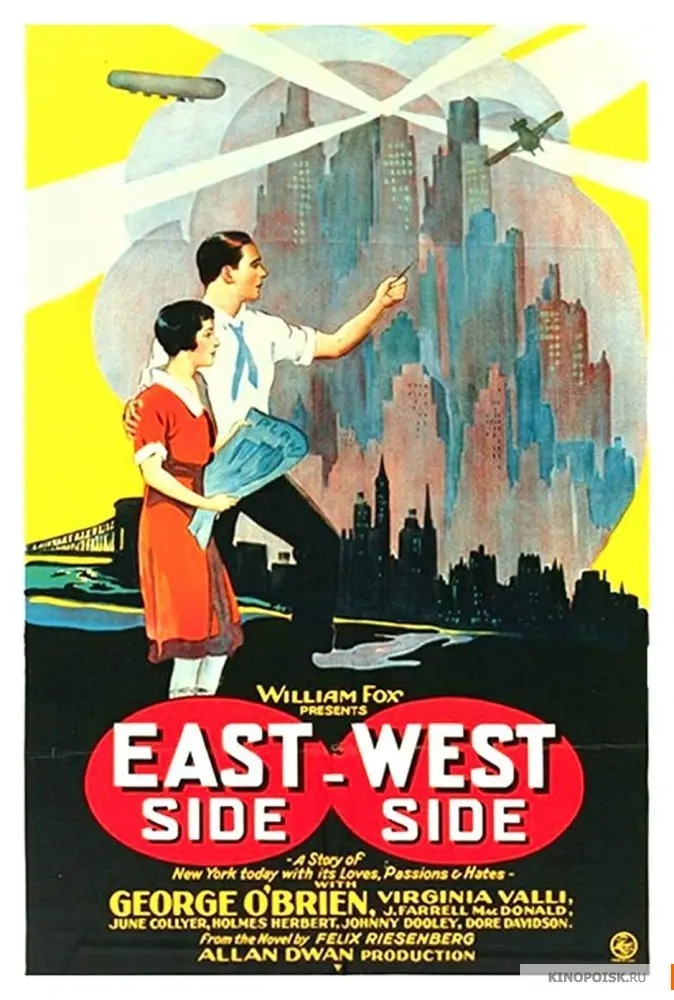
A definitive 7.1/10 rating for a film that redefined the boundaries of cult cinema. East Side, West Side remains a cornerstone of transgressive art.
Is Allan Dwan’s 1927 silent film, East Side, West Side, worth watching today? Short answer: yes, but with significant caveats that speak to its era and its ambitious scope. This sprawling melodrama is a fascinating artifact for cinephiles, historians, and those intrigued by the social narratives of the Roaring Twenties. However, it will likely test the patience of viewers accustomed to modern pacing and narrative subtlety.
This film works because of its raw emotional core and its unflinching portrayal of class struggle. This film fails because its narrative ambition often outstrips its ability to maintain consistent character development and thematic focus. You should watch it if you appreciate grand-scale silent epics, enjoy stories of social mobility, or are interested in early Hollywood’s attempts at complex character arcs. It’s a long film. But it’s an important one, too, offering a window into a specific moment in cinema history.
East Side, West Side is an ambitious social drama that attempts to bridge the chasm between New York’s working-class tenements and its gilded Fifth Avenue mansions through the tumultuous journey of John Breen. The film opens with a visceral tragedy: a barge accident that claims John’s mother and stepfather, leaving him an orphan on the gritty East Side. He’s rescued and raised by the Lipvitches, a family emblematic of the city’s resilient, salt-of-the-earth inhabitants.
John’s driving motivation, however, isn’t merely survival, but a deep-seated quest to find his biological father, a man who callously rejected his mother years prior. This quest propels him into the boxing ring, where his raw strength and determination catch the eye of the wealthy Van Horn. In a twist that feels both classically melodramatic and surprisingly understated for its time, Van Horn turns out to be John’s estranged father, unknowingly taking his own son under his wing.
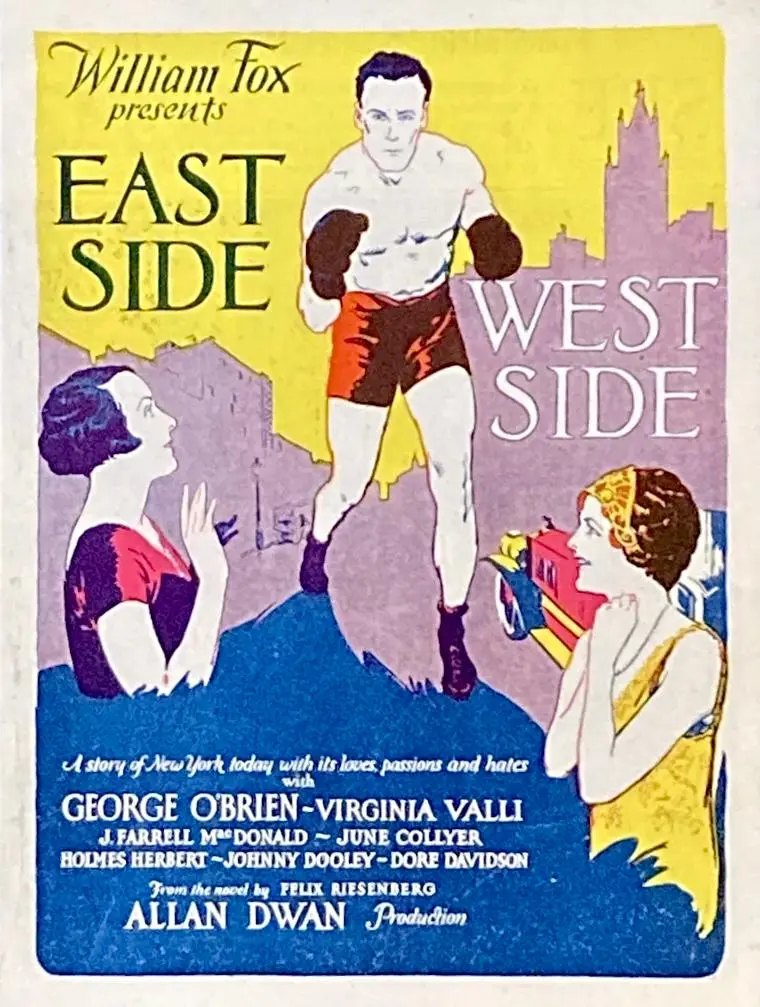
The film then pivots, exploring John’s uncomfortable assimilation into high society. His heart, however, remains tied to Becka Lipvitch, a woman from his past. Yet, the pressures of his new life, orchestrated by well-meaning but misguided advisors like Pug Malone, push him towards a more 'suitable' match: Josephine, Van Horn’s ward. This love triangle, complicated by class expectations and personal loyalties, forms the emotional backbone of the film, even if it occasionally strains credulity.
John’s journey is one of constant redefinition, from prizefighter to aspiring engineer, from East Side tough to West Side gentleman. It’s a peculiar kind of ‘rags-to-riches-to-re-rags-and-back-to-riches’ story, where the ultimate prize isn't wealth but authenticity and genuine connection. The narrative, while sprawling, attempts to explore themes of identity, social mobility, and the enduring power of love across societal divides. It’s a story that, despite its silent film conventions, still resonates with a certain timeless appeal.
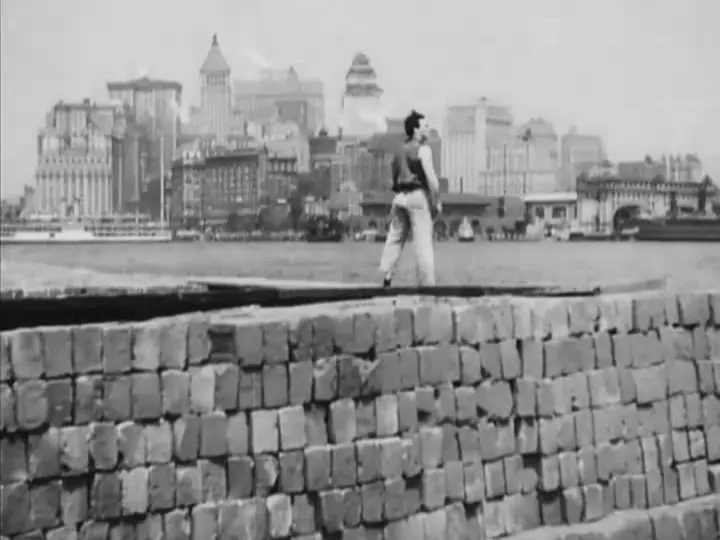
Allan Dwan, a prolific director of the silent era, brings a palpable sense of scale and realism to East Side, West Side. His direction is characterized by an effective use of contrasting environments. The early scenes on the East Side are imbued with a raw, almost documentary-like grittiness, showcasing crowded streets, bustling markets, and the cramped living conditions of the working class. The cinematography here often employs wider shots to emphasize the communal, yet struggling, existence.
In stark contrast, the West Side sequences are opulent, expansive, and meticulously framed. The lavish interiors of Van Horn’s mansion, with their grand staircases and polished surfaces, are bathed in a different quality of light – often softer, more artificial. Dwan uses these visual distinctions to underscore the film’s central theme of class disparity, making the divide not just a narrative point but a tangible, visual reality. One particularly striking example is the initial barge accident, depicted with a sense of chaotic realism that immediately grounds the film in tragedy.
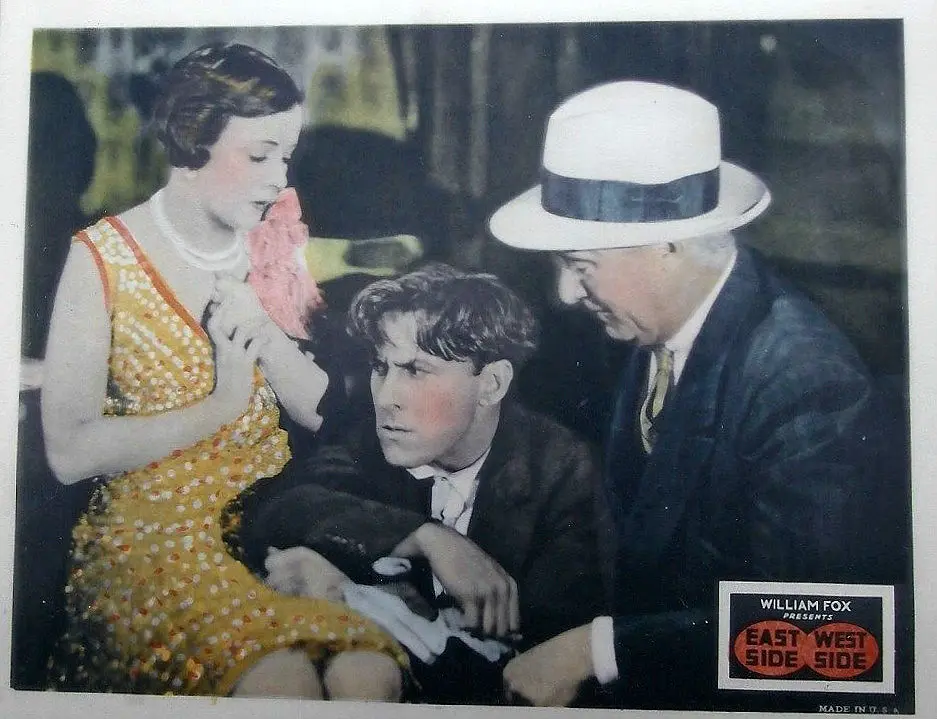
While Dwan’s ambition is clear, his execution sometimes wavers. The film's epic scope, while impressive, occasionally leads to a feeling of narrative sprawl, where certain plot points feel rushed or underdeveloped to make way for the next dramatic turn. For instance, the sudden shift in John’s career from boxing to engineering, while explained, lacks the visual or emotional emphasis it might receive in a more focused narrative. However, the sequence involving Van Horn's ship sinking, though not explicitly shown in gory detail, is conveyed with a sense of impending doom and chaos that highlights Dwan's ability to create tension through suggestion and reaction shots.
The film's visual language, typical of the late silent era, relies heavily on strong compositions and expressive intertitles to convey emotion and plot. Dwan’s camera is often static, observing the drama unfold, but when it moves, it does so with purpose, guiding the viewer's eye. The use of natural light in many of the East Side scenes gives them an authenticity that stands in stark opposition to the more controlled, artificial lighting of the West Side, a subtle but effective cinematic choice.
The success of any silent film hinges heavily on the expressive capabilities of its cast, and East Side, West Side features some compelling performances. George O'Brien, as John Breen, carries the film with a blend of rugged physicality and earnest vulnerability. O'Brien, known for his athletic build and leading man presence, portrays John’s journey from street fighter to sophisticated gentleman with conviction. His boxing scenes are particularly convincing, showcasing a kinetic energy that translates well to the silent screen.
What makes O'Brien's performance noteworthy is his ability to convey John’s internal conflict without dialogue. The moments where he grapples with his dual loyalties – his love for Becka versus his societal obligations to Josephine – are communicated through subtle facial expressions and body language. His eyes, in particular, often betray a deep-seated weariness or confusion, even as his posture projects strength. This is particularly evident in scenes where he interacts with Becka, struggling to articulate his dilemma.
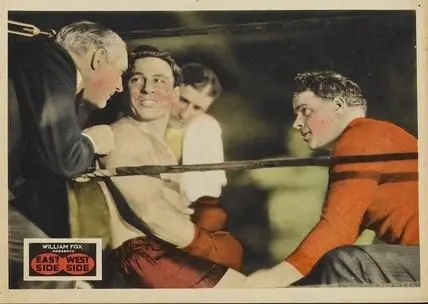
Virginia Valli, as Becka Lipvitch, delivers a nuanced performance that anchors the emotional core of the film. Valli imbues Becka with a quiet strength and dignity, making her character far more than a mere love interest. Her sacrifices, particularly when she renounces John’s love for his perceived betterment, are portrayed with a heartbreaking sincerity that elevates the melodrama. Her expressions of longing and resignation are among the most poignant in the film, making her a truly sympathetic figure. The scene where she is advised by Pug Malone to let John go is a masterclass in silent suffering.
Frank Allworth, as the villainous Flash, provides a necessary counterpoint to the more morally complex characters. His portrayal is effectively sinister, embodying the darker underbelly of the city that John eventually confronts. While perhaps a more archetypal villain, Allworth’s performance is sufficiently menacing to create genuine tension. The supporting cast, including J. Farrell MacDonald as Van Horn, provides solid if less memorable turns. MacDonald’s portrayal of the millionaire father, initially aloof but growing to care for John, adds another layer to the class dynamic.
The pacing of East Side, West Side is a significant factor in how a modern audience might experience it. As with many silent epics of its era, the narrative unfolds at a deliberate, sometimes episodic, pace. Plot points are introduced, developed, and resolved with a certain theatricality that can feel drawn out to contemporary viewers. The film’s extensive runtime (around 100 minutes) means that patience is a virtue required for full appreciation.
The tone of the film is quintessential melodrama, a genre that thrived in the silent era. It’s a world of grand gestures, stark moral contrasts, and heightened emotional stakes. While this can sometimes lead to moments that feel overly dramatic or even comical by today's standards, it’s crucial to approach the film within its historical context. The melodrama was not just a narrative device but a cultural language understood by audiences of the time. The film oscillates between gritty social realism in its East Side depiction and a more romantic, aspirational tone in its West Side segments, creating a somewhat uneven but ultimately compelling narrative.
One could argue that the film’s greatest weakness lies in its struggle to reconcile its sprawling narrative with the inherent limitations of the silent medium. Intertitles, while necessary, can break the flow, and the need to convey complex character motivations through purely visual means sometimes results in broad strokes rather than subtle nuances. The sudden introduction of new characters or plot twists, like the Rantoul-Josephine romance, can feel abrupt, requiring the audience to quickly adjust their emotional investment. Its narrative scope rivals other ambitious silent works of the era, such as The City or even The Awakening.
Despite these challenges, the film maintains a certain compelling charm. Its earnestness is disarming, and its exploration of class divides and the search for identity remains relevant. Dwan’s ambition here, while commendable, sometimes feels like a sledgehammer rather than a scalpel. It works. But it’s flawed. The film’s occasional clunkiness is offset by moments of genuine emotional power and a fascinating glimpse into a bygone cinematic era. It is certainly more engaging than some of its contemporaries like Kids and Kidlets, which suffered from a more simplistic narrative.
Yes, East Side, West Side is worth watching today, especially for those with an interest in silent cinema, social dramas, or early American film history. It offers a rich, if somewhat unwieldy, narrative that explores timeless themes of class, identity, and love. The film provides valuable insight into the filmmaking techniques and storytelling conventions of the 1920s.
However, it demands a certain level of commitment. Viewers must be prepared for silent film pacing, which is slower than modern cinema. The melodrama can be intense. The narrative, while ambitious, occasionally feels disjointed.
If you are a casual viewer looking for quick entertainment, this might not be your film. If you appreciate historical context and grand narratives, it offers a rewarding experience. It's a significant piece of cinematic history.
Pros:
- Strong, expressive performances from George O'Brien and Virginia Valli.
- Ambitious narrative scope tackling significant social themes.
- Effective use of contrasting environments to highlight class disparities.
- Historical value as a snapshot of 1920s American cinema and society.
- Moments of genuine emotional impact and dramatic tension.
Cons:
- Pacing can feel slow and deliberate by modern standards.
- Narrative becomes episodic and somewhat disjointed in its latter stages.
- Some character motivations and plot developments feel abrupt or underdeveloped.
- Heavy reliance on melodrama may alienate some contemporary viewers.
- The sheer length can be a test of endurance.
East Side, West Side is a fascinating, if uneven, experience. It stands as a testament to Allan Dwan’s directorial ambition and the expressive power of silent film acting, particularly from George O'Brien and Virginia Valli. While its sprawling plot and melodramatic tendencies may require a shift in viewing expectations, the film offers a rich exploration of class, identity, and the enduring human search for belonging. It's a valuable historical document and a compelling drama for those willing to immerse themselves in its world.
It’s not a perfect film, but its imperfections are part of its charm, revealing the struggles and triumphs of early cinematic storytelling. For students of film and dedicated cinephiles, it’s an essential watch. For others, it’s a journey that, while occasionally arduous, ultimately proves rewarding in its unique depiction of a changing America.
IMDb 5.4
1933
Community
Log in to comment.