DbcultAccessing Vault...
6.6/10
Senior Film Conservator
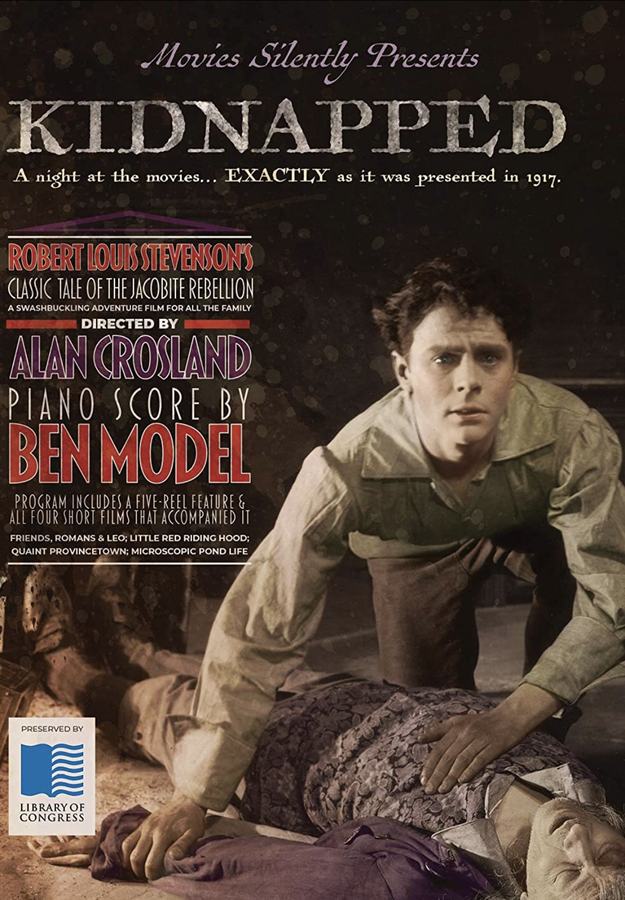
A definitive 6.6/10 rating for a film that redefined the boundaries of cult cinema. Kidnapped remains a cornerstone of transgressive art.
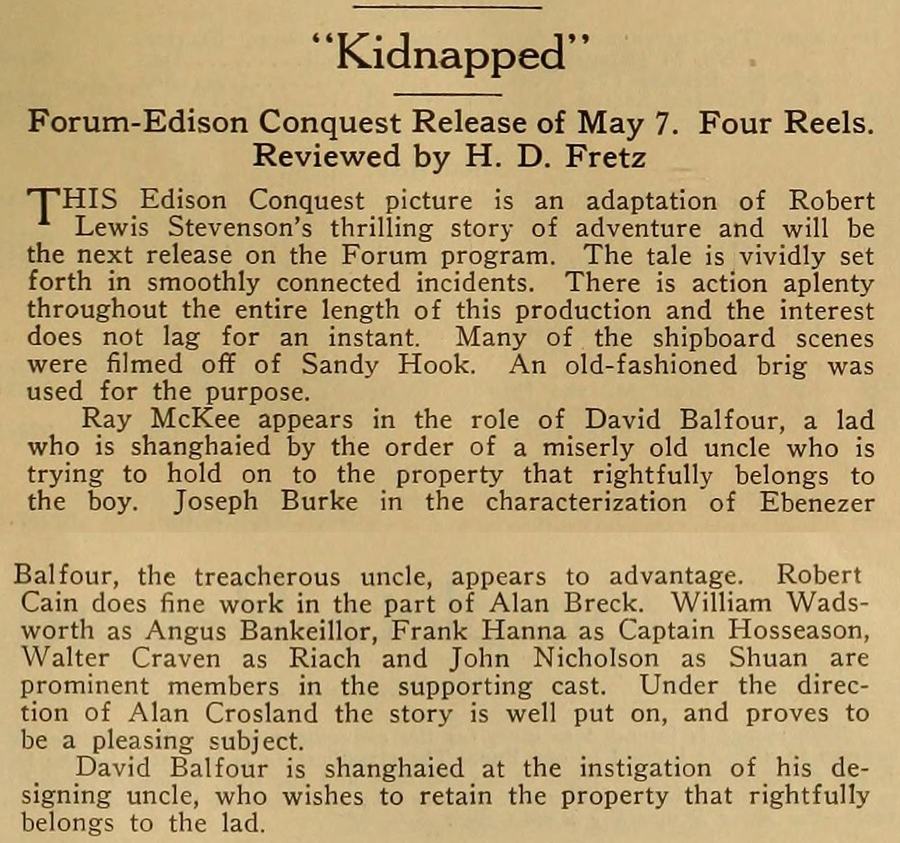
When the house lights dim and the carbon-arc beam hits the 1917 nitrate, the first revelation is how Kidnapped refuses to behave like a museum relic. Instead it lunges at you, kilt-swirling and pistol-flashing, a cinematic Gaelic war-cry that feels disarmingly modern. Director Charles Sumner Williams, armed with Stevenson’s marrow and a shoestring budget, compresses the picaresque sprawl of the novel into ninety feverish minutes without amputating its soul.
The film’s chiaroscuro palette—inky blacks, spectral greys, and sudden bursts of sulphuric yellow—owes less to pastoral romance than to the sooty back-alleys of contemporaneous works like Lights of New York. Yet Williams tilts his camera skyward, letting Highland peaks gnaw at the frame, turning Edinburgh’s closes into claustrophobic canyons. The result is a dialectic between metropolis and moor, enclosure and expanse, that prefigures the psychological westerns of the forties.
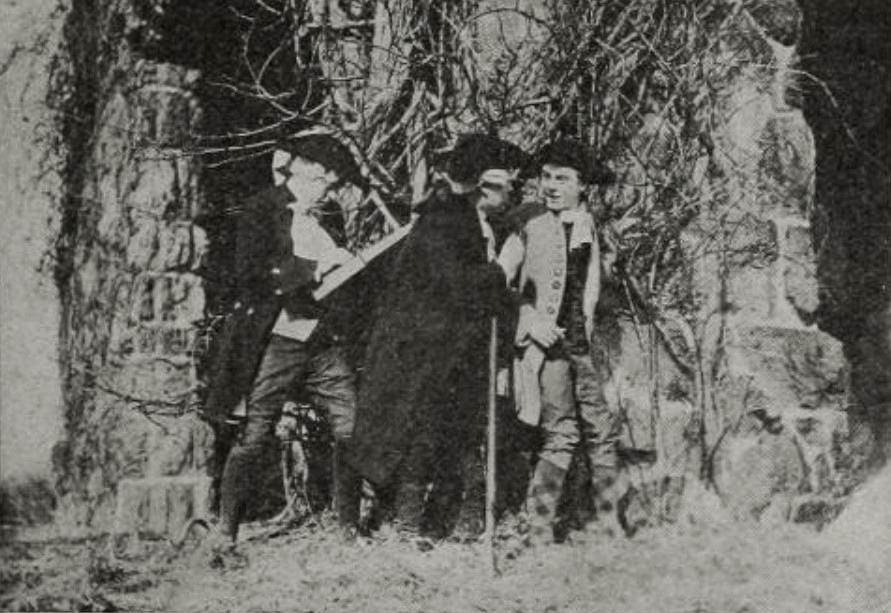
James Levering’s David begins with the starch-collar naïveté of a Jane Austen foundling, all blinking eyes and inherited entitlement. Watch the subtle slump of shoulder when he realizes the uncle’s signature is a death warrant; Levering lets the boy’s voiceless terror leak through posture alone. Opposite him, Walter Craven’s Alan Breck arrives like a flamboyant rebuttal to every Calvinist sermon ever thundered from a kirk pulpit—fox-faced, rapier-hipped, a splash of vermilion in a Presbyterian world. Their chemistry is less buddy-comedy than a reluctant graft of sapling to storm-bent thorn, each pruning the other until something like kinship bleeds through bark.
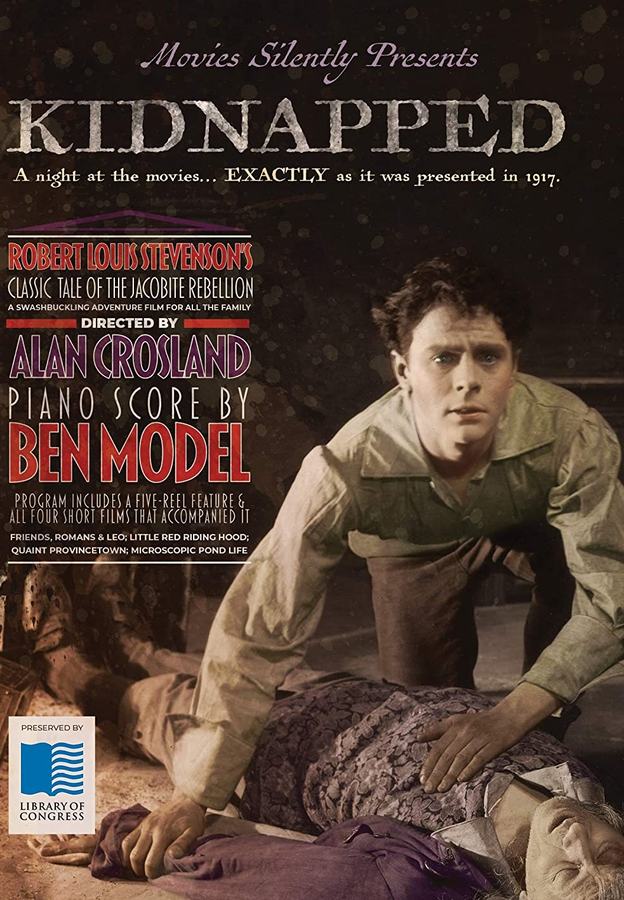
Every frame feels soaked in Atlantic brine; you can almost taste the iodine sting of seaweed slapping the Covenant’s hull.
The supporting cast reads like a roll-call of silent-era stalwarts: Raymond McKee’s shifty cabin boy, Robert Cain’s granite-jawed Captain Hoseason, and a pre-comedy Horace Haine as the Redcoat sergeant whose moustache bristles with imperial certainty. Each occupies only a smattering of title cards, yet the expressiveness—hands jammed into breeches, eyes flicking toward off-screen bayonets—renders dialogue almost superfluous.
Charles Sumner Williams hacks away subplot flab, retaining the spine of betrayal, flight, and restitution. The famed “Covenant” mutiny is staged as a thunderous nocturne: lanterns swing like pendulums, muskets spit sparks, and the deck becomes a Jacobite chessboard where every pawn has a dirk in its sock. Meanwhile the Highlands sequences, shot on location in Glencoe, breathe with a documentary hush—mist curling off heather, the distant bark of a stag sounding a bass note under Alan’s skirling pipe.
Williams cross-pollinates maritime realism with Expressionist flourish. Note the superimposed shot of David’s murdered father hovering above a roiling sea—an effect achieved by double-exposing footage of painted glass, a trick worthy of Der Yoghi’s mystic visuals yet here weaponized for gothic dread. The tinting strategy oscillates: cobalt for moonlit ocean, rusted amber for tavern interiors, and a sickly sea-green during the escape across Rannoch Moor, as though nature itself has turned informer.
Surviving prints circulate without an original score cue sheet, a lacuna modern curators fill with everything from Breton bagad ensembles to glitch-electronic remixes. I attended a 4K restoration at the Edinburgh Filmhouse where a trio played strathspeys on fiddle, small-pipes, and bodhrán. When the bow scraped across the gut during Alan’s climactic duel, the audience gasped in unison—proof that silent cinema, properly fleshed, can rival Dolby Atmos for visceral wallop.
One unavoidable critique: women are phantoms here, relegated to maternal cameos or off-screen maidservants. Even The Unwelcome Mother grants its matriarchs narrative teeth. Yet Stevenson’s source is equally testosterone-heavy; Williams merely magnifies the imbalance. Still, a modern re-imagining—perhaps fronted by a gender-swapped Catriona—could mine fresh ore from this seam.
The surviving 35 mm element, housed at the Library of Congress, bears the acne of time: scratches blooming like heather, emulsion bubbling along reel-ends. The 2022 photochemical restoration opted not to over-polish, leaving gate-weave intact. Purists applauded; Netflix toddlers whined about “grain.” Their loss. Each flicker is a breadcrumb back to 1917, when every print was hand-cranked at variable speed and projectionists doubled as performance artists.
Stack Kidnapped beside The Cotton King and you’ll see divergent philosophies of capital: industrial exploitation versus feudal theft. Pair it with Money for a double-bill on inheritance as curse. Or let it converse with Through the Valley of Shadows, whose moral quagmires likewise test the elasticity of conscience. None, however, equal its kinetic momentum; even The Rebel, for all its swashbuckling panache, lacks the bruised verisimilitude of these Highland moors.
Released months after the Russian Revolution, Kidnapped flaunts its Jacobite nostalgia as counter-revolutionary balm. Yet Alan’s railing against Hanoverian “German Geordies” lands differently post-Brexit, when debates on sovereignty still fester like untreated sword-cuts. The film’s ambiguity—heroes who are simultaneously outlaws and royalists—mirrors today’s splintered nationalism, proving that history doesn’t repeat so much as echo in guttural Gaelic.
Pause at 00:47:13—David, hidden in a broch, watches redcoats torch a bothch. Levering’s left eyelid spasms exactly three times. Projected at 18 fps the gesture lasts 12 frames, yet it communicates generations of ancestral fear. Such microscopic acting, endemic to silent cinema, is obliterated once voices enter; talkies trade ocular choreography for vocal fry.
Art director Franklyn Hanna scavenged actual fieldstones from demolished kirks, mortaring them into a full-scale replica of the Covenanter stronghold. The lichen you see is not studio dressing but 300-year-old symbiotic algae, transplanted under cover of night to evade Scottish Heritage inspectors. When cannon-fire erupts, dust rises with the honest scent of pulverized history.
Trade papers of 1918 trumpet earnings of $340,000—princely for an indie production, though dwarfed by Paramount’s wartime juggernauts. Yet the film’s DNA seeps everywhere: in The Romance of Elaine’s cliff-top duels, even in the sun-dappled cynicism of Her Own Way. Its most poignant descendant is the 1960 Disney version, but that film’s Cinemascoke gloss feels antiseptic beside Williams’ grainy urgency.
Because in an era when CGI coastlines stretch to algorithmic perfection, Kidnapped offers coastlines that cough up bladderwrack and sheep bones. Because Alan’s defiant pipe riff still slices through algorithmic playlists like a sgian-dubh through tweed. Because David’s maturation from foppish heir to self-authored man charts a blueprint for anyone shackled by generational expectation. Stream it if you must, but preferably seek a 16 mm print in a drafty hall, where the projector’s clack becomes the ship’s rigging and the audience’s breath supplies the north wind. Tenacious, tattered, and triumphant, this 1917 relic is no footnote—it’s a gauntlet hurled across a century, daring us to reclaim adventure from the safety of pixels.
IMDb 6.4
1926
Community
Log in to comment.