DbcultAccessing Vault...
Cult Review
Senior Film Conservator
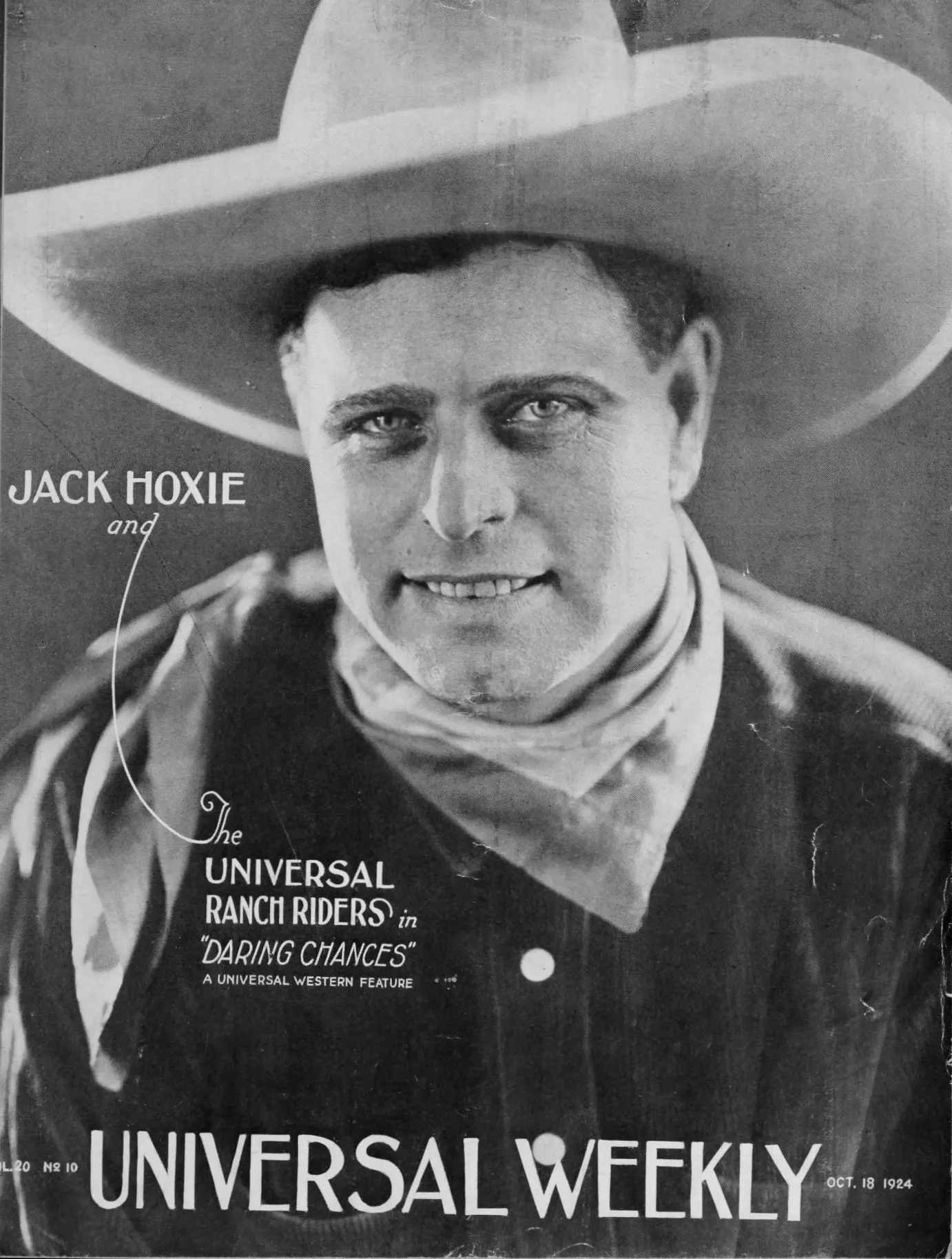
The year 1924 was a watershed moment for the cinematic Western, a period when the genre began to shed its rudimentary origins and embrace a more sophisticated, albeit still rugged, narrative architecture. At the epicenter of this evolution stands Daring Chances, a film that transcends the simplistic 'white hat vs. black hat' dichotomy to explore themes of grief, systemic corruption, and the transformative power of the domestic sphere. While many contemporaries were content with mindless gunplay, director William James Craft and writers Wyndham Gittens and Isadore Bernstein opted for a character-driven odyssey that utilizes the physical prowess of Jack Hoxie not merely as a spectacle, but as an extension of his moral fiber.
Jack Hoxie occupies a unique space in the pantheon of silent stars. Unlike the flamboyant athleticism of Douglas Fairbanks or the somber, almost religious intensity of William S. Hart, Hoxie possessed a grounded, earthy charisma. In Daring Chances, his portrayal of Jack Armstrong is a masterclass in understated masculinity. When he receives the news of his sister’s death, the grief is not telegraphed through wild gesticulation—a common pitfall of the era—but through a tightening of the jaw and a subtle shift in his posture. This restraint makes the subsequent action sequences feel earned rather than gratuitous.
The film’s central conflict hinges on the adoption of little Bebe, played with an endearing lack of artifice by Doreen Turner. This subplot echoes the pathos found in Oliver Twist, yet it is transplanted into a landscape where the law is often a tool for the powerful. The threat to the child is not just physical, but legal, as the machinations of Sampson Burke and Joe Slavin weaponize the judicial system against Armstrong. This nuance elevates the film above the standard fare of the time, suggesting that the true danger in the West wasn't just the outlaw, but the corrupted institution.
Every great hero requires a formidable shadow, and Daring Chances delivers a dual threat. Jack Pratt’s Joe Slavin is the personification of the predatory frontier entrepreneur—a man who views his wife as property and his niece as a bargaining chip. His alliance with Sampson Burke (Claude Payton) creates a fascinating synergy of brawn and bureaucratic malice. Burke’s motivation is rooted in a primal jealousy over Agnes Rushton, the schoolteacher who represents the civilizing force of the frontier. Unlike the more abstract romantic entanglements in The Girl I Loved, the stakes here are immediate and tangible.
The conspiracy to frame Armstrong for abduction is a narrative masterstroke. It forces the protagonist to fight on two fronts: he must prove his innocence in the eyes of the law while simultaneously protecting the child from Slavin’s greed. This layering of conflict ensures that the pacing never falters, leading the audience through a labyrinth of tension that only finds release in the dust and thunder of the rodeo arena.
One cannot discuss Daring Chances without acknowledging the technical brilliance of the Universal Ranch Riders. In an era before CGI or sophisticated safety rigs, the stunts performed in this film are nothing short of breathtaking. The rodeo sequence is not merely a backdrop; it is a visceral, immersive experience that captures the chaotic energy of the era. The cinematography manages to frame Hoxie’s horsemanship with a fluidity that feels remarkably modern. There is a kineticism here that rivals the dramatic tension of Brigadier Gerard, yet it is rooted in the gritty reality of the American soil.
The theft of the gate receipts during the rodeo serves as the film’s inciting incident for the final act. It is a moment of pure cinematic adrenaline. The pursuit that follows is choreographed with a precision that speaks to Craft’s directorial vision. The use of natural light and the vast, open vistas of the filming locations provide a sense of scale that smaller, studio-bound productions like From Gutter to Footlights simply could not achieve. The landscape itself becomes a character—both an obstacle and an ally to Armstrong.
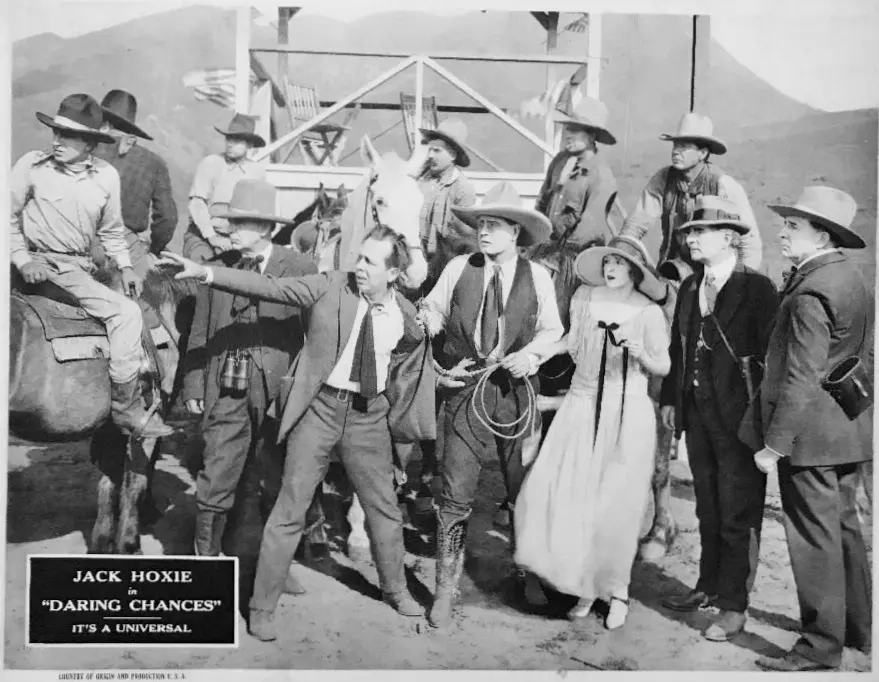
Visually, the film benefits from a clarity of composition that was the hallmark of Universal’s high-budget Westerns. The contrast between the dark, claustrophobic interiors of Slavin’s saloon and the sun-drenched, expansive schoolhouse reflects the internal struggle of the community. Agnes Rushton, played with grace by Genevieve Danninger, is more than a damsel in distress; she is the moral compass of the film. Her faith in Armstrong, even when the evidence is stacked against him, provides the emotional anchor necessary to sustain the high-octane plot.
When compared to the societal critiques found in The Good Provider, Daring Chances might seem more focused on genre thrills, but a closer look reveals a sophisticated commentary on the nature of fatherhood and the definition of a 'legitimate' family. Armstrong’s claim to Bebe is based on love and blood, whereas Slavin’s is based on a cold, patriarchal legalism. This conflict resonates even today, proving that the silent Western was capable of handling complex thematic material with as much nuance as contemporary dramas like Tess of the D'Urbervilles.
The climax of the film is a tour de force of silent era editing. The intercutting between Armstrong’s frantic ride, Slavin’s desperate attempt to escape with the child and the money, and Agnes’s anxious vigil creates a mounting sense of dread. The resolution—Slavin’s death and the rescue of Bebe—is handled with a satisfying sense of poetic justice. It is not a victory won through luck, but through the sheer perseverance and physical capability of the hero.
The final scenes, which see Armstrong and Agnes united, offer a respite from the violence. There is a sense of a new world being built on the ruins of the old. The 'daring chances' taken by Armstrong were not just risks of life and limb, but risks of the heart. He risked his freedom to protect a child and his reputation to stand up for what was right. In doing so, he transitioned from a mere ranch hand to a pillar of the burgeoning community.
In the broader landscape of 1920s cinema, Daring Chances stands as a testament to the durability of the Western myth. It lacks the surrealism of The Ouija Board or the satirical bite of Silk Stockings, but it possesses a raw, unadulterated honesty. It is a film that understands the primal appeal of the frontier: the idea that in a land without established order, a man’s character is his only true currency. For fans of Hoxie, or for those seeking to understand the DNA of the modern action hero, this film is an essential text.
Ultimately, Daring Chances is a triumph of silent storytelling. It utilizes the visual medium to its fullest extent, conveying a complex narrative of betrayal and redemption without the need for excessive intertitles. It is a reminder of a time when cinema was a purely visceral experience, a window into a world of dust, sweat, and iron-willed determination. Whether compared to the domestic dramas of Rose o' Paradise or the gritty realism of The Clean-Up, Hoxie’s masterwork remains a towering achievement in the genre, a film that dared to take chances and succeeded on every level.
IMDb —
1919
Community
Log in to comment.