DbcultAccessing Vault...
Cult Review
Senior Film Conservator
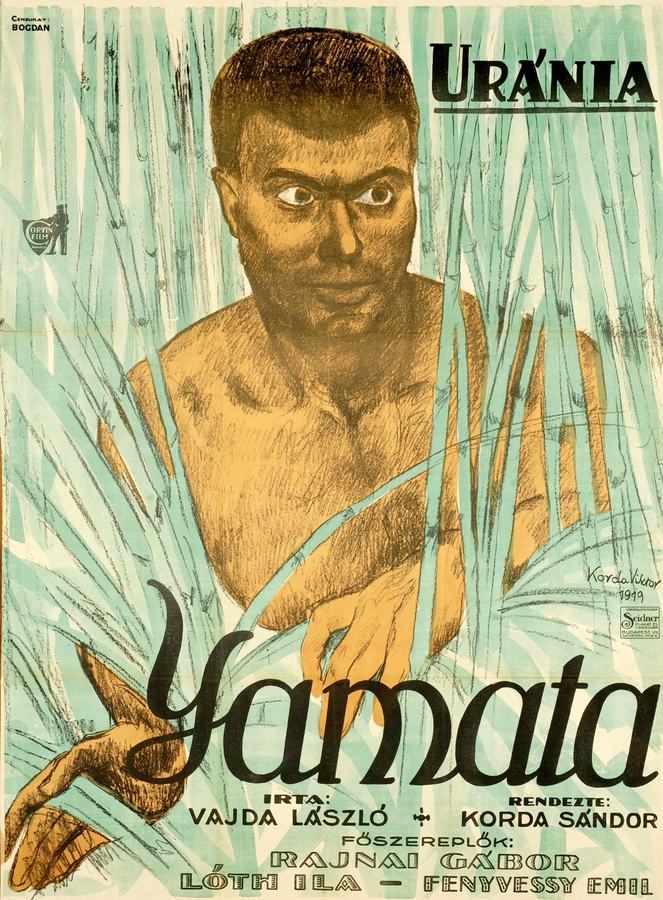
In the annals of cinematic history, certain films emerge not merely as narratives but as profound cultural artifacts, resonating with an almost mystical depth that transcends their era. Ladislaus Vajda's "Yamata" stands as one such towering achievement, a silent epic that, even today, speaks volumes about the human condition, our fraught relationship with the natural world, and the enduring struggle against oppressive forces. It’s a film that eschews simplistic morality tales, plunging instead into a complex tapestry of folklore, spiritualism, and raw human emotion. To merely describe its plot would be to strip it of its ethereal power; "Yamata" demands to be felt, to be experienced, a visceral journey into a world both alien and eerily familiar.
At its core, "Yamata" is a mesmerizing allegory, set in a desolate, unnamed land where the prosperity of the people is inextricably linked to the ancient, benevolent spirit, Yamata. This entity, a slumbering guardian, is not merely a myth but a tangible force, a literal wellspring of life. However, this delicate balance is shattered by the arrival and subsequent dominion of Baron Kael, portrayed with chilling efficacy by Gábor Rajnay. Kael is no ordinary tyrant; his malevolence is rooted in a perverse desire to subjugate not just the populace, but the very essence of the land itself. His rituals, depicted with a disturbing blend of archaic mysticism and nascent industrial ambition, are designed to awaken Yamata not for reverence, but for exploitation, transforming a source of life into an instrument of his greed. This thematic exploration of environmental degradation and the corruption of spiritual heritage feels remarkably prescient, lending "Yamata" a timeless quality that resonates with contemporary concerns about ecological stewardship.
Into this blighted landscape steps Elara, brought to life with astonishing nuance by Ila Lóth. Elara is not a hero forged in traditional molds; she is a vessel, a conduit for the land's suffering and its faint hopes. Her connection to Yamata is not intellectual but visceral, an intuitive understanding born of generations living in harmony with the spirit. Lóth’s performance, characterized by subtle gestures and intensely expressive eyes, conveys the immense burden of her heritage and the nascent stirrings of rebellion. Her journey is one of awakening, from passive observer to active participant in her people's destiny. The arrival of Andrei, a wandering scholar or exiled idealist, played by Gusztáv Vándory, serves as the crucial catalyst. Vándory imbues Andrei with a fiery intellect and an unwavering moral compass, providing the intellectual framework for Elara’s spiritual intuition. Their burgeoning alliance, born of shared purpose rather than conventional romance, forms the emotional bedrock of the narrative, highlighting the power of collective resistance.
Ladislaus Vajda’s screenplay, while silent, crafts a narrative of remarkable complexity. The exposition is delivered not through verbose intertitles, but through meticulously composed visual storytelling, a testament to Vajda’s profound understanding of the cinematic medium. The slow reveal of Kael's true intentions, the gradual decay of the landscape mirroring the spiritual decline of the people, and Elara's growing resolve are masterfully paced. The film delves into themes of ancient prophecy, the clash between tradition and modernity, and the ultimate price of unchecked ambition. It’s a narrative that, much like the mythological structures in The Moth and the Flame, explores the destructive allure of power and the transformative nature of sacrifice. The inclusion of Emil Fenyvessy as the wise, albeit initially fearful, village elder provides the narrative with a crucial anchor to tradition and forgotten lore, guiding Elara through the labyrinthine prophecies surrounding Yamata. His performance, understated yet deeply resonant, adds another layer of gravitas to the unfolding drama.
The visual language of "Yamata" is nothing short of breathtaking. The director (presumably Vajda himself, or a close collaborator under his vision) employs a stark, expressionistic style that perfectly complements the film's somber themes. The landscapes are characters in themselves: barren plains stretch towards an indifferent sky, ancient gnarled trees stand as silent sentinels, and the sacred site of Yamata is rendered with an almost otherworldly aura. The use of shadow and light is particularly masterful, creating a palpable sense of foreboding in Kael’s fortress and moments of ethereal beauty in Elara’s connection to nature. Close-ups of the actors' faces, particularly Lóth's and Rajnay's, are used to convey profound emotional states, circumventing the need for extensive intertitles. The visual storytelling is so potent that entire sequences unfold with minimal textual interruption, a testament to the power of pure cinema.
The set design, though perhaps limited by the technology of its time, is remarkably effective in conveying the oppressive atmosphere of Kael's dominion versus the organic, crumbling beauty of the villagers' lives. The sacred site of Yamata, in particular, is an architectural marvel of imagination, fusing natural formations with ancient, ritualistic structures. The visual poetry evokes a sense of ancient myths coming to life, reminiscent of the grand, symbolic gestures found in films like Es werde Licht! 2. Teil, which similarly grappled with profound, almost cosmic themes through powerful imagery. The director’s keen eye for composition transforms each frame into a painting, a deliberate choice that elevates "Yamata" beyond mere storytelling into the realm of visual art. The transitions between scenes are often fluid, employing dissolves and fades that mirror the dreamlike quality of the narrative, especially when Elara experiences visions or commune with the land.
The performances in "Yamata" are uniformly exceptional, anchoring its fantastical elements in deeply human emotions. Ila Lóth, as Elara, delivers a performance of astounding depth and vulnerability. Her portrayal is a masterclass in silent acting, relying on subtle shifts in posture, the eloquent language of her hands, and the profound sorrow and growing resolve in her eyes. She embodies the spirit of a people, burdened yet resilient, echoing the quiet strength seen in protagonists of films like Divorce and the Daughter, where a woman's internal struggle becomes a powerful external force. Lóth’s Elara is not a passive victim but a slowly blossoming force of nature, her transformation from timid villager to defiant savior utterly convincing.
Gábor Rajnay’s Baron Kael is a villain for the ages. Rajnay eschews overt theatrics, instead building a character whose menace is insidious, rooted in a cold, calculating intellect and a chilling sense of entitlement. His physical presence, often framed against the desolate landscape, seems to suck the very light out of the scene. The subtle sneer, the imperious gesture, the glint in his eye as he orchestrates his dark rituals – these are the brushstrokes of a truly unforgettable antagonist. Kael is not merely evil; he is a force of corruption, a man who believes he can bend even the ancient spirits to his will, a manipulative figure akin to the schemers in The Love Brokers, but with far grander, more destructive ambitions.
Gusztáv Vándory, as Andrei, provides the film with its intellectual and emotional counterpoint. His portrayal is one of passionate conviction and unwavering idealism. Vándory’s Andrei is the voice of reason and hope in a world succumbing to despair, his gestures broad and emphatic, communicating a sense of urgency and moral clarity. He represents the external force that helps awaken the internal strength of the community, much like the catalysts in narratives such as Beating Back, where an outsider's determination ignites a dormant spirit of resistance. His scenes with Lóth are charged with a poignant chemistry, a shared sense of purpose that transcends mere romantic entanglement, evolving into a profound partnership in the face of overwhelming odds.
And then there is Emil Fenyvessy, whose performance as the village elder is a quiet revelation. Fenyvessy embodies the wisdom of ages, the keeper of forgotten truths. His initial trepidation, born of years of oppression and the fear of Kael's power, gradually gives way to a resolute courage as he witnesses Elara's unwavering spirit. His character serves as a bridge between the ancient world of Yamata and the desperate present, providing critical lore and guidance. Fenyvessy’s gravitas adds significant weight to the film’s spiritual dimensions, making the ancient prophecies feel tangible and urgent. The ensemble's synergy is palpable, each actor contributing a vital thread to the rich tapestry of the narrative.
Ladislaus Vajda’s contribution as the writer of "Yamata" cannot be overstated. Even without explicit dialogue, his narrative structure is robust, his character arcs meticulously crafted, and his thematic explorations profound. Vajda manages to imbue the silent form with a literary sensibility, creating a story that feels epic in scope yet intimately personal in its emotional core. The mythology of Yamata itself is wonderfully conceived, feeling authentic and deeply rooted in a rich, imagined cultural history. Vajda’s genius lies in his ability to translate complex spiritual and political conflicts into visually compelling sequences. His work here stands as a testament to the power of pure storytelling, demonstrating that a compelling narrative transcends the spoken word. The intricate plotting, which balances moments of quiet despair with bursts of defiant hope, showcases a writer at the peak of his craft, capable of weaving a grand tapestry of human experience.
The narrative progression, from the initial depiction of a land in decline to the climactic confrontation, is handled with an expert hand. Vajda avoids simplistic resolutions, presenting a world where victory comes at a cost, and true harmony requires profound sacrifice. This nuanced approach to storytelling elevates "Yamata" beyond a mere adventure tale, transforming it into a meditative exploration of destiny and free will. His ability to craft compelling intertitles, used sparingly but impactfully, further enhances the narrative, providing crucial context without ever feeling intrusive. This is storytelling that understands the visual medium's strengths, allowing images to carry the primary burden of communication, a lesson many contemporary filmmakers could still learn.
"Yamata" occupies a unique space within early cinema, drawing comparisons to various contemporaries while forging its own distinct path. Its grand scale and focus on a community's struggle against an overwhelming force might evoke parallels with the social realism found in films like At the Front, though "Yamata" imbues its struggle with a potent mystical dimension. The portrayal of a tyrannical figure exploiting ancient powers for personal gain finds echoes in the oppressive systems depicted in Superintendents, but Kael's ambition is far more metaphysical, aiming to dominate the very spirit of the land.
The film's exploration of a chosen individual's spiritual connection to their land and destiny, particularly Elara's role, resonates with the archetypal hero's journey found in many mythic narratives. There's a certain kinship with the fantastical elements and moral quandaries explored in films like Die liebe der Bajadere, which also delved into exotic locales and complex emotional landscapes. However, "Yamata" grounds its fantastical elements in a palpable sense of earth-bound struggle, making its spiritual battles feel profoundly real. The narrative's underlying message of resilience and the fight for freedom, even against overwhelming odds, is a universal one, a timeless testament to the human spirit's capacity for hope, much like the unwavering optimism in Broadway Bill, albeit with a far more dramatic and mystical backdrop.
Moreover, the film's visual poetry and emphasis on natural landscapes as dynamic characters could be seen as a precursor to later cinematic movements that prioritized environmental themes. While films like The Luck of Roaring Camp focused on human struggles within nature, "Yamata" positions nature itself as a living, breathing entity whose fate is intrinsically linked to humanity's moral choices. It's a powerful statement, delivered with the subtlety and grace that only silent cinema, at its peak, could achieve. The film also cleverly subverts expectations of traditional romance, focusing instead on a partnership of intellect and spirit, a departure from the more conventional romantic narratives often found in films like A Yankee Princess or Champagne caprice, where romantic entanglements often drive the primary plot.
"Yamata" is more than just a historical curiosity; it is a vibrant, living piece of art that continues to provoke thought and stir the soul. Its innovative visual style, profound thematic depth, and unforgettable performances coalesce into a cinematic experience that transcends language barriers and temporal divides. It serves as a powerful reminder of the early cinema's capacity for grand storytelling and profound artistic expression. The film’s message about the delicate balance between humanity and nature, the dangers of unchecked power, and the resilience of the human spirit resonates perhaps even more strongly today than it did upon its initial release.
As we reflect on "Yamata," it's clear that Ladislaus Vajda and his collaborators crafted a work of enduring significance. It's a film that demands rediscovery, a cinematic gem that offers not just entertainment, but a profound meditation on humanity's place in a complex, mystical world. Its visual poetry and thematic richness ensure its place not just as a landmark of Hungarian cinema, but as a universal testament to the power of film to explore the deepest facets of our existence. The culmination of Elara’s quest, the confrontation with Baron Kael, and the ultimate fate of Yamata itself leave an indelible mark, demonstrating that true cinema, regardless of its era, possesses the power to transport, enlighten, and inspire. This is a film that truly earns its place among the greats, a beacon of artistic integrity and visionary filmmaking that continues to illuminate the path forward.
IMDb 6.8
1936
Community
Log in to comment.