DbcultAccessing Vault...
7.5/10
Senior Film Conservator
A definitive 7.5/10 rating for a film that redefined the boundaries of cult cinema. Move Along remains a cornerstone of transgressive art.
Is Move Along a hidden gem of the silent era that deserves a modern restoration? Short answer: No, but it remains a vital study in the 'pathetic' comedy style that Lloyd Hamilton perfected before his legacy was overshadowed by his peers.
This film is specifically for silent cinema completists and those who appreciate the 'lonesome' archetype popularized by comedians who weren't quite as optimistic as Chaplin. It is definitely not for viewers who demand high-definition visual clarity or those who find the 'it was all a dream' trope to be a narrative betrayal.
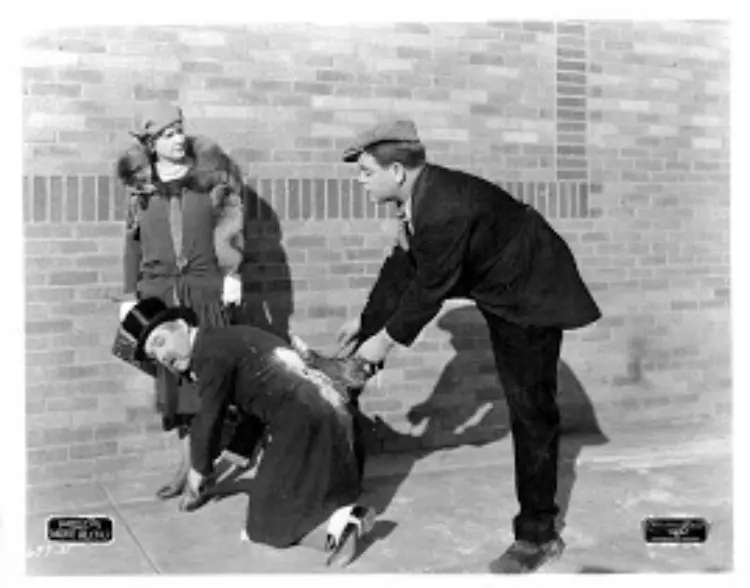
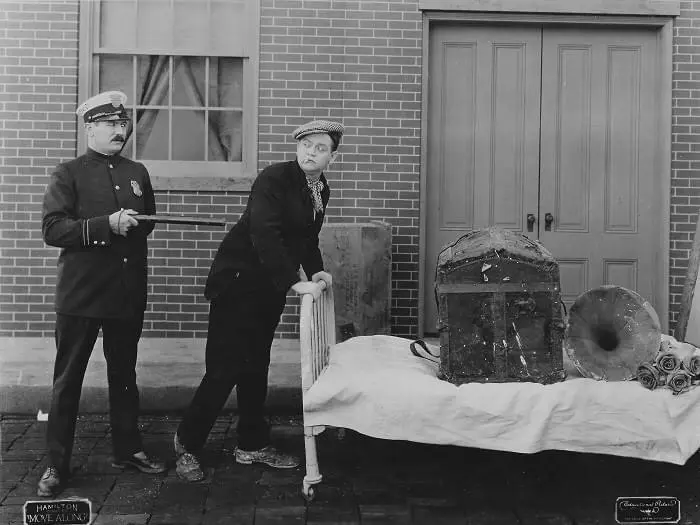
1) This film works because Lloyd Hamilton’s physical commitment to moving a full-sized bed through a city street creates a surreal, visual absurdity that transcends the era’s standard slapstick.
2) This film fails because the 'it was all a dream' ending is a lazy narrative escape hatch that undermines the genuine pathos built during the freezing rain sequences.
3) You should watch it if you want to see the DNA of the 'loser' archetype that would later influence everything from Buster Keaton to modern dark comedies.
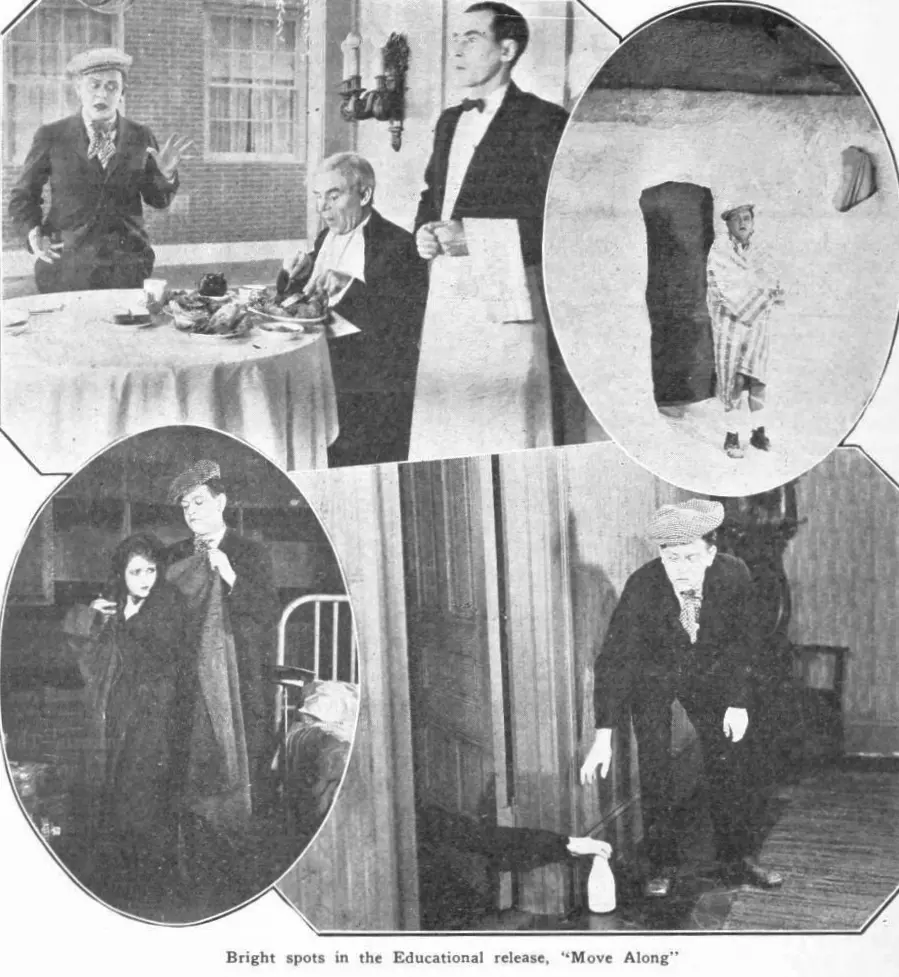
Lloyd Hamilton is often the forgotten third or fourth man of silent comedy. While Chaplin had his grace and Keaton had his mechanical precision, Hamilton had a uniquely doughy, relatable helplessness. In 'Move Along,' this is on full display. The opening scene, where he is evicted, isn't played for high-stakes drama; it’s played with a weary resignation that feels surprisingly modern.
When he carries his bed through the streets, it isn't just a gag. It is a visual metaphor for the weight of domestic expectations. Contrast this with the more frantic energy of Fighting Blood, and you see a comedian who is willing to slow down the pace to let the audience feel the absurdity. Hamilton’s face is a canvas of mild disappointment, which makes the eventual 'shelter' sequence even more impactful.
Before Norman Taurog became the go-to director for Elvis Presley musicals, he was a master of the short-form silent comedy. In 'Move Along,' Taurog demonstrates an impressive grasp of atmosphere. The transition from the sunny boarding house to the rain-slicked slums is handled with a tonal shift that borders on noir. The use of the awning as a makeshift home is a brilliant set piece.
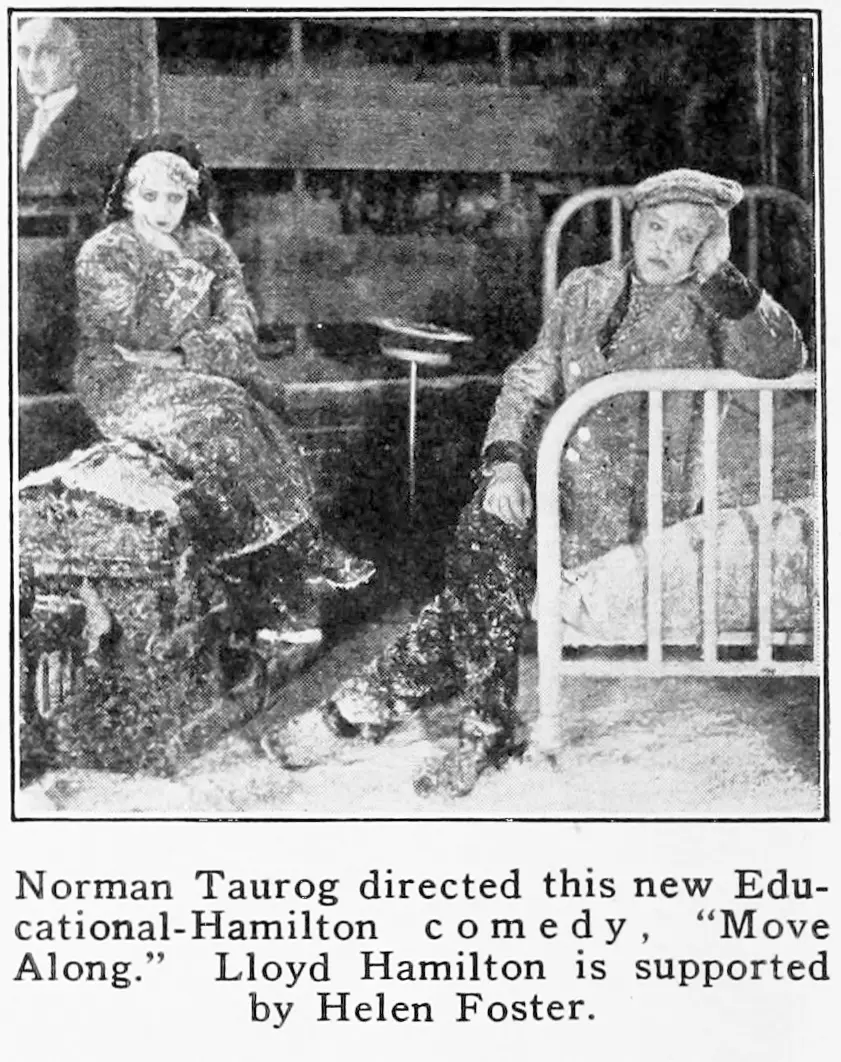
The way Taurog captures the freezing of the environment is particularly effective. You can almost feel the dampness on the screen. It’s a far cry from the more polished, stage-like settings found in The Master Key. Here, the grime feels real. The interaction between Hamilton and the girl (played with a quiet dignity by Helen Foster) is handled with more sincerity than one might expect from a 1926 short.
I have a bone to pick with the ending. It is a cheat. By 1926, the 'dream ending' was already becoming a cliché, and here it feels particularly jarring. We spend fifteen minutes investing in this man’s struggle to find love in the cold, only to be told it didn't happen. It’s a punch in the ribs for the audience as much as it is for the protagonist.
However, one could argue that the dream is a commentary on the hopelessness of his situation. He is so far removed from the possibility of love and shelter that he can only experience them in his subconscious. It’s dark. It’s bleak. It works. But it’s still a flaw in the narrative structure that prevents the film from reaching the heights of something like Sherlock's Home.
Yes, but only as a historical artifact. If you are looking for a laugh-a-minute riot, 'Move Along' will disappoint you. If you are looking for a masterclass in silent-era physical comedy and atmospheric storytelling, it is essential viewing. It captures a specific moment in time where comedy was beginning to experiment with heavier themes of poverty and social displacement.
The performance by Anita Garvin, though brief, adds a layer of professionalism that elevates the production. The chemistry between the cast members creates a lived-in feel that many shorts from this period lack. It feels less like a series of sketches and more like a cohesive, albeit short, story.
Pros:Cons:
- Excellent use of practical effects (rain and ice).
- Lloyd Hamilton’s unique screen presence.
- Strong atmospheric direction by Norman Taurog.
- Genuinely touching moments of shared humanity.
- The ending feels like a cop-out.
- Some of the middle pacing drags during the storm.
- The print quality of surviving versions is often poor.
The cinematography in 'Move Along' is surprisingly sophisticated for a low-budget short. The use of shadows in the slum sequence adds a layer of depth that reminds me of the expressionistic work in Tseka komissar Mirostsenko. The camera remains mostly static, but the framing of Hamilton against the vast, empty streets emphasizes his isolation.
Pacing is where the film struggles slightly. The transition from the eviction to the slums feels a bit rushed, while the sequence under the awning feels extended. However, this extension is necessary to build the romantic tension. If you compare the pacing here to the brisk nature of Andy's Lion Tale, you can see Taurog was aiming for something more substantial.
It is a tragedy of film history that so much of Hamilton's work was lost in the Universal vault fires. 'Move Along' gives us a glimpse into why he was so highly regarded by his peers. He didn't need to do backflips to get a laugh; he just needed to look at the camera with a sense of quiet desperation. This 'everyman' quality is what makes the dream sequence so heartbreaking.
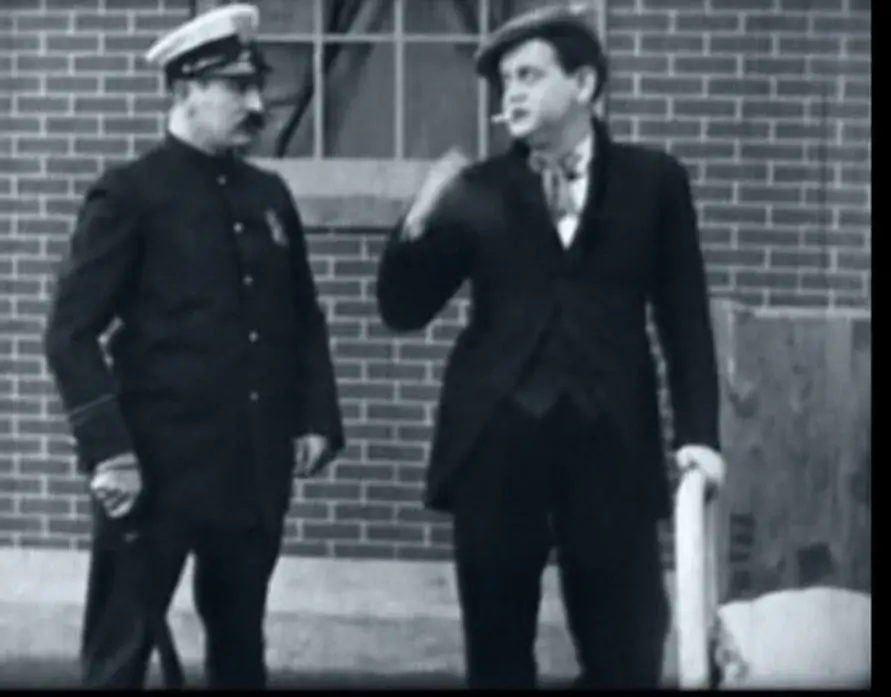
When he wakes up to the policeman’s boot, it’s not just a gag—it’s a reminder that for men like his character, there is no 'happily ever after.' This cynical edge is what separates this film from the more whimsical shorts like Sic 'Em Brownie. It’s a comedy that isn't afraid to be miserable.
'Move Along' is a fascinating, if flawed, piece of silent cinema. It showcases a comedian at the top of his game and a director who understood how to use the medium to evoke emotion beyond simple laughter. While the ending remains a point of contention, the journey through the rain-soaked streets is one worth taking. It is a reminder that even in 1926, cinema was grappling with the harsh realities of urban life with a mix of humor and heart.
IMDb 6.1
1935
Community
Log in to comment.