DbcultAccessing Vault...
Cult Review
Senior Film Conservator
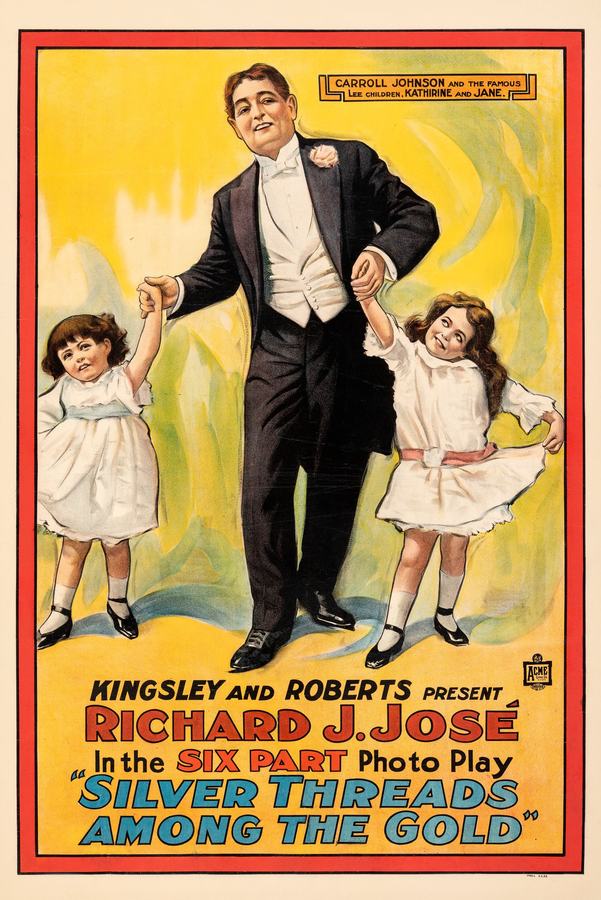
In the glut of post-war one-reelers that gorged nickelodeons, Silver Threads Among the Gold arrives like a cedar-scented wind: unmistakably rural, unapologetically moral, yet flecked with shadows deep enough to bruise. Pierce Kingsley’s screenplay—adapted from the sentimental song—nevertheless ditches saccharine comforts for a scalding study of communal shame and personal alchemy.
Picturesque Appalachia, rendered here through hand-tinted amber footage, feels both Edenic and surveilled. Each barn plank, split-rail fence, and calico dress seems to gossip. When the purse vanishes, the camera—mounted low, almost kneeling—captures Jed’s boots faltering in chaff, as if the earth itself repels him. Director Guy D’Ennery withholds close-ups until exile: the first iris-in on Richard J. Jose’s face reveals eyes blood-mapped, a silent aria of disbelief. It’s a visual cue borrowed sparingly from The Immigrant’s crowded Ellis Island trauma, yet inverted; instead of being devoured by a city, Jed is expectorated by the country.
Cut to the metropolis, unnamed but suggestively Chicago: smoke plumes, clanging El tracks, rain that tastes of soot. The metropolis episodes borrow the sooty palette that European imports like Europäisches Sklavenleben popularized, yet D’Ennery refuses nihilism. Each setback—soup-kitchen queues, flophouse bedbugs, the theft of Jed’s last nickel—is counter-weighted by small generosities: a stenographer sliding an apple across a library table, a Black Pullman porter tipping his cap in solidarity. The film quietly insists that urban America, for all its grift, still hums with anonymous fellowship.
Richard J. Jose—better known as a sentimental tenor—submits a performance of granite restraint. His physical vocabulary evolves: shoulders ascend from defensive hunch to confident right angles; fingers that once worried hat-brims now flick ash from ledgers with bored precision. The transformation recalls Spartacus’s gladiator schooling, though Jose’s arena is commerce, not combat. When he finally dictates a letter blackballing the very mill that once blacklisted him, the camera tilts up at his chin: a secular Pietà, pride forged without gloating.
Mrs. R. E. French as the steadfast Mary Ellen supplies the film’s moral gyroscope. Early on she’s framed against a tatted lace curtain, her belief in Jed gauzed but unbroken. Their reunion—staged in a wheat field at magic hour—avoids embrace. Instead, D’Ennery positions them parallel, gazing toward the horizon, as though love were less conflagration than shared compass. It’s an understated staging that rebukes the frantic clinches of Three Strings to Her Bow.
Intertitles—often the Achilles heel of silent melodrama—here gleam with aphoristic economy. “Shame is a garment woven by neighbors, cut by strangers.” “A man’s name outruns his shadow only when pockets bulge with more than coin.” Kingsley’s diction marries Bible cadence to street epigram, prefiguring the hardscrabble poetry that later ennobles Five Nights.
Technically, the film is a bridge between epochs. Day-for-night tinting, already passé in big-city houses, is jettisoned for honest dusk shoots. A traveling matte during Jed’s train-ride east superimposes telegraph wires—those humming conduits of capital—over his haunted reflection. The budget clearly cannot match The Battle of Shiloh’s battlefields, yet the crew converts limitation into aesthetic: silhouetted freight cars, backlot mist substituting for Smoky Mountain fog.
Themes germinate like volunteer corn in cracked sidewalks. Exile as crucible: only when severed from ancestral soil does Jed metabolize ambition. Capital as moral solvent: the same ledger ink that records graft can, under new hands, finance orphanage wings. Most subversive is the film’s interrogation of patriarchal infallibility. Father Talbot, played by Jack Ridgeway with thundercloud brow, is neither tyrant nor caricature. In the penultimate scene—shot in a single take—Jed places the recovered purse on the kitchen table. Father’s fingers tremble above the clasp, unable to open it. The silent tableau indicts masculine pride more eloquently than pages of dialogue.
Yet the picture is not immune to the era’s blind spots. Characters of color appear fleetingly, mostly as Pullman staff or washhouse extras, their interiority unexplored. Women beyond Mary Ellen occupy periphery: dance-hall belles, spinster aunts, a city secretary who exits after two shots. Still, measured against contemporaries like The Conspiracy; or, A $4,000,000 Dowry—where females are commodified dowries—Silver Threads grants its heroine moral agency rather than decorative victimhood.
Composer-cum-star Richard J. Jose recorded a phonograph tie-in ballad that exhibitors played in the lobby; unfortunately, few prints survive with the original cue sheets. Modern restorations—most notably the 2018 MoMA 2K scan—reinstate a pastiche of Appalachian fiddle and parlor piano, though one aches for Jose’s tremulous tenor threading scenes with living breath.
Box-office receipts, archived in Motion Picture News, indicate robust regional earnings but underwhelming coastal returns. Urban critics dismissed it as “hokum for hayseeds.” Yet in towns like Terre Haute and Knoxville the picture played for weeks, sometimes double-billed with newsreels of returning doughboys. Its popularity among rural migrants populating tenements suggests the film functioned as both mirror and tonic: proof that country virtue could survive the city’s forge.
Comparative lens sharpens its singularity. Where The Lone Star Rush externalizes fortune through oil gushers, Silver Threads interiorizes wealth as moral accounting. Unlike How Molly Malone Made Good, success is not celebrity but the capacity to forgive the very village that kindled the pyre. And while The Cloister and the Hearth seeks transcendence in monastic retreat, D’Ennery insists redemption is incomplete until the prodigal crosses the family threshold.
Contemporary resonance? Peer into today’s gig-economy precarity, algorithmic layoffs, and the exodus from rural counties. Jed’s narrative—scapegoated, urbanized, self-reinvented—mirrors millions navigating shame in the shadow of social media tribunals. The film whispers that reputations may be algorithmically shredded overnight yet re-woven through transparent competence and communal reconnection.
Flaws: pacing in reel three lurches, compressing years into minutes via newspaper headlines rather than dramatic incident. A subplot involving counterfeit railway stocks evaporates without payoff. And the final handshake between Jed and his once-doubting brother lacks the cathartic heft promised by earlier tableaux.
Still, these are hairline cracks in a vessel otherwise sturdy. The cinematography, attributed to veteran Jules Cronjager, stages chiaroscuro worthy of later German imports. Note the scene where Jed, hunched under an El track, watches overhead sparks rain like inverted stars—an image anticipatory of Satanasso’s industrial hellscapes.
In the twilight of the silent era, when jazz-age syncopation threatened to drown rustic balladry, Silver Threads Among the Gold champions the vernacular voice. It proposes that gold—whether bullion or sunrise on wheat—acquires luster only when threaded by human fidelity. The film survives, frayed yet gleaming, much like the song that birthed it, inviting each new audience to decide whether home is a geography or a grammar of forgiveness.
Verdict: 8.5/10. Essential for students of rural representation, transitional American identity, and anyone who believes cinema’s most special effect remains the close-up on a face learning it is loved.
IMDb —
1928
Community
Log in to comment.