DbcultAccessing Vault...
Cult Review
Senior Film Conservator
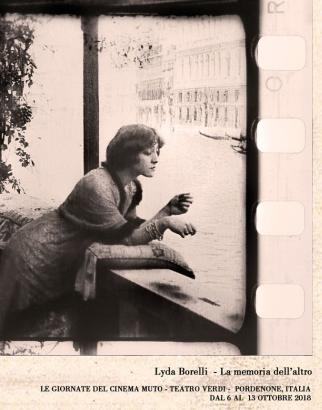
Lyda Borelli’s silhouette opens Memoria dell’altro like a crack in the sky: leather helmet askew, silk scarf snapping against the wind, she descends from cloud-cover into a world still governed by gaslight and protocol. The year is 1915; Europe is busy immolating itself in trenches, yet inside this Italian studio fantasia the wounds are strictly amorous, the battlefield a drawing-room where corsets creak louder than artillery.
Director Mario Bonnard—still years away his later noir-tinged sound work—understands that altitude equals erotic danger. When Borelli’s aviatrix banks her biplane over the Ligurian coast, the camera tilts with her, turning the Mediterranean into a slanted mirror of impossible desires. Every frame vibrates with the tension between lift and gravity, between a woman who refuses to be owned and a society that still prices brides by the carat.
The sky is not freedom here; it is merely a higher prison with better vistas.
Enter the Prince of Sèvre, played by Vittorio Rossi Pianelli with the languid cruelty of a man who has never heard the word no except as foreplay. He offers Lyda a château, a title, a vault of heirlooms looted from three revolutions. She laughs—an abrupt, modern sound that the intertitles can only approximate with “Grazie, no.” The refusal is so casual it feels like regicide.
Mario (Emilio Petacci) arrives next: trench-coat scented with printer’s ink, engagement ring burning through his glove like a guilty conscience. He is dispatched to interview the flying prodigy, yet the interview collapses into seduction within the length of a single iris-in. Bonnard withholds close-ups until the lovers lock eyes; then the camera lunges forward, as if itself complicit. Their first kiss is intercut with shots of a propeller slowly winding down—machinery surrendering to biology.
But the real protagonist of the sequence is architecture: a spiral staircase that corkscrews upward through Lyda’s aerodrome loft. It functions like a DNA helix of fate, carrying Mario to her bedchamber and, later, Cesarina (Letizia Quaranta) back to reclaim him. The women never confront one another directly; instead they wage war via negative space, via the echo of heels on wrought iron, via the flutter of a curtain at the exact moment one exits and the other enters.
Cesarina ought to be a thankless role: the scorned fiancée, the narrative obstacle. Yet Quaranta infuses her with such icy pragmatism that the camera seems to drop a few degrees whenever she glides into frame. She does not plead; she recalibrates. Whispering into Mario’s ear, she reframes the entire affair as a class suicide: marry an aviatrix and you’ll be the punchline of every salon in Turin. The performance is all in the tempo—deliberate, soporific, like a spider paralyzing prey before wrapping it in silk.
Respectability, the film suggests, is Italy’s most addictive narcotic.
Mario capitulates off-screen; we only glimpse the aftermath. Bonnard cuts from Cesarina’s triumphal gaze to a thunderclap of silence: Lyda alone in her hangar, wedding-cake clouds visible through the rafters, a half-packed trunk gaping like a mouth that has forgotten how to speak. The intertitle offers no dialogue—merely the date “Domani”—tomorrow—which, in the context of 1915, sounds less like promise than epitaph.
Scholars love to pigeonhole Borelli as the femme fatale of Italian diva-film, but Memoria dell’altro complicates the label. Yes, she sports the genre’s signature chlorotic pallor, eyes ringed with the violet fatigue of someone who has read too many Symbolist journals. Yet the film refuses to punish her with the standard fin-de-siècle demise—no morphine, no leap from parapet. Instead the final shot traps her inside a looping, existential gif of anticipation: she revs the engine, lets the aircraft shudder, but never releases the brake. The propeller churns smoke into the shape of a question mark that dissolves before it can be answered.
Compare this to The Cheat’s hysterical conflagration, where Fannie Ward’s branded flesh becomes spectacle, or to After the Ball’s moralizing epilogue that shoves the errant heroine into marriage and oblivion. Bonnard withholds both damnation and absolution; he simply parks Lyda on the tarmac of perpetual almost.
Viewers conditioned by late silent cinema’s symphonic crescendos may be startled by the quiet that haunts this print. Contemporary accounts mention a single live avioline—a hybrid violin rigged to mimic propeller drones—accompanying the Venice premiere. Absent that, the film hisses like a brazier: nitrate crackle substituting for wind, for heartbreak, for the hush of a man sneaking down a servant’s stair at dawn. The illusion is so complete you swear you smell castor oil and hot metal, the olfactory signature of early aviation.
Released months after Italy’s entry into WWI, Memoria dell’altro cannot escape the zeitgeist. Lyda’s aircraft—a Blériot XI stitched together with Italian military surplus—echoes the fragile machines then reconnoitering over the Alps. When she banks left, the horizon tilts toward Tripoli, toward Libya’s desert where her same model dropped grenades on Bedouin camps a scant three years earlier. Love and empire share the same cockpit here; the erotic triangle merely a domestic displacement of larger conquests.
Every love affair in 1915 Italy is a proxy war.
Yet the film declines jingoism. Bonnard’s camera lingers on the instability of flight rather than its potency: fabric wings warping under stress, rigging wires humming like overtightened harp strings. The message is clear: conquer gravity, conquer desire, conquer nations—sooner or later the universe invoices you for fuel.
Place Memoria dell’altro beside The Fates and Flora Fourflush and you see two divergent attitudes toward female appetite: American slapstick cushions transgression with burlesque, whereas Italian melodrama sharpens transgression into a stiletto. Contrast it with The Masked Motive and you notice how both films use architecture-as-snare: staircases, balconies, boudoir screens become the Panopticon of patriarchy.
Oddly, the closest spiritual cousin might be Gypsy Love: another tale where bohemian freedom collides with bourgeois contract, though that Viennese operetta lets the lovers escape into harmonic major chords, whereas Bonnard leaves us in the minor key of doubt.
The surviving 35 mm element—housed at Milan’s Cineteca Italiana—is incomplete: two reels, water-stained, riddled with vinegar syndrome blossoms that look eerily like the lilacs Mario once tucked into Lyda’s shoulder strap. Digital cleanup removed scratches but kept the amber scabs of decay, reasoning that amnesia is a worse defect than emulsion rot. The tinting scheme follows Bonnard’s production notes: cobalt for exteriors, straw-gold for salons, rose for the ambiguous moments between confession and coitus. Projected at 18 fps instead of the modern 24, gestures acquire the languor of underwater ballet, a tempo arguably closer to 1915 spectatorship.
Contemporary critics hailed Borelli as “l’angelo del cielo” yet tethered that praise to moral caution: her yearning must end in solitude, they argued, lest the social fabric unravel. A century on, the same narrative reads as proto-feminist sabotage. Lyda’s refusal to die, to marry, or to capitulate turns her into an open tab in history’s browser: the possibility of a life lived outside the ledgers of men. When the prince waves his bloodline like a credit card, she laughs; when the journalist offers adulterous weekends, she takes the pleasure but returns the deed; when the other woman reclaims the groom, Lyda simply fastens her helmet tighter.
To survive as a woman in 1915 is to become an expert in controlled altitude.
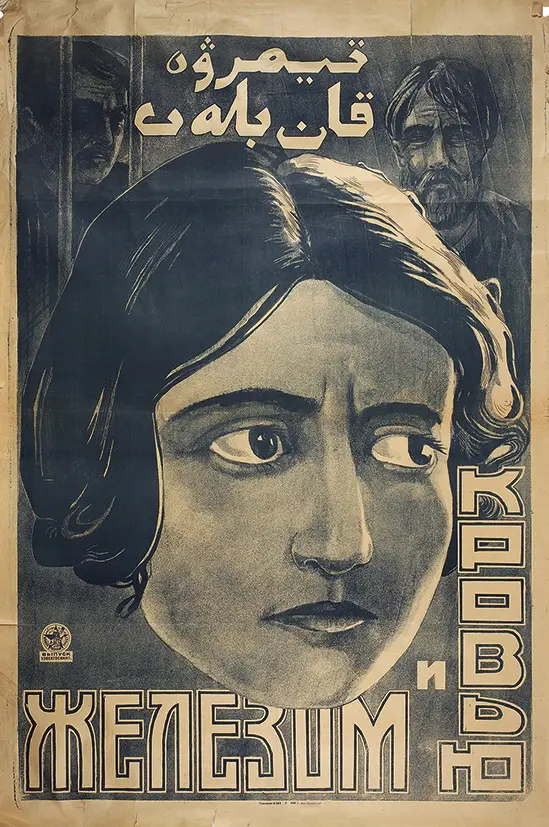
In that sense the film rhymes with Sonka zolotaya ruchka, where another heroine weaponizes criminal savvy against Tsarist patriarchy, though Lyda’s rebellion is quieter, more aerodynamic: she steals altitude, not rubles.
Great cinema is not what you watch; it is what watches you back. Long after the last propeller flicker, Borelli’s gaze remains perched in the rafters of your skull, asking whether you too have ever taxied to the runway of an impossible life, throttle wide, brakes engaged. The film’s tragedy is not that Lyda loses Mario—it is that history itself is engaged to Cesarina, forever whispering duty just as you prepare for take-off.
Stream it if you must, but better to hunt down one of the rare archival screenings where the projector’s carbon-arc throws shadows sharp enough to cut. Sit on the aisle, let the beam pass over your skin, and feel the hum of that century-old engine. When the lights rise, you will walk outside hearing an imaginary propeller—an aural hallucination that lingers like tinnitus for days, reminding you that every ascent demands its sacrifice, every memory its altitude sickness.
In the end we are all grounded—only the manner of our fall differs.
IMDb 6.2
1932
Community
Log in to comment.