DbcultAccessing Vault...
Cult Review
Senior Film Conservator
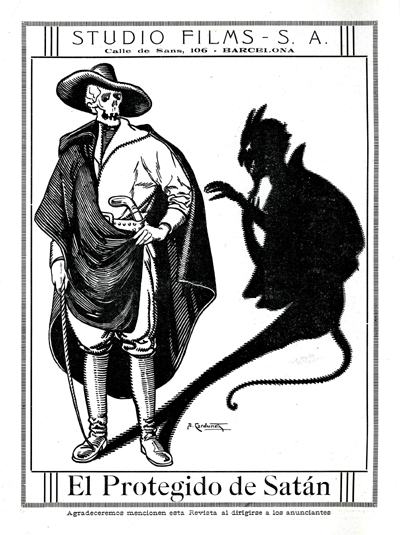
There are films that merely entertain, and then there are those that burrow deep into the psyche, unsettling long-held convictions and leaving an indelible mark. Juan María Codina’s 'El Protegido de Satán' is unequivocally of the latter variety. It’s a cinematic descent into the abyss, a chilling exploration of artistic ambition, moral compromise, and the insidious allure of forbidden knowledge. From its opening frames, steeped in a pervasive melancholia, to its breathtakingly nihilistic conclusion, the film asserts itself not just as a potent horror offering, but as a profound meditation on the human condition’s darker impulses.
The narrative, meticulously crafted by Codina, centers on Elena, portrayed with an astonishing blend of fragility and burgeoning malevolence by Carmen Rodríguez. Elena is a painter on the precipice of obscurity, her talent undeniable but her spirit slowly crushed by the indifference of a world that refuses to acknowledge her unique vision. Her early work, glimpsed briefly, hints at a delicate sensitivity, a nuanced understanding of light and shadow, but it lacks the 'punch,' the 'edge' that the art establishment seems to crave. This initial portrayal of Elena's struggle immediately establishes a sympathetic connection with the viewer, making her subsequent, agonizing choices all the more impactful.
It is into this crucible of desperation that Josep Balaguer strides as Maestro Alarico, a performance that is nothing short of mesmerizingly diabolical. Balaguer eschews conventional villainy, instead crafting a character of unsettling charisma, a serpentine whisperer who offers salvation with one hand while tightening a noose with the other. His eyes, often obscured by shadow or glinting with an ancient, knowing light, convey centuries of accumulated malevolence. Alarico isn't merely a cult leader; he is a force of nature, an embodiment of temptation itself, offering Elena the very thing she yearns for most: artistic immortality. His 'Obsidian Hand' brotherhood is depicted with a subtle, almost academic, sinister quality, far removed from the sensationalized cults often seen in genre fare. This restraint only serves to amplify their chilling efficacy.
The film’s visual language is a triumph of atmospheric dread. Cinematography by an uncredited, but clearly visionary, hand bathes the urban landscapes in a perpetual twilight, reflecting Elena's internal descent. The use of shadow is not merely aesthetic; it's narrative, obscuring truths and hinting at the unseen forces at play. When Elena's art begins to transform, so too does the film's visual palette. Her early works, muted and yearning, give way to canvases exploding with aggressive, almost violent, hues. The film cleverly uses these artistic transformations as a barometer for Elena's spiritual corruption, her once-delicate brushstrokes becoming sharp, jagged, and imbued with an unholy energy. This stylistic evolution is reminiscent of the psychological unraveling depicted in films like The Turmoil, but with a uniquely macabre artistic bent.
The production design deserves particular commendation. Elena's studio, initially a sanctuary of creative aspiration, gradually becomes a charnel house of spiritual decay, littered with disturbing artifacts and the unsettling detritus of her 'new' artistic process. The interiors of Alarico's inner sanctum are a masterclass in understated horror – ancient, ornate, and radiating an almost palpable sense of forbidden history. Every prop, every architectural detail, feels imbued with significance, whispering tales of rituals performed and souls claimed over centuries. This meticulous attention to detail anchors the supernatural elements in a tangible, believable reality, making the horror resonate on a deeper, more visceral level.
While Rodríguez and Balaguer command the screen with their powerful performances, the supporting ensemble provides crucial texture and depth to Codina's intricate tapestry. Julián de la Cantera, as Detective Vargas, offers a grounding presence, his pragmatic skepticism slowly eroded by the increasingly inexplicable events. His journey from cynical observer to desperate truth-seeker provides an essential human anchor amidst the escalating supernatural chaos. Vargas's dogged pursuit of answers, despite the institutional resistance and personal danger, gives the audience a surrogate through which to process the unfolding horror. His scenes often provide a brief respite from the suffocating dread, only to plunge us back into it with renewed force as his investigations inevitably lead to more unsettling discoveries. His performance, understated yet compelling, prevents the film from becoming solely a two-hander, broadening its scope and humanizing its terrifying premise.
The film also benefits immensely from the nuanced portrayals of the other members of Alarico's cult. Anita Stephenson, as the seemingly demure but chillingly devoted acolyte, brings a disturbing quiet intensity to her role. Her unwavering loyalty to Alarico, expressed through subtle gestures and vacant stares, speaks volumes about the cult's pervasive influence. Similarly, Bianca Valoris and Baltasar Banquells, as other key members, embody the chilling banality of evil, their everyday appearances masking a sinister dedication to ancient rituals. Their collective presence creates an atmosphere of pervasive unease, suggesting that darkness lurks in the most unassuming of faces, a theme explored with equal potency in films like The Silent Witness.
Even smaller roles leave a lasting impression. María Álvarez de Burgos, in a brief but poignant turn as a distraught family member of one of the missing, injects a raw emotional core into the escalating mystery. Her brief scenes serve as a stark reminder of the human cost of the dark machinations at play. Juan Oliva and Leandro Cinca, as art critics initially fawning over Elena's 'transformed' work, perfectly capture the superficiality and susceptibility of the art world, their pronouncements becoming increasingly absurd as Elena's art grows more grotesque. Their rapid shift from dismissive to adulatory, then to fear-stricken, highlights the pervasive power of the dark forces influencing Elena's success. This satirical jab at the fickle nature of artistic judgment adds another layer to Codina's already rich narrative.
The supporting cast's collective impact is truly remarkable, elevating 'El Protegido de Satán' beyond a simple horror narrative. Each actor, from Luis Zapeta's understated police chief to Ramón Quadreny's unsettling gallery owner, contributes to the film's immersive sense of dread. Their individual performances, though often brief, are meticulously crafted, adding to the intricate web of deception and terror that Codina has so skillfully woven. Elisa Ruiz Romero, Silvia Mariátegui, and Lola París, in their various roles as cult members, victims, or peripheral characters caught in the supernatural undertow, each contribute to the pervasive atmosphere of unease, embodying the widespread reach of Alarico's influence. Their presence, often fleeting, serves to expand the perceived scope of the cult's activities, suggesting a much larger, more deeply entrenched network of malevolence than initially apparent. This broad cast, each delivering a memorable contribution, ensures that the film feels populated by real people facing unimaginable horrors, rather than mere archetypes.
'El Protegido de Satán' is a masterclass in thematic exploration. At its core, it’s a modern Faustian bargain, but one rendered with a raw, psychological intensity that feels uniquely contemporary. The film interrogates the very nature of artistic creation: does true genius require a brush with the forbidden? Is there a line that, once crossed in pursuit of greatness, irrevocably corrupts the soul? Codina's script doesn't offer easy answers; instead, it plunges the audience into the ethical quagmire alongside Elena, forcing a confrontation with uncomfortable truths about ambition and sacrifice. The narrative structure, while linear, frequently employs unsettling dream sequences and hallucinatory imagery, blurring the lines between reality and Elena's deteriorating mental state. This technique, while challenging, is expertly handled, enhancing the film's psychological horror elements and preventing it from devolving into mere jump-scare territory. The gradual escalation of the horror, from subtle unease to overt terror, is paced with surgical precision, a testament to Codina's narrative prowess. One cannot help but draw parallels to the slow, agonizing descent of characters in films like Slave of Sin, where moral erosion is as terrifying as any supernatural threat.
The film also subtly critiques the art world itself, its susceptibility to hype, and its hunger for the 'next big thing,' regardless of its origins. The critics and gallery owners who once dismissed Elena now laud her grotesque, demonically inspired works, blind to the malevolent source of her 'genius.' This satirical undercurrent adds another layer of sophistication to the film, making it more than just a supernatural thriller. It's a commentary on societal values, on what we choose to celebrate and ignore in our pursuit of cultural novelty. The subversion of artistic appreciation, where the most unsettling and morally compromised art gains the most acclaim, highlights a disquieting truth about the human fascination with the macabre and the transgressive. This thematic depth elevates the film beyond mere genre fare, inviting deeper reflection on the nature of beauty, horror, and authenticity in artistic expression.
The sound design in 'El Protegido de Satán' is an unsung hero, meticulously crafted to amplify the film’s pervasive sense of dread. The score, often minimalist and discordant, weaves unsettling harmonies that underscore Elena's psychological unraveling. It’s never intrusive, but rather a subtle, creeping presence, a low thrum that suggests an ancient evil stirring beneath the surface. The film expertly uses silence as well, moments of profound quietude often preceding bursts of disorienting noise or chilling whispers, making the audience acutely aware of every creak and groan. The ambient sounds of the city, distorted and alienated, further contribute to Elena’s sense of isolation and impending doom. The sound of brushes scratching violently against canvas, initially mundane, becomes increasingly harsh and unsettling as Elena's art takes on its demonic qualities. This auditory journey mirrors her visual and psychological one, creating a truly immersive experience of escalating horror. The guttural whispers, the distant, ritualistic chants, and the almost imperceptible shifts in the atmospheric soundscape are all designed to lodge themselves deep within the viewer's subconscious, continuing to haunt long after the credits roll. This sophisticated use of sound is a hallmark of truly effective horror, akin to the unsettling auditory landscapes crafted in films like The Corner, where what you hear is often more terrifying than what you see.
In its unflinching depiction of moral decay and supernatural malevolence, 'El Protegido de Satán' carves its own niche, yet it resonates with echoes of other cinematic explorations of the darker side of human nature. One might consider its thematic depth alongside the stark psychological examinations found in The Life and Death of King Richard III, where ambition's corrupting influence leads to monstrous acts, albeit through different means. Both films meticulously chart a character's descent into depravity, demonstrating the irreversible consequences of choices made in the pursuit of power or recognition. The chilling concept of an unwitting protagonist becoming a pawn in a larger, ancient game also recalls the subtle dread of The Ordeal of Elizabeth, though 'El Protegido de Satán' pushes its protagonist's agency, or lack thereof, into far more terrifying, existential territory.
Furthermore, the film's nuanced portrayal of a clandestine, influential society and its insidious operations bears a conceptual kinship with the quiet menace of The Flight of the Duchess, where hidden agendas and societal pressures dictate fates. However, 'El Protegido de Satán' injects a much more potent, overtly supernatural element, elevating its secret society from mere human conspiracy to something far more ancient and terrifying. The exploration of a hidden world coexisting with the mundane, influencing it from the shadows, is a recurring motif in cinema, but Codina’s vision imbues it with a unique blend of gothic elegance and visceral horror. The psychological toll exacted upon Elena, and the insidious nature of the pact she makes, also brings to mind the slow-burn dread of Mary Lawson's Secret, where hidden truths and their consequences slowly unravel a life. The film's ability to juxtapose the mundane with the utterly horrific, making the supernatural feel disturbingly plausible, is a testament to its masterful storytelling.
In conclusion, 'El Protegido de Satán' is not merely a film to be watched; it is an experience to be endured. It is a bold, uncompromising work of art that challenges, disturbs, and ultimately enthralls. Juan María Codina has crafted a narrative that lingers, its unsettling imagery and profound questions echoing long after the final, chilling frame. This is a film that demands discussion, dissecting its layers of psychological horror, its astute social commentary, and its unforgettable performances. It solidifies its place as a significant contribution to the genre, a dark jewel in the crown of Spanish horror cinema that will undoubtedly be revisited and analyzed for years to come. It's a journey into the heart of darkness, where the cost of genius is a soul, and the protector is anything but divine. This cinematic offering is a true testament to the power of film to explore the most unsettling corners of the human psyche, leaving an indelible mark on its audience, much like the indelible stains Elena's art leaves on the soul.
IMDb —
1926
Community
Log in to comment.