DbcultAccessing Vault...
Cult Review
Senior Film Conservator
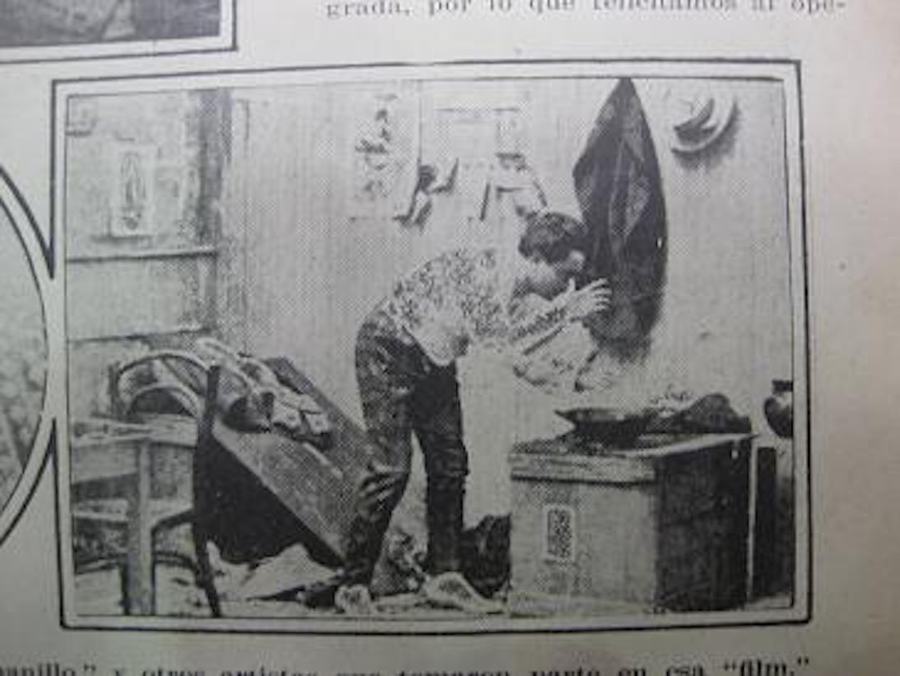
From the opening frame, El rompecabezas de Juanillo immerses the viewer in a chiaroscuro tableau where the sea’s relentless roar competes with the town’s muted murmurs. The cinematography, bathed in muted blues and bruised oranges, mirrors the protagonist’s internal conflict: a yearning for illumination amidst encroaching darkness. The director’s decision to linger on rain‑slick cobblestones, each puddle reflecting fractured neon signage, is not mere aesthetic flourish; it is a visual metaphor for the puzzle’s fragmented narrative.
The screenplay unfolds like a series of interlocking gears, each scene a cog that propels the next. Juanillo’s discovery of the wooden box is the inciting incident, but the real thrust emerges as the audience is invited to solve the enigma alongside him. The script’s pacing is deliberately uneven—moments of languid contemplation are punctuated by sudden, almost jarring revelations. This rhythm evokes the sensation of turning a stubborn lock: the anticipation builds, the tension spikes, and finally the click reverberates.
Comparatively, the structural ingenuity recalls the cerebral layering seen in The Page Mystery, yet El rompecabezas de Juanillo diverges by grounding its abstractions in visceral, tactile reality. Where the former dwells in textual riddles, this film anchors its mysteries in the tactile grain of wood, the scent of salt‑laden air, and the palpable weight of generational guilt.
Juan Arthenack delivers a performance that oscillates between stoic restraint and fleeting vulnerability. As the antiquarian, he embodies a paradox: a scholar whose polished exterior conceals a lineage tangled in the very puzzle he seeks to decode. His eyes, often narrowed against the sea wind, flicker with an unspoken desperation that transcends dialogue.
Arthenack’s nuanced gestures—an absent‑minded tapping of the box’s surface, a lingering stare at a faded photograph—communicate subtext more effectively than any monologue. In scenes where he confronts the mayor, his controlled fury is reminiscent of the simmering intensity that propelled the protagonist in The Wolf. Yet, unlike the overt aggression in that film, Arthenack’s rage is a slow‑burn, a smoldering ember that finally erupts when the puzzle’s final compartment is revealed.
At its core, the film interrogates the elasticity of memory. The puzzle’s verses, written in an archaic dialect, act as mnemonic anchors that pull characters back into forgotten epochs. Each solved segment triggers a flashback—a kaleidoscopic montage of smuggler raids, clandestine baptisms, and a lost emerald that once adorned a queen’s crown. These sequences are not merely decorative; they underscore the film’s thesis that personal identity is a mosaic assembled from inherited narratives.
The sea, ever‑present, functions as both setting and symbol. Its relentless tides echo the inexorable march of time, washing away secrets while simultaneously preserving them in its depths. This duality is reminiscent of the thematic currents in Der gestreifte Domino, where water serves as a conduit for revelation.
The palette is a calculated triad: dark orange (#C2410C) for moments of revelation, yellow (#EAB308) for fleeting hope, and sea blue (#0E7490) for the omnipresent oceanic backdrop. The director employs these hues with surgical precision. For instance, when Juanillo finally aligns the penultimate piece, a wash of dark orange floods the frame, casting the characters in a warm, almost sacramental glow.
Sound design is equally meticulous. The creak of the puzzle’s hinges is amplified, becoming a percussive heartbeat that syncs with the viewer’s anticipation. Ambient waves crash in a low‑rumble, punctuated by the occasional church bell—a reminder of the town’s lingering religiosity, a theme explored further in Hilde Warren und der Tod.
Three motifs recur with deliberate frequency:
When juxtaposed with The Ring and the Ringer, both films share an obsession with artifacts that bind past and present. However, while the latter leans heavily on melodramatic exposition, El rompecabezas de Juanillo trusts its visual language, allowing the puzzle’s mechanics to narrate as much as the dialogue.
In terms of pacing and tonal balance, the film finds a middle ground between the relentless suspense of Kiss or Kill and the measured, character‑driven unraveling of Poor Relations. It avoids the gratuitous violence of the former, opting instead for psychological tension, and sidesteps the occasional narrative meandering of the latter by maintaining a clear, forward‑driving objective.
The director’s vision is evident in every frame, from the weather‑worn dockside warehouses to the intimate clutter of Juanillo’s workshop. Production design employs authentic period pieces—rusted iron tools, hand‑stitched sails, and weathered ledgers—imbuing the world with a tactile verisimilitude that grounds the film’s more fantastical elements.
Lighting choices deserve particular commendation. In scenes where characters grapple with their lineage, the director employs chiaroscuro, casting half‑faces in shadow, thereby visualizing the duality of known versus unknown heritage. This technique is reminiscent of the visual storytelling in The Reward of Patience, yet it feels fresher here due to the integration of the sea’s natural luminescence.
The dialogue is spare, each line weighted with subtext. Juanillo’s terse responses contrast sharply with Arthenack’s erudite soliloquies, highlighting generational and cultural gaps. The script’s most memorable moments arise when characters speak in riddles that echo the puzzle’s own cryptic verses, creating a meta‑narrative loop that rewards attentive viewers.
There are, however, occasional lapses where exposition feels forced—particularly during the exposition of the sect’s doctrine. Yet these moments are brief and do not significantly detract from the overall momentum.
Although the cast list is minimal, the supporting actors deliver nuanced performances that enrich the tapestry. The mayor, portrayed with a veneer of civility that cracks under scrutiny, embodies the corrupt aristocracy often seen in The Two Edged Sword. The town’s elderly librarian, a silent custodian of forgotten lore, provides the film’s emotional anchor, her stoic presence reminding viewers of the weight of collective memory.
The film’s denouement, set against a storm‑lashed shoreline, is both cathartic and melancholic. As the final piece slides into place, a phosphorescent bloom erupts, illuminating the faces of the characters in an otherworldly light. The visual spectacle is matched by an aural crescendo—a choir of distant whales, the wind’s howl, and the soft ticking of the tide clock. This convergence of sensory elements evokes a profound sense of closure while simultaneously leaving a lingering ache for what remains unsaid.
The audience is left to contemplate the paradox that some mysteries, once solved, become new riddles—an idea that resonates long after the credits roll.
Rating: ★★★★½ (9/10)
El rompecabezas de Juanillo is a tour de force that melds visual poetry with cerebral intrigue. Its meticulous craftsmanship, anchored by Juan Arthenack’s magnetic performance, renders it a standout entry in contemporary mystery cinema. While minor narrative hiccups surface, they are eclipsed by the film’s thematic depth and aesthetic audacity. For viewers who relish puzzles that extend beyond the screen—those that invite introspection about heritage, truth, and the inexorable tide of time—this film is an unmissable experience.
Explore further analyses of similar narrative structures in Inherited Passions and discover how the motif of hidden artifacts shapes modern storytelling.
IMDb 6.2
1932
Community
Log in to comment.