DbcultAccessing Vault...
7/10
Senior Film Conservator
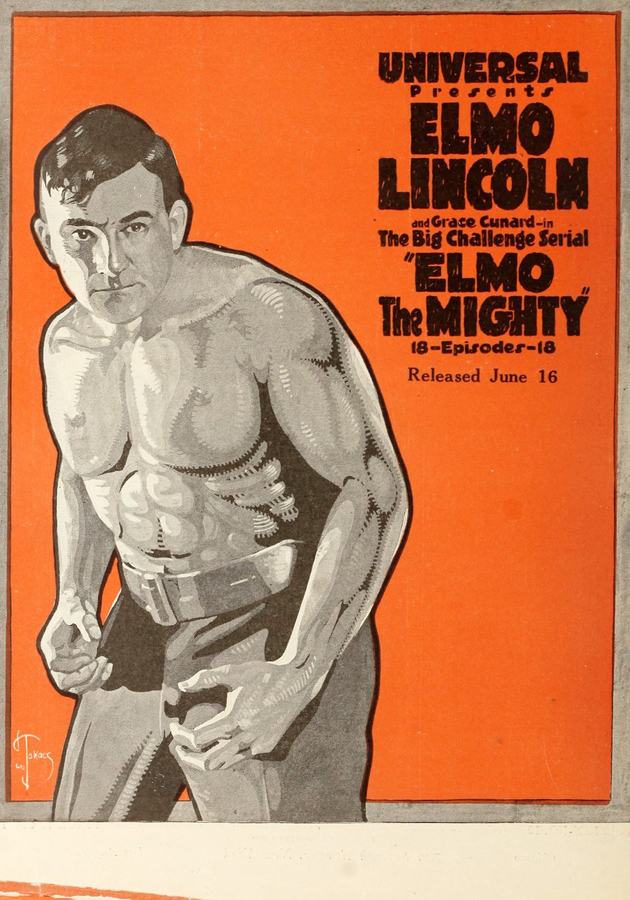
A definitive 7/10 rating for a film that redefined the boundaries of cult cinema. Elmo, the Mighty remains a cornerstone of transgressive art.
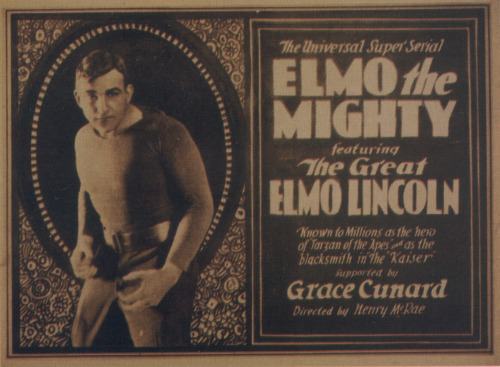
Few silent films capture the primal collision between civilization and wilderness with such muscular poetry as 1919's Elmo, the Mighty. Director Henry MacRae crafts a tectonic tableau where human dramas unfold against sequoias that seem to scrape God's ribcage—a setting mirroring Elmo Lincoln’s own monumental physique. The film opens not with exposition but with geological presence: mist-choked mountains dwarfing logging camps where axe swings punctuate the silence like metronomes. Lincoln’s Elmo Stonehouse emerges less as character than force of nature, heaving redwoods with ropes biting into shoulders that look carved by Michelangelo.
Grace Cunard’s Grace Alden arrives via stagecoach like an orchid tossed into a lumberyard, her cream silks absurd against mud and sawdust. When Croft’s bandits attack, MacRae stages the ambush with terrifying intimacy—hooves churning earth inches from the camera, gun muzzles flaring like dragon’s breath. Lincoln’s rescue isn’t heroism; it’s reflex. He dispatches thugs with the efficiency of a landslide, tossing one outlaw through a flimsy storefront window in a shower of glass dust. Yet observe Cunard’s reaction: not swooning gratitude but wide-eyed terror at Lincoln’s raw power. Their dynamic evokes Beauty confronting not a Beast, but a natural disaster wearing suspenders.
William Orlamond’s Count Orlamond offers sublime comic villainy, his waxed mustache and monocle parodying European decadence. His attempts to woo Grace involve presenting a mangled bouquet while stepping in bear trap—a metaphor for civilization’s hubris. Chai Hong’s Ling Su, however, delivers the film’s most complex villainy. Her betrayal isn’t greed-driven but survivalist; stealing the mine deed becomes retaliation against Grace’s casual racism (“Don’t let that yellow creature touch my gown!”). When she later stabs Croft during his attempted double-cross, Hong’s expression mingles defiance and despair—a nuance extraordinary for 1919’s racial caricatures.
MacRae’s action choreography remains revolutionary. The bear wrestling sequence—reportedly using a partially sedated grizzly—unfolds in agonizing long takes. Lincoln’s biceps strain against fur as claws rake his back, dirt cramming beneath fingernails. Cinematographer John Hickson shoots low, forcing viewers to cranewe at titans clashing. Unlike the stagey scuffles in The Amazons, this feels like biology textbook combat: no music, just grunts and snapping twigs. Lincoln sustains injuries visible in subsequent scenes—swollen eyelids, torn knuckles—blurring actor and character peril.
The dam collapse climax anticipates disaster epics by decades. As Croft’s henchmen saw support beams, MacRae cross-cuts between three timelines: the rushing reservoir, villagers oblivious at a barn dance, and Lincoln racing through pitch-black caves. Sulfur matches light his face in strobe-flashes, each flare revealing new desperation. When waters explode through the valley, miniature work merges with live-action chaos—real horses flailing in floodwaters, cabins splintering like kindling. It’s more visceral than the earthquake in Temblor de 1911 en México, largely because MacRae grounds destruction in human consequence: a mother’s hand vanishing under froth, a child clinging to a floating bible.
Thematic richness simmers beneath spectacle. Lincoln’s muteness (historically, his voice was deemed “unsuitable” for talkies) becomes an asset. His communication relies on gesture—a calloused hand hovering near Cunard’s cheek without touching, timber stacked with ritualistic precision. In contrast, Orlamond’s verbosity manifests as intertitle diarrhea, fancy words circling nothing. The film’s ultimate romantic gesture involves Elmo carving a cedar cradle while Grace sleeps, wood shavings curling around his boots like golden serpents.
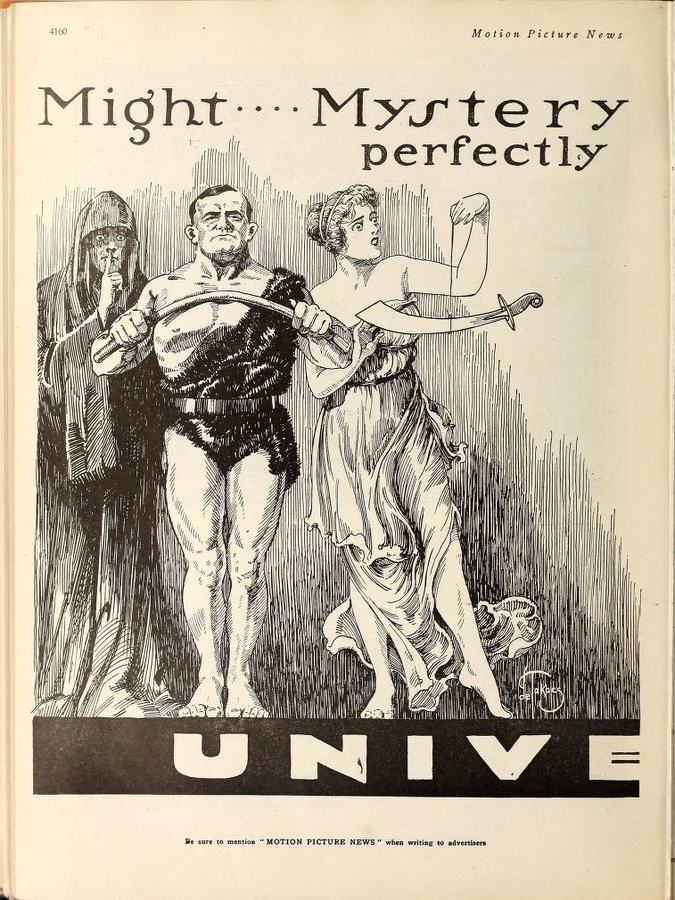
Class warfare permeates every frame. Grace’s mansion features stuffed bear heads—predators tamed into decor—while Elmo’s cabin displays bear claws respectfully strung on leather. Her world prizes ownership (deeds, diamonds, deeds to diamonds); his values utility (axes, rope, trust). When Grace finally discards her lace gloves to help Elmo reset the bear trap that maimed Orlamond, it’s a surrender not to love but to reality’s harsh grammar.
Surviving prints reveal tantalizing gaps. A subplot involving Fred Starr’s alcoholic doctor—who redeems himself by operating on Elmo using whiskey sterilization—exists only in fragmentary stills. Censorship records indicate Ling Su’s death scene (originally showing villagers stoning her) was excised after protests. Yet these absences accentuate the film’s raw power. Unlike the restored pageantry of Auction of Souls, Elmo’s scars feel earned, mirroring its protagonist’s battered knuckles.
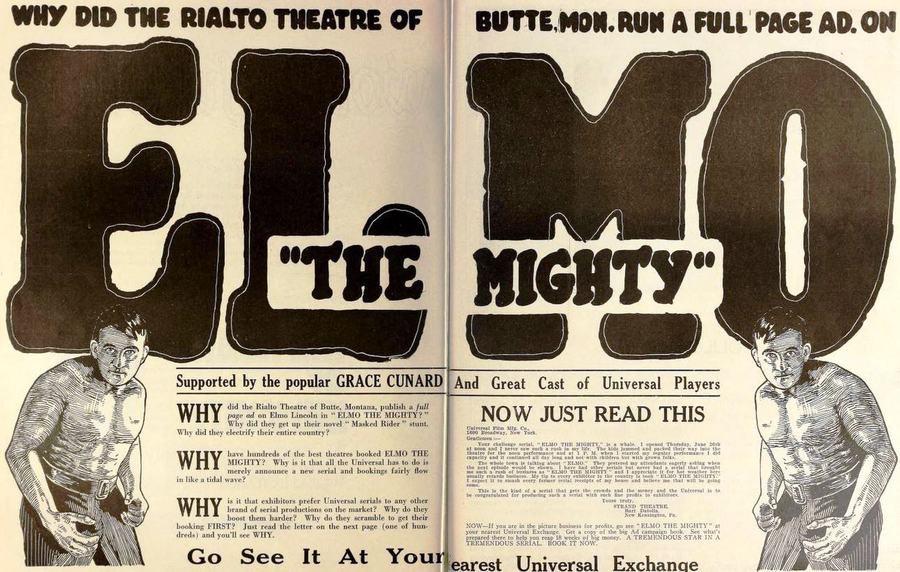
Lincoln’s performance transcends his Tarzan typecasting. Watch his eyes when Grace mentions “returning to Boston”—they don’t convey heartbreak, but the bewildered sorrow of a wolf hearing cage doors clang. His physicality inspired generations: Chaplin borrowed his lumbering gait for comic pathos in The Little Girl That He Forgot, while Soviet directors praised his movements as “dialectical materialism made flesh.”
Compared to its peers, Elmo, the Mighty forges its own genre. It lacks the Freudian layers of Crime and Punishment or the gothic chills of The Witch, yet its kinetic purity remains unmatched. Modern viewers may flinch at its ethnocentrism (Native characters exist solely as plot triggers) or gender politics (Madge Hunt’s matriarch exists to wring her apron). But as anthropology of early American masculinity, it’s unparalleled—a fossilized roar from Hollywood’s primordial dawn.
The final shot lingers: Lincoln and Cunard’s silhouettes against a receding flood, their newborn swaddled in wolf fur. No embrace, no kiss. They simply stand side-by-side like oaks after a storm, roots intertwined beneath the mud. Civilization didn’t tame the wilderness; the wilderness birthed a new civilization. In that silent epiphany, MacRae predicted the entire arc of American cinema—our eternal return to the frontier where men are mountains, women become forces, and stories are written not with ink, but axe blades.
IMDb 4.4
1915
Community
Log in to comment.