DbcultAccessing Vault...
Cult Review
Senior Film Conservator
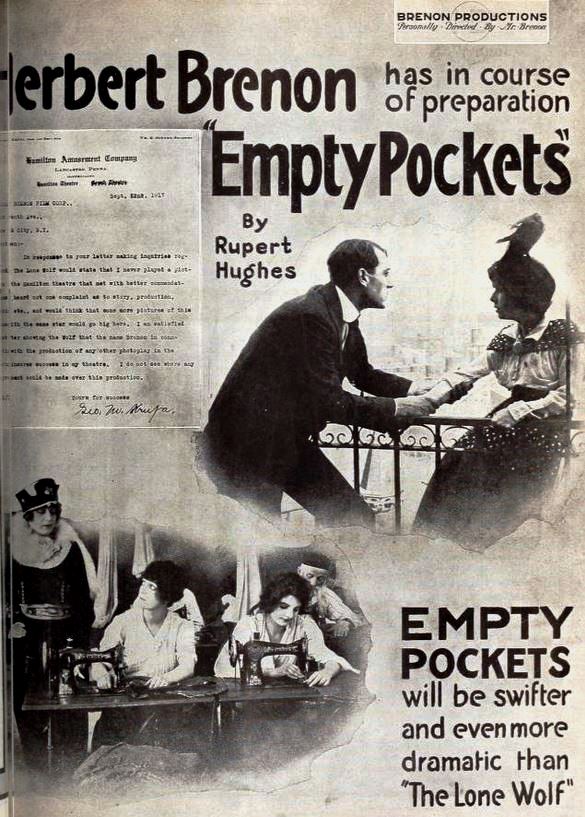
Stepping back into the annals of cinematic history, one encounters films that, despite the passage of a century, still manage to grip the imagination with their sheer narrative audacity. Such is the case with Empty Pockets, a 1918 silent-era mystery that, even today, demonstrates a masterful command of suspense and character intrigue. Directed by the visionary minds of the era and penned by the formidable duo of George Edwardes-Hall and Rupert Hughes, this film delivers a complex whodunit that transcends its temporal origins, offering a rich tapestry of societal commentary interwoven with a thrilling criminal investigation. It’s a testament to the enduring power of a well-crafted story, proving that even without synchronized dialogue, the human drama can resonate profoundly.
The film plunges its audience into immediate disquiet with the discovery of the millionaire Perry Merrithew, ironically nicknamed "Merry," lifeless on the desolate rooftop of an East Side tenement. This isn't just any murder; it's a spectacle of social contrast, a man of immense wealth meeting his end in the gritty underbelly of the city. The initial shock gives way to a chilling clue: strands of vibrant red hair clutched in Merrithew’s rigid hands. This singular detail serves as the fulcrum upon which the entire mystery pivots, narrowing the field of suspects to four distinct women, each with auburn tresses and, presumably, a connection to the deceased. It’s a narrative device that’s both economical and highly effective, immediately establishing a powerful sense of suspicion and drawing the viewer into the detective’s mindset. The sheer audacity of this setup, placing a high-society murder in such a low-rent locale, immediately sets a tone of dramatic tension and social commentary, hinting at the hidden lives and secret desires that often lurk beneath the surface of polite society.
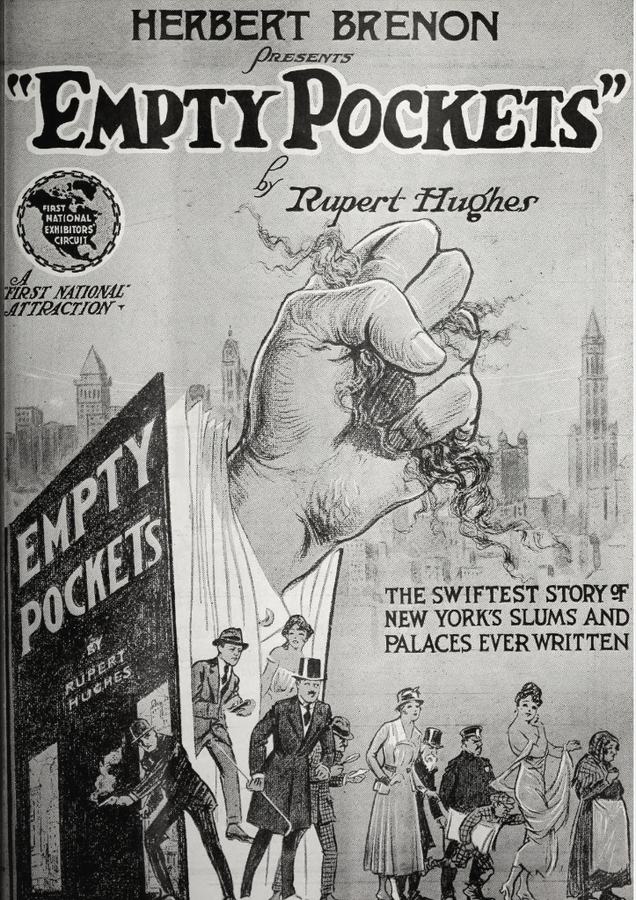
The genius of Edwardes-Hall and Hughes lies in their creation of these four compelling female characters, each representing a facet of early 20th-century urban life and its inherent class divisions. First, there is the millionaire's daughter, a figure of inherited privilege whose life likely intersected with Merrithew's in the rarefied air of high society. Her involvement immediately suggests a potential scandal or a hidden rivalry within the elite circles. Then, Merrithew's mistress enters the fray, a character whose relationship with the victim is inherently fraught with passion, secrecy, and potential betrayal. Her motive could be anything from a lover's scorn to a desperate act born of manipulation. The third suspect is the daughter of a bankrupt society woman, a character whose family's fall from grace might have provided a powerful impetus for desperate measures or a desire for revenge against those who still possessed wealth. Finally, the cabaret dancer, a figure from the city's more bohemian and less constrained world, introduces an element of bohemian allure and potential entanglement in a clandestine lifestyle. This diverse array of suspects—Peggy Betts, Ketty Galanta, Barbara Castleton, and Suzanne Willa, among others, bring these archetypes to life with nuanced performances—ensures that the narrative never feels one-dimensional. Each woman carries her own baggage, her own secrets, and her own potential motive, creating a rich tapestry of human complexity that elevates Empty Pockets beyond a mere crime procedural. It delves into the psychological undercurrents that drive human action, a quality that even contemporary thrillers like The Seven Pearls or The Crimson Wing, while different in their specific plots, share in their exploration of layered character motivations.
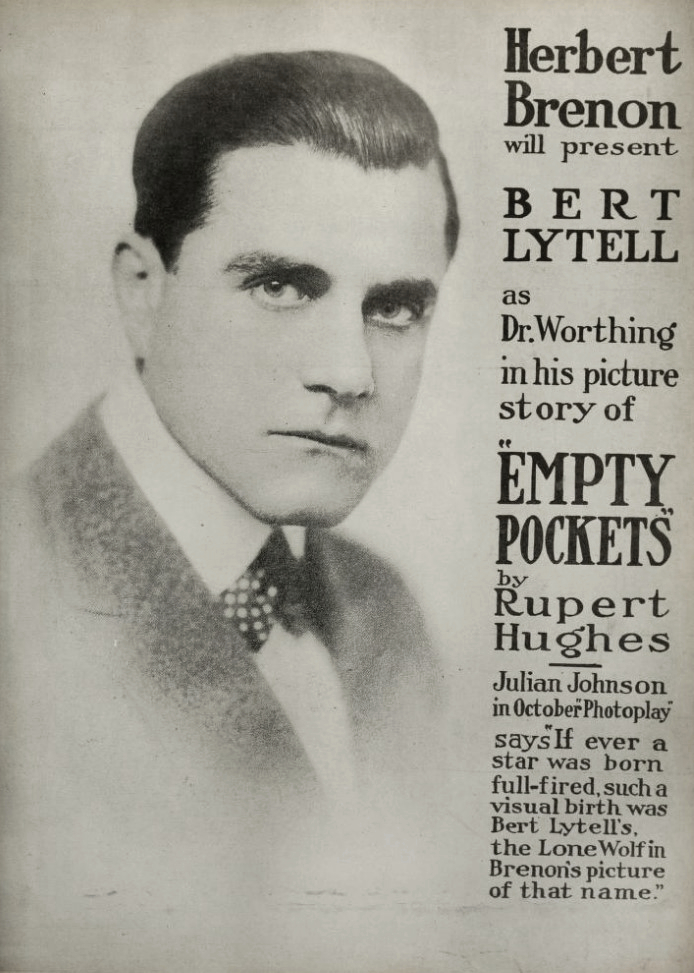
Into this maelstrom of suspicion and societal intrigue steps Dr. Clinton Worthing, portrayed with compelling gravitas by Bert Lytell. Worthing is not merely a detective; he is a man of science and intellect, whose methodical approach to crime-solving provides the film with its intellectual backbone. His "heroic deeds" are not merely acts of physical bravery, but rather triumphs of deduction, perseverance, and an unwavering commitment to truth. He navigates the treacherous waters of high society and the shadowy alleys of the East Side with equal aplomb, piecing together fragments of evidence and challenging preconceived notions. His character arc is particularly engaging, as he must contend not only with the criminal element but also with the social pressures and expectations that often obscure justice. Ben Graham, Malcolm Williams, and Jack Baston also lend their talents to the supporting cast, creating a believable world for Worthing to inhabit. In an era where many narratives relied on overt melodrama, Worthing's cerebral heroism feels remarkably modern, a precursor to the analytical protagonists who would dominate detective fiction for decades to come. His journey is one of intellectual pursuit, a meticulous reconstruction of events that often defies the initial, sensationalistic conclusions. This emphasis on methodical investigation distinguishes Empty Pockets, setting it apart from more action-oriented thrillers of the time and aligning it more with the burgeoning genre of psychological mystery. The film effectively uses Worthing's perspective to guide the audience through the maze of clues, making us feel as though we are solving the puzzle alongside him, a truly immersive experience for a silent film.
The aesthetic craftsmanship of Empty Pockets is undeniably striking. Despite the limitations of silent film technology, the cinematography is remarkably expressive, utilizing stark contrasts and evocative close-ups to convey emotion and build tension. The use of shadow and light, particularly in the tenement scenes, creates an almost noir-like atmosphere, predating the classic film noir era by decades. The performances, too, are a masterclass in non-verbal communication. Actors like Peggy Betts and Ketty Galanta, deprived of dialogue, rely on exaggerated gestures, facial expressions, and body language to convey their characters' inner turmoil, fear, and duplicity. This requires a heightened level of skill, transforming every glance and every movement into a potent narrative tool. The pacing, though deliberate by modern standards, is meticulously controlled, allowing the audience to absorb each clue and ponder each revelation. The intertitles, far from being mere plot facilitators, are crafted with literary flair, often adding poetic depth or ironic commentary to the unfolding drama. This dedication to visual storytelling and expressive acting ensures that the film remains engaging, even for contemporary viewers accustomed to sound and color. It's a powerful reminder that the essence of cinema lies in its ability to tell a story visually, a principle that Empty Pockets champions with remarkable success. The film's ability to create a palpable sense of dread and suspense purely through visual means is a testament to the artistry of its creators, distinguishing it from many of its contemporaries and aligning it with the more sophisticated narrative techniques explored in films like The Bronze Bride or The Bandit of Port Avon, which also relied heavily on visual narrative to convey complex themes and emotional states.
While ostensibly a murder mystery, Empty Pockets delves into deeper thematic waters, offering a subtle yet incisive critique of societal structures and the corrupting influence of wealth. The title itself, "Empty Pockets," is a poignant commentary on the ephemeral nature of material possessions, particularly in the face of death, but it also hints at the moral and emotional emptiness that can plague even the most affluent. The stark contrast between Merrithew's millionaire status and his ignominious death on a tenement roof speaks volumes about the hidden connections between different social strata, suggesting that the lives of the rich and poor are far more intertwined than appearances might suggest. The film subtly explores themes of class disparity, moral ambiguity, and the often-deceptive facades people present to the world. Each of the four female suspects, hailing from different social backgrounds, serves as a microcosm of the era's complex social fabric, highlighting how desperation, ambition, or love can drive individuals to extraordinary, often tragic, actions. This thematic depth elevates the film beyond a simple puzzle, transforming it into a compelling social drama wrapped in the guise of a thriller. It challenges the audience to look beyond the immediate crime and consider the broader implications of wealth, power, and their absence. This nuanced exploration of societal pressures and their impact on individual choices can be seen as a parallel to the intricate social dynamics explored in films like Shall We Forgive Her? or In the Balance, which also grappled with moral dilemmas and social expectations within their respective narratives.
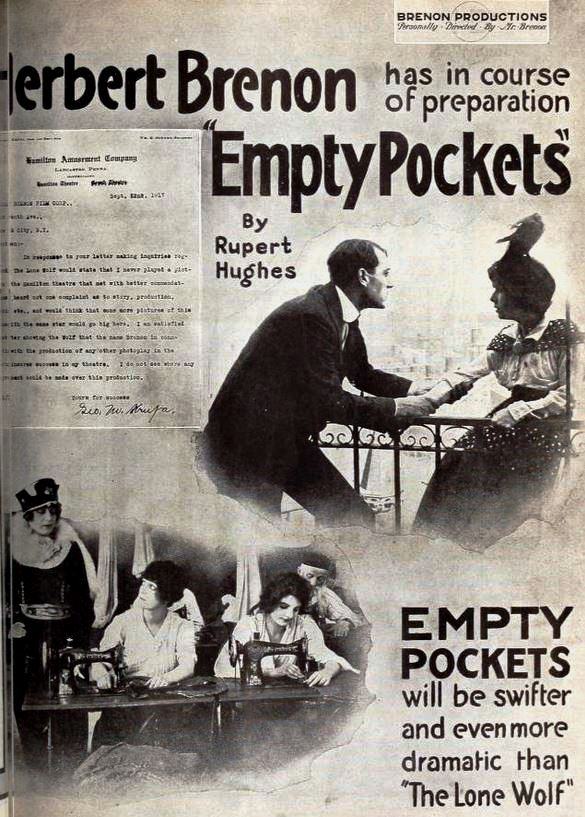
For a film produced over a century ago, Empty Pockets holds up remarkably well, a testament to the timeless appeal of a well-crafted mystery. Its influence can be seen in countless subsequent thrillers, both silent and sound, that adopted its meticulous approach to clue-dropping and character development. The writers, George Edwardes-Hall and Rupert Hughes, demonstrated an acute understanding of narrative tension, crafting a screenplay that keeps the audience guessing until the very end. The performances, particularly Bert Lytell as Dr. Worthing, are captivating, drawing the viewer into the emotional and intellectual stakes of the investigation. While it may lack the bombast of some of its contemporaries or the fantastical elements of something like Alice in Wonderland, its strength lies in its grounded realism and psychological depth. It’s a film that demands active engagement from its audience, inviting them to participate in the intellectual exercise of solving the crime. This interactive quality, combined with its evocative visual style and compelling characters, ensures its place as a significant, albeit often overlooked, entry in the canon of early American cinema. It’s a compelling argument for the sophistication of silent film, proving that the absence of spoken dialogue did not equate to a lack of narrative complexity or emotional resonance. Indeed, the film’s ability to communicate such a rich and intricate story without a single spoken word is perhaps its most profound achievement, solidifying its status as a foundational work in the development of the cinematic mystery genre. The careful construction of the plot, the deliberate unveiling of information, and the nuanced portrayal of human motivations all contribute to a viewing experience that feels both historically authentic and surprisingly modern, a rare feat for a film of its vintage. Its legacy is not just in its individual brilliance but in its contribution to the evolving language of cinema, demonstrating how suspense, character, and social commentary could be masterfully woven into a compelling visual narrative. It serves as a stark reminder that the foundations of modern storytelling were laid long before the advent of sound and color, showcasing an era where ingenuity and artistic vision triumphed over technological limitations. In many ways, Empty Pockets is a time capsule, offering not just a thrilling mystery but also a window into the social anxieties and narrative techniques that defined a pivotal period in film history. This makes it an essential watch for anyone interested in the evolution of cinema, proving that some stories, and the way they are told, truly are timeless.
In conclusion, Empty Pockets is far more than a historical curiosity; it is a vibrant, engaging mystery that stands shoulder-to-shoulder with the best of its genre, regardless of era. Its intricate plot, memorable characters, and sophisticated visual storytelling make it a compelling watch for anyone with an appreciation for classic cinema or a love for a good whodunit. The film’s ability to evoke such strong emotions and intellectual curiosity without the benefit of sound is a powerful testament to the artistry of silent film. The dedication of cast members like Bert Lytell and the meticulous writing of Edwardes-Hall and Hughes combine to create a cinematic experience that is both intellectually stimulating and emotionally resonant. While one might compare its intricate plot to the layered narratives found in films like Diamonds and Pearls or its dramatic tension to The War of the Tongs, Empty Pockets carves out its own distinct niche, a testament to its originality. It’s a film that reminds us that the foundations of cinematic excellence were laid long ago, in an era where creativity and ingenuity compensated for technological limitations. For those seeking a thrilling journey into the past, filled with suspense, social commentary, and a genuinely clever mystery, Empty Pockets is an absolute revelation. It’s a film that demands to be seen, not just appreciated for its historical significance, but celebrated for its enduring power as a piece of gripping storytelling. The layers of intrigue, the compelling performances, and the sheer audacity of its narrative structure coalesce into a truly unforgettable experience, affirming its status as a silent-era gem that continues to shine brightly today.
IMDb 5.6
1924
Community
Log in to comment.