DbcultAccessing Vault...
Cult Review
Senior Film Conservator
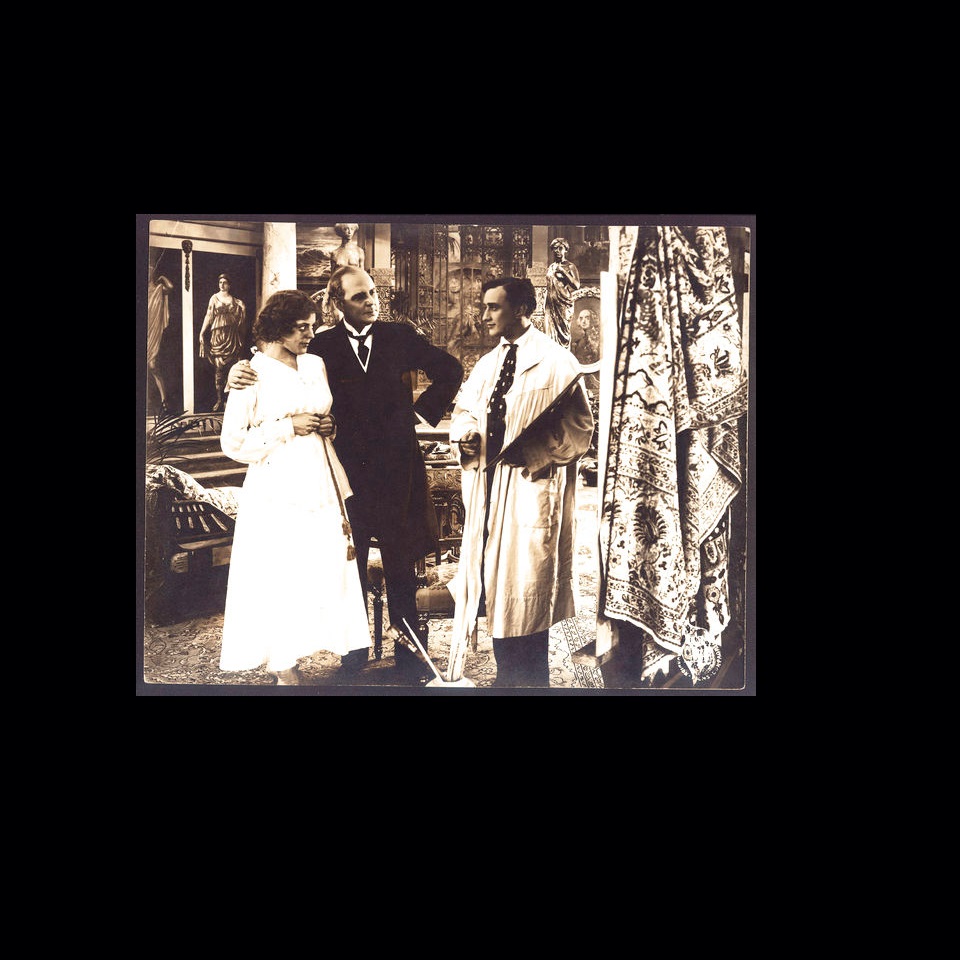
Stepping back into the nascent days of cinematic storytelling, A.V. Olsen's 'En kunstners kærlighed' (A Painter's Love) emerges as a poignant testament to the enduring power of silent film to capture the intricate tapestry of human emotion. This Danish production, a melodrama steeped in the romantic ideals and societal constraints of its era, transcends mere narrative to become a compelling exploration of art, devotion, and the devastating impact of misunderstanding. It's a film that, despite its age and the absence of spoken dialogue, communicates with a visceral immediacy, drawing viewers into a world where longing glances and dramatic gestures speak volumes.
The narrative centers on Erik, portrayed with a compelling blend of intensity and vulnerability by Sophus Bernhard, a painter whose artistic soul yearns for both inspiration and recognition. Bernhard imbues Erik with a raw, almost feverish passion that is palpable from his initial introduction. His world, initially one of solitary struggle and fervent creation, is irrevocably altered by the arrival of Marie, brought to life with ethereal grace by Betzy Kofoed. Kofoed’s performance is a masterclass in silent screen acting, her expressive eyes and delicate demeanor conveying a depth of character that resonates long after the credits roll. Marie is not merely a pretty face; she is the embodiment of purity and an unwitting catalyst for both Erik’s greatest artistic triumphs and his most profound despair. Their meeting is depicted not as a mere chance encounter, but as a fated convergence, a spark igniting a creative and romantic fire that threatens to consume them both.
Marie quickly becomes Erik's muse, her presence transforming his studio into a sanctuary of creativity. The film masterfully illustrates this symbiosis, showing how Marie's quiet strength and beauty unlock new dimensions in Erik's art. His brushstrokes, initially perhaps hesitant, gain a newfound confidence and vibrancy, each line and shade a tribute to his burgeoning affection. This period of intense artistic output, culminating in a portrait of Marie that promises to be his magnum opus, forms the emotional core of the film. It's here that Olsen, through the lens, crafts a visual poem about the intrinsic link between love and artistic inspiration. The unfinished portrait itself becomes a powerful symbol, representing not just Erik's artistic ambition, but the fragility of their nascent happiness, perpetually on the brink of completion yet vulnerable to external forces.
However, the idyll is short-lived, threatened by the intrusion of pragmatic concerns and societal expectations. Henny Lauritzen, in her role as Marie's aunt, delivers a nuanced performance of a character driven by what she perceives as Marie's best interests, yet ultimately contributing to her niece's sorrow. Her portrayal avoids caricature, instead presenting a figure whose anxieties about financial security and social standing are deeply rooted in the era's realities. It is through her influence that Marie is subtly, yet firmly, pushed towards Baron von Hagen, a character embodied by Arne Weel with an unsettling blend of charm and understated menace. Weel’s Baron is not overtly villainous in the traditional sense; rather, his danger lies in his cold calculation and his ability to manipulate circumstances to his advantage, embodying the materialistic counterpoint to Erik’s artistic idealism. His wealth, a symbol of stability in the eyes of Marie's aunt, becomes a gilded cage for Marie, suffocating her spirit.
The film's central conflict escalates through a series of misunderstandings, masterfully orchestrated by von Hagen. The silent medium, in its reliance on visual cues and intertitles, amplifies the dramatic tension of miscommunication. Erik, already vulnerable due to his precarious financial situation and passionate nature, becomes an easy target for von Hagen's machinations. A twisted letter, a staged encounter, or a deliberately misleading gesture — typical tropes of the era, yet rendered here with potent emotional force — convince Erik that Marie has willingly abandoned him for the Baron's opulence. This betrayal, perceived rather than real, shatters Erik's world. Sophus Bernhard’s descent into despair is agonizingly portrayed, his once vibrant artistic spirit replaced by a profound melancholy. The unfinished portrait, once a beacon of hope, now stands as a stark monument to his shattered dreams, a poignant reminder of what was lost.
The performances of supporting cast members like Carl Lauritzen, Ingeborg Spangsfeldt, Aage Hertel, and Ingeborg Bruhn Bertelsen, while perhaps less central, contribute significantly to the film's rich tapestry. Carl Lauritzen might play a sympathetic patron, a voice of reason lost in the clamor of misunderstanding, or perhaps a fellow artist observing Erik's tragic decline. Aage Hertel, with his often stern demeanor, could embody a more cynical friend or another rival, adding layers to the social dynamics. Ingeborg Spangsfeldt and Ingeborg Bruhn Bertelsen, in their various capacities, would round out the emotional landscape, perhaps as confidantes, servants, or societal observers, each contributing to the narrative's depth and realism within the melodramatic framework. Their presence helps to ground the more operatic emotions of the main protagonists in a believable social context.
Years pass, marked by the distinct visual contrast between Marie's life of gilded unhappiness and Erik's reclusive existence. Marie, trapped in a marriage devoid of love, lives a life of quiet desperation, her inner turmoil reflected in subtle gestures and downcast eyes. Her outward beauty remains, but it is now tinged with an unmistakable sadness. Erik, meanwhile, has become a shadow of his former self. His art, once so full of life and color, now reflects his internal desolation, dominated by dark hues and melancholic themes. This period of prolonged suffering is crucial, allowing the audience to fully appreciate the weight of their separation and the depth of their enduring affection. It's a narrative device commonly found in melodramas, but 'En kunstners kærlighed' uses it with particular effectiveness, drawing out the pain and demonstrating the lasting scars of deceit.
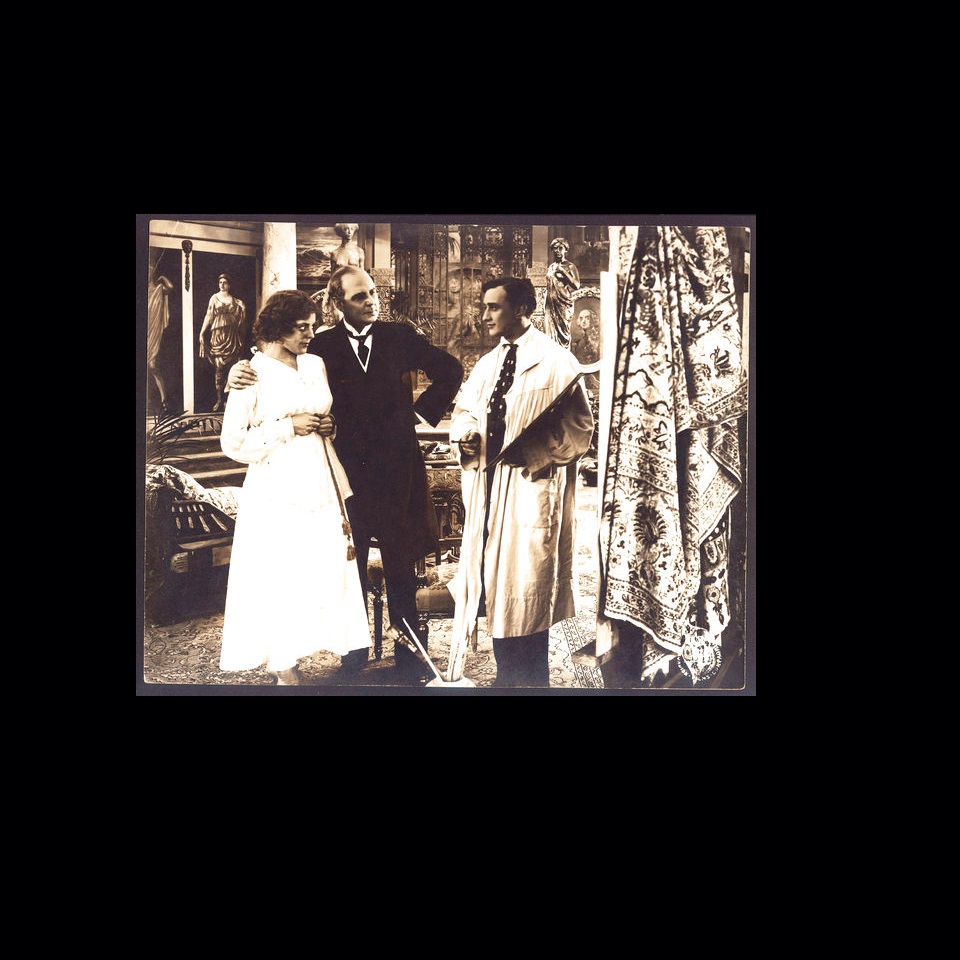
The cinematography of 'En kunstners kærlighed', though operating within the technical limitations of its era, is remarkably effective. Olsen and his team understood the power of visual storytelling, utilizing light and shadow to enhance mood, framing to emphasize emotional distance or intimacy, and close-ups to capture the nuances of facial expression. The contrast between the vibrant, sun-drenched scenes of Erik and Marie's early love and the somber, dimly lit interiors of their later suffering is particularly striking. The camera often lingers on significant objects—the unfinished portrait, a discarded palette, a letter—imbuing them with symbolic weight. This visual language is not merely functional; it is inherently artistic, a silent symphony complementing the actors' performances.
The dramatic climax arrives with a chance encounter, perhaps at an art exhibition where Erik's early, inspired works are displayed, drawing Marie's attention. This moment serves as the catalyst for the truth to finally emerge. The veil of deceit, meticulously woven by von Hagen, is torn away, revealing the intricate tapestry of manipulation and misunderstanding that tore Erik and Marie apart. The revelation is a powerful emotional torrent, a mix of regret, anger, and a desperate, rekindled hope. The film handles this moment with a delicate balance, avoiding simplistic resolutions and instead focusing on the profound emotional impact of truth. The confrontation, whether a heated exchange or a quiet, devastating confession, allows the audience to witness the raw pain and eventual relief that accompanies the unmasking of lies.
The ending, while not necessarily a fairy tale, offers a poignant and hard-won redemption. It's a resolution that feels earned, reflecting the suffering endured. The rekindling of their love, though perhaps scarred by the passage of time and past trauma, also promises the resurgence of Erik's dormant genius. The unfinished portrait, once a symbol of loss, now represents the potential for completion, for a life and an art reborn. It speaks to the idea that true love and artistic passion, once genuine, can survive even the most formidable trials. This thematic resonance aligns with other silent era melodramas, where virtue often triumphs, albeit through significant hardship. The film implies that even if the youthful innocence of their first love is gone, a deeper, more resilient connection can emerge from the ashes of their past.
When considering 'En kunstners kærlighed' within the broader landscape of silent cinema, parallels inevitably arise. The theme of a woman torn between love and societal pressure, or forced into a marriage of convenience, is a recurrent motif. One might draw comparisons to films like The Divorcee, where social expectations and personal desires clash, often with tragic consequences for the female protagonist. Similarly, the dramatic intensity of a love thwarted by external forces echoes through productions like The Grip of Jealousy, though in Olsen's film, the jealousy is more insidious and manipulative than overtly passionate. The suffering artist trope, a staple of romantic literature and art, finds its cinematic voice here with a profound emotional depth that rivals the best of its contemporaries. The journey of an artist finding and losing inspiration, only to rediscover it through suffering, is a universal narrative that silent film was particularly adept at conveying through visual metaphor.
The portrayal of societal class distinctions and the pressures they exert on individuals also finds echoes in films like The Land of Promise (1917), where characters navigate rigid social structures. The theme of a woman's sacrifice for family or duty, though often leading to personal unhappiness, is a powerful undercurrent in many films of the era, much like the choices faced by Marie. The manipulative antagonist, like Baron von Hagen, has his counterparts in various melodramas, often serving as a foil to the earnest, if sometimes naive, hero. The insidious nature of his deceit, which leads to Erik's heartbreak, is a familiar device, yet it feels fresh and impactful in this specific context due to the strong performances.
Moreover, the cinematic exploration of art itself as a source of both profound joy and immense sorrow is a theme that recurs throughout film history, but 'En kunstners kærlighed' captures it with a raw honesty characteristic of early cinema. The way Erik's art mirrors his emotional state, from vibrant inspiration to desolate despair, is a testament to the film's thoughtful approach to its central metaphor. It's a narrative thread that could be tenuously linked to later, more explicit portrayals of artistic struggle, though the silent film's reliance on visual symbolism gives it a unique flavor. The dramatic intensity and emotional sweep also bring to mind other powerful silent narratives like The Eternal Law, which often explored grand moral and emotional conflicts with similar fervor.
A.V. Olsen's 'En kunstners kærlighed' stands as more than just a historical artifact; it is a compelling piece of cinematic art that continues to resonate with audiences capable of appreciating its unique language. Its careful construction, from A.V. Olsen's thoughtful screenplay to the nuanced direction and powerful performances by Sophus Bernhard and Betzy Kofoed, creates a cohesive and emotionally rich experience. The film's ability to communicate complex themes—love's transformative power, art's fragile dependency on inspiration, the corrosive nature of deceit, and the eventual triumph of truth—without a single spoken word is a remarkable achievement. It reminds us of the universal appeal of stories centered on human connection and the trials it faces. The enduring quality of its visual storytelling and the profound emotional depth of its characters ensure its place as a significant contribution to early Danish cinema and silent film as a whole. It’s a work that speaks to the heart, proving that genuine emotion transcends the need for dialogue, remaining as impactful today as it was in its initial release. The film's legacy lies in its eloquent portrayal of the human spirit's resilience, the complex interplay between passion and practicality, and the timeless pursuit of both artistic and romantic fulfillment. It is a quiet masterpiece, an exquisite brushstroke in the grand canvas of cinema history.

IMDb 5.6
1928
Community
Log in to comment.