DbcultAccessing Vault...
6.4/10
Senior Film Conservator
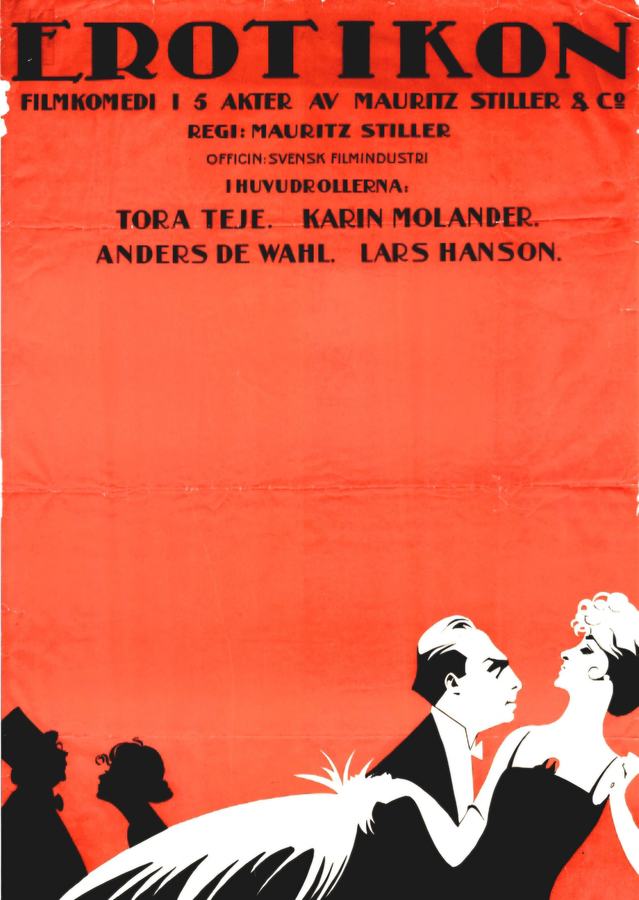
A definitive 6.4/10 rating for a film that redefined the boundaries of cult cinema. Erotikon remains a cornerstone of transgressive art.
Before the 'Lubitsch Touch' became a codified aesthetic in Hollywood, the Swedish cinematic landscape was already vibrating with a scandalous, continental energy. Mauritz Stiller, a director often overshadowed in historical discourse by the somber gravity of Victor Sjöström, unleashed Erotikon in 1920, effectively shattering the glass ceiling of silent film morality. While Sjöström was busy crafting the harrowing social realism of Ingeborg Holm, Stiller was pivoting toward the boudoirs of the bourgeoisie, finding a different kind of truth in the artifice of romance.
Erotikon is not merely a film; it is a structural marvel of narrative geometry. It treats the concept of the love triangle not as a tragic inevitability, but as a playful, ever-shifting polygon. The film’s protagonist, Irene, portrayed with a mercurial brilliance by Tora Teje, exists in a state of perpetual emotional motion. She is the catalyst in a chemical reaction that involves her husband, an entomologist whose scientific detachment mirrors the film's own voyeuristic lens, and a cast of suitors who represent various facets of the male ego.
The brilliance of the screenplay—co-written by Stiller, Arthur Nordén, and Gustaf Molander—lies in its central metaphor. Leo Charpentier, the husband, is obsessed with the sexual habits of insects. This isn't just a quirky character trait; it is a meta-commentary on the film itself. As Leo peers through his magnifying glass at beetles, Stiller peers through the camera lens at the human specimens of Stockholm’s upper crust. There is a delicious irony in Leo’s inability to perceive the rampant infidelity blooming in his own living room while he catalogs the reproductive cycles of the coleoptera.
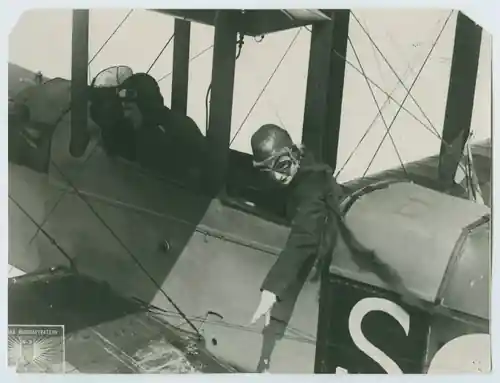
This detachment creates a unique tonal atmosphere. Unlike the heavy-handed moralizing found in contemporary dramas like Thou Shalt Not, Erotikon refuses to judge its characters. It observes them with a bemused, almost scientific curiosity. When Irene begins her dalliance with Baron Felix, the aviator, the film doesn't descend into the melodramatic tropes of the 'fallen woman' seen in The Scarlet Road. Instead, it invites the audience to participate in the thrill of the chase, the kinetic energy of the flirtation, and the sheer absurdity of the social ritual.
"Stiller transforms the domestic space into a theater of the absurd, where every glance is a weapon and every silence is a confession. Erotikon is the blueprint for the modern romantic comedy, stripped of its saccharine pretenses."
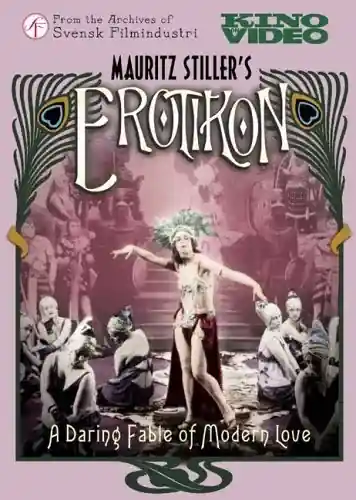
One cannot discuss Erotikon without addressing the centerpiece: the ballet sequence. This is a film-within-a-film, a stylistic tour de force that serves as a microcosm for the entire narrative. The performance of 'Shah Shariar' provides a lavish, Orientalist backdrop against which the characters’ real-world dramas play out in the audience. As the dancers leap and twirl on stage, Stiller cuts to the spectators, capturing a panopticon of desires. Irene watches the Baron; Preben watches Irene; Leo watches... well, Leo is likely thinking about bugs, or perhaps his niece Marthe.
The cinematography by Julius Jaenzon is nothing short of revolutionary. The use of deep focus and complex blocking allows multiple layers of narrative to unfold within a single frame. This is a far cry from the static, stagey compositions of lesser 1920s fare like A Maid of Belgium. Jaenzon and Stiller utilize the architecture of the opera house and the sprawling estates to emphasize the characters' isolation and their interconnectedness. The camera moves with a fluidity that suggests a director who was fully aware of the medium’s potential to transcend the limitations of the proscenium arch.
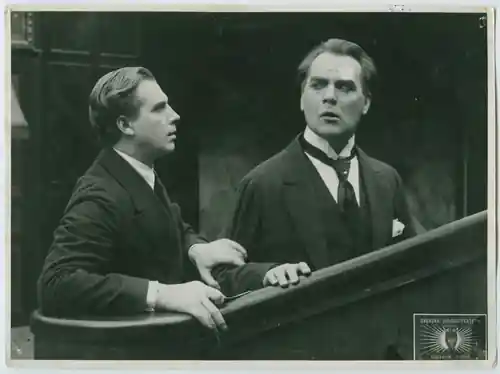
In many ways, Erotikon is a proto-feminist text. Irene is not a victim of her circumstances; she is the master of them. While she is caught in a web of male attention, she navigates it with a calculated agency that was rare for the period. Contrast her with the protagonists of The Splendid Sin or The Lady of the Photograph, where women are often defined by their relationship to male virtue or vice. Irene operates outside these binaries. Her eventual realization that she loves Preben—her husband’s best friend—is handled with a refreshing lack of histrionics.
The film also touches upon the 'menage a quatre' dynamic with a startling frankness. The subplot involving Leo and his niece, Marthe, adds a layer of transgressive heat that keeps the audience off-balance. Is it incestuous? Is it merely a paternal affection gone awry? Stiller leaves the ambiguity intact, refusing to provide the easy moral resolutions found in films like As a Man Thinks. This refusal to simplify human relationships is what gives Erotikon its enduring modern resonance.
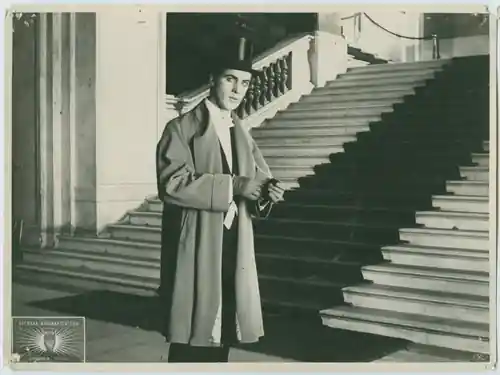
While the 1920s were often characterized by the heavy shadows of German Expressionism or the rugged landscapes of the Swedish 'National Romantic' style, Erotikon exists in a world of pure light and sophisticated levity. It shares more DNA with the witty social satires of Ruggles of Red Gap than with the grim tragedies of its era. Stiller’s ability to find humor in the potential wreckage of a marriage is a testament to his unique worldview—one that embraced the messy, contradictory nature of the human heart.
The performances are universally excellent, but Lars Hanson as Preben deserves special mention. He brings a soulful, understated quality to the role that balances the film’s more farcical elements. His chemistry with Tora Teje is palpable, providing the emotional anchor that prevents the film from drifting into mere frivolity. When compared to the broad acting styles seen in Rowdy Ann or the melodrama of The Strange Case of Mary Page, the ensemble in Erotikon feels remarkably contemporary.
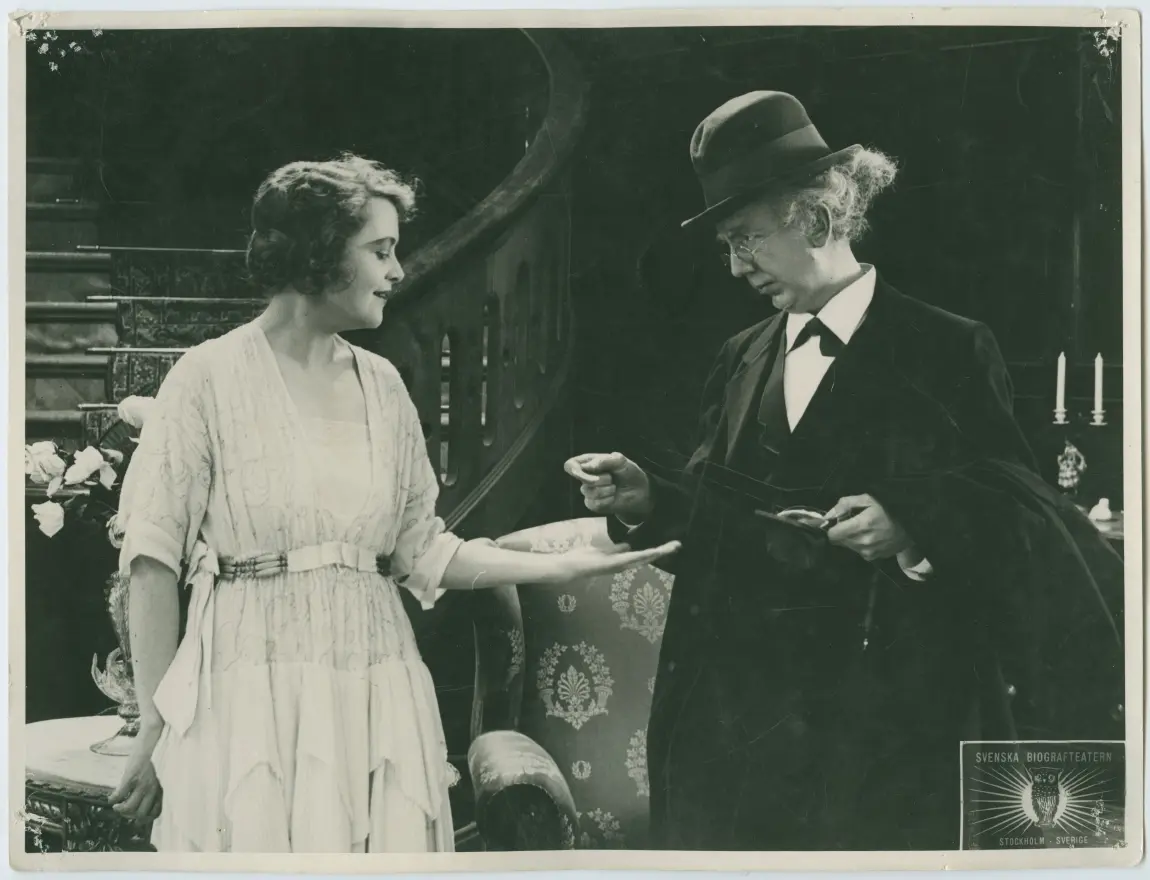
The production design of Erotikon is a character in its own right. The interiors are cluttered with the signifiers of wealth and intellectualism—books, sculptures, and of course, Leo’s endless cases of insects. This environment creates a sense of domestic claustrophobia that justifies Irene’s desire for flight. The contrast between the rigid, indoor world of the Charpentier household and the open, airy sequences involving the Baron’s airplane is a masterclass in visual storytelling. Stiller uses space to define character longings, much like the thematic use of setting in The Eleventh Hour.
Furthermore, the editing—often overlooked in silent cinema—is incredibly tight. The pacing never flags, a rare feat for a film that relies so heavily on dialogue (via intertitles) and subtle facial expressions. Stiller knows exactly when to linger on a character’s reaction and when to cut away to a secondary action, creating a rhythmic experience that mirrors the tempo of a waltz. This precision is what allows the film to navigate its complex plot twists without ever feeling convoluted or forced.
Revisiting Erotikon over a century after its release is a humbling experience. It serves as a reminder that 'sophistication' is not a modern invention. The film’s exploration of polyamory, marital neglect, and the performative nature of social status remains as biting and relevant today as it was in 1920. It lacks the saccharine sentimentality of A Dream or Two Ago and the simplistic morality of A vasgyáros. Instead, it offers a complex, shimmering portrait of humanity in all its flawed glory.
Mauritz Stiller may have later found himself struggling within the rigid confines of the Hollywood studio system, but in Erotikon, he was a director at the height of his powers, completely unburdened by censorship or convention. He crafted a film that is both a celebration of the senses and a sharp-witted critique of the structures that seek to contain them. If you wish to understand the roots of cinematic wit, you must look to the Swedish master. Erotikon is not just a historical curiosity; it is a living, breathing piece of art that continues to enchant, provoke, and delight.
In the pantheon of the silent era, where films like Der Märtyrer seines Herzens explored the depths of the human soul, Erotikon dared to explore the heights of human desire. It remains a sparkling jewel in the crown of world cinema, a testament to the power of the image to convey the most delicate of human emotions.
IMDb —
1920
Community
Log in to comment.