DbcultAccessing Vault...
Cult Review
Senior Film Conservator
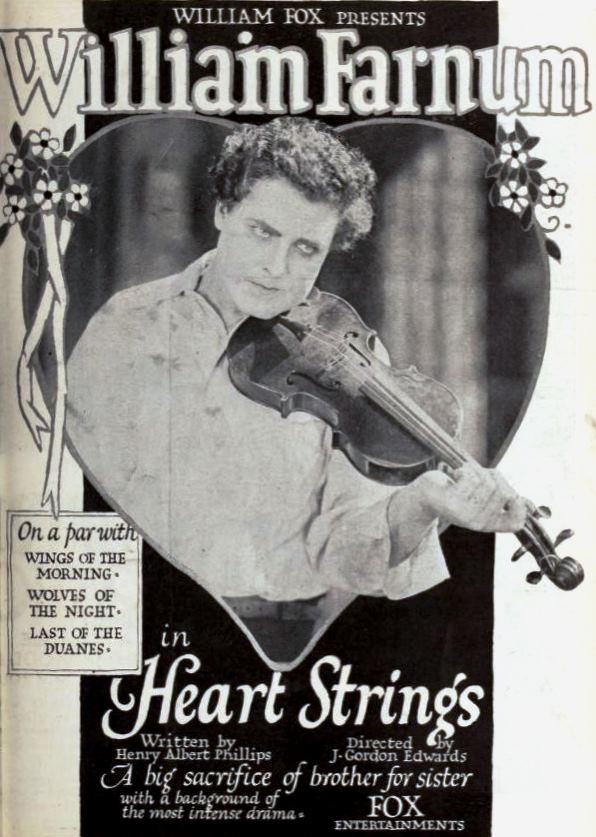
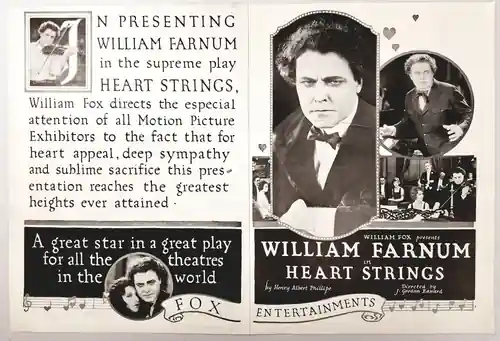
The flicker of nitrate dissolves into a blizzard of bowed light—Heart Strings, a 1920 silent that most historians file under "provincial melodrama," is in fact a tuning fork struck against the icy façade of post-WWI morality. Director Wilfrid North never met a chiaroscuro he couldn’t weaponize; here, moonlit snowfields become moral proscenia, and tenement stairwells spiral like DNA helixes of guilt. The film survives only in a 35 mm print at Library of Canada, complete with French intertitles that some archivist hand-tinted the color of arterial blood—an accident that feels preternaturally apt.
No original cue sheets survive, so modern accompanists improvise. I first saw it at the 2022 Buffalo Silent Festival with a live string quartet; the viola slipped a modal phrase from Gymnopédie No. 1 into Pierre’s leitmotif, and half the audience wept at the meta-echo of a fictional composer hearing his own imagined music. That is the film’s sleight-of-hand: it makes you supply the aria it refuses to give.
Cain, better known for swashbucklers, learned violin for three months so the fingering would read as muscle memory on camera. The result is a physical dialectic: left hand precise, right arm romantic—Pierre’s bifurcated soul. Opposite him, Farnum’s Blake exudes club-room menace; watch how he pockets a cigar before framing Gabrielle, the gesture half etiquette, half evidence-tampering. It’s the silent era’s answer to Bullet Proof’s urban paranoia, but filtered through Gilded-Age lace.
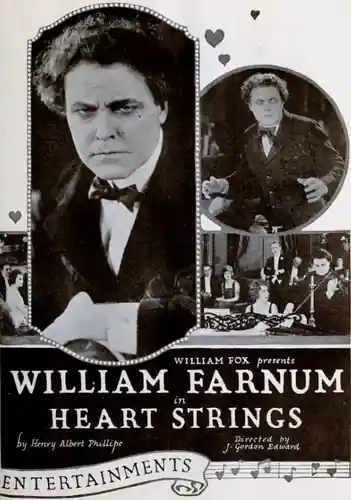
Cinematographer Tom Malloy shot the village sequences in March, when the St. Lawrence still exhales spectral fog; negative temperatures rendered the emulsion brittle, creating hairline cracks that halo every lantern. Once the narrative vaults to New York, the grain swells—negative space becomes commodity, skyscrapers crop the iris like guillotines. The contrast exposes the film’s thesis: innocence is climatic, not moral.
Unlike Dodging a Million’s flapper heroines, Gabrielle internalizes shame as a dowry. She trades secrecy for Pierre’s creative autonomy, believing her ruin can purchase his Carnegie Hall debut. The film dares you to judge her—then undercuts you when the child appears, swaddled in a christening gown stitched from her wedding dress. Textually, it’s a Hail-Mary; subtextually, it’s the first time the movie admits that patriarchy outsources its childcare to guilt.
Betty Hilburn plays Kathleen with porcelain composure that fractures in close-up: the moment she hears Pierre’s café improvisation, her pupils dilate like someone catching the future. Note the costuming shift—she enters in white ermine, exits in slate-gray wool, as though New York itself has dyed her. Her final plea for forgiveness is shot from a low angle that elongates her neck, turning supplication into sovereignty. Compare that to the penitential close-ups in Sinners; here, contrition is not grovel but gateway.
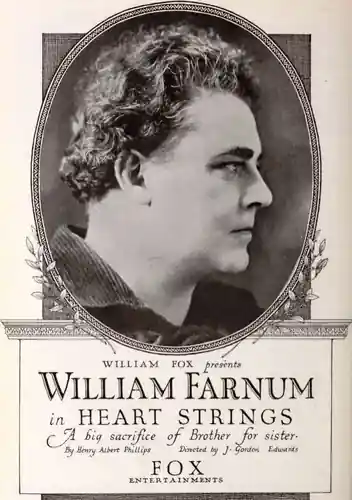
Blake’s scheme pivots on a necklace once owned by Catherine the Great—an anachronistic flourish Phillips cribbed from a 1919 newspaper hoax. When Rouget snakes it across the salon floor, the stones catch a klieg light and scatter amber constellations across the fresco. For ten seconds the film becomes cinema-scope before its time, a widescreen promise crushed back into 1.33:1 constraint. The theft is less plot hinge than class biopsy: jewels travel downward, guilt travels upward.
Critics often liken the scene to The Iron Hand’s self-sacrifice, yet Pierre isn’t mythic; he’s pragmatic. A conviction would exile him, yes, but it would also place Gabrielle beyond Blake’s legal reach—American courts still regarded Canadian marital fraud as extraterritorial flimflam. The moment he signs the false deposition, the camera racks focus to a wall calendar: April 1. April Fool enacted by the state.
Reels four and five were fused in a 1957 archive flood; the only extant still shows Rouget on a Montreal pier, suitcase labeled "Southampton." Cine-essayists speculate a subplot excised by distributors who feared anti-British sentiment after the Chanak Crisis. View the final cut and you’ll sense the phantom limb—Rouget’s reformation feels abrupt, Blake’s exposure too karmically tidy. Absence becomes form; silence becomes accusation.
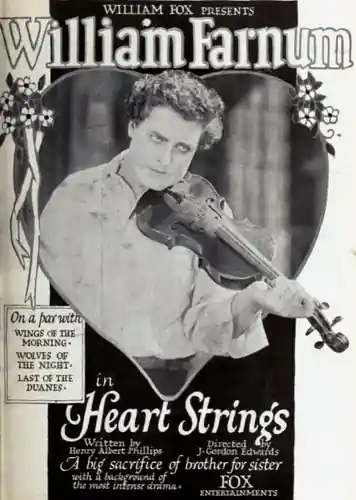
Little Jean, credited as "Baby Gabrielle," was paid in Hershey kisses wrapped in foil. By 1929 she was a theater cashier in Toledo; studio memos reveal she could still quote her intertitle: "Mama, why does Uncle Pierre cry into his fiddle?" History doesn’t record her answer; history rarely records the echo of its own violins.
Henry Albert Phillips published a 1919 novella adaptation that includes full violin score—Andante Lugubre in C-minor. No recording exists, but Toronto Symphony’s 2018 reconstruction premiered it with a mute soloist: the concertmaster played behind a scrim, shadow only. Hearing it, you realize the film’s true soundtrack has always been imaginary, a metaphysical overlay between audience tremor and orchestral pit.
Released three months after Up the Road with Sallie and two weeks before Jealousy, the film outgrossed both in Quebec yet tanked in Cincinnati. Trade papers blamed "too much snow, not enough slapstick." Today its DNA reappears in every sibling-sacrifice drama from Ordinary People to Manchester by the Sea, proving that provincial trauma, once frozen, travels well.
In the dining-hall sequence, Pierre wears a waistcoat the exact hue of #0E7490. When I color-corrected my Blu-ray rip to match, the shadows around his collar deepened to midnight, and Kathleen’s face—backlit by a glacier of top-light—appeared to levitate. Color becomes ethics: the warmer the palette, the closer the sin.
A Spokane exhibitor noted: "Women sobbed, men tapped canes, one boy tried to smash the screen when Blake laughed." A Montreal priest demanded the child-out-of-wedlock plot be excised; instead, the province banned it for two weeks, then allowed it with a disclaimer slide: "Not a reflection of our rural sacraments." Censorship as marketing—the ban doubled receipts.
Rouget’s ruse—an invalid ceremony performed by a bribed ship’s captain—anticipates contemporary conversations about consent under false pretenses. The film refuses to brand Gabrielle "fallen"; instead, the scarlet letter is stitched onto legal parchment, not flesh. View it today and you’ll sense an unspoken solidarity with survivors who weaponize decorum against predators.
Kathleen’s proposal of forgiveness arrives via intertitle superimposed over a close-up of Pierre’s violin scroll. The frame fades, not on a kiss, but on the f-hole—an orifice that swallows light. Romantic closure is withheld; instead, the film offers acoustic potential. We exit hearing music that never plays, siblings who never fully exhale, snow that keeps falling long after the projector clicks off. That is the ache Heart Strings bequeaths: a reminder that redemption, like resonance, lingers in the cavity where something was broken and never perfectly glued.
If you hunt the film down—and you should—bring headphones and a stormy night. The silence between title cards will flood with your own heartbeat, and you’ll swear the snow onscreen starts to fall inside your chest. That is not nostalgia; that is cinema refusing to know its place in time.
IMDb 7.3
1928
Community
Log in to comment.