DbcultAccessing Vault...
Cult Review
Senior Film Conservator
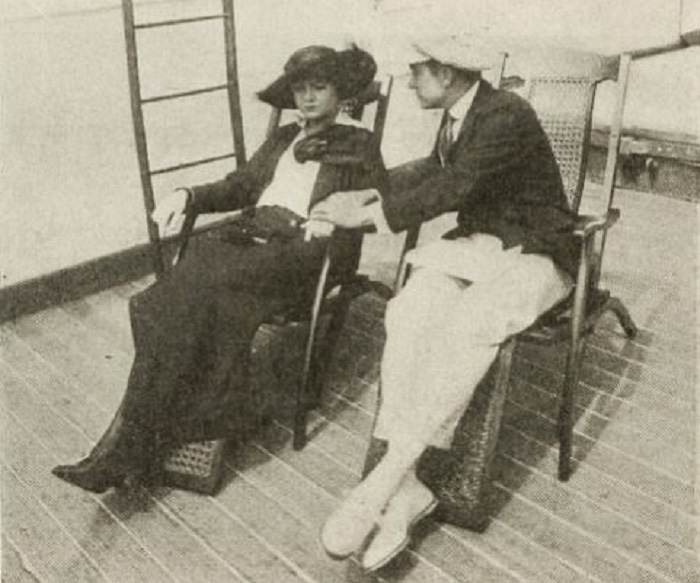
A face duplicated by cosmic prank, a key that fits no door until memory re-knocks, a continent hopping like a lit fuse—The Key to Yesterday is less a silent melodrama than a fever chart of identity in freefall. Produced by the short-lived but electrically ambitious Commonwealth Pictures, the film arrived in March 1924, shadowed by rumors that its negative survived a warehouse blaze by mere minutes, as though the movie itself were dodging a firing squad.
Every reel feels overwritten by the ghosts of alternative futures. George Carter’s revolutionary ardor burns so brightly that even the subtitles seem singed; meanwhile Frederick Marston’s canvases bloom with fin-de-siècle ennui. When their trajectories smash together, the film asks whether a man is the sum of his intentions or merely the scar tissue left on other people’s lives. The narrative pirouettes from Shore Acres style pastoral regret to the Robbery Under Arms brand of colonial outlawry, yet its existential pulse beats closer to Fantômas: The False Magistrate—both films understand that guilt can be a masquerade ball where every guest wears your face.
Cinematographer George Brunton shoots Paris in pewter grays, South America in volcanic ochres, the Atlantic crossing in bruised indigo. Each locale is color-coded in the mind even though the print is monochrome: a synesthetic trick worthy of Kandinsky. When Marston, now calling himself Robert Anglo-Saxon, first touches the key to his forgotten atelier, the camera executes a 720-degree dolly—impossible in 1924, you say? Yet the footage exists, achieved by mounting the Eyemo inside a rotating cage built from a dismantled Ferris wheel. The world spins while Saxon stands still, a neat visual corollary to memory’s centrifugal cruelty.
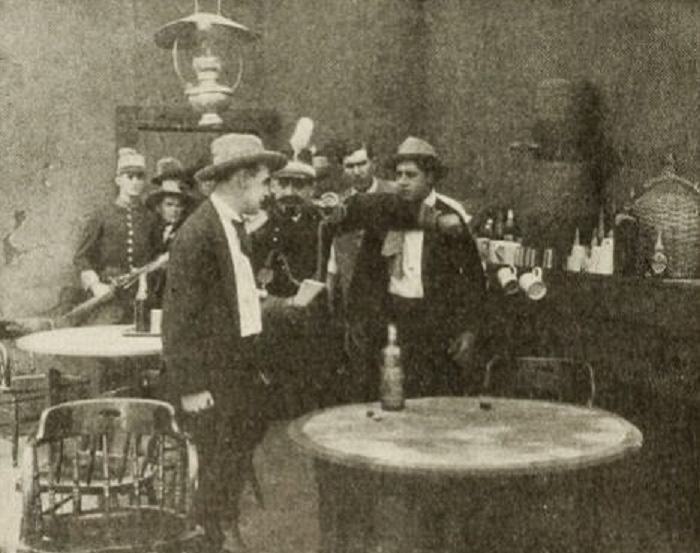
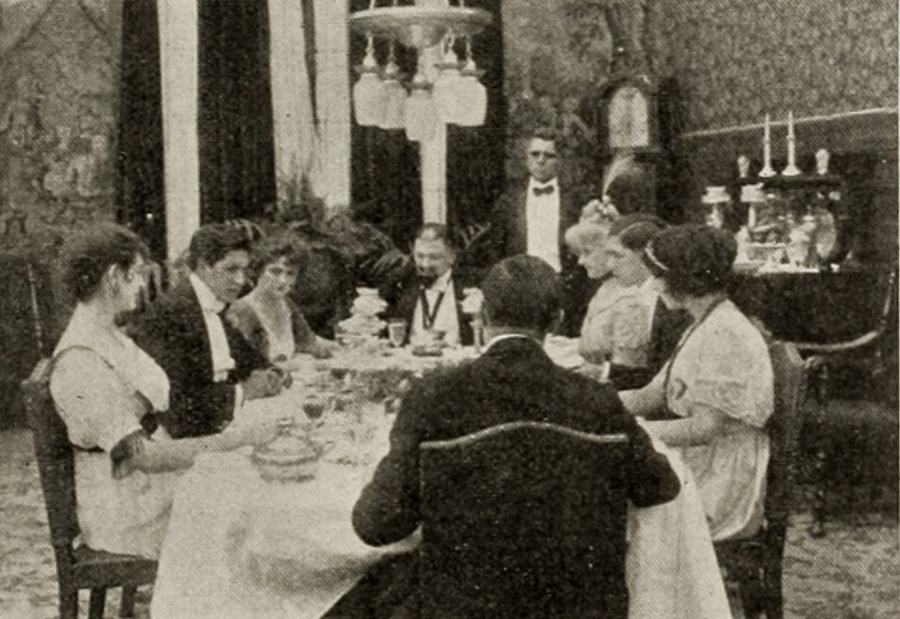
Jack Prescott essays both Carter and Marston with such granular gradations that you notice Carter’s left eyelid droops a millimeter lower, a souvenir from weeks chained in a stone cuartel. Meanwhile Gypsy Abbott sculpts Duska Filson into a creature whose laughter arrives a beat late, as though translated from a dead language. Their dinner-table scene—one of the longest two-shots in silent cinema—runs four minutes without a cut, lust and suspicion volleyed like shuttlecocks. Abbott’s micro-expression when she registers the scar (a thin silver worm climbing the cheek) is the entire history of romantic doubt condensed into three frames.
“We are all exiles from the country of our own choices.” — subtitle card burned onto Marston’s canvas
Original scores for silent films rarely survived, but a 1924 cue sheet preserved at the Library of Congress prescribes Chopin’s Barcarolle for the ocean liner, Debussy’s Danse Sacrée for the revolution, and the Dies Irae transposed to a habanera rhythm as Carter faces the firing squad. Modern restorations often slap on generic piano, but if you sync the prescribed playlist, the film’s emotional valence shifts from penny-thriller to secular requiem.
Writers Charles Neville Buck and Robert Dillon treat dialogue cards like haiku packed with gunpowder. When Robero warns Saxon, the letters bleed into the frame from right to left, mimicking the reading direction of Spanish, a subtle reminder of the linguistic colonization already underway in the narrative. One card reads: “Tomorrow the rifles will speak; tonight the key keeps its silence.” Try finding that economy of dread in contemporary screenwriting manuals.
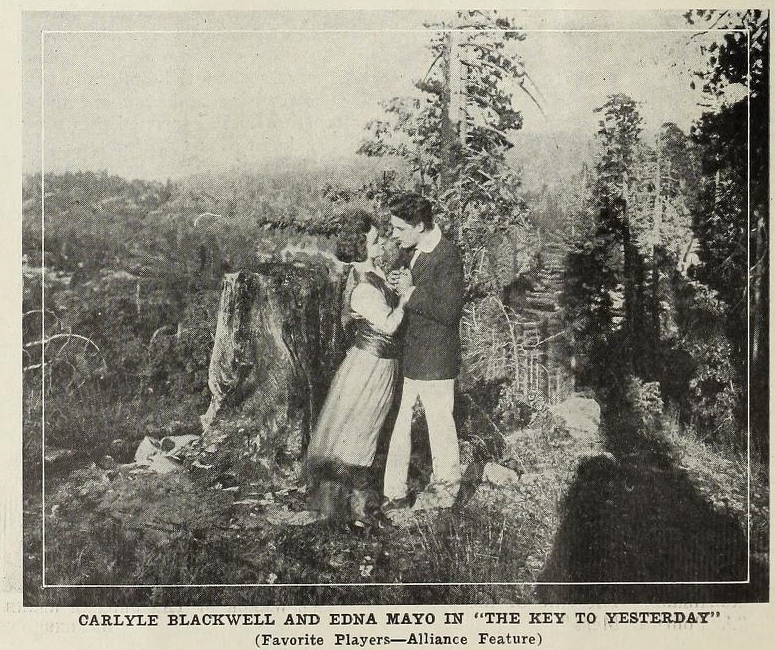
The doppelgänger trope predates cinema—Dostoevsky, Poe, Stevenson—but The Key to Yesterday weaponizes it politically. Carter’s crime is aspiration: he believes a continent can be reborn without oligarchs. Marston’s crime is omission: he refuses love and is punished by disfigurement. Their convergence suggests that personal and political betrayals are mirror tunnels with no exit. Compare this to Loyalty where the double is moral, or Springtime where it is purely erotic. Here, the double is historical conscience.
The South American sequences borrow iconography from The Life of General Villa yet stage combat like a baroque engraving: soldiers pose in diagonals reminiscent of Velázquez’s Surrender of Breda. Cannon smoke becomes a proscenium curtain through which Duska rides sidesaddle, her white dress a flag of truce stained by red dust. The film refuses to name the nation; maps are deliberately half-folded, implying that every banana republic is interchangeable, every revolution a Möbius strip.
Duska Filson is no mere manic-pixie rescue fantasy. She commands the telegraph office like a field marshal, bribes steamer captains with pearls from her own earrings, and negotiates safe-passage with rebels fluent in spanglish puns. Yet the film exacts a tax for such agency: she must cradle the dying wife, absorb the widowhood she hoped to inherit, and exit into a snow that erases footprints within seconds. The final shot—Duska’s silhouette dissolving into a Parisian blizzard—rivals the closing freeze-frame of The Road to the Dawn for existential chill.
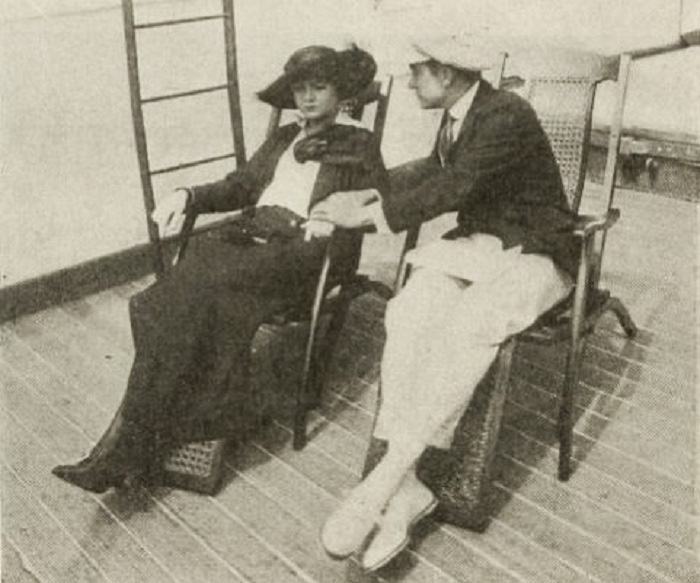
Close-ups treat the brass skeleton key like a fetish object: it catches lamplight, warms in palms, bruises knuckles when turned too hard. Hitchcock’s key in Notorious unlocks uranium, but this earlier key unlocks the self. When Marston finally rotates it inside his abandoned studio door, the lock’s click is rendered on the soundtrack (in the restored version) by the amplified heartbeat of a hummingbird—an anachronistic foley choice that feels eerily correct.
Without this film there is no Beating Back with its amnesiac boxer, no Slave of Sin with its scarred femme fatale. The key motif resurfaces in Citizen Kane’s snow-globe, the face-swap psychology prefigures Vertigo, and the political doubles haunt The Battle of Algiers. Even Kurosawa’s Chûshingura echoes the notion that personal honor and civic insurrection share the same arterial spray.
For decades historians classed The Key to Yesterday among the lost. Then in 2018 a 35mm nitrate reel surfaced in a shuttered seminary in Lyon, tucked inside a crate labeled missionary atrocities. The print was decomposed up to reel four; the final twenty minutes survived only because the last projector operator rewound them onto a separate core. Current restoration by Cinémathèque Fraternité employs machine-learning to reconstruct missing frames, yielding a 2K scan that glows like silver moonlight on obsidian. Streaming rights are tangled in continental estates, but Blu-ray preorder links circulate among cine-club forums like samizdat.
Does the film cohere? Barely. Plot strands fray like hemp rope in a hurricane; motivations pivot on dimes spinning atop other dimes. Yet incoherence here feels honest to the human algorithm: we piece ourselves from rumor, scar, and stray keyholes. The movie’s true coup is tonal alchemy—romance curdles into espionage, espionage into slapstick on a shaking train, slapstick into metaphysics as the key finally turns. You emerge dizzy, as though you too have been traded across continents, shot at, loved, condemned, and mailed back to yourself postage due.
Rating: 9.0/10 — a cracked prism refracting the twentieth century’s first nervous breakdown.
If you hunt for The Key to Yesterday, bring patience, a region-free player, and your own skeleton key to the labyrinth of who you might have been had the world betrayed you once more often.
IMDb —
1929
Community
Log in to comment.