DbcultAccessing Vault...
Cult Review
Senior Film Conservator
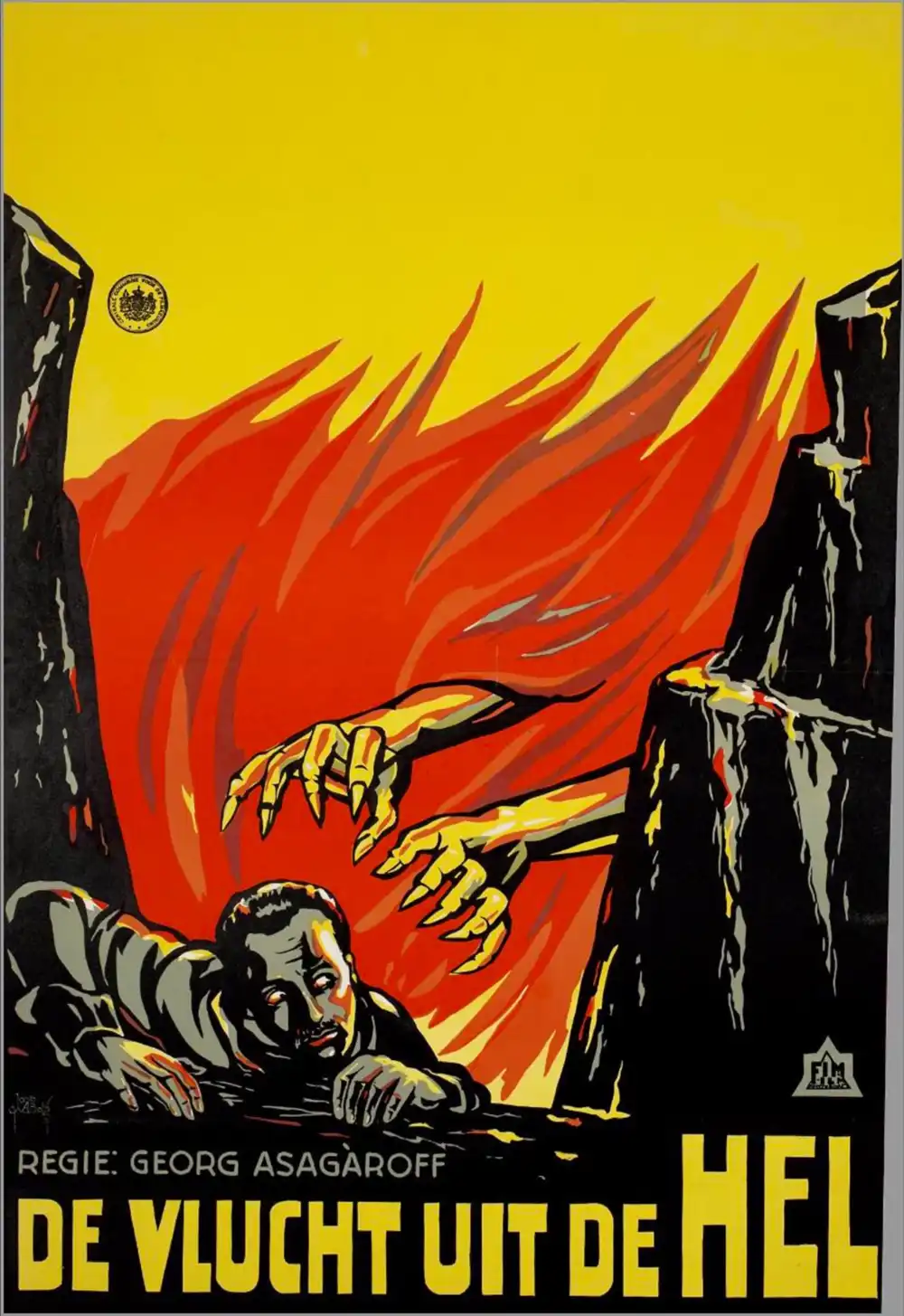
If you have an afternoon to kill and a high tolerance for the kind of theatrical gesturing that went out of style before the Great Depression really hit, Escape from Hell is worth a look. It’s for the person who likes to see how 1920s European cinema handled "grit" before everything became sanitized by the Hays Code or over-stylized by the later noir movement. If you’re looking for a fast-paced thriller, though, stay far away. This movie moves with the speed of a glacier that’s rethinkng its life choices.
The first thing that hits you is the lighting. It’s that heavy, German studio style where every shadow looks like it was applied to the set with a trowel. The "hell" in the title is a penal colony, and the production design does a decent job of making it feel like a place where you’d catch a cough you could never shake. There’s a lot of dust. Not the cinematic, sparkling kind, but the kind that makes you want to reach for a glass of water while watching.
Paul Heidemann is interesting here. Usually, the guy is doing comedy, or at least something with a bit of a wink, but in this, he’s trying so hard to be serious that his face occasionally looks like it’s frozen in a grimace. There’s a scene early on where he’s staring at a letter, and the camera just stays on him. And stays. You can see the moment where he runs out of "serious acting" and just starts blinking rhythmically. It’s those little human gaps in the performance that make these old silents feel more real than the restored, polished versions we usually see.
Ágnes Eszterházy shows up, and as usual, she looks like she stepped out of a high-end perfume ad rather than a grueling survival situation. Her hair is suspiciously perfect. Even when the plot suggests she should be covered in the grime of the colony, she has this luminous quality that feels totally at odds with the rest of the cast. It’s a weird tonal clash—you have these guys like Aruth Wartan looking like they haven't seen a bathtub in three years, and then Eszterházy appears like a ghost from a much more expensive movie.
There is a specific moment during the actual escape—no spoilers, though the title is literally the plot—where the group has to scale a wall. The wall is very clearly painted canvas or light plaster. You can see it wobble slightly when one of the actors grabs a "rock." For some reason, that didn't take me out of the movie; it actually made me appreciate it more. There’s something charming about the ambition of trying to create a massive, terrifying fortress on a budget that probably wouldn't cover the catering on a modern set.
The editing is... well, it’s 1928. There’s a sequence involving a guard’s realization that something is wrong that is cut so abruptly it feels like a frame is missing. One second he’s standing there, the next he’s halfway across the room. It gives the whole film this jittery, nervous energy that I don’t think was intentional, but it works to heighten the paranoia of the characters. It reminds me a bit of the frantic pacing in The Master Mystery, though that was more about gimmicks and this is trying to be a serious drama.
I found myself focusing on the background extras a lot. In the crowd scenes, there’s always one guy in the back who clearly wasn't told the camera was rolling yet. He’s just scratching his nose or looking off-set. It’s those tiny details that break the "prestige" wall and remind you that this was just a job for these people. They were trying to get through the day, just like the characters they were playing.
The middle section of the film drags. There’s a lot of walking. Walking through hallways, walking through the "jungle" (which looks a lot like a very well-manicured park in Berlin), and walking toward the camera. If you’ve seen The Trap, you know how these survival stories can either be tight or bloated. Escape from Hell leans toward the bloated. It feels like director Louis Ralph really loved his wide shots and didn't want to cut away from them until every single actor had fully exited the frame.
Speaking of Louis Ralph, he’s in this too, and he has a way of commanding the screen that makes everyone else look a bit like cardboard cutouts. He has this very specific way of holding his shoulders that suggests he’s carrying the weight of the entire production, which, to be fair, he basically was. His chemistry with Jean Murat is almost non-existent, though. They have a few scenes together where they’re supposed to be building a rapport, but it feels like two people waiting for the same bus who have nothing to say to each other.
The costumes are another weird point. The guards wear these uniforms that look about two sizes too large. Every time someone tries to look intimidating, their sleeves are bunching up at the wrists. It’s hard to be terrified of a brutal regime when the enforcers look like they’re wearing their older brothers' hand-me-downs. But again, it adds to that "lived-in" feeling. It’s not a polished Hollywood version of a prison; it’s a messy, poorly-funded European one.
The ending comes on fast. After all that slow walking and staring at shadows, the climax happens in what feels like five minutes. It’s a common problem with silents from this period—they spend eighty minutes building a mood and then realize they only have one reel of film left to wrap up the actual story. It leaves you feeling a bit breathless, but not necessarily in a good way. More like you just ran to catch a train that had already left the station.
Is it a masterpiece? No. But it has these flashes of genuine atmosphere. There’s a shot of the moon over the water near the end that is genuinely beautiful, even with the grain and the scratches on the print. It’s a reminder that even in these "programmers," the cinematographers were often artists trying to find one perfect image in the middle of a clunky script. If you can handle the pacing, it’s a fascinating look at the tail end of the silent era before everything changed.

IMDb 7.1
1931
Community
Log in to comment.