Is "Estudiantes y modistillas" worth watching today? Short answer: yes, but with significant caveats that demand a particular kind of viewer. This film is a fascinating historical artifact, a melodrama steeped in early 20th-century Spanish social commentary, which offers a unique window into Madrid of yesteryear. It's a film for those who appreciate cinematic history, classic melodramatic storytelling, and a deep dive into period-specific moral dilemmas. Conversely, it is decidedly NOT for viewers seeking fast-paced narratives, nuanced character development by modern standards, or a story free from overt moralizing.
A Glimpse into Old Madrid
At its core, "Estudiantes y modistillas" is a morality play, thinly veiled as a romantic drama. It chronicles the plight of Soledad, a working-class seamstress, and her entanglement with Julio, a law student from a privileged background. Their brief affair leaves Soledad pregnant and abandoned, a predicament that was, in its era, a profound societal condemnation. The film then follows Julio’s journey through the legal system, culminating in a case that forces him to confront his past actions and seek a path to redemption. It’s a narrative arc that feels both predictable and profoundly resonant within the melodramatic tradition.
What immediately strikes the viewer, beyond the narrative itself, is the film's grounding in real Madrid locations. From the tranquil elegance of Retiro Park to the bustling energy of Puerta del Sol, and the spiritual solace of the Paloma Church, these settings are more than mere backdrops. They are characters in themselves, lending an authenticity and a distinct sense of place that elevates the often-heightened emotions of the plot. This on-location shooting, particularly for its time, was a significant artistic choice, anchoring the universal themes of class and consequence in a very specific cultural landscape.
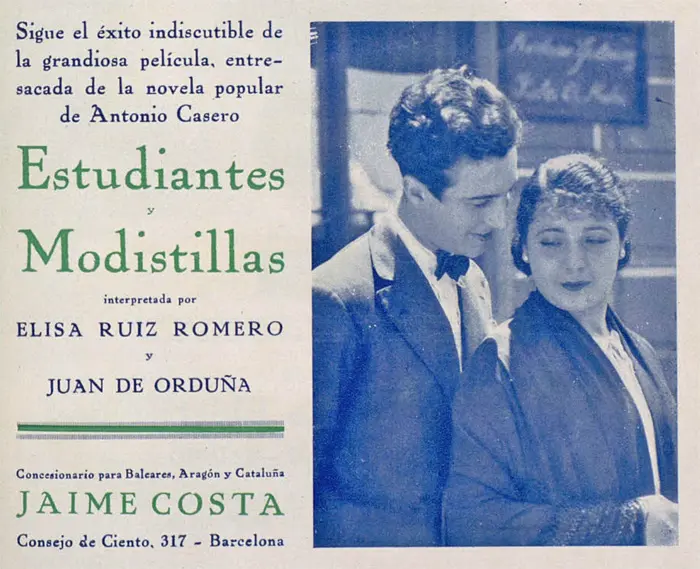
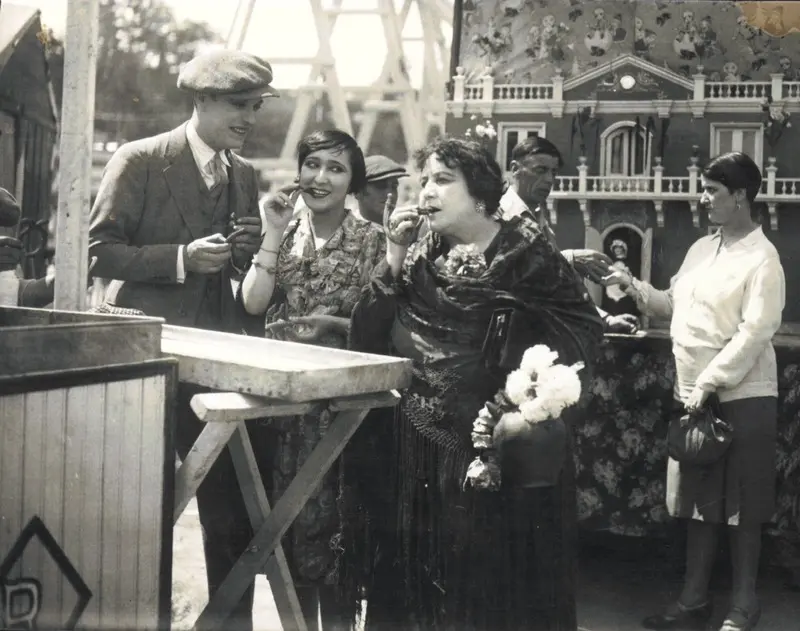
Scene from Estudiantes y modistillas
Cinematic perspective: Exploring the visual vocabulary of Estudiantes y modistillas (1927) through its definitive frames.
The Heart of the Matter: What Works and What Doesn't
This film works because: It provides an invaluable historical snapshot of Madrid and its social dynamics, delivered through a classic melodramatic lens that, despite its age, still manages to evoke genuine pathos.
This film fails because: Its pacing is deliberately slow, its characterizations are often broad strokes rather than deep dives, and its moralizing can feel heavy-handed to a contemporary audience.
You should watch it if: You have an interest in early Spanish cinema, enjoy period melodramas, or want to experience Madrid through a historical cinematic lens.
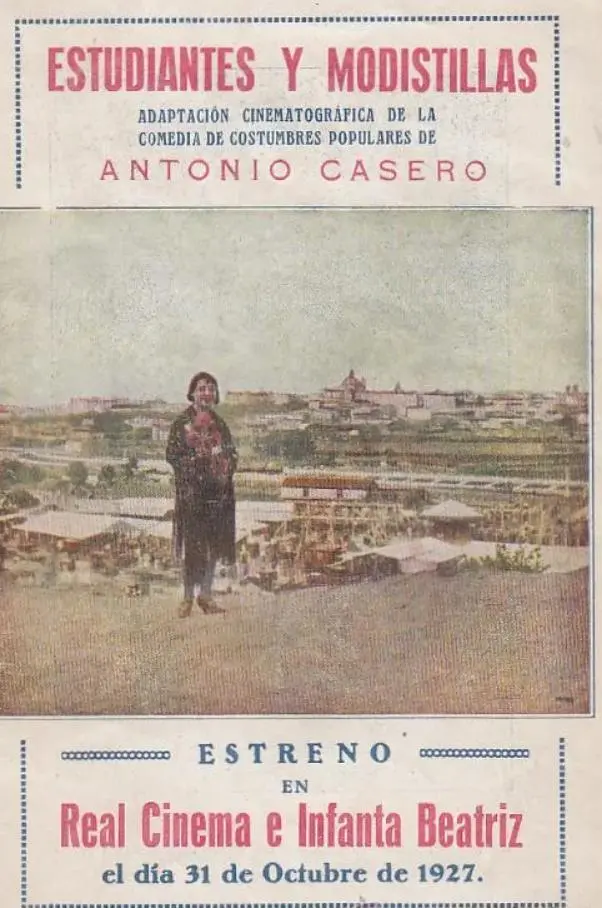
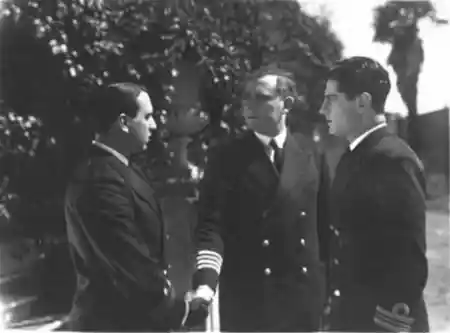
Scene from Estudiantes y modistillas
Cinematic perspective: Exploring the visual vocabulary of Estudiantes y modistillas (1927) through its definitive frames.
Directing and Cinematography: A Stylistic Time Capsule
The direction, helmed by Antonio Casero and Juan Antonio Cabero, is functional and direct, typical of its era. There’s a theatricality to the blocking and the way scenes are framed, reminiscent of stage productions adapted for the screen. Close-ups are used sparingly, often reserved for moments of intense emotional weight, such as Soledad’s silent plea at the Paloma Church, where Nieves González’s expression carries the burden of her character’s despair. These moments are surprisingly effective, cutting through the broader narrative strokes to deliver genuine feeling.
The cinematography, while not groundbreaking by modern standards, is perhaps the film’s most enduring strength. The decision to shoot extensively on location transforms the film into a living document of Madrid. We see the city not as a set, but as a vibrant, breathing entity. The long shots of Retiro Park, for instance, are not merely establishing shots; they imbue the early, hopeful scenes between Soledad and Julio with a fleeting, idyllic quality that contrasts sharply with the harsh realities that follow. This visual documentation of a bygone Madrid is, frankly, priceless. It offers a tangible connection to the past, something films like The Pride of New York or The Cigarette Girl, while also period pieces, don't quite capture with the same regional specificity.
Performances: Embodied Archetypes
The acting in "Estudiantes y modistillas" adheres closely to the dramatic conventions of its time. Nieves González, as Soledad, embodies the archetypal wronged woman with a quiet dignity. Her performance relies heavily on expressive glances and body language rather than overt dialogue, particularly in her moments of silent suffering. One particular scene, where she is forced to confront her situation alone, conveys more through her downcast eyes and trembling hands than pages of script ever could. It’s a portrayal rooted in pathos, designed to elicit sympathy, and in this, González largely succeeds.
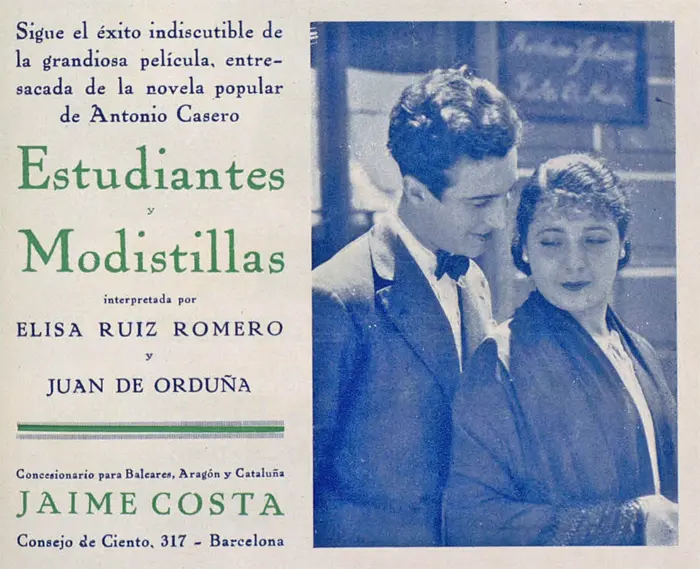
Scene from Estudiantes y modistillas
Cinematic perspective: Exploring the visual vocabulary of Estudiantes y modistillas (1927) through its definitive frames.
Juan Antonio Cabero, pulling double duty as both writer and actor for Julio, presents a character arc that is less about subtle internal struggle and more about a dramatic moral awakening. His initial portrayal of the carefree, somewhat arrogant student is convincing, but it’s his transformation into the barrister grappling with his conscience that truly defines his performance. The shift isn't gradual; it's a stark realization, almost an epiphany, which can feel abrupt to a contemporary audience accustomed to more psychological depth. Yet, within the film’s melodramatic framework, it serves its purpose effectively. The supporting cast, including Elisa Ruiz Romero as Lola, provides solid, if less memorable, contributions, largely serving to underscore the central conflict.
Themes and Social Commentary: A Mirror to Society
The film is a potent reflection of early 20th-century Spanish society, particularly its rigid class structures and gender expectations. Soledad’s vulnerability as a working-class woman, contrasted with Julio’s impunity as a wealthy student, highlights the stark inequalities of the era. The narrative unflinchingly addresses the severe consequences of premarital pregnancy and abandonment for women, emphasizing the societal shame and economic hardship they faced. The plea to the Paloma Virgin is not just a religious act, but a symbolic cry for justice in a world that offered little recourse.
However, the film’s most interesting thematic thread is its exploration of redemption, albeit a somewhat convenient one. Julio’s change of heart is triggered by an external event—defending another abandoned woman—rather than a deep, internal moral reckoning developed over time. This external catalyst, while dramatically effective, can feel like a narrative shortcut, minimizing the true weight of his initial actions. It posits that a man can be redeemed through a single, grand gesture, a notion that might feel simplistic to modern viewers, but was likely a comforting narrative for its original audience. It's a theme explored in many films of the era, such as The Forfeit, though perhaps with less overt religious undertones.
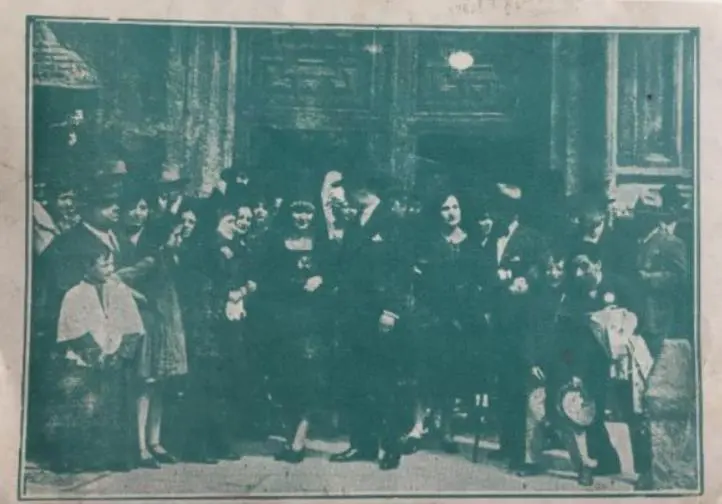
Scene from Estudiantes y modistillas
Cinematic perspective: Exploring the visual vocabulary of Estudiantes y modistillas (1927) through its definitive frames.
Pacing and Tone: A Measured Melodrama
"Estudiantes y modistillas" moves at a deliberate, almost stately pace. This is not a film designed for quick cuts or rapid plot progression. Instead, it savors its moments, allowing scenes to unfold with a measured rhythm that builds emotional tension slowly. While some might find this slow burn challenging, it allows the viewer to absorb the period details and the emotional weight of Soledad's predicament. The tone is consistently serious, infused with a pervasive sense of moral gravity, which occasionally borders on didacticism. There are no lighthearted interludes; every scene serves to advance the central drama or underscore its thematic concerns.
This measured approach, while authentic to the melodramatic genre, does mean that moments of revelation or emotional catharsis feel less like sudden explosions and more like inevitable conclusions. The film aims for a cumulative emotional impact, rather than a series of sharp, shocking beats. It works. But it’s flawed. The ending, in particular, feels earned in its emotional resolution, even if the path to get there involved some narrative conveniences. It’s a film that asks for patience, and for those willing to grant it, there are rewards to be found in its earnest storytelling.
Is This Film Worth Watching Today?
Should I watch Estudiantes y modistillas?
Yes, if you have a specific interest in the historical context of Spanish cinema or enjoy the conventions of early 20th-century melodrama. It's a valuable cultural document. No, if you prefer contemporary filmmaking styles, intricate character studies, or narratives that challenge traditional moral frameworks. It's a niche watch.
The film's primary appeal lies in its historical value and its evocative portrayal of Madrid. The on-location shooting alone makes it a compelling watch for anyone interested in urban history or the evolution of cinematic realism. Beyond that, it's a solid example of a genre that, while often dismissed, played a crucial role in shaping popular entertainment and reflecting societal anxieties.
Key Takeaways
Best for: Film historians, students of Spanish culture, and fans of classic melodrama