DbcultAccessing Vault...
8.1/10
Senior Film Conservator
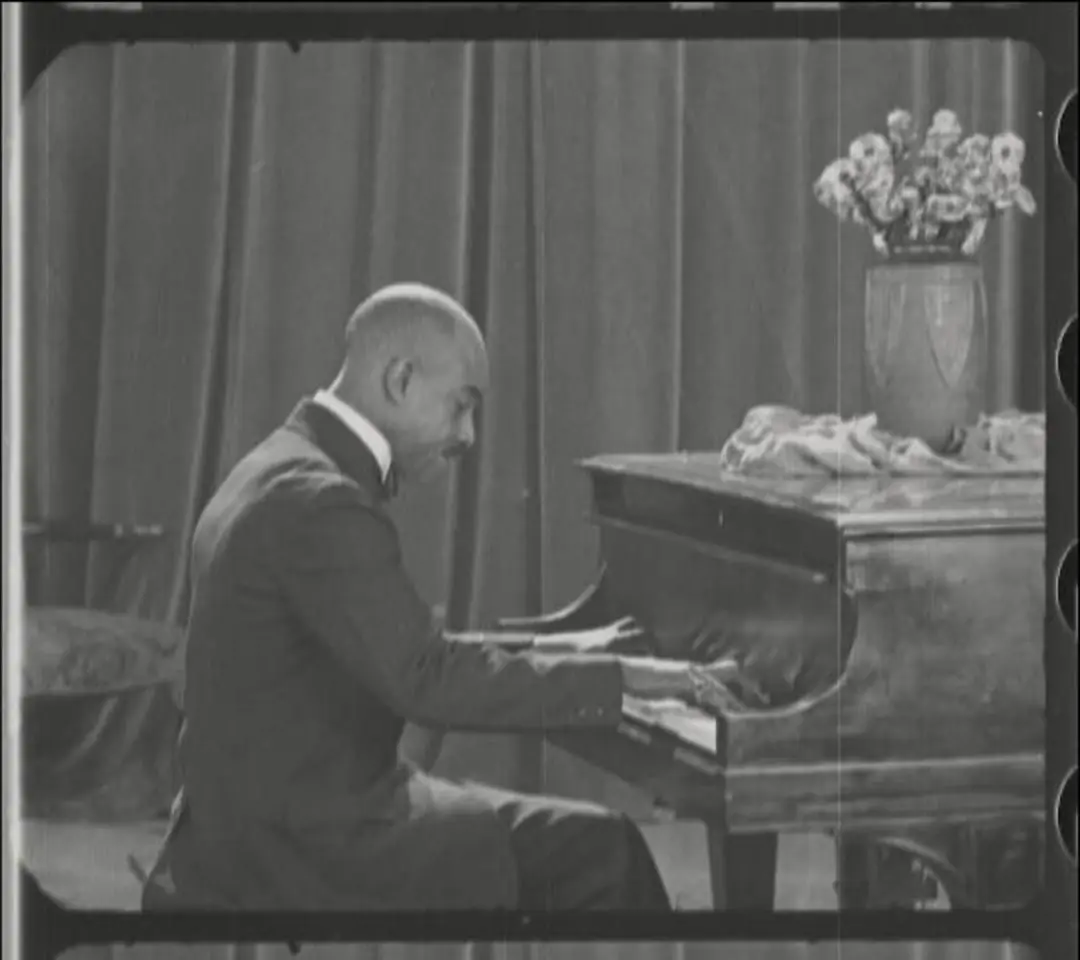
A definitive 8.1/10 rating for a film that redefined the boundaries of cult cinema. Eubie Blake Plays His Fantasy on Swanee River remains a cornerstone of transgressive art.
The year 1921 presented an intriguing crossroads for motion pictures, a period where the silent film had matured into a sophisticated art form, yet whispers of a new sensory dimension — sound — were beginning to permeate the industry. Into this crucible stepped Eubie Blake, a titan of American music, whose performance in 'Eubie Blake Plays His Fantasy on Swanee River' stands as a colossal, if imperfect, monument to this transformative era. This isn't merely a film; it's an archaeological dig into the very foundations of sound cinema, a visceral encounter with the audacious spirit of innovation that defined the early 20th century. To witness Blake, a figure whose career spanned from ragtime's zenith to the jazz age and beyond, captured on film with synchronized audio, even with its inherent flaws, is to gaze upon history unfolding. It’s a testament to the fact that even in its infancy, the desire to merge sight and sound was powerful enough to compel these pioneering experiments, laying groundwork that would irrevocably alter the cinematic landscape.
Blake's performance itself is a masterclass in pianistic virtuosity, a compelling display of his unique neoclassical approach to a beloved American melody. His 'Fantasy on Swanee River' transcends mere interpretation, transforming Stephen Foster's familiar tune into a complex tapestry of improvisational brilliance and structured elegance. One can observe the fluid dexterity of his fingers, the subtle shifts in his posture, the very embodiment of a musician deeply engrossed in his craft. The visual aspect of the film, stripped of the vibrant hues and intricate staging of later productions, offers an unvarnished intimacy, drawing the viewer into the immediate presence of the artist. It's a stark contrast to the grand narratives unfolding in contemporary silent epics like The Call of the North, which relied solely on visual grandeur and intertitles to convey its story. Here, the focus is singular: the man, the piano, the nascent sound, creating a different kind of immersive experience.
However, the film's most striking, and perhaps most poignant, characteristic lies in its technical limitations, specifically the notorious failure to record the highest notes of Blake's intricate piano work. This isn't a minor glitch; it's a gaping void in the auditory landscape, a silent testament to the nascent state of sound recording technology. Imagine an architect's blueprint with critical structural elements missing, or a painter's masterpiece with entire sections of color absent. The absence of these high frequencies doesn't merely diminish the fidelity; it fundamentally alters the perception of Blake's artistry, flattening the dynamic range and obscuring the sparkling upper registers that are so vital to piano performance, especially in a piece designed to showcase a 'fantasy' of variations. This sonic amputation provides a visceral understanding of the monumental hurdles faced by early sound engineers, reminding us how far we've come from these crude yet courageous beginnings. It's a humbling reminder that even the greatest artistic intentions can be constrained by the limitations of the tools at hand.
The very existence of 'Eubie Blake Plays His Fantasy on Swanee River' serves as a crucial historical document, a window into the technological frontier of its time. While other films of the era, such as Lotus Blossom, meticulously crafted visual narratives and emotional depth through pantomime and dramatic lighting, Blake's film was grappling with an entirely new dimension. It was a bold foray into uncharted territory, a daring experiment that, despite its imperfections, unequivocally pointed towards the future. The engineers and filmmakers behind this project were not just recording a performance; they were pushing the boundaries of what cinema could be, venturing beyond the purely visual spectacle. Their efforts, though imperfect, provided invaluable data and lessons that would inform the rapid advancements leading to the full 'talkie' revolution later in the decade. This raw, unpolished attempt is arguably more illuminating than a perfectly rendered later work, as it exposes the very struggle of creation and innovation.
Beyond the technical curiosities, the film's enduring power emanates from Eubie Blake's undeniable presence. Even with the truncated sound, his rhythmic precision, his harmonic sophistication, and his sheer musicality shine through. Blake was a composer and performer of immense talent, capable of blending ragtime's syncopated energy with classical structures, creating a sound uniquely his own. His choice of 'Swanee River,' a melody deeply embedded in the American consciousness, and his subsequent 'fantasy' on it, speaks volumes about his artistic vision: to elevate popular music through virtuosic arrangement and improvisation. This film, however flawed, offers a rare glimpse into the performance style of a musician who would continue to influence generations, a man whose contributions to American music are incalculable. It reminds us that artistry, even when imperfectly captured, possesses an inherent resilience, a capacity to transcend the limitations of its medium.
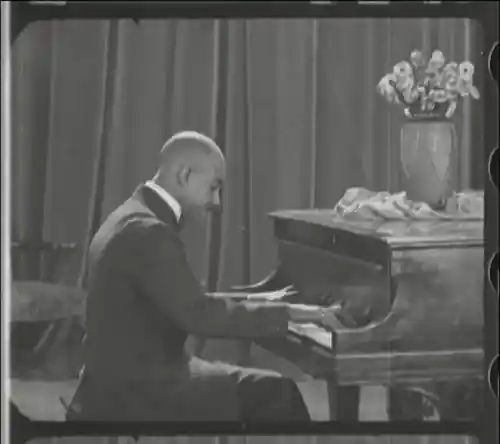
The 'fantasy' aspect of the title is particularly telling. It implies a departure from the conventional, an imaginative reinterpretation. Blake doesn't simply play 'Swanee River'; he embroiders it, extrapolates from it, and transforms it into something richer and more complex. This artistic ambition, captured during a period when cinema was still finding its voice, is remarkable. While contemporary films like In the Power of Opium explored dramatic narratives, Blake's film was charting a course for how music itself could be presented and recontextualized within the new medium. It wasn't just about recording sound; it was about recording a *performance* of sound, with all its nuances, even those that were inadvertently lost to the nascent technology. This distinction is critical, as it underscores the film's role not just as a technological experiment, but as an early attempt at musical documentation in a dynamic, moving visual format.
The legacy of 'Eubie Blake Plays His Fantasy on Swanee River' extends far beyond its brief running time. It's a foundational text in the history of sound film, a critical stepping stone that allowed subsequent filmmakers and engineers to learn from its successes and, crucially, its shortcomings. Every 'talkie' that followed, from the rudimentary experiments of the mid-1920s to the full-fledged revolution of 1927 and beyond, stands on the shoulders of these early, courageous attempts. It's a testament to the iterative nature of innovation, where even 'failures' contribute significantly to progress. Without understanding the challenges faced in films like this, one cannot fully appreciate the eventual triumph of synchronized sound. It informs our appreciation for the sound design of films like Her Beloved Villain and Happy Go Luckies from a slightly later period, which were able to build upon these early experiments, even if they were still silent films themselves, benefitting from the general technological maturation of film production.
Viewing this film today is a complex experience, blending historical fascination with a touch of melancholy for what was lost in translation. It's a reminder of the fragility of early recordings and the relentless march of technological progress. Yet, it also offers a profound appreciation for the sheer determination of those who sought to push the boundaries of artistic expression. The film functions as a unique time capsule, preserving a singular moment in the evolution of both cinema and American music. It captures a legend at work, grappling with a medium still in its infancy, and in doing so, it offers a powerful narrative about human ingenuity and the persistent desire to bridge the gap between artistic vision and technological capability. It’s an artifact that speaks volumes, not just about Eubie Blake, but about the very essence of innovation itself.
Comparing this groundbreaking effort to other films of its immediate era highlights its unique position. While films like Red Foam and Annexing Bill were honing the visual storytelling techniques of silent cinema, mastering cinematography and dramatic pacing, Blake’s film was attempting to add an entirely new sensory layer. It wasn't about refining existing techniques but inventing new ones. The ambition to record a live musical performance, with all its temporal and sonic complexities, was a monumental leap. This was a period where the industry was still grappling with basic narrative structures, as seen in films like The Hope or Charge It to Me. The idea of adding synchronized sound was a radical departure, a conceptual revolution that fundamentally challenged the established norms of filmmaking. It foreshadowed a future where the auditory experience would be just as integral as the visual, a future that films like Little Sunset and A Dog Gone Day, focused on simpler narratives, couldn't yet imagine.
The historical weight of 'Eubie Blake Plays His Fantasy on Swanee River' cannot be overstated. It stands as a testament to an era of fearless experimentation, where the possibilities of a new medium were being explored with passion and ingenuity. Eubie Blake, with his enduring talent and pioneering spirit, becomes a symbol of this transformative period. His performance, even in its truncated sonic form, reminds us of the profound impact that individual artists and relentless innovators can have on the course of history. It's a beautiful, frustrating, and utterly essential piece of cinematic and musical heritage, challenging us to listen beyond the imperfections and appreciate the monumental achievement it represents. It’s a film that resonates with a quiet power, much like the subtle intricacies of Blake's own compositions, leaving an indelible mark on the tapestry of film history. It helps us understand the progression of cinema from the more traditional storytelling of Ginger Mick or the grand vistas of The U.P. Trail, into an entirely new sensory realm. Even as films like No Man's Woman and White Youth continued to perfect the craft of silent storytelling, Blake’s short film was daring to imagine a cinema that spoke, sang, and played.
Community
Log in to comment.