DbcultAccessing Vault...
6.6/10
Senior Film Conservator
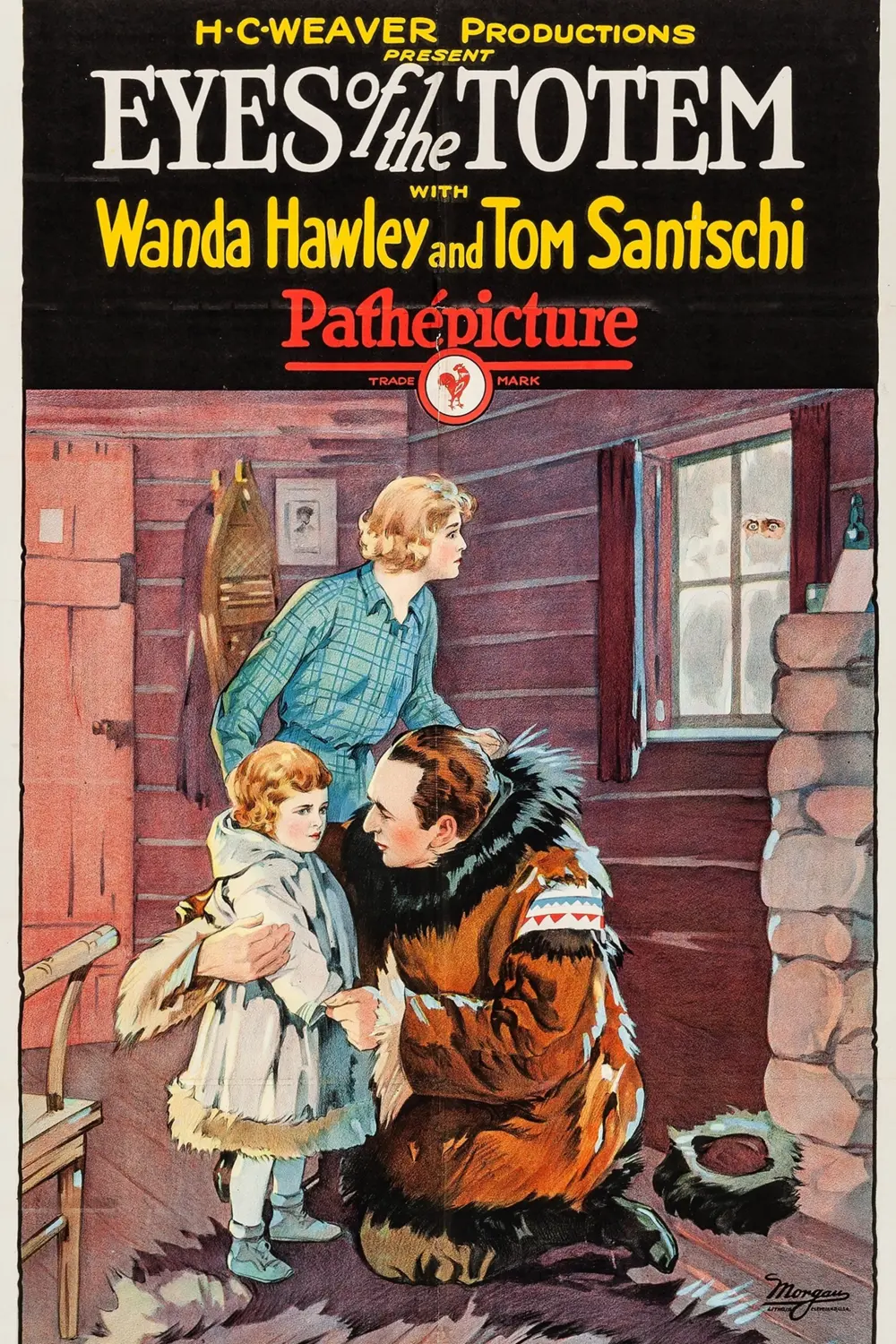
A definitive 6.6/10 rating for a film that redefined the boundaries of cult cinema. Eyes of the Totem remains a cornerstone of transgressive art.
Is Eyes of the Totem worth watching today? Short answer: Yes, but with significant caveats. This is a film for ardent silent era enthusiasts, historians, and those fascinated by the raw, often unpolished storytelling of early cinema. It is emphatically NOT for casual viewers seeking modern pacing, sophisticated character arcs, or pristine visual quality; such audiences will likely find its deliberate rhythm and melodramatic flourishes challenging.
From the moment the credits roll, it's clear Eyes of the Totem positions itself as a relic, a fascinating echo from a bygone era of filmmaking. Directed by W.S. Van Dyke, a name that would later become synonymous with Hollywood’s Golden Age, this early silent feature, now a rare find, presents a unique lens through which to examine the nascent stages of cinematic narrative and technique. Its plot, a stark tale of vengeance and survival, is drenched in the kind of heightened emotion only the silent screen could truly deliver, unburdened by dialogue but amplified by exaggerated gesture and potent intertitles.
This film works because it offers a fascinating glimpse into early narrative conventions and features a surprisingly tenacious female lead, Miriam, whose journey from societal victim to hardened survivor is genuinely compelling. This film fails because its pacing is often glacial, its technical limitations are frequently jarring, and its reliance on overt melodrama can feel heavy-handed to a modern audience. You should watch it if you are prepared to engage with a historical artifact, appreciate its unique place in film evolution, and are willing to overlook its rough edges for the sake of its historical and thematic value.
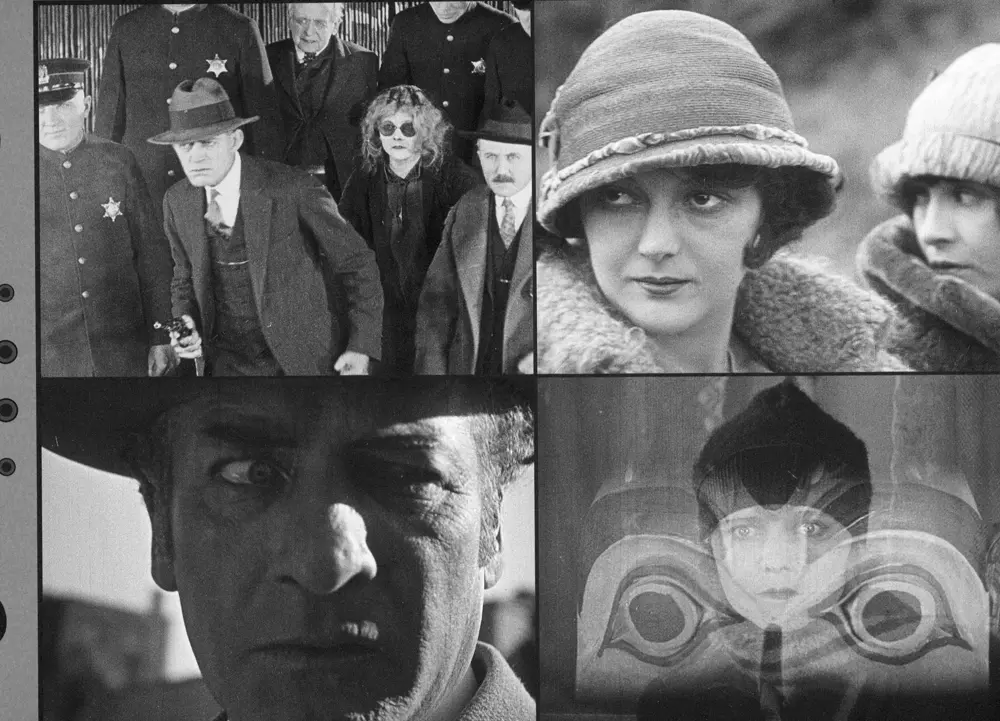
The core of Eyes of the Totem is Miriam’s relentless pursuit of justice, or perhaps, more accurately, revenge. Her husband’s murder is not just a plot device; it’s the seismic event that redefines her existence, stripping her of social standing and forcing her into the desperate margins of society. The film’s opening act, depicting her initial grief and the futility of police efforts, sets a bleak tone, immediately establishing the stakes for a woman left with nothing but a memory of a killer’s eyes.
What follows is a descent into a world rarely depicted with such raw immediacy in mainstream cinema: a community of beggars. This segment, while perhaps intended to heighten Miriam’s plight, also offers an unconventional social commentary on poverty and resilience. It’s here that Miriam, initially a victim, begins to harden, shedding her former identity to survive. This transformation, though conveyed through silent acting and intertitles, is remarkably effective, making her eventual encounter with the killer years later all the more impactful.
The narrative arc, though straightforward, relies heavily on coincidence and dramatic irony, hallmarks of the era. The eventual confrontation isn't merely a chance meeting but feels like an inevitable collision orchestrated by fate. It’s a story where character motivation, particularly Miriam’s unwavering resolve, drives the plot forward, even when the external forces feel somewhat contrived. The film’s strength lies in its ability to keep this central quest compelling, even through its more ponderous moments.
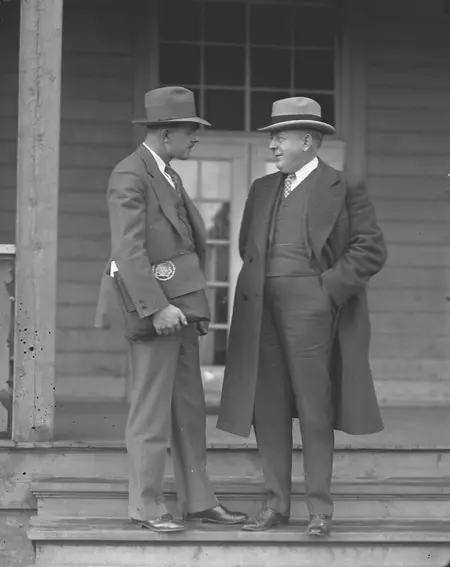
W.S. Van Dyke, later celebrated for his versatile work on films like The Thin Man series, showcases his nascent talent here. Eyes of the Totem is a testament to the experimental nature of early filmmaking. Van Dyke’s direction, while not yet exhibiting the polished efficiency of his later career, demonstrates a clear understanding of visual storytelling within the silent medium.
He employs close-ups to emphasize emotional states, particularly Miriam’s grief and later, her steely determination. The framing often feels theatrical, perhaps a holdover from stage conventions, but there are moments of genuine cinematic flair. For instance, the fleeting glimpse of the killer, though brief, is staged to be impactful and memorable, searing itself into Miriam's consciousness and, by extension, the audience's.
However, the film also highlights the limitations of early directing. Pacing can be uneven, and some scenes linger longer than necessary, relying on exaggerated gestures to convey meaning. It’s a learning curve for Van Dyke, certainly, but one can discern the seeds of a director who would eventually master the art of narrative flow. Compared to contemporaries, his work here feels earnest, if occasionally clunky, prioritizing emotional resonance over technical finesse.
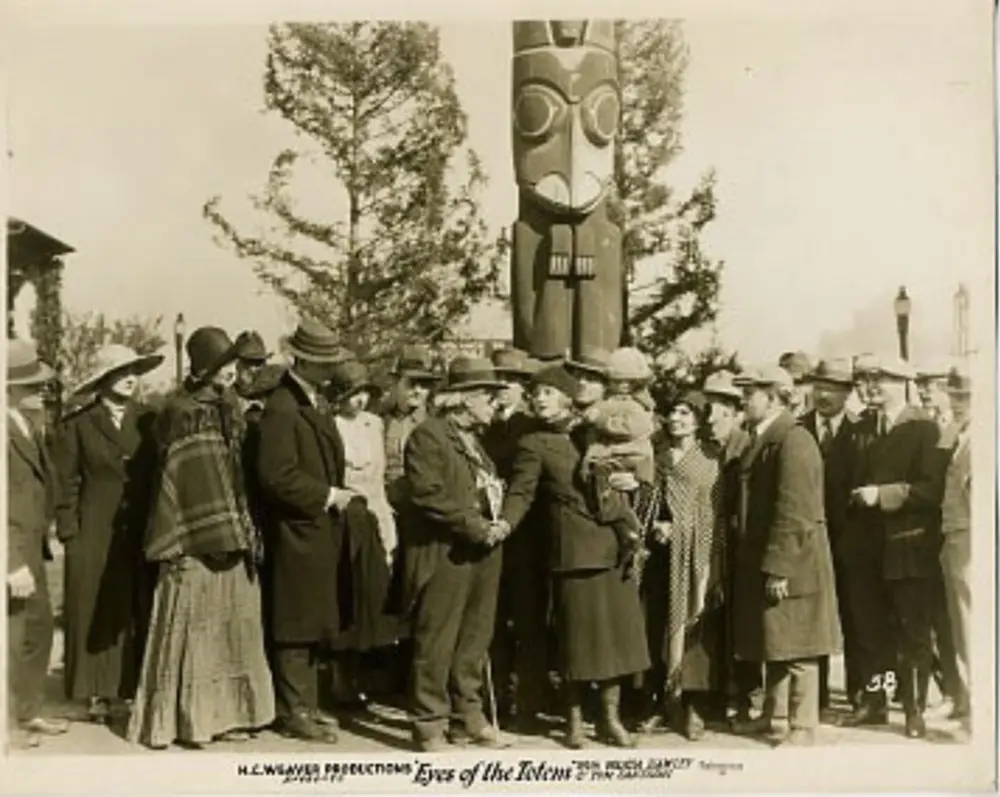
The cast of Eyes of the Totem, featuring names like Emily Roudebush as Miriam and Monte Wax in a pivotal role, delivers performances typical of the silent era: grand, expressive, and often bordering on theatrical. Emily Roudebush, in particular, carries the emotional weight of the film. Her portrayal of Miriam’s journey from delicate widow to hardened survivor is the film’s anchor.
Roudebush’s ability to convey profound grief, simmering anger, and unwavering resolve through facial expressions and body language is commendable. There's a scene where she first encounters the beggar's society, her initial shock and despair slowly giving way to a fierce will to survive; this transition is communicated almost entirely through her eyes and posture. It's a performance that, while melodramatic by modern standards, resonates with a raw authenticity born of the necessity of the silent screen.
Monte Wax, as the elusive man with the sinister eyes, embodies the archetypal villain. His presence, though often fleeting, carries a palpable menace. The supporting cast, including W.S. Van Dyke himself in a role, contributes to the film’s texture, though their performances are largely in service of the central drama. It’s a reminder of an acting style that prioritized clarity of emotion over subtle nuance, a necessity when dialogue was absent.

The cinematography of Eyes of the Totem, while rudimentary by today’s standards, is effective in its simplicity. The film relies heavily on natural light and straightforward compositions, capturing the grit of its settings – from the domestic tragedy to the squalor of the beggar’s world. There's a starkness to the black-and-white photography that enhances the film’s melodramatic tone, painting a world of sharp contrasts between good and evil, despair and hope.
The use of intertitles is crucial, not just for dialogue but for providing narrative exposition and emotional context. They act as a silent narrator, guiding the audience through the story’s twists and turns. While some might find their frequency disruptive, they are an integral part of the silent film language, serving to bridge the gaps that dialogue would later fill. Consider how they are used to convey Miriam's internal monologues, giving insight into her motivations without a single spoken word.
One particularly interesting aspect is how the film attempts to use visual motifs. The “eyes of the totem” themselves, while perhaps not a constant visual presence, represent the haunting, inescapable nature of memory and fate. This symbolic element, though not always overtly presented, adds a layer of depth to the otherwise direct visual narrative. It's less refined than the visual poetry found in a film like Shadows, but it serves its purpose.

The pacing of Eyes of the Totem is a significant factor for modern viewers. Silent films inherently operate at a different rhythm, often slower and more deliberate, allowing scenes to unfold with a stately grandeur. This film is no exception. Its segments, particularly those establishing Miriam’s life among the beggars, take their time, building atmosphere and character through sustained observation rather than rapid cuts.
This deliberate pace can be a challenge, requiring patience and a willingness to immerse oneself in a different cinematic language. However, it also allows for a deeper appreciation of the acting and the visual storytelling. The tone is unashamedly melodramatic, a hallmark of the era. Emotions are writ large, morality is often black and white, and fate plays a heavy hand in the characters' destinies. This isn't a film for subtlety; it's a film for grand gestures and sweeping emotional arcs.
The aesthetic is one of stark realism blended with dramatic exaggeration. The depiction of poverty, while perhaps romanticized in parts, feels grounded in a certain truth. Yet, the emotional reactions of the characters are often heightened to ensure they register without the aid of sound. This balance between grounded settings and elevated emotion is central to the silent film experience, and Eyes of the Totem navigates it with varying degrees of success.
Yes, for specific audiences. This silent film is a valuable historical document. It showcases early filmmaking techniques and storytelling. Miriam's journey is surprisingly compelling. However, its slow pace and melodramatic style are not for everyone. It requires an appreciation for cinematic history. It's a challenging but rewarding watch for enthusiasts.
Eyes of the Totem is not a film that will resonate with everyone. It's a challenging watch, demanding a certain appreciation for the historical context and the unique language of silent cinema. Its narrative, while compelling in its core quest for justice, is delivered with the broad strokes and heightened emotions characteristic of its era. This isn't a flaw, per se, but rather a defining feature that dictates its audience.
For those willing to engage with it on its own terms, however, there are genuine rewards. Emily Roudebush’s performance is a testament to the power of silent acting, and W.S. Van Dyke’s early direction offers fascinating insights into his developing craft. The film functions less as a universally entertaining piece and more as a crucial artifact, a window into the evolution of storytelling on screen.
It works. But it’s flawed. Its historical significance often outweighs its cinematic polish, making it more valuable as a study than a casual viewing. Ultimately, Eyes of the Totem is a testament to the enduring human desire for retribution and resilience, presented through the raw, expressive lens of early Hollywood. Approach it with patience and an open mind, and you'll find a peculiar, often moving, piece of cinematic history.
IMDb —
1917
Community
Log in to comment.