DbcultAccessing Vault...
Cult Review
Senior Film Conservator
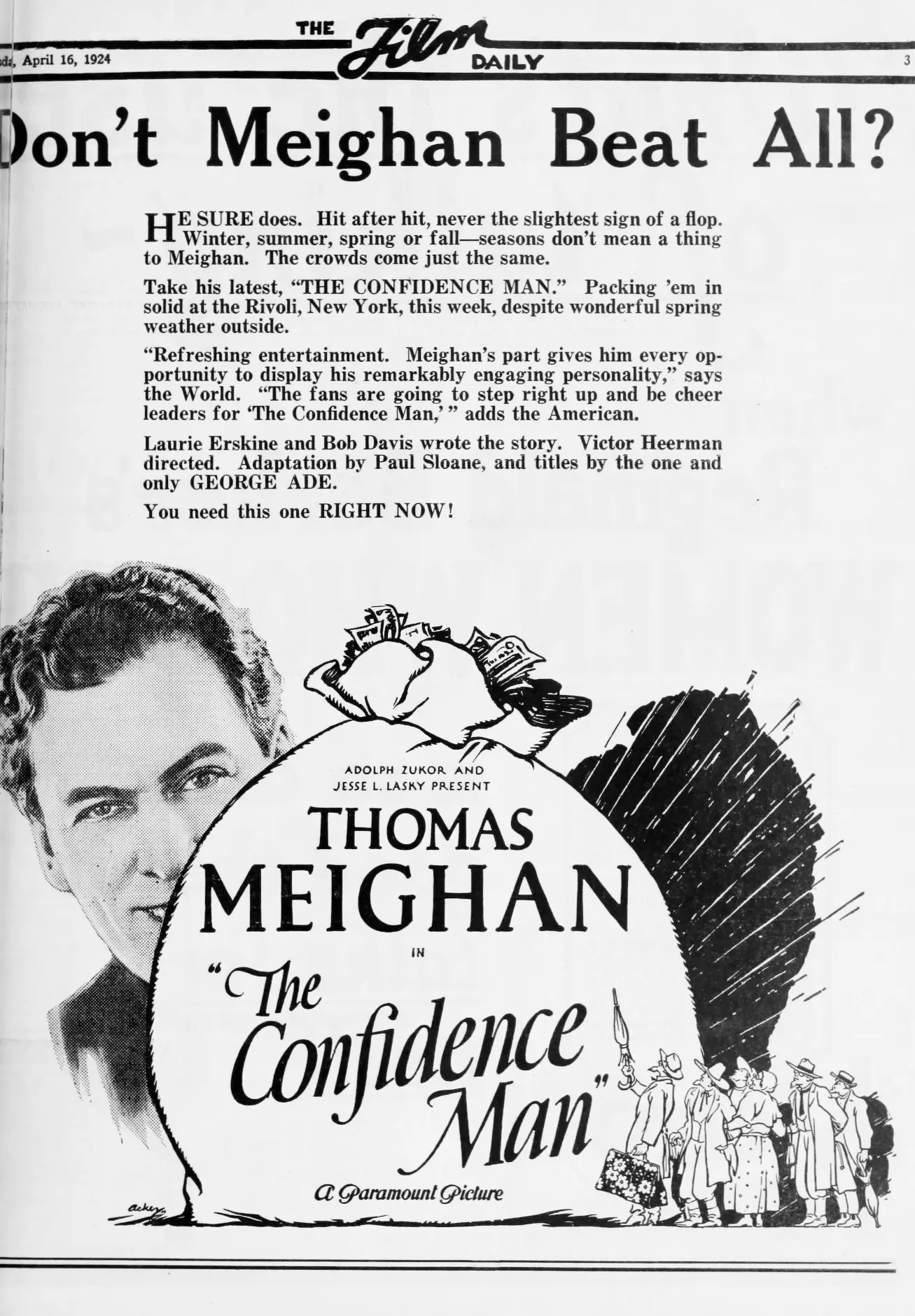
In the early 1920s, the American film industry was abuzz with tales of con artists and their elaborate schemes. 'The Confidence Man' (1921), directed by Robert Hobart Davis, Laurie York Erskine, George Ade, and Paul Sloane, offers a fascinating glimpse into this bygone era of cinematic storytelling. This morality tale, set against the backdrop of a small Florida town, explores the transformative power of trust and redemption.
The film centers around Dan Corvan (Thomas Meighan) and Larry Maddox (Larry Wheat), two smooth-talking salesmen peddling worthless oil stocks to unsuspecting townsfolk. Their target is the frugal Godfrey Queritt (George Nash), whom they aim to relieve of his hard-earned wealth. As they gain the trust of the community, Corvan becomes smitten with Margaret Leland (Margaret Seddon), a charming local girl who sees the good in everyone.
The narrative takes a pivotal turn when an elderly lady (Helen Lindroth) approaches Corvan, entreating him to recover her son's stolen funds. This plea sparks a crisis of conscience within Corvan, who begins to question the morality of his actions. As he grapples with his own sense of right and wrong, Corvan starts to see the world through Margaret's eyes, and his emotional transformation becomes the linchpin of the story.
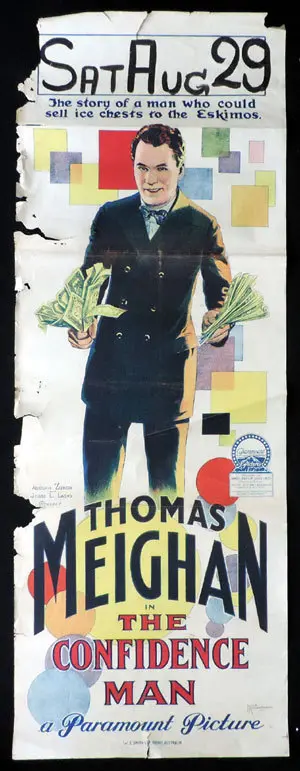
The performances in 'The Confidence Man' are noteworthy, particularly Thomas Meighan's portrayal of Dan Corvan. Meighan brings a certain je ne sais quoi to the role, imbuing his character with a sense of vulnerability and likability. The chemistry between Meighan and Margaret Seddon is palpable, and their on-screen romance adds a touch of warmth to the narrative.
In terms of thematic resonance, 'The Confidence Man' shares similarities with other silent films of the era, such as The Garden of Weeds (1925) and A Girl of Yesterday (1923). These films often explored the tensions between deception and honesty, as well as the redemptive power of love and trust.
From a technical standpoint, 'The Confidence Man' features a range of innovative cinematographic techniques, including clever uses of lighting and composition. The film's visual storytelling is complemented by a strong narrative drive, which keeps viewers engaged from start to finish.
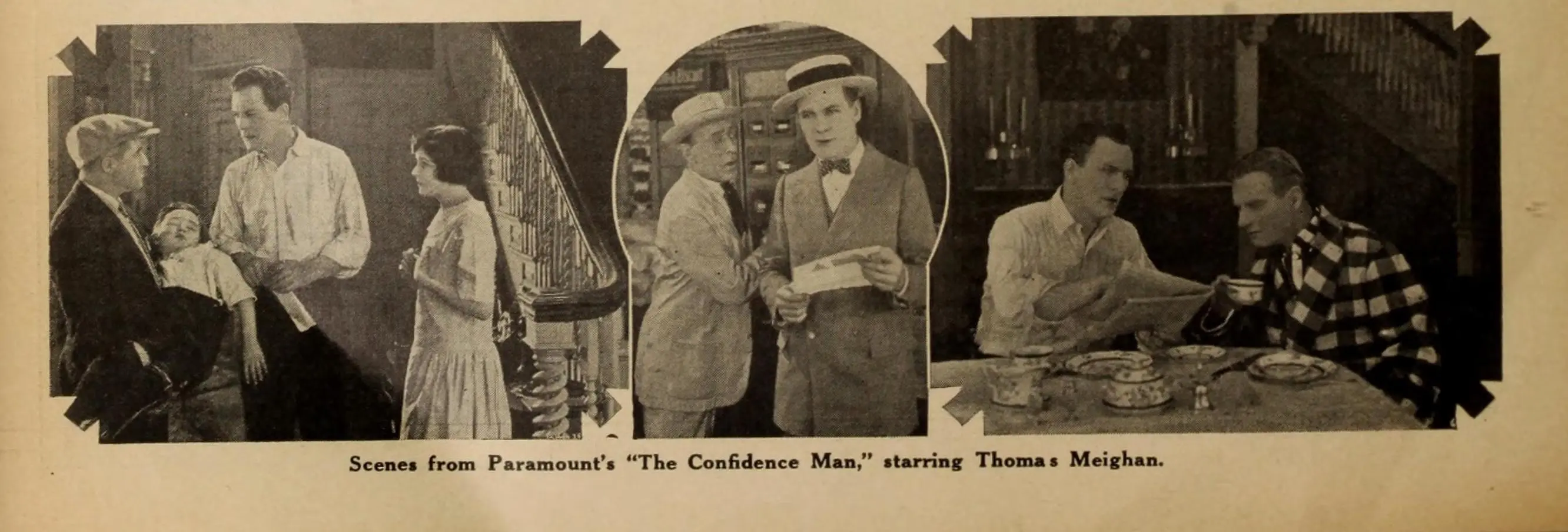
While 'The Confidence Man' may not be as well-known as some of its contemporaries, such as Snobs (1925) or The Arrival of Perpetua (1924), it remains a fascinating example of the silent film era's ability to craft compelling stories that transcend time. This morality tale continues to resonate with modern audiences, offering a powerful exploration of the human condition.
In conclusion, 'The Confidence Man' is a hidden gem of the silent film era, offering a captivating narrative, strong performances, and innovative cinematography. If you're a fan of classic cinema or simply looking for a film that explores the complexities of human nature, then 'The Confidence Man' is definitely worth watching.
Interestingly, the film's themes of deception and redemption are echoed in other films of the era, such as The Son-of-a-Gun (1925) and Checkers (1927). These films demonstrate the ongoing fascination of filmmakers with the tensions between honesty and deception, as well as the redemptive power of love and trust.
Ultimately, 'The Confidence Man' is a timeless tale that continues to captivate audiences with its universal themes and memorable characters. If you're interested in exploring the silent film era or simply looking for a compelling story, then 'The Confidence Man' is an excellent choice.

IMDb 7.4
1931
Community
Log in to comment.