DbcultAccessing Vault...
Cult Review
Senior Film Conservator
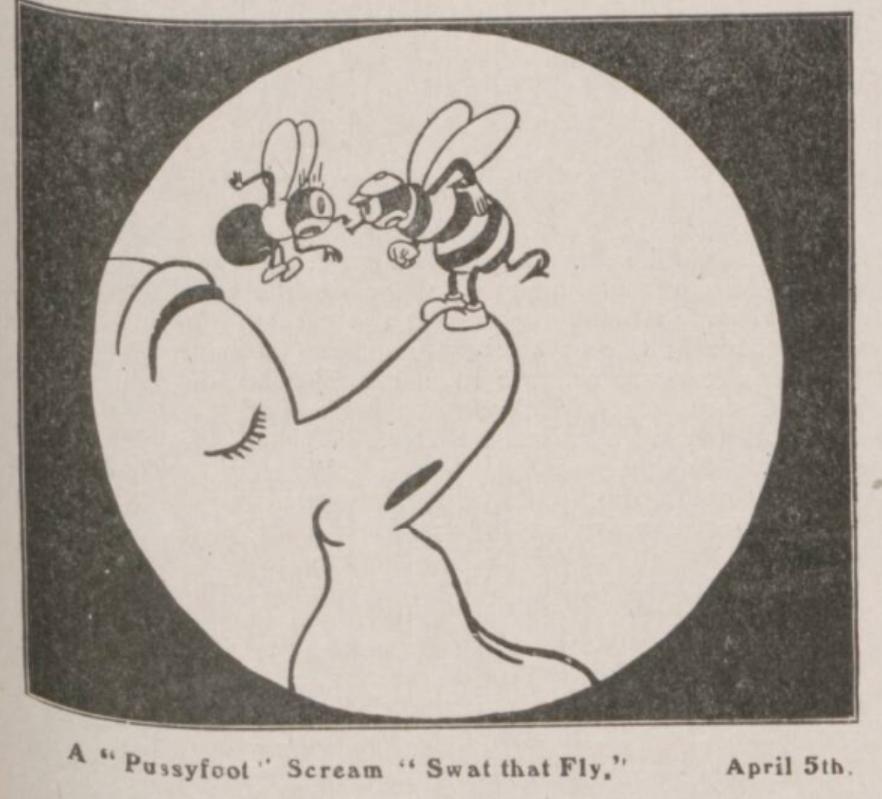
In the nascent years of the silver screen, animation was not merely a medium for children but a laboratory for visual experimentation. Swat the Fly, a 1916 jewel directed by the legendary Gregory La Cava, serves as a quintessential artifact of this era. Unlike the somber, heavy-handed morality found in contemporary dramas like The Christian, this short film embraces a philosophy of pure, unadulterated motion. It is a work that understands the inherent comedy of the human condition when pitted against the microscopic annoyances of the natural world.
The film opens with a sequence that is deceptively simple: a woman, a fly, and a bowl of milk. However, through La Cava’s lens, this becomes a study in frustration and spatial dynamics. The fly is not merely an insect; it is a catalyst for the total breakdown of domestic order. As Ma lunges and misses, we see the early development of 'squash and stretch'—the fundamental principle that gives life to ink. The fluidity here is remarkable, especially when contrasted with the stiff, stage-bound movements often seen in early live-action features like The Upstart.
The narrative broadens its scope as we transition to the exterior, where the Uncle engages with a vacuum cleaner. In 1916, such a device was a symbol of burgeoning modernity, a promise of labor-saving ease. Yet, in the hands of the Katzenjammer family, technology is invariably a conduit for disaster. The Uncle’s collapse into sleep beneath the tree is a moment of pastoral peace that feels almost out of place, reminiscent of the quietude in Paradise Garden, before the storm of mischief arrives.
Enter the twins. Hans and Fritz are the archetypal agents of chaos. Their transformation of the vacuum cleaner into a weapon of war—a bee-sucking apparatus—is a stroke of genius that highlights the subversive nature of the Katzenjammer strip. While films like Nurse Cavell were exploring themes of heroism and sacrifice, La Cava was interested in the visceral, immediate impact of a well-placed sting. The twins represent the id, the unbridled impulse to disrupt the status quo, making them far more relatable than the stoic heroes of Wolves of the Border.
The sequence involving Pa and the outhouse is where the film’s technical prowess truly shines. Pa is exhausted, a victim of the mundane labor of painting—a task that mirrors the repetitive nature of animation itself. The use of white paint against the monochrome background creates a striking visual contrast. When the twins unleash the vacuum-borne bees upon him, the resulting explosion of movement is breathtaking. It is a masterclass in timing. Every sting, every frantic swat, and every leap of agony is choreographed with the precision of a clockmaker.
This level of slapstick synchronization was rare for its time. While Sunshine Dad attempted to find humor in domesticity through dialogue and performance, Swat the Fly achieves it through pure visual rhythm. The bees are not just dots on a screen; they are a malevolent force of nature, a swarm of consequences for Pa’s momentary lapse into slumber. The chase that follows is a sprawling epic in miniature, traversing the landscape with a speed that rivals the adventure in Kidnapped, though with significantly more stings and less historical baggage.
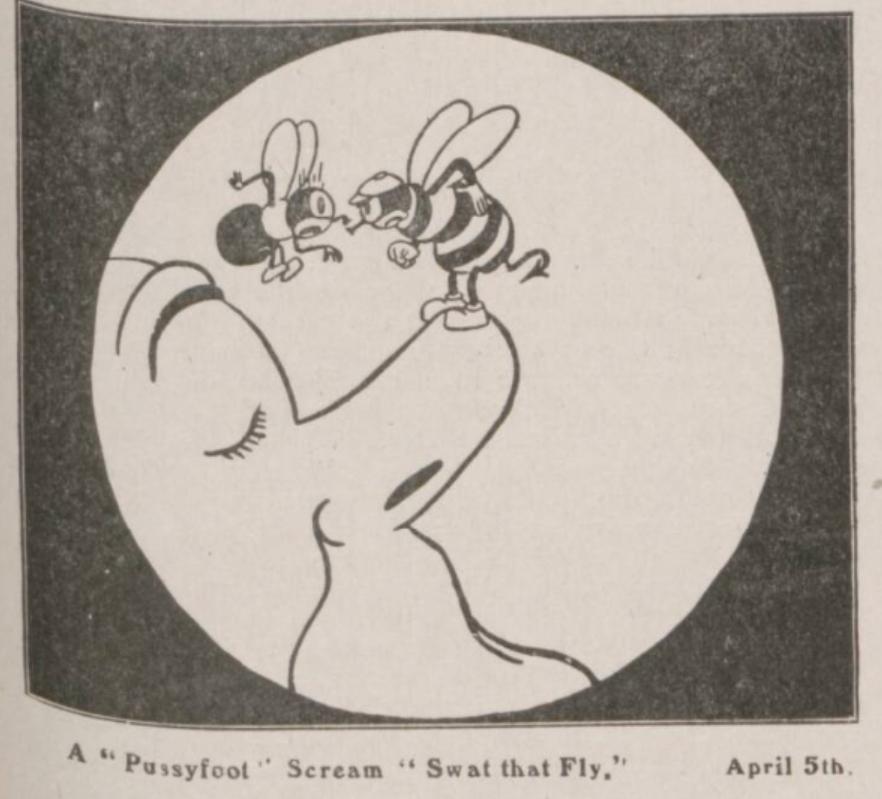
To understand Swat the Fly, one must understand its roots in Rudolph Dirks’ comic strip. The Katzenjammer Kids were a reflection of the immigrant experience in America—rebellious, loud, and constantly at odds with authority. In an era where films like El signo de la tribu or Bar Kochba, the Hero of a Nation sought to define national identity through myth and legend, the Katzenjammers defined it through the subversion of the family unit. They were the anti-heroes the working class needed.
The film’s conclusion, involving the capture and punishment of the twins, might seem harsh to modern sensibilities, but it is a vital component of the genre’s DNA. It provides a cathartic release, a restoration of the patriarchal order that was so frequently challenged in silent cinema. This cycle of rebellion and retribution is far more honest than the saccharine resolutions of The Price of Happiness. There is no moralizing here; there is only the reality of the paddle.
Gregory La Cava’s direction is characterized by a restlessness that would eventually lead him to great success in live-action 'screwball' comedies. In Swat the Fly, we see the blueprints for that future. The way he utilizes the entire frame, forcing the eye to jump from the foreground action of Ma to the background antics of the twins, is sophisticated. It lacks the static, theatrical feel of Gli spettri or the gothic rigidity of Das verwunschene Schloß.
The animation itself, produced under the International Film Service banner, shows a level of polish that was the gold standard of the 1910s. The character designs are expressive, capturing the essence of Dirks' original drawings while imbuing them with a new dimension of life. The way the characters move—with a certain weight and momentum—suggests a deep understanding of physics that many of La Cava's contemporaries lacked. Even in a film as short as this, the character of Ma feels fully realized; her frustration is palpable, her movements sharp and determined, unlike the breezy nonchalance found in Wives and Other Wives.
Why does Swat the Fly matter today? In an age of digital perfection and CGI-saturated landscapes, there is something profoundly refreshing about the raw, hand-drawn energy of the 1916 Katzenjammers. It reminds us that comedy does not require a complex plot or high-concept premises. It requires only a fly, a vacuum, and a target. It is a primal form of storytelling that bypasses the intellect and aims straight for the funny bone.
While it may not have the historical prestige of Lola Montez or the rugged charm of Rough and Ready, Swat the Fly occupies a unique space in the evolution of cinema. It is a testament to the power of the gag, the resilience of the comic strip, and the burgeoning genius of Gregory La Cava. It is a whirlwind of ink and mischief that, despite its century-old age, remains as vibrant and irritatingly delightful as the fly that started it all. To watch it is to witness the birth of modern comedic timing, wrapped in a package of beautiful, chaotic simplicity.
Reviewer's Note: For those seeking to trace the lineage of animated comedy, this film is an essential waypoint. It bridges the gap between the static panels of the newspaper and the cinematic symphonies that would follow in the decades to come.
IMDb —
1929
Community
Log in to comment.