DbcultAccessing Vault...
Cult Review
Senior Film Conservator
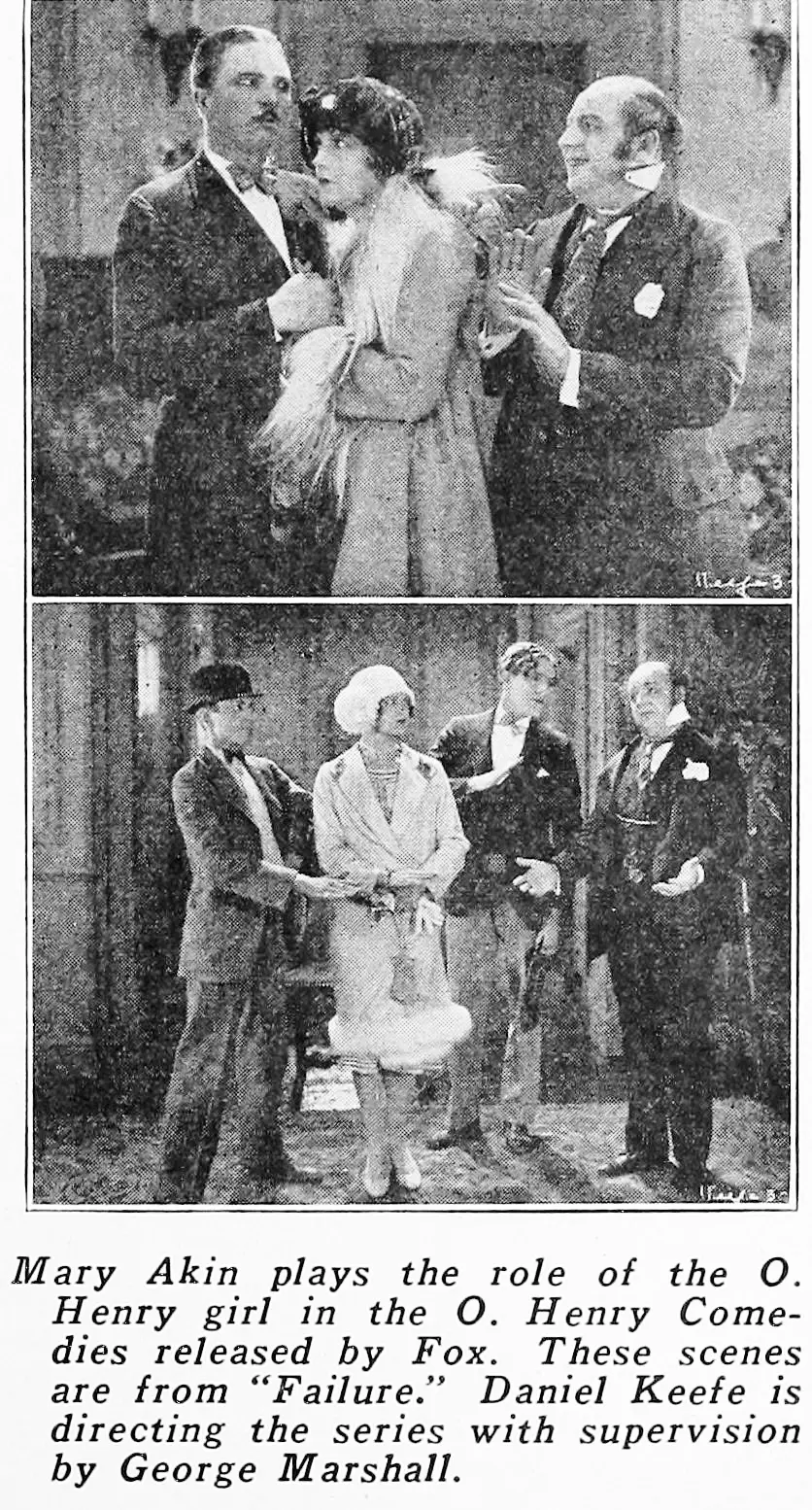
Is 'Failure' (1921) worth your time in an age of dazzling blockbusters and intricate streaming series? Short answer: yes, but with a significant caveat. This silent O. Henry adaptation is a delightful, if slight, piece of cinematic history that still manages to charm and amuse almost a century after its release.
This film is absolutely for anyone with an appreciation for early cinema, particularly silent comedies, and those who enjoy the clever, often ironic, storytelling style of O. Henry. It is emphatically not for viewers seeking modern pacing, high-stakes drama, or cutting-edge special effects. You need patience and a willingness to engage with a different era of filmmaking.
This film works because of its surprisingly sharp script, its commitment to O. Henry's signature twist, and the earnest, if broad, performances that anchor its comedic premise.
This film fails because its technical limitations, common for its era, can make it feel somewhat rudimentary to contemporary eyes, and its humor, while effective, rarely transcends gentle amusement.
You should watch it if you are a film historian, a fan of O. Henry's short stories, or simply curious about the foundational elements of cinematic storytelling and comedic timing.
"Failure" arrives from 1921, a product of an era when cinema was still finding its voice, literally and figuratively. Based on an O. Henry story, it carries the distinct narrative DNA of its source material: a deceptively simple premise leading to an ironic, often humorous, reversal of expectations. This is not a film that attempts to reinvent the wheel, but rather to spin it with a certain practiced elegance that was characteristic of its time.
The film centers on Gooch, a divorce lawyer, a character archetype ripe for comedic exploitation even then. His office becomes a revolving door for marital disputes, each more convoluted than the last. The plot, as detailed in the summary, is a masterclass in escalating comedic tension through mistaken identities and conflicting financial incentives. It’s a tight, efficient narrative, a hallmark of short-story adaptations from this period.
One of the film's undeniable strengths is its adherence to the spirit of O. Henry. The famed short story writer was known for his surprise endings, and "Failure" delivers on this promise with a satisfying, if predictable, final reveal. For those familiar with O. Henry's work, the twist isn't groundbreaking, but its cinematic execution is charmingly effective.
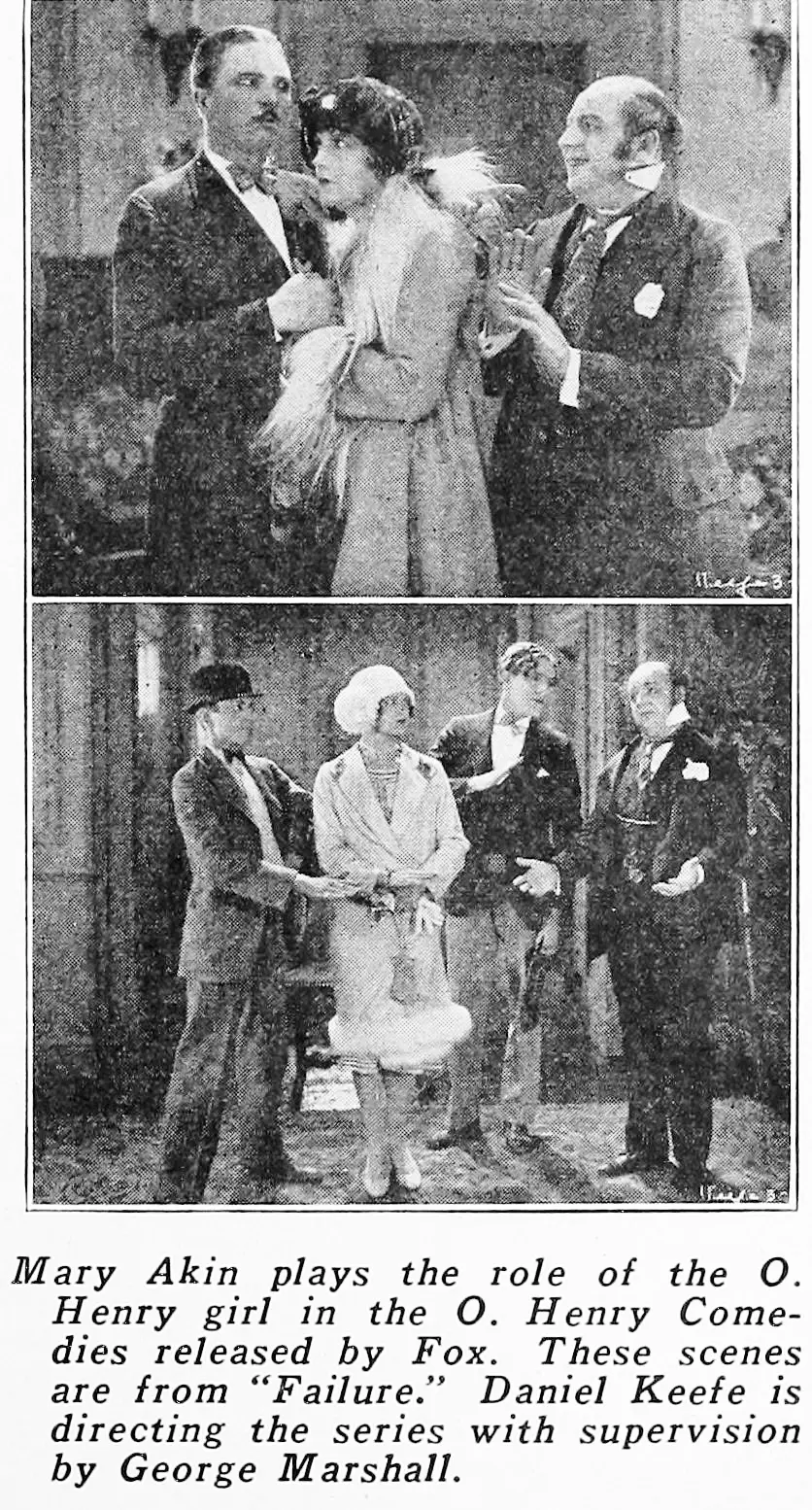
The direction, while not groundbreaking, is competent. It utilizes the visual language of silent film effectively, relying on clear character blocking and intertitles to convey dialogue and internal thoughts. There's a particular scene where Gooch, overwhelmed by the conflicting demands, physically throws his hands up in despair, a universally understood gesture that transcends the silent medium and lands perfectly.
What strikes me most is how much storytelling efficiency was possible even without sound. Every gesture, every facial expression, every intertitle had to count. "Failure" is a testament to this disciplined approach, telling its story with an economical grace that many modern films could learn from.
The cast of "Failure" operates within the conventions of early silent comedy, where performances were often broad and theatrical, designed to convey emotion and intent without spoken words. This isn't a criticism; it's a necessary artistic choice for the medium, and the actors here largely succeed in their task.
William Bailey, as the beleaguered lawyer Gooch, carries much of the film's comedic weight. His expressions range from professional detachment to utter bewilderment, often within a single scene. The way he subtly (or not so subtly) calculates the financial implications of each new client's request is genuinely funny. His exasperated sighs, conveyed through body language and exaggerated gestures, are a highlight.
Kathryn McGuire, playing Mrs. Billings, embodies the 'unhappily married' woman with a vivacious energy that hints at her true, more manipulative intentions. Her initial portrayal of distress quickly gives way to a knowing smirk once her plan is set in motion. It's a performance that, while not deep, serves the comedic purpose well, making her character a delightful trickster.
The supporting cast, including William Bakewell and Harvey Clark, fill their roles with similar gusto. Bakewell, as Mrs. Billings' suitor, effectively conveys his desperation to escape her clutches, making his final, convoluted plan understandable, if not entirely admirable. The physical comedy, though sparse, is well-timed, such as a moment where a character nearly trips over himself in haste, adding a touch of slapstick to the proceedings.
It's easy to dismiss these performances as overly theatrical by today's standards, but to do so would be to miss the point. These actors were pioneers, developing a new language for a new art form. Their exaggerated movements and expressive faces were essential tools for communicating complex narratives to an audience accustomed to stage plays. They nail it.
From a technical standpoint, "Failure" is exactly what one would expect from a 1921 production. The cinematography is straightforward, primarily utilizing static shots and medium close-ups to capture the action and character reactions. There are no sweeping crane shots or intricate tracking movements here, nor would they be expected.
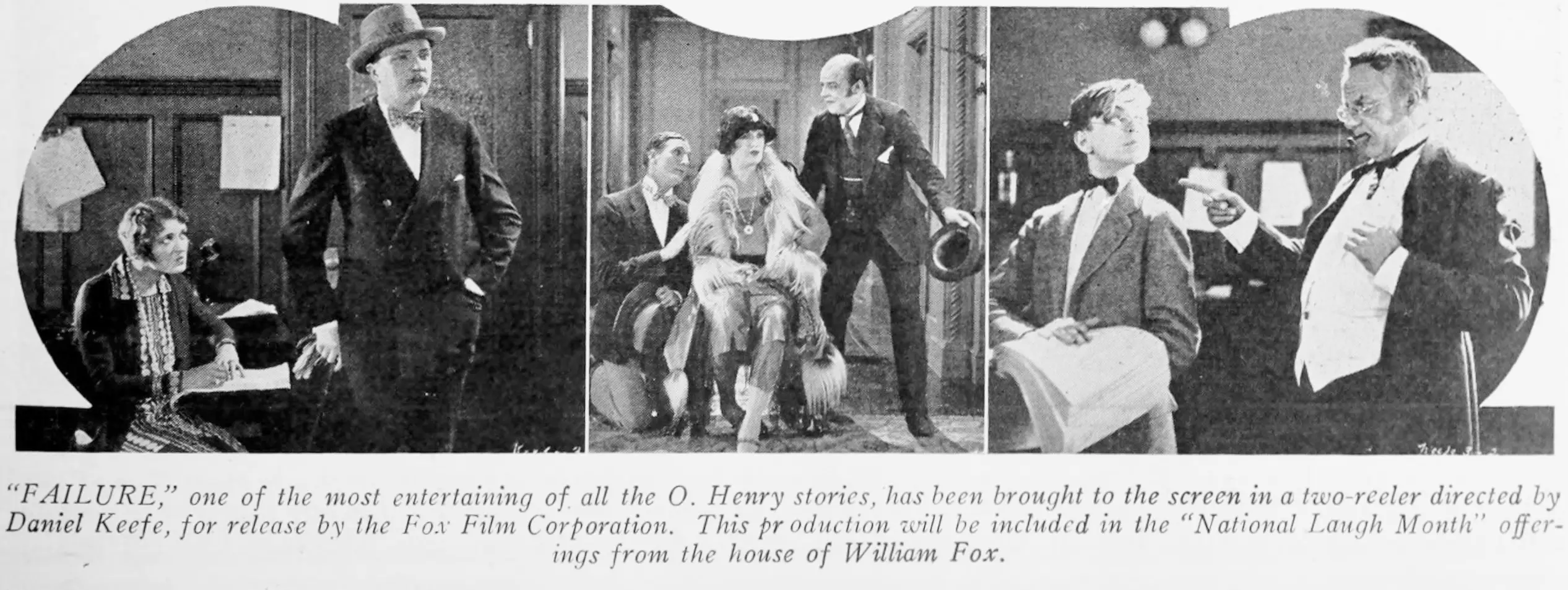
The lighting is functional, illuminating the sets and actors clearly, though without much artistic flair or dramatic shadow play. This is a film focused on narrative clarity rather than visual spectacle. The sets themselves are simple but effective, particularly Gooch's office, which feels authentic to the period, cluttered with legal tomes and a worn desk.
Pacing is another aspect that differentiates silent films from their modern counterparts. "Failure" moves at a deliberate, measured pace, allowing the audience time to read the intertitles and absorb the visual information. While it might feel slow to some, it’s entirely appropriate for the genre and era. The film never rushes its comedic beats, letting the irony simmer before the big reveal.
The tone is consistently light-hearted and comedic. Even when characters are expressing frustration or scheming, there's an underlying sense of whimsy that prevents the film from ever feeling genuinely dramatic. This consistent tone is crucial for a silent comedy, as it guides the audience's emotional response without the aid of spoken dialogue or musical scores (though live accompaniment would have been standard in its original exhibition).
One unconventional observation: the sheer audacity of the final plot twist, where a man would rather pay a lawyer to reconcile his pursuer with her husband than simply tell her to leave him alone, speaks volumes about societal norms and the perceived power of legal intervention at the time. It’s a bizarre, yet brilliant, contrivance that feels uniquely O. Henry.
O. Henry's short stories were incredibly popular source material for early filmmakers, and it's easy to see why. Their concise plots, memorable characters, and signature twist endings translated well to the nascent medium of silent film, which thrived on clear narratives and strong visual cues.
"Failure" is a prime example of this successful synergy. The story's core conceit, a lawyer caught in a web of marital deceit, is perfectly suited for a comedic short. While other O. Henry adaptations like A Double-Dyed Deceiver might explore more dramatic territory, "Failure" leans into the lighter side of human foibles.
It also offers an interesting parallel to other films of the era dealing with marriage and divorce, such as Le sorprese del divorzio, highlighting a prevalent social concern that found fertile ground in cinematic narratives. The evolving legal landscape around marriage and separation was clearly a topic of public fascination, and films like "Failure" tapped into that curiosity with humor.
I firmly believe that films like "Failure," despite their age and technical simplicity, hold immense value for understanding the evolution of storytelling. They are not merely historical artifacts; they are foundational texts that demonstrate how cinematic language was first constructed. To dismiss them is to ignore the roots of modern filmmaking.
"Failure" is a charming relic, a small but perfectly formed piece of cinematic history that still holds a surprising amount of appeal. It works. But it’s flawed. Its clever script, derived from O. Henry's witty storytelling, is the engine that keeps it engaging, even a century on. While it won't revolutionize your understanding of cinema, it offers a delightful peek into the foundational elements of screen comedy and narrative construction.
For those willing to step back in time and appreciate the craft of early filmmakers, "Failure" is a worthwhile diversion. It serves as a strong reminder that good storytelling, even without spoken words or advanced technology, can always find an audience. It's not a grand spectacle, but a quiet, intelligent chuckle, and sometimes, that's precisely what a film critic needs.
IMDb 6.6
1924
Community
Log in to comment.