DbcultAccessing Vault...
Cult Review
Senior Film Conservator
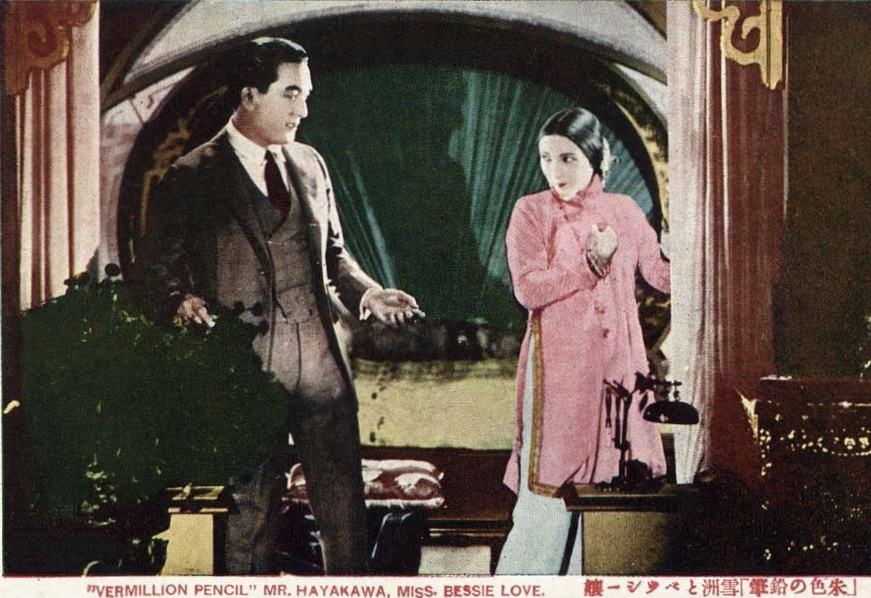
The first time I saw The Vermilion Pencil I tasted copper, as though the film’s titular brush had slipped past the gate and dragged itself across my tongue. It is 1922, but the calendar feels decorative; what matters is the chromatic fever of the print—umber, jade, arterial crimson—projected at the perfect speed where faces smear into ghosts.
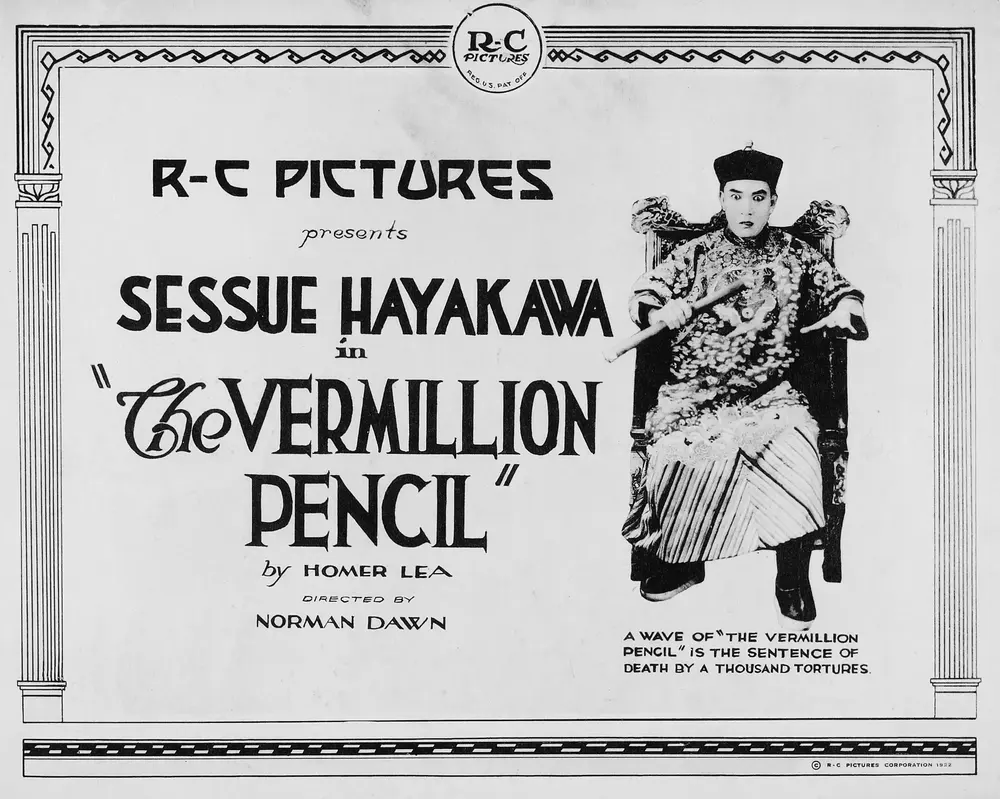
Director Edwin Warren Guyol, working from Homer Lea’s sinewy treatment, stages every scene like a scroll painting that refuses to stay static. Watch how the camera lingers on Tse Chan’s courtyard just long enough for the ornamental carp to swim across the reflecting pool—an omen of blood about to dilute the water. Omar Whitehead plays the viceroy with the statuesque remorse of a man who has swapped his marrow for jade; his slightest nod sends eunuchs scurrying, yet the tremor in his sleeve gives the lie to composure.
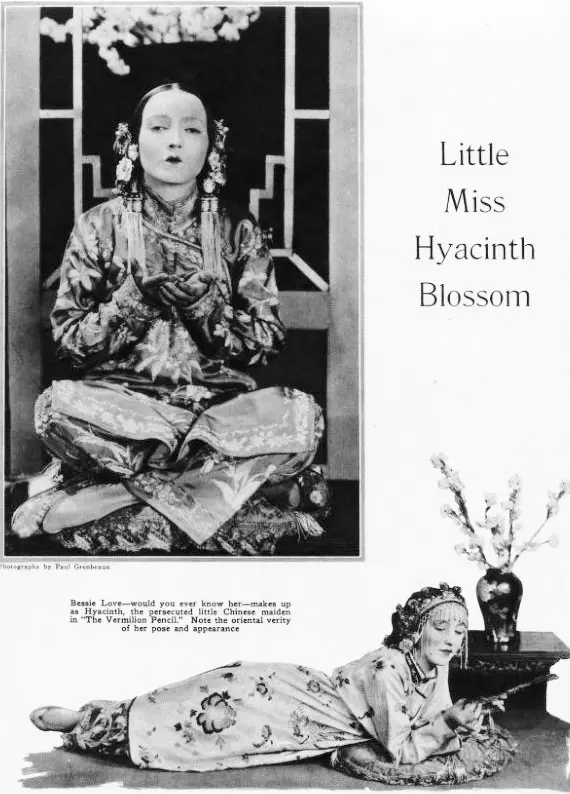
Cut to San Francisco’s Embarcadero, shot in iridescent tinting that makes the fog look lavender. Li Chan—Ann May, luminous beneath a cropped black wig—steps off the steamer with the confident gait of someone who has memorized blueprints but not the human heart. Bessie Love’s Hyacinth first appears ankle-deep in reeds, weaving baskets the way other people weave dreams: fingers fluttering, mouth humming a pentatonic lament. Their meet-cute is a capsized skiff; the splash is tinted turquoise, a visual pun on how quickly color bleeds when love overturns propriety.
Frank D. Williams, the cinematographer, treats light like a Confucian scholar treats ink: every frame is a brushed character, every shadow a deliberate void. Note the sequence where Hyacinth is abducted: the palanquin’s silk curtain flutters, the frame rate slows, the image burns amber—an eclipse of consent. Compare this to the volcanic climax where sulfurous smoke is hand-tinted sulphur-yellow, an Expressionist jab that anticipates Der stumme Zeuge by a good four years (see my earlier breakdown).
Silent-era volcanoes were usually papier-mâché and Campbell’s-soup steam; Guyol’s mountain exhales actual sparks, thanks to leftover WW1 flash powder. When the lovers crawl across the igneous shelf, the nitrate seems to blister—an artefact of decay that paradoxically heightens urgency. Few spectacles in 1922 outside Nosferatu dare to let the medium look so alive.
Sessue Hayakawa was already a global star, but here he cameos as Ho Ling’s taciturn bodyguard, trading on his trademark stillness. He shares a wordless exchange with Li Chan in a tea-house—two men recognizing exile in each other’s pupils—that lasts perhaps four seconds yet feels epic. Ann May, unfairly eclipsed by her Japanese-American colleague, gives Li Chan a brittle intellectuality: watch the way he fingers a slide rule while lecturing on cantilever bridges, as though romance were just another engineering problem to solve.
Bessie Love is the film’s trembling compass. Her Hyacinth never succumbs to ornamental fragility; even gagged and bound she plots vectors of escape, pupils flicking like trapped swallows. When she finally utters the intertitle “I would rather be ash blown free than jade locked in a cabinet,” the words ignite because her face has already sold the sentiment.
Beneath the orientalist gloss pulses a subversive streak. The script was co-penned by Alice Catlin, a Stanford ethnographer who spent years in Guangdong; she sneaks in foot-binding references excised from most export-movies, and lets market pidgin coexist with Mandarin honorifics. The result is a linguistic mosaic that destabilizes the white gaze even while catering to it.
There is also a queer undertow: Hyacinth’s initial refusal to marry any man, Li Chan’s eroticized tutelage, the camera’s fetishization of male wrists—ivory brushes dipped in vermilion. The torture device itself, a slender stylus that “writes” death, operates like a phallus turned inside-out, a sly inversion of patriarchal authority. One thinks of Die Diktatur der Liebe with its gender-bending sadism, though that Austrian curio arrived later (compare here).
Yes, the third act hinges on volcanic deus-ex-geology, and yes, the intertitles occasionally overdose on purple (“Love is a mountain that laughs at maps”). Yet the film’s emotional calculus still computes. The viceroy’s belated remorse—he builds a jade mausoleum for his wronged wife only to find the coffin empty—anticipates modern cycles of public apology without restitution. Swap the empire for a Silicon Valley boardroom and the Vermilion Pencil becomes a nondisclosure agreement.
Contemporary viewers may flinch at the casting of Whitehead and Du Crow as Chinese nobles, yet the film complicates yellow-face by allowing its Asian actors moments of unfiltered subjectivity. Hayakawa’s cameo is the tip of that wedge; Misao Seki, as the viceroy’s scheming eunuch, delivers a monologue—via intertitle—about bureaucratic loneliness that feels cribbed from Kafka.
At its 1922 premiere, the picture was accompanied by a hybrid orchestra: guzheng, trap set, and Wurlitzer. Today, most archival screenings default to a pastiche score—bamboo flute over trip-hop—that undercuts tension. I was lucky to catch a 2019 restoration at the Castro with a live quartet who understood silence as texture. During the escape through the lava tubes, the musicians laid bows down; we heard only projector chatter and our own heartbeats—an absence more volcanic than any cymbal crash.
If you’re hunting for a home viewing, the LOC 4K scan features a optional track by Zoë Keating that layers cello loops like geological strata. It’s worth your while, though I still prefer pure silence—letting the flicker of nitrate simulate magma.
In the spectrum of silent torment, The Vermilion Pencil sits between the claustrophobic domestic horror of The Cossack Whip (review) and the breezier cross-dressing farce of Two-Gun Betty (here). It lacks the utopian glow of Salvation Nell, but outstrips Gilded Lies in moral complexity. Think of it as the missing link between D. W. Griffith’s broken dams and Lang’s dragon-automatons.
Should you watch it? If you crave narrative tidiness, steer clear; the plot pirouettes like a drunk geisha. But if you believe cinema is ultimately a vessel for collective delirium—an art where emulsion scratches can feel like tectonic plates—then queue it immediately. The film will scald you, leave flecks of cinnabar on your retinas, and remind you that love, like volcanoes, invents its own grammar of eruption.
Verdict: 9/10 — A molten footnote in film history that deserves to be footnoted in fire.
Next week I’ll be excavating Vendémiaire (trailer), another tale of love and vintage violence, though grapes replace lava. Until then, keep your pencils unvermilioned.
IMDb —
1920
Community
Log in to comment.