DbcultAccessing Vault...
Cult Review
Senior Film Conservator
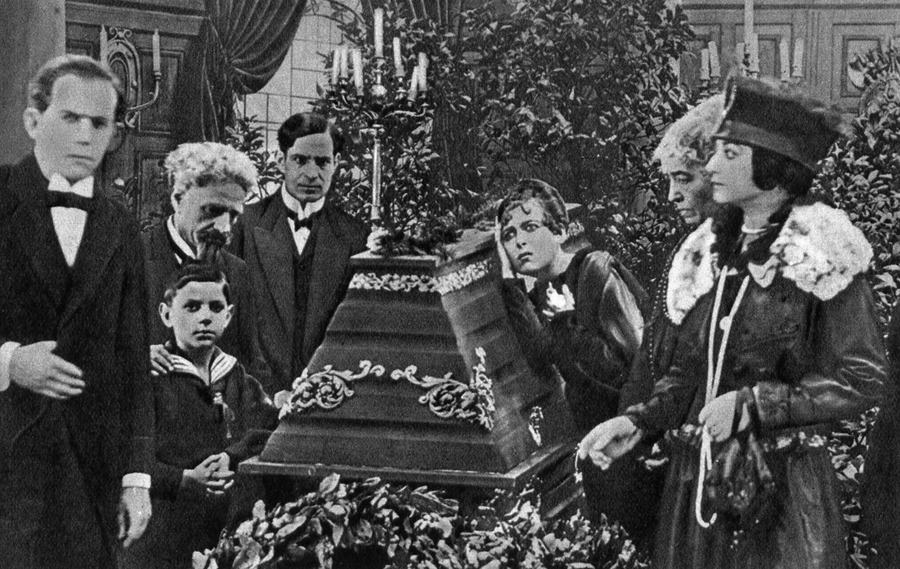
Stepping back into the hallowed halls of early cinema, one often encounters works that, despite their age, resonate with an astonishing contemporary poignancy. Such is the case with Die Frau mit den Karfunkelsteinen, a cinematic gem from the golden age of German silent film. This isn't merely a historical artifact; it's a vibrant tapestry woven with threads of mystery, romance, and societal critique, demonstrating the profound expressive power achievable even without spoken dialogue. Directed with an astute eye for dramatic tension and visual symbolism, this film, inspired by the literary world of Eugenie Marlitt and adapted by Georg Victor Mendel, beckons us into a world where hidden truths and gleaming jewels hold sway over human destinies.
At its core, Die Frau mit den Karfunkelsteinen is a masterclass in narrative suspense, meticulously unfolding the layers of a past shrouded in ambiguity. The arrival of Eleonore von Reutlingen, brought to vivid, nuanced life by the incomparable Olga Engl, serves as the catalyst for the entire drama. Engl, a titan of early German cinema, imbues Eleonore with an almost ethereal grace, yet beneath her composed exterior lies a palpable undercurrent of sorrow and resilience. Her character is not merely defined by the titular carbuncle stones, but rather, she defines them – their fiery hue seeming to reflect the complex passions and trials she has endured. These stones are more than just exquisite adornments; they are a visual metaphor for the weight of history, a silent testament to secrets both personal and ancestral.
The film’s setting, a seemingly tranquil German estate, quickly reveals itself to be a hotbed of whispers and societal scrutiny. The local gentry, portrayed with a keen understanding of provincial snobbery and curiosity, forms a formidable backdrop against which Eleonore's quiet dignity shines. Their judgmental gazes and hushed conversations are expertly conveyed through the film's visual language, leveraging close-ups and clever framing to suggest the oppressive weight of public opinion. In many ways, the film explores themes not dissimilar to those found in other melodramas of the era, such as Slave of Sin, where societal expectations and moral judgment often trap or define female protagonists. However, Die Frau mit den Karfunkelsteinen elevates this premise through its intricate plot and the sheer force of Engl's performance, transforming a potential victim into a figure of quiet strength.
The romantic entanglement between Eleonore and Baron von Falkenberg, portrayed with a compelling blend of melancholy and ardent curiosity by Erich Kaiser-Titz, forms the emotional core of the narrative. Kaiser-Titz, known for his commanding screen presence, perfectly embodies the aristocratic suitor, drawn inexorably to Eleonore's enigmatic charm. Their courtship is a delicate ballet of glances, gestures, and unspoken desires, a testament to the power of silent acting to convey profound emotional depth. The chemistry between Engl and Kaiser-Titz is undeniable, their scenes together crackling with an understated intensity that speaks volumes without a single word. This nuanced portrayal of burgeoning affection amidst suspicion is a hallmark of the film's sophistication, distinguishing it from simpler romantic fare like Come Robinet sposò Robinette, which often leaned more into comedic or straightforward romantic tropes.
However, their path to potential happiness is fraught with obstacles, primarily in the form of Edith Meller's Gräfin von Linden. Meller delivers a memorable performance as the calculating socialite, her every movement and expression dripping with a thinly veiled malice. The Gräfin is not merely a jealous rival; she is an architect of discord, driven by a desire to secure her own social standing and, more crucially, to exploit a long-forgotten secret connected to the Baron’s estate and, by extension, the very carbuncles Eleonore wears. Her machinations inject a vital element of dramatic tension, propelling the plot forward with a relentless, almost thrilling, pace. This interplay of romantic longing against societal intrigue is a recurring motif in cinematic history, echoing the intricate social dances seen in films like Den hvide rytterske, where class and ambition often clash with personal desires.
The titular carbuncle stones are far from mere props; they are a potent symbol, a MacGuffin that drives the entire narrative. Their deep red hue suggests passion, danger, and a storied past. As the plot thickens, it becomes clear that these jewels are not just a mark of Eleonore’s personal wealth but are inextricably linked to a historical injustice, a family secret that has festered for generations. The film brilliantly uses these physical objects to represent abstract concepts: lineage, hidden shame, and ultimately, the quest for truth. This symbolic use of an object to unravel a complex narrative is a sophisticated technique, one that perhaps finds a spiritual cousin in the symbolic weight of objects in films like Hamlet, where a skull can represent mortality and destiny. Here, the carbuncles are a pulsating heart, beating out the rhythm of the past.
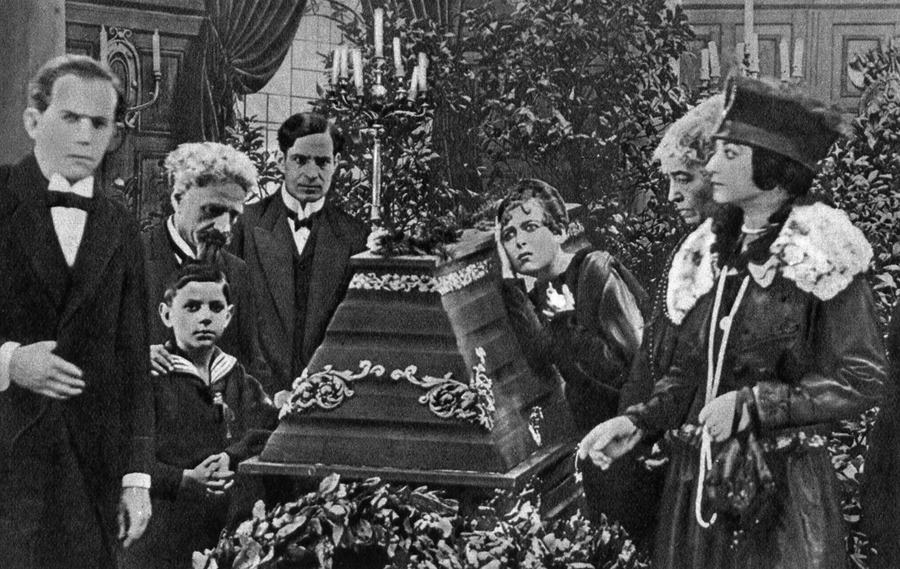
The screenwriters, Eugenie Marlitt (whose literary works often explored similar themes of hidden identities and romantic entanglements within aristocratic settings) and Georg Victor Mendel, craft a narrative that deftly weaves together personal drama with broader implications of societal hypocrisy and the enduring power of historical misdeeds. The film suggests that the sins of the fathers (or grandfathers) can indeed reverberate through generations, impacting the innocent and the guilty alike. The discovery of forged documents and long-lost letters becomes a pivotal plot device, slowly but surely pulling back the veil on the carbuncles' true provenance and Eleonore's rightful claim, not just to wealth, but to her own identity and dignity. This intricate unraveling of a historical puzzle gives the film a detective-story quality, albeit one steeped in melodrama and romantic tension, setting it apart from more straightforward narratives like Lovely Mary, which focused on simpler, more direct emotional arcs.
The ensemble cast of Die Frau mit den Karfunkelsteinen delivers performances that are nothing short of exemplary, a testament to the artistry of silent film acting. Olga Engl's Eleonore is a masterclass in controlled emotion, her eyes conveying a universe of pain, hope, and determination. She avoids the theatrical excesses sometimes associated with the era, opting instead for a subtle, internalised portrayal that draws the audience into her plight. Erich Kaiser-Titz, with his strong features and expressive gaze, perfectly complements Engl, creating a compelling romantic lead whose struggle between societal duty and personal desire is keenly felt. His portrayal of the Baron is one of quiet strength, a man capable of great love but also burdened by the expectations of his lineage.
Edith Meller, as the villainous Gräfin, embraces her role with relish, crafting a character who is both repellant and fascinating. Her gestures are precise, her expressions sharp, leaving no doubt as to her nefarious intentions. She serves as an excellent antagonist, providing the necessary dramatic friction against Eleonore’s stoicism. Else Roscher, in contrast, offers a portrayal of innocence and vulnerability as the Baron’s cousin. Initially perhaps a pawn in the Gräfin's schemes, Roscher's character evolves, demonstrating a capacity for empathy and ultimately contributing to the unraveling of the truth. Her performance provides a necessary counterpoint to the more intense dramatic turns, offering moments of genuine human frailty and eventual resolve. The interplay of these distinct acting styles creates a rich tapestry of human emotion, much like the varied character studies found in films such as Hans Faders Ære, where diverse personalities clash and intertwine.
The film’s cinematography, though a product of its time, showcases a sophisticated understanding of visual storytelling. The use of natural light, the careful composition of shots, and the subtle yet effective intertitles all contribute to a rich cinematic experience. The director employs a range of techniques, from sweeping long shots that establish the grandeur of the estate to intimate close-ups that magnify the characters' inner turmoil. The visual aesthetics are particularly striking when depicting the carbuncles themselves; their reflective surfaces are often highlighted, making them appear almost sentient, repositories of the very secrets they represent. This attention to visual detail and symbolic imagery elevates the film beyond a simple melodrama, imbuing it with an artistic depth that rewards repeated viewings.
Thematic resonance is another strong suit of Die Frau mit den Karfunkelsteinen. Beyond the immediate mystery and romance, the film delves into broader societal issues. It critiques the rigid class structures of the era, the hypocrisy often found within aristocratic circles, and the precarious position of women who dared to defy convention or whose pasts were deemed scandalous. Eleonore's journey is one of vindication, not just personally, but as a symbolic triumph over the forces of prejudice and deceit. Her eventual reclamation of her rightful place, achieved through courage and integrity rather than through inherited status, offers a powerful message that transcends its historical context. This exploration of social justice and personal redemption resonates with the moral complexities seen in films like A Law Unto Himself, where characters often grapple with ethical dilemmas and societal expectations.
In a cinematic landscape often dominated by the more widely known American or French productions of the silent era, Die Frau mit den Karfunkelsteinen stands as a vibrant testament to the sophistication and artistry of German silent cinema. It showcases the collaborative genius of its writers, the visionary direction, and the captivating performances of its cast. The film’s ability to conjure a world rich in detail, emotion, and thematic depth without the aid of spoken dialogue is nothing short of remarkable. It’s a compelling reminder that the language of cinema is universal, capable of transcending temporal and cultural barriers.
For enthusiasts of silent film, or indeed anyone with an appreciation for finely crafted storytelling, Die Frau mit den Karfunkelsteinen offers a rewarding experience. It’s a film that lingers in the mind long after the final frame, prompting reflection on themes of identity, legacy, and the enduring power of truth. Its meticulous construction and powerful emotional beats place it firmly among the significant works of its period, deserving of renewed attention and appreciation. One might even draw parallels to the intricate dramatic structures found in other emotionally charged silent films like Bristede Strenge or In the Hour of Temptation, which similarly explored the depths of human passion and moral quandaries. This film is more than just a historical curiosity; it is a living, breathing work of art that continues to speak to audiences today, proving that true cinematic brilliance knows no temporal bounds. Its fiery carbuncles still gleam, beckoning us to uncover the secrets they hold, and in doing so, to appreciate the enduring magic of the silver screen.
IMDb 7.7
1932
Community
Log in to comment.