DbcultAccessing Vault...
Cult Review
Senior Film Conservator
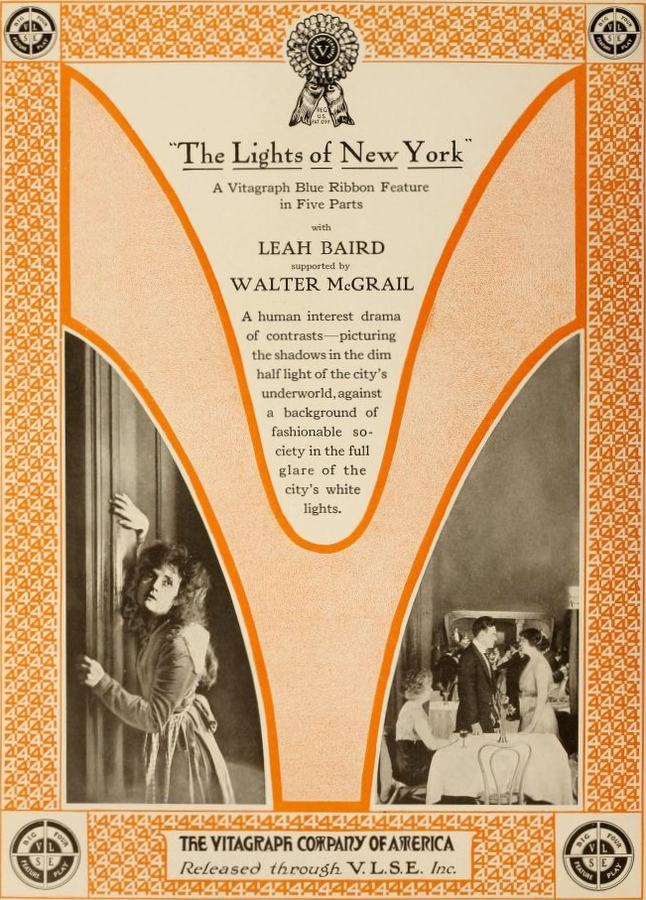
The moment the Vitaphone disk crackles alive, Lights of New York betrays its own marketing: this is no gangster cartoon, but a nocturne soaked in harbor brine and violin rosin, a city symphony that prefers heartbreak to gunfire.
Shot for pocket change in a Brooklyn warehouse while Broadway producers laughed, Charles L. Gaskill’s film survives as a cracked mirror held up to 1928 Manhattan—its reflections warped by poverty, xenophobia, and the first metallic cough of the talkie era. Walter McGrail’s con-man Eddie Blake has the velvet purr of a cabaret emcee, but his eyes are ledger books balancing souls against dollars; when he murmurs “I’ll send you to Vienna, kid,” the line lands like a guillotine because we already hear the blade of broken promises.
Agnes Wadleigh’s Mary Ann—blind since a tenement fire—walks through the film as if every step tests the thickness of the planet’s crust. The camera dotes on her fingers reading brick-wall seams, counting fire escapes like rosary beads. Her solitude is underscored by the city’s new soundscape: elevated trains become iron xylophones, steam valves hiss like cobra charmers, and somewhere a Victrola keeps skipping on Charmaine, turning longing into a skipping-stone that refuses to sink.
Compare it to the same year’s The Battles of a Nation and you see how Gaskill rejects patriotic bombast for gutter impressionism; compare it to A Pardoned Lifer and notice how both films stage prison, yet only Lights recognizes the whole metropolis as a carceral device of blinking ads and hunger.
History books tout this as the first “100% all-talking” picture, but the miracle is how selective the soundtrack is. Dialogue drops out for thirty-second stretches so we hear only a distant ferry whistle and Mary Ann’s music-box—its cylinder warped, producing a microtonal lullaby that feels ashamed of itself. Gaskill understood that silence, once weaponized by sound, hits harder than gunshots; when Eddie’s final con unspools, the absence of city noise is suffocating, as if Manhattan itself inhales before the crash.
Cinematographer William Marshall pushes the primitive Eastman 2-Stock until grain swarms like bedbugs. Neon signs leak onto rain-slick streets, turning characters into walking bruises. In one brazen shot, Eddie’s silhouette dissolves into a wall poster of AL SMITH FOR PRESIDENT, suggesting political hope is just another confidence trick. The film’s budget shows—sets wobble, shadows fall wrong—but the shabbiness morphs into expressionist truth: poverty is a flimsy backdrop that keeps getting reused.
McGrail had been a matinee idol in the teens, but here his baritone carries rust; that corrosion suits Eddie, a man whose charm is on the verge of default. Watch how he modulates volume—whispering to Mary Ann so the mic barely registers, then barking at underlings like a subway grind. Agnes Wadleigh counterbalances with a voice always half-swallowed, as though speech itself were a luxury she can’t afford. Their duet in the moonlit tenement hallway—she asking “Does the world look kinder with eyes?”—is the film’s emotional nadir, a moment that makes Warner’s later gangster cycles feel like drum majorettes.
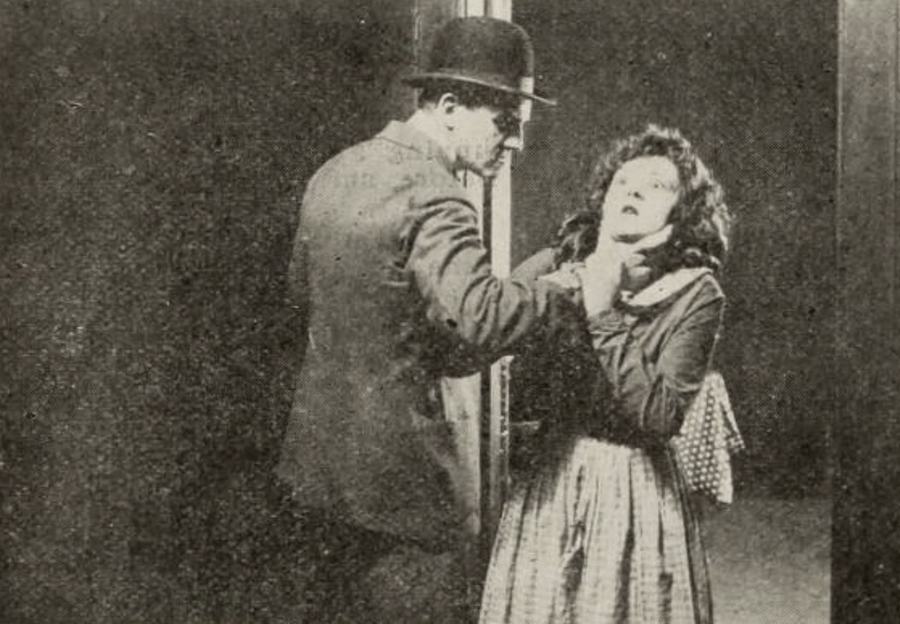
Unlike the femmes of The Taint or A Modern Magdalen, Mary Ann refuses redemption through domesticity. Her choice to return to blindness reads as radical autonomy—a rejection of the male gaze literally and figuratively. Leila Blow’s chorus girl Kitty, all flapper fringe and sarcastic gum-chews, provides counterpoint: she weaponizes her visibility, extorting Eddie with a smile that knows its market value. The film lets both women lose, yet their losses critique a metropolis that prices flesh by the minute.
Chinese extras drift through Chinatown scenes like ghosts the film doesn’t know how to name. A Malay sailor offers Mary Ann opium with the gentleness of a midwife; the camera lingers on his opal earring, suggesting empire’s loot glittering in immigrant ears. These are not noble savages or Yellow Peril cartoons, just weary entrepreneurs in a horizontal Babel. Gaskill’s refusal to subtitle their dialects preserves alterity while indicting the white protagonists’ trespass—an approach more honest than De Voortrekkers’ blood-soaked paternalism.
Released July ’28, three months before the stock bubble burst, the picture vibrates with pre-Crash hubris: skyscraper shadows climb like ivy, speakeasy tycoons flip nickels to buskers, everyone bets on tomorrow. Modern viewers feel macabre hindsight; each cheerfully corrupt deal prefigures Black Tuesday. The final shot—Mary Ann disappearing into a protest march—now reads like prophecy: the city will soon demand its pound of flesh from every Eddie and every orphan.
Scorsese kept a 16 mm print in his office while crafting Mean Streets; the alley cat POV that opens Taxi Driver lifts directly from Gaskill’s gutter-level tracking shot. Jazz composer John Zorn sampled the ferry-whistle motif for his 1997 album Godard, looping it until the lament becomes industrial heartbeat. Meanwhile the Criterion 4K restoration (2022) reveals cigarette burns shaped like tiny crucifixes—evidence that projectionists once spliced in frames of holy cards to ward off the film’s nihilism.
Yes, the plot hinges on a coincidence so sprawling it needs its own subway token; yes, the climactic courtroom scene drags like a leg iron. Yet these scars feel commensurate with a city stitched together by graft and wishful thinking. The stilted line readings endemic to early talkies—actors pausing for the hidden mic—here serve theme: communication itself falters when cash is the only fluent tongue.
To watch Lights of New York is to eavesdrop on a metropolis learning to speak and choosing, instead, to stutter poetry. It is both artifact and wound, a film that knows every neon promise curdles into darkness, yet keeps promising anyway. Ninety-five years on, its broken music-box still plays, off-key and indestructible, reminding us that cities and hearts alike run on borrowed electricity.
If you seek antecedents, pair this with Stormfågeln for Nordic fatalism, or with Alice in Wonderland for childhood disillusionment. But let it converse most fiercely with your own city walks at 2 a.m.—when every traffic light is a heartbeat skipping on debt, and every stranger’s laugh might be a con.
IMDb —
1920
Community
Log in to comment.