DbcultAccessing Vault...
Cult Review
Senior Film Conservator
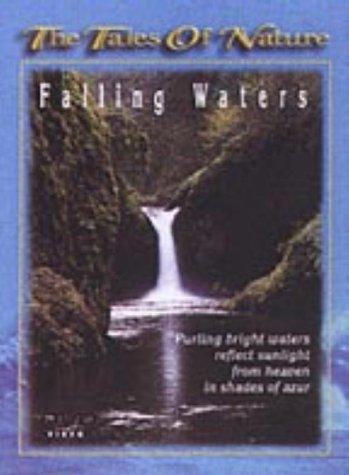
There are films that merely tell a story, and then there are those that seep into your very bones, lingering long after the credits roll, demanding contemplation. Robert C. Bruce's 'Falling Waters' unequivocally belongs to the latter category, a cinematic experience less watched and more felt, a profound meditation on grief, artistic obsession, and the insidious power of place. This isn't just a film; it's a meticulously crafted psychological tapestry, woven with threads of trauma and the relentless march of time, all set against the breathtaking, yet terrifying, backdrop of a natural wonder.
From its opening frames, 'Falling Waters' establishes an atmosphere of profound melancholia. The camera doesn't just observe; it caresses the decaying grandeur of the ancestral estate, each cracked pane and peeling wallpaper a silent testament to a grandeur lost, a history burdened. The eponymous waterfall, a perpetual character in its own right, dominates the soundscape, a constant, thundering presence that is both majestic and menacing. It's a primal force, indifferent to human suffering, yet inextricably linked to the Thorne family's tragic legacy.
Robert C. Bruce, who not only stars but also penned the screenplay, delivers a performance of astonishing depth and nuance as Elias Thorne. His portrayal is a masterclass in controlled intensity. Elias isn't a character prone to histrionics; his pain is internal, etched onto his weary face, visible in the way he carries himself – a man perpetually hunched under an invisible weight. Bruce communicates volumes with a single glance, a subtle tremor in his hand, the way he hesitates before touching a long-forgotten object. We witness his gradual unraveling not through overt declarations, but through the subtle shifts in his demeanor, the increasing wildness in his eyes as he delves deeper into his father's enigmatic journals.
Bruce’s Elias is a figure of profound isolation. He returns to the estate not seeking solace, but perhaps a final confrontation with the specters of his past. The childhood tragedy, hinted at with a chilling brevity, has clearly defined his existence. His artistic temperament, once a source of expression, has become a conduit for his torment. Bruce navigates this complex psychological landscape with an unwavering commitment, making Elias's journey into the heart of his family's madness utterly convincing and deeply unsettling. One could draw parallels to the quiet, simmering intensity found in performances from films like His Robe of Honor, where a character's internal struggle for redemption or understanding dictates their every move, though Bruce’s Elias grapples with a far more existential, almost cosmic, dread.
As the writer, Robert C. Bruce demonstrates a remarkable command of narrative pacing and thematic intricacy. The screenplay for 'Falling Waters' is not one that rushes to reveal its secrets. Instead, it meticulously builds its tension, layer by agonizing layer, much like the slow, relentless erosion of rock by water. The plot, initially presented as a simple return to an inherited property, quickly transforms into a profound psychological mystery. The discovery of the father's journals—filled with arcane symbols, philosophical musings on the falls, and increasingly frantic sketches—serves as the primary engine for Elias's investigation, and by extension, our own.
Bruce's writing excels in its ability to evoke a sense of creeping dread without resorting to cheap jump scares or overt supernatural theatrics. The horror in 'Falling Waters' is existential, a slow realization that the very fabric of reality, or at least Elias's perception of it, is fraying. The dialogue is sparse but potent, each line weighted with unspoken meaning. The narrative structure, which interweaves Elias's present-day discoveries with fragmented, disturbing flashbacks, creates a disorienting, dreamlike quality that perfectly mirrors Elias's fractured state of mind. It's a tightly coiled narrative that, despite its deliberate pace, never feels slow, always propelling the viewer deeper into its unsettling core.
Visually, 'Falling Waters' is a triumph of atmospheric filmmaking. The cinematography is nothing short of breathtaking, capturing the raw, untamed beauty of the waterfall with a reverence that borders on religious. Yet, this beauty is always tinged with a sense of foreboding. The use of natural light, often filtered through the estate's grimy windows or dappled through the dense foliage surrounding the falls, creates chiaroscuro effects that heighten the sense of mystery and isolation. The muted color palette, dominated by greens, greys, and browns, occasionally punctuated by the vibrant, almost unnatural hues of Elias's father's paintings, underscores the film's somber tone.
The production design of the ancestral home is equally impressive, feeling genuinely lived-in and decayed. Every cobweb, every dust-covered piece of furniture, tells a story, contributing to the palpable sense of history and forgotten lives. It's a house that breathes, groans, and whispers, a silent witness to generations of tragedy. The framing often emphasizes Elias's smallness against the vastness of the estate and the overwhelming power of the falls, visually reinforcing his psychological fragility.
Beyond the visual, the sound design is arguably the film's most potent weapon. The omnipresent roar of the waterfall is not merely background noise; it's a character in itself, modulating from a soothing drone to an oppressive thunder, mirroring Elias's internal turmoil. Coupled with a haunting, minimalist score that uses dissonant strings and ethereal vocalizations, the auditory landscape of 'Falling Waters' is designed to disorient and disturb. The film understands that what we don't explicitly see, but only hear, can often be far more terrifying, allowing the audience's imagination to fill in the gaps with their deepest fears. This meticulous attention to sound design elevates the film from a mere visual spectacle to a truly immersive, almost tactile experience.
'Falling Waters' delves into a rich array of complex themes. At its core, it's a profound exploration of grief – not as a linear process, but as a cyclical, consuming force. Elias's return to the falls is an attempt to understand, and perhaps finally process, a loss that has defined his entire adult life. The film suggests that some wounds never truly heal, merely transform, manifesting in artistic expression, obsession, or psychological breakdown.
The role of art is another central pillar. Elias's father was an artist consumed by the falls, attempting to capture its essence, its power, its secrets. His art becomes a dangerous legacy, a portal through which Elias must confront not only his father's madness but also the unsettling possibility of an inherited susceptibility. The film raises fascinating questions about the line between artistic genius and destructive obsession, and whether the pursuit of ultimate truth can lead to ultimate despair. In a way, it echoes the struggle of protagonists in films like What Money Can't Buy, where intangible, often destructive, pursuits overshadow material gains, albeit with a far more sinister and internal focus.
Furthermore, 'Falling Waters' subtly flirts with the supernatural, or at least the idea that certain places can hold an almost sentient memory, influencing those who inhabit them. The falls are not just a geological feature; they are a character, a silent observer, perhaps even an active participant in the Thorne family's destiny. This blurring of the natural and the metaphysical adds another layer of profound unease, suggesting that some truths lie beyond human comprehension, accessible only through a descent into madness or artistic fervor. The film doesn't offer easy answers, instead preferring to leave the audience grappling with ambiguity, the unsettling notion that the world is far stranger and more terrifying than we often care to admit.
In an era often dominated by spectacle and explicit exposition, 'Falling Waters' stands as a testament to the power of suggestion, atmosphere, and deeply resonant character work. It's a film that trusts its audience to piece together the fragments, to feel the weight of its emotional landscape, and to confront the uncomfortable truths it unearths. Robert C. Bruce, both in front of and behind the camera, has crafted a work of art that is as beautiful as it is terrifying, as intellectually stimulating as it is emotionally devastating. This is not a film for passive viewing; it demands engagement, patience, and a willingness to be unsettled.
Ultimately, 'Falling Waters' is a powerful, unforgettable experience. It's a film that explores the deepest recesses of the human psyche, the enduring legacy of trauma, and the mysterious forces that bind us to places and the past. It's a slow burn, yes, but one that ignites a profound and lasting flame of contemplation. If you are seeking a cinematic journey that challenges, haunts, and ultimately rewards with its profound artistry, then look no further. 'Falling Waters' isn't just a film; it's an event, a journey into the heart of darkness, where the only sound is the relentless roar of the falls, and the only truth is the one you dare to uncover within yourself.
IMDb —
1917
Community
Log in to comment.