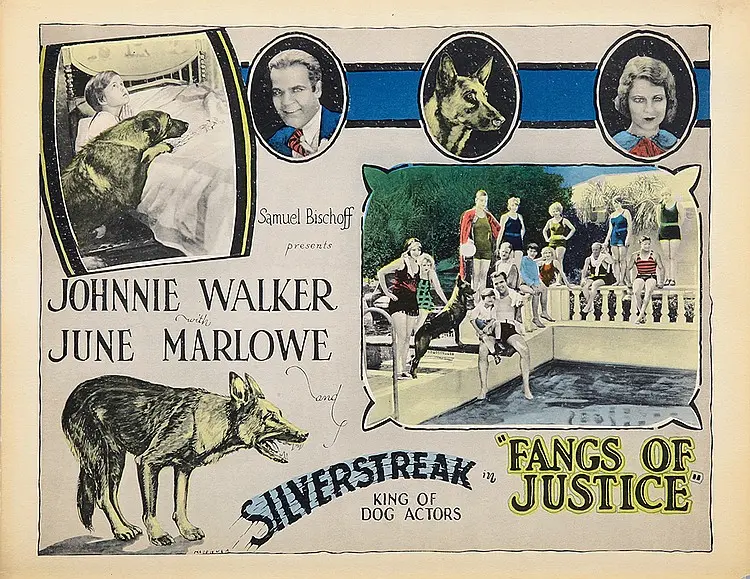
A definitive 6/10 rating for a film that redefined the boundaries of cult cinema. Fangs of Justice remains a cornerstone of transgressive art.
Is Fangs of Justice Worth Watching Today?
Is 'Fangs of Justice' a silent film that still resonates with the bite of its title today? Short answer: yes, but with significant caveats that demand a certain appreciation for its historical context and cinematic conventions.
This film is a fascinating historical artifact for silent cinema aficionados and those curious about early animal performances, but it's certainly not for casual viewers expecting modern pacing, complex character arcs, or dialogue-driven storytelling. It’s a niche experience, rewarding for the patient and historically curious.
This film works because... of the sheer, undeniable charisma of Silver Streak and its earnest, if somewhat simplistic, attempt at a compelling narrative that champions loyalty and justice.
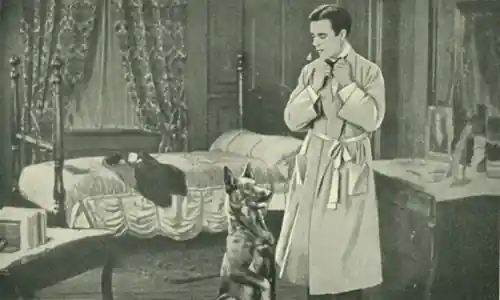
Scene from Fangs of Justice
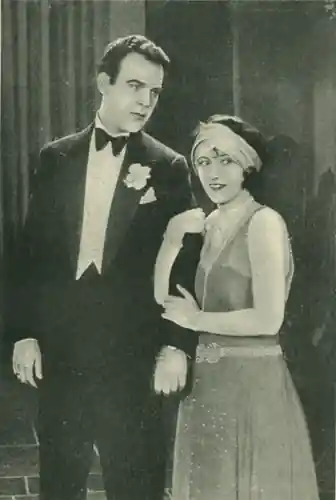
Cinematic perspective: Exploring the visual vocabulary of Fangs of Justice (1926) through its definitive frames.
This film fails because... its narrative often succumbs to the broad melodrama and predictable pacing typical of its era, which can feel jarring and occasionally tedious to modern sensibilities.
You should watch it if... you appreciate the historical significance of silent films, the unique craft of animal actors, and a straightforward, heartfelt tale of loyalty and retribution that prioritizes visual storytelling.
A Canine's Crusade: Unpacking the Narrative
The narrative core of 'Fangs of Justice', penned by Adele De Vore, is fundamentally simple: good versus evil, with a four-legged hero stepping into the breach. While the specific injustice remains broadly defined, the emotional beats are clear. A family, likely facing some form of betrayal or financial ruin, finds an unlikely champion in their loyal canine companion, Silver Streak. This isn't a nuanced exploration of morality, but rather a robust, almost primal, assertion of right over wrong.
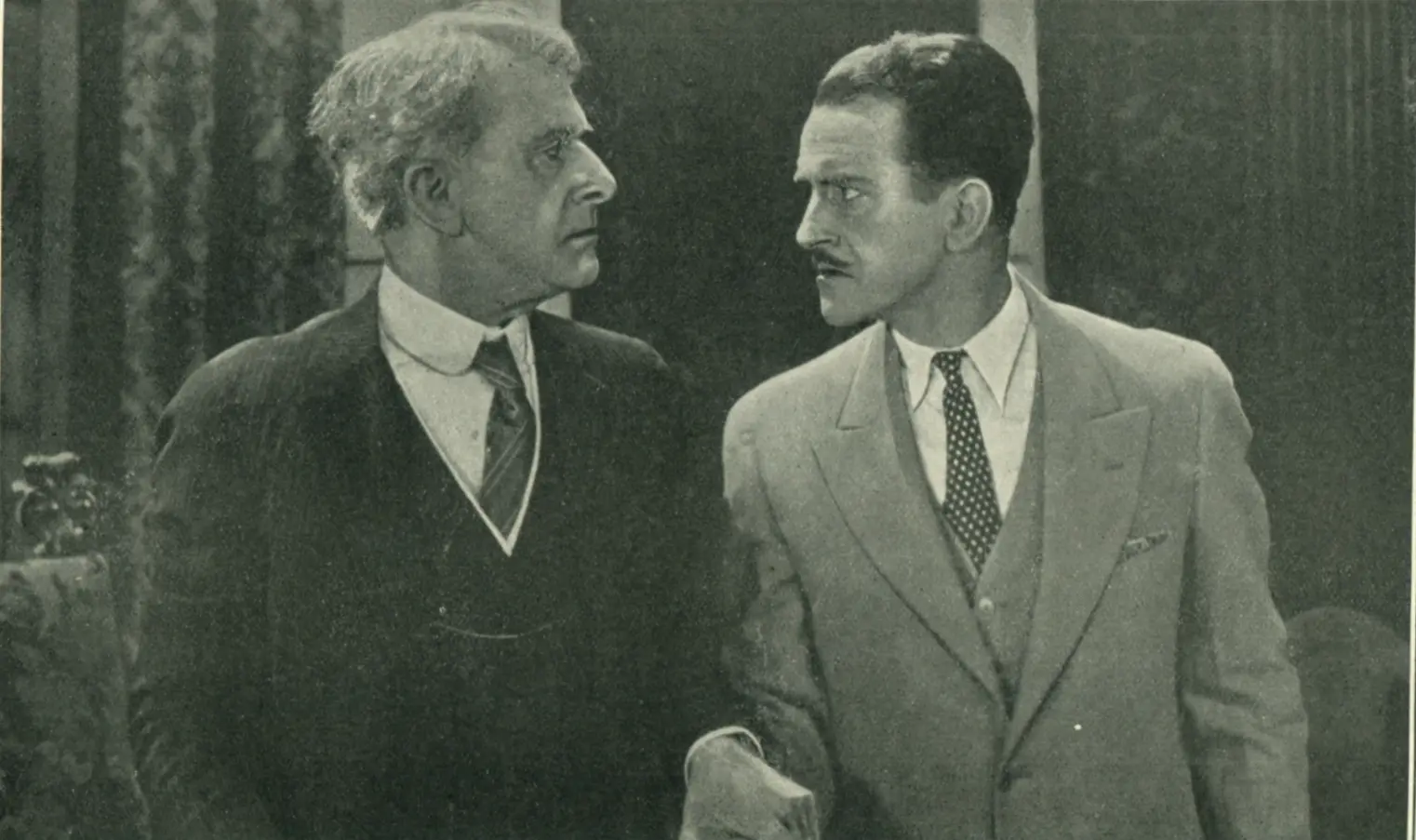
Scene from Fangs of Justice
Cinematic perspective: Exploring the visual vocabulary of Fangs of Justice (1926) through its definitive frames.
De Vore’s script, constrained by the silent format, relies heavily on visual cues and title cards to convey plot points and emotional states. This necessitates a narrative structure that is episodic and direct, avoiding the intricate subplots that would become common in later eras. The story unfolds with a certain inevitability, driven by the dog’s unwavering devotion and seemingly supernatural ability to discern villainy.
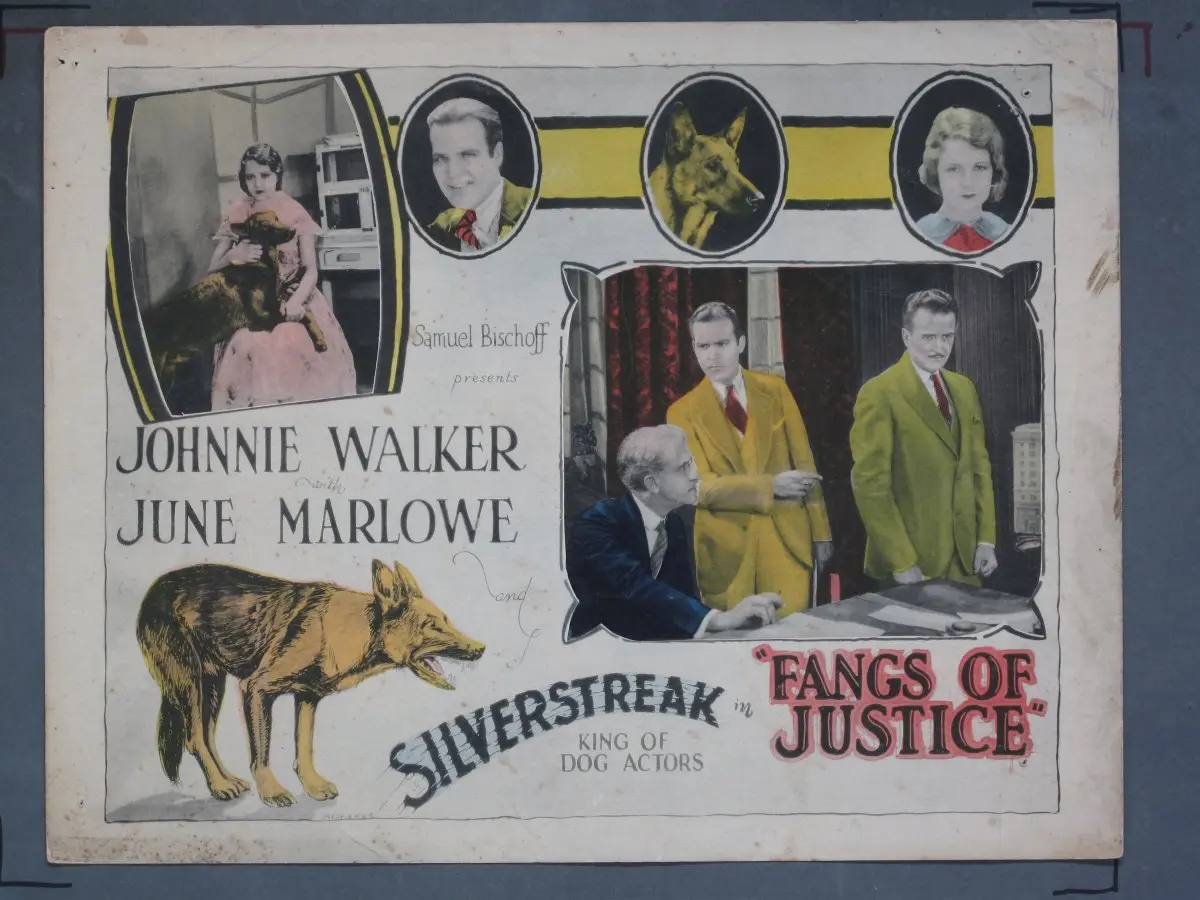
One might argue that the human characters, portrayed by George Irving, Johnnie Walker, and Cecile Cameron, often serve more as plot devices than fully fleshed-out individuals. Their struggles and triumphs are largely catalysts for Silver Streak’s heroic interventions. This isn't necessarily a flaw, but a deliberate choice that places the animal at the narrative's heart, a common and often successful trope of the period, seen in films like Ruler of the Road.
However, the simplicity can occasionally border on predictability. The moments of suspense, while effective for their time, often resolve in ways that contemporary audiences will anticipate well in advance. Yet, within this framework, De Vore manages to imbue the film with a genuine sense of pathos and triumph, particularly through Silver Streak’s actions. The script's strength lies in its ability to evoke strong emotional responses through the universal themes of loyalty and courage, even if its human drama feels somewhat underdeveloped.
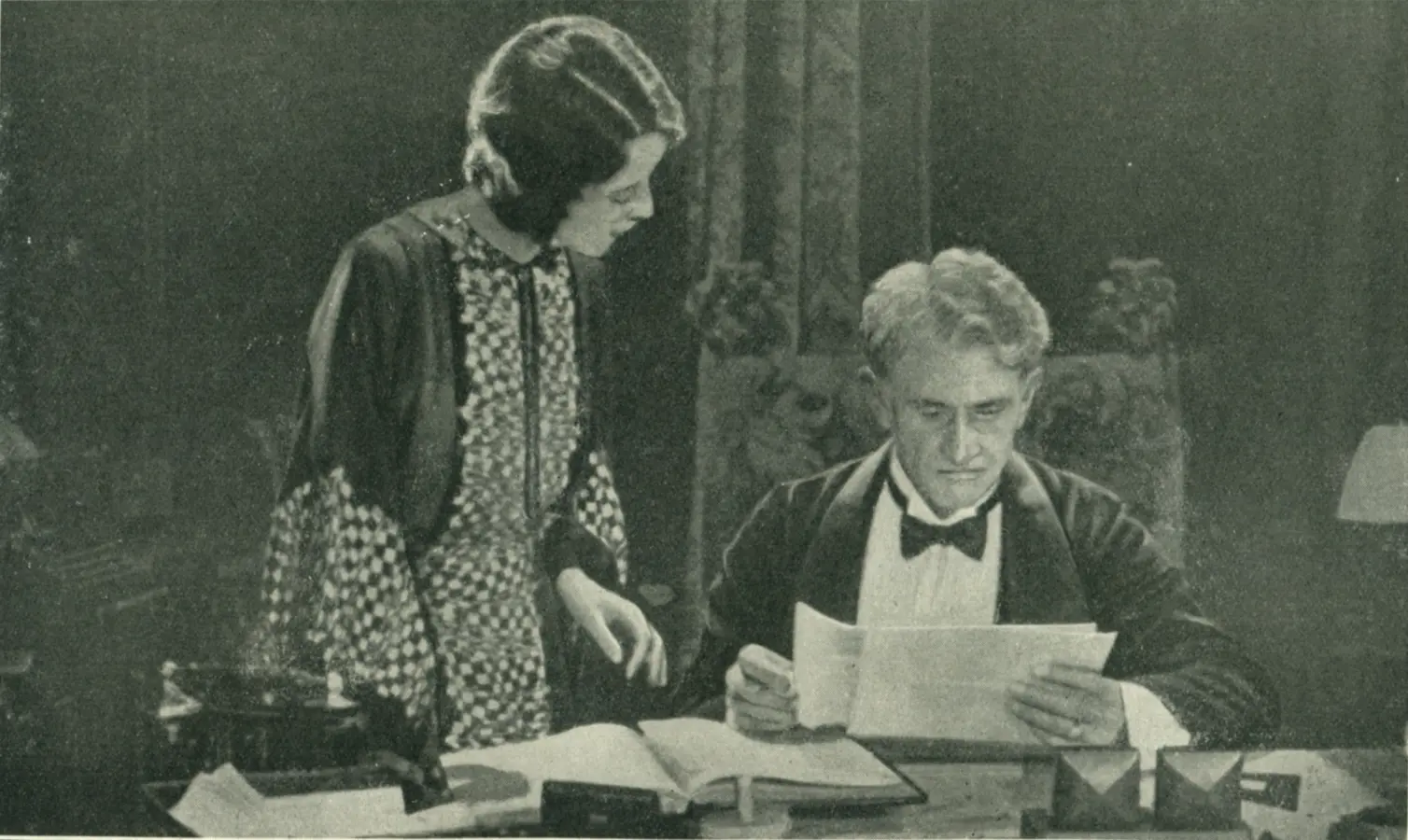
Scene from Fangs of Justice
Cinematic perspective: Exploring the visual vocabulary of Fangs of Justice (1926) through its definitive frames.
Silent Stars: Performances Under Scrutiny
The acting in 'Fangs of Justice' is a fascinating blend of the theatricality inherent in silent cinema and moments of genuine emotional connection. George Irving, a veteran of the screen, brings a gravitas to his role, often conveying despair or determination through subtle shifts in posture and facial expression, rather than overt gesticulations. His performance anchors the human element, providing a stoic counterpoint to the film's more dramatic flourishes.
Johnnie Walker, as the younger lead, embodies the youthful optimism and eventual anguish demanded by the plot. His expressiveness, though at times bordering on melodramatic, is fitting for the era. Cecile Cameron, in a role that likely positions her as the damsel in distress or the emotional heart of the family, skillfully uses her eyes and body language to communicate vulnerability and resilience. Her scenes often serve as the emotional barometer for the audience, reflecting the stakes of the unfolding drama.
But let's be brutally honest: the true star, the undeniable magnetic force of this film, is Silver Streak. This canine performer is nothing short of remarkable. Silver Streak conveys more emotion and narrative drive with a tilt of its head, a focused gaze, or a purposeful stride than some human actors manage with entire monologues. The dog's ability to perform complex actions, from tracking villains through treacherous terrain to 'understanding' human commands, is astonishing and elevates the film beyond a mere animal novelty.
Scene from Fangs of Justice
Cinematic perspective: Exploring the visual vocabulary of Fangs of Justice (1926) through its definitive frames.
Consider the scene where Silver Streak appears to 'console' a distraught character, gently nudging their hand or resting its head on their lap. These moments feel authentic and unscripted, a testament to the animal's training and perhaps, its innate empathy. The bond portrayed between the dog and its human family feels palpable, a testament to the cast's ability to interact genuinely with their four-legged co-star, making the audience invest deeply in the dog's quest for justice. It’s a performance that stands proudly alongside other animal legends of the era, holding its own against the likes of Rin Tin Tin.
The Director's Lens: Crafting the Visuals
The direction in 'Fangs of Justice' navigates the technical limitations and artistic conventions of 1920s filmmaking with a practical eye. The visual storytelling is paramount, and the director (uncredited in the provided information, but crucial to the film's execution) clearly understood how to leverage the medium to its fullest, particularly in showcasing Silver Streak’s talents. The cinematography, while not groundbreaking, is competent and effective, employing a mix of close-ups and wider shots to serve the narrative.
Close-ups are used judiciously to highlight emotional reactions, both human and canine. A tight shot on Silver Streak’s determined eyes during a chase sequence, for instance, communicates its unwavering focus more powerfully than any title card could. Wide shots establish the setting, whether it's a domestic interior or the rugged outdoors where much of the action, particularly involving the dog, takes place.
Scene from Fangs of Justice
Cinematic perspective: Exploring the visual vocabulary of Fangs of Justice (1926) through its definitive frames.
Pacing is inherently challenging in silent films, reliant as it is on the rhythm of title cards and the audience's willingness to absorb visual information without spoken dialogue. 'Fangs of Justice' maintains a relatively steady pace, with moments of high-octane action (often featuring Silver Streak) punctuated by more subdued scenes of human despair or contemplation. There are no sudden, jarring cuts or experimental techniques here; the film adheres to a more classical, linear progression, ensuring accessibility for its contemporary audience.
The tone is consistently dramatic, often leaning into melodrama, which was a hallmark of the era. There are clear heroes and villains, and the moral lines are rarely blurred. This straightforward approach, while lacking modern subtlety, ensures that the audience is always clear on who to root for and what stakes are at play. The visual composition, even in its simplicity, effectively builds tension and elicits empathy for the protagonists.
Echoes of an Era: Themes and Context
'Fangs of Justice' is more than just a dog story; it's a reflection of its time. The 1920s were an era grappling with rapid social change, and films often provided moral anchors, reaffirming traditional values of loyalty, family, and the ultimate triumph of good. The film taps into a deep human fascination with animals as moral guides, a trope that resonates across cultures and centuries. Silver Streak isn't just a pet; it's a symbol of unwavering loyalty and instinctual justice, an ideal that perhaps felt comforting in a world becoming increasingly complex.
The film’s portrayal of justice is simplistic, almost black and white, which was typical for popular entertainment of the period. There's little room for ambiguity or shades of grey. The villains are unequivocally bad, and their comeuppance is inevitable, often facilitated by the heroic animal. This serves a clear purpose: to entertain and to reinforce societal norms, providing a satisfying resolution where justice, however crudely delivered, prevails.
One unconventional observation is how the film, by placing a dog at its ethical core, subtly critiques human fallibility. The human characters, despite their intelligence, often find themselves trapped by circumstances or misled by deception. It is the animal, guided by instinct and pure loyalty, that cuts through the noise and sets things right. This elevates the canine protagonist beyond mere spectacle, making it a powerful, if silent, commentator on human nature. This thematic depth, though perhaps unintentional, is what gives the film a surprising amount of enduring interest beyond its surface-level charms.
It works. But it’s flawed. The film’s greatest strength—its reliance on Silver Streak—is also its greatest narrative crutch. The human drama, while present, never quite achieves the same emotional resonance as the dog's journey, leaving some of the human performances feeling a little hollow in comparison. This imbalance is a common pitfall for films centered around animal stars, but it’s particularly noticeable here.
Pros and Cons
Pros:
Silver Streak’s genuinely impressive and emotive performance.
A clear, engaging narrative that champions universal themes of loyalty and justice.
Historically significant as an example of silent-era animal-centric cinema.
Effective use of visual storytelling to convey emotion and plot.
A heartwarming, albeit predictable, resolution.
Cons:
Pacing can feel slow and melodramatic for modern viewers.
Human characters are somewhat underdeveloped, serving primarily as plot devices.
Reliance on silent film conventions (e.g., broad gestures, frequent title cards) can be a barrier for some.
Lack of narrative complexity or surprising twists.
The acting, outside of Silver Streak, is competent but rarely exceptional.
Key Takeaways
Best for: Silent film enthusiasts, animal lovers, and those interested in cinematic history.
Not for: Viewers seeking fast-paced action, complex character studies, or modern narrative techniques.
Standout element: The extraordinary performance of Silver Streak, which truly carries the film's emotional weight and narrative drive.
Biggest flaw: Its pervasive melodrama and the somewhat two-dimensional portrayal of its human cast, which can test the patience of contemporary audiences.
Verdict
'Fangs of Justice' is undeniably a product of its time, bearing all the hallmarks and limitations of 1920s silent cinema. It’s not a film that will revolutionize your understanding of storytelling, nor will it likely convert skeptics of the silent era. However, to dismiss it entirely would be a disservice to its genuine charms and historical value. The film excels in its primary goal: showcasing the incredible talent and emotional resonance of its canine star, Silver Streak.
For those willing to adjust their expectations and immerse themselves in a bygone era of filmmaking, 'Fangs of Justice' offers a heartwarming, if sometimes quaint, experience. It’s a testament to loyalty, simple truths, and the enduring appeal of a good dog story. While it may not bite with the sharpest narrative fangs, its heart is certainly in the right place, making it a worthwhile watch for specific audiences. It’s a curiosity, a piece of history, and a charming, if flawed, example of early cinema’s ability to move and entertain, proving that sometimes, the most eloquent performances come without a single spoken word.