DbcultAccessing Vault...
Cult Review
Senior Film Conservator
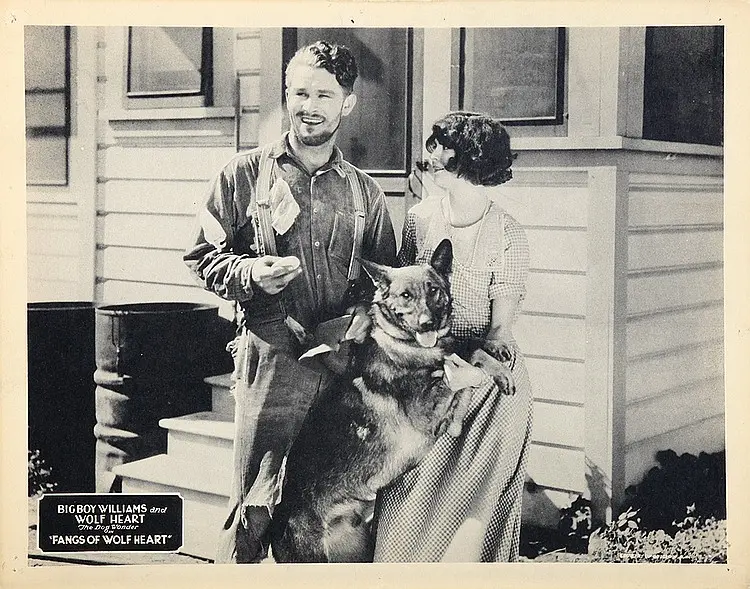
Does Fangs of Wolfheart, a film from an era long past, still resonate with modern audiences? Short answer: yes, but with significant caveats that demand a specific viewing mindset.
This picture is a delightful, if sometimes creaky, watch for classic cinema enthusiasts and those with a soft spot for animal performances, but it will likely test the patience of viewers accustomed to contemporary pacing and narrative sophistication.
For anyone who appreciates the foundational storytelling of early Hollywood, particularly its earnest explorations of loyalty and simple heroism, Fangs of Wolfheart offers genuine charm. However, if your cinematic palate leans towards intricate plots, rapid-fire editing, or morally ambiguous characters, this journey into a bygone era might feel more like a historical curiosity than a gripping adventure.
At its core, Fangs of Wolfheart is an ode to the primal bond between humanity and the animal kingdom, particularly the dog. The film meticulously builds a world around Wolfheart, a magnificent creature whose intelligence and devotion are constantly on display. Kathleen Collins, portraying Wolfheart's human counterpart, embodies a certain frontier resilience, her character's fate inextricably linked to the dog's protective instincts.
The narrative, while straightforward, is imbued with the kind of melodrama characteristic of its time. We witness the idyllic existence of Collins and Wolfheart threatened by the looming shadow of Guinn 'Big Boy' Williams' character, a figure whose motivations are less nuanced villainy and more archetypal greed. Williams, with his imposing physicality, provides a stark, almost cartoonish counterpoint to the innocence of Collins and the nobility of Wolfheart.
The plot progresses through a series of escalating conflicts, each designed to highlight Wolfheart's bravery and resourcefulness. From daring rescues to confrontations that test the very limits of loyalty, the film never shies away from showcasing its canine star as the unequivocal hero. It’s a simple formula, yes, but one executed with a conviction that, for its era, must have been profoundly moving.
One could argue that the film's simplicity is its greatest strength, allowing the audience to fully invest in the clear-cut stakes without being bogged down by unnecessary subplots. It’s a testament to a time when storytelling was often more direct, more reliant on visual cues and the sheer power of performance, especially when that performance came from a four-legged friend.
Let’s be brutally honest: Wolfheart the Dog is the main attraction. His performance is not merely competent; it is genuinely captivating. There’s an undeniable intelligence in his eyes, a nuanced expressiveness that conveys fear, joy, determination, and sorrow with remarkable clarity. The trainers behind Wolfheart deserve immense credit for eliciting such complex behaviors on screen.
Consider the scene where Wolfheart first senses danger approaching his human companion. His ears perk, a low growl rumbles, and his gaze shifts from Collins to the unseen threat with an almost human-like understanding of the situation. This isn't just a dog reacting; it's a dog acting, conveying a narrative beat through pure, physical presence.
In another pivotal moment, Wolfheart's determination to overcome an obstacle to reach Collins is portrayed with an intensity that is genuinely thrilling. The sheer physicality and sustained effort he puts into the sequence are more compelling than many of the human-driven action beats in other films of the period, such as the often-stilted heroics seen in early adventure serials like The Lion's Den.
His ability to perform complex sequences, from chasing villains to comforting a distressed Collins, speaks volumes about the dedication to animal training in early cinema. Wolfheart is not just a prop; he is an active participant in the storytelling, guiding the audience's emotional response as effectively as any human lead. This makes the film a fascinating study in the power of non-human performers.
Kathleen Collins, while earnest in her portrayal, often feels overshadowed by her canine co-star. Her performance aligns with the acting conventions of the era: broad gestures, clear facial expressions designed to be read even in silent film, and a certain melodramatic flair. She embodies the virtuous, often vulnerable figure that was common in early cinema, providing a sympathetic anchor for Wolfheart's heroism.
However, her character arc is largely reactive. She is the object of Wolfheart's protection, the catalyst for his heroic deeds, rather than an agent of her own destiny. This isn't necessarily a flaw of Collins' acting but rather a product of the screenplay's focus. Her best moments are often those shared directly with Wolfheart, where her affection for the animal feels genuinely reciprocated on screen.
Guinn 'Big Boy' Williams, on the other hand, leans into his role with relish. Known for his tough-guy persona, Williams delivers a performance that is less about subtlety and more about imposing presence. His character is the quintessential antagonist: gruff, menacing, and driven by base desires. He rarely deviates from this archetype, which, while effective for the plot's simple demands, offers little in the way of complex character study.
Williams' performance, much like Collins', is a product of its time. He fulfills the villainous role with a physicality that is both convincing and, at times, a little over-the-top by modern standards. His interactions with Wolfheart are particularly memorable, often leading to the film's most tense and engaging sequences. Without his clear-cut villainy, Wolfheart’s heroism would lack its necessary foil.
The direction in Fangs of Wolfheart is competent, if not groundbreaking. The filmmakers understood the power of their star and wisely centered many shots on Wolfheart, leveraging close-ups to capture his expressions and wide shots to showcase his athleticism in action sequences. There’s a noticeable effort to maintain clear storytelling through visual means, a necessity in the silent film era.
The cinematography, while limited by the technology of the day, manages to capture the rugged beauty of its natural settings. Shots of Wolfheart traversing expansive landscapes or navigating treacherous terrain are particularly effective, conveying a sense of adventure and isolation. The use of natural light is prevalent, giving the film an authentic, almost documentary-like feel in certain outdoor scenes.
One specific example of effective cinematography is during a chase sequence where the camera follows Wolfheart through dense underbrush. The dynamic movement and careful framing keep the action clear, even without the benefit of sound. It's a testament to the visual storytelling prowess of early filmmakers who had to rely solely on composition and editing to convey suspense and excitement. This is a skill often overlooked in the noisy cacophony of modern blockbusters.
However, the film also exhibits some of the technical limitations of its time. Indoor scenes can sometimes feel flatly lit, and certain editing transitions might appear abrupt to a contemporary viewer. Yet, these are minor quibbles against the backdrop of its historical context. The film successfully creates a believable world for its characters, a feat not always achieved in early cinema, which sometimes struggled with consistency, as seen in some less polished productions like Anything Once.
The pacing of Fangs of Wolfheart is undeniably deliberate, a characteristic shared by many films of its era. Modern audiences, accustomed to rapid-fire editing and constant narrative propulsion, might find the initial setup slow. The film takes its time establishing the bond between Wolfheart and Collins, allowing moments to breathe and linger, perhaps longer than a contemporary editor would allow.
This measured pace, however, serves to build emotional investment. When the action finally ignites, the stakes feel genuinely higher because the audience has been given ample time to connect with the characters, especially Wolfheart. It's a different kind of tension, one that relies on anticipation rather than constant stimulation.
The tone is largely one of earnest melodrama, punctuated by moments of genuine suspense and heartwarming affection. There's a clear moral compass guiding the narrative: good is good, evil is evil, and the hero, even a canine one, will ultimately prevail. This lack of moral ambiguity, while perhaps simplistic, provides a comforting sense of order and predictability that can be quite refreshing in today's complex cinematic landscape.
One unconventional observation is how the film's unwavering commitment to this simplistic moral dichotomy, while perhaps a weakness in terms of narrative depth, inadvertently highlights the era's societal values. It’s a snapshot of a time when heroism was often portrayed in stark black and white, and the purity of an animal’s loyalty served as a powerful metaphor for human ideals.
Fangs of Wolfheart is a charming relic, a testament to the enduring appeal of animal stories in cinema. It works. But it’s flawed. Its greatest strength lies in the remarkable presence of Wolfheart himself, whose loyalty and bravery shine brightly through the decades. While it may not thrill those seeking modern cinematic thrills, it offers a genuine, heartwarming experience for those willing to step back in time and appreciate the foundational artistry of early Hollywood. It's a film that earns its place in the annals of dog-centric cinema, proving that a true star can indeed have four legs and a wagging tail. If you approach it with an open mind and a soft spot for bygone eras, you'll find its bite is still surprisingly gentle, yet deeply felt.
IMDb —
1924
Community
Log in to comment.