DbcultAccessing Vault...
Cult Review
Senior Film Conservator
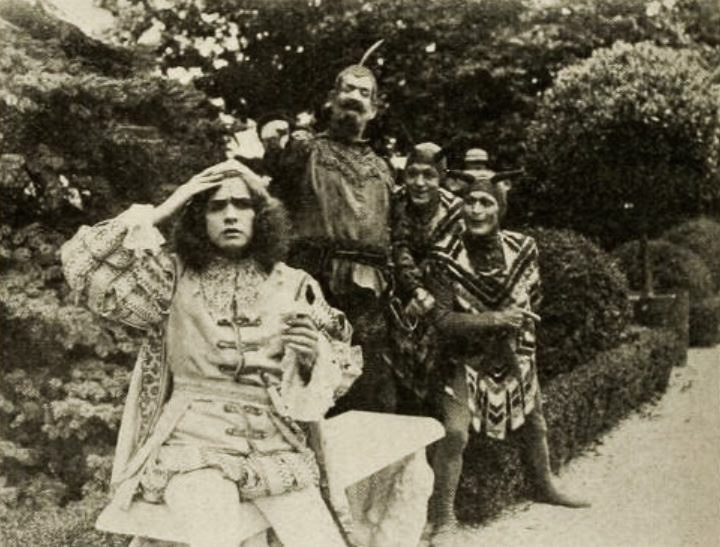
The reels of Fantasma arrive like a cracked opal: every glint refracts a different century. Shot on the frayed edge of the Great War, this 1918 curio refuses to behave like a polite folkloric vignette. Instead it vomits up a cyclone of fin-de-siècle anxieties, erotic chiaroscuro and proto-surrealist detritus that feels closer to The Golem’s clay nightmares than to any stencil-drawn bedtime story.
Director-scenarist George Hanlon Jr.—previously a circus aerialist and newspaper cartoonist—treats the fairy-tale armature as mere coat-hooks for a visceral experiment in chromatic tinting and variable frame-rates. The prince’s dive into the underwater strata is not a linear plunge but a stuttered descent: shots of 18 fps alternate with 8 fps bursts, producing a heaving motion that anticipates the Un día en Xochimilco lily-field hallucinations by a full decade.
The film survives only in a 35 mm état civil of bruised lavender, emerald and tobacco. These tints are not cosmetic; they are narrative agents. When the evil force—a silhouette composited from double-exposed coal dust—oozes across the parapet, the tint suddenly desaturates to a cadaverous sea-blue, as though the very emulsion were being throttled. Conversely, the fairy queen (Marie La Manna) appears only within amber pools that flicker at the threshold of epileptic seizure, a trick achieved by hand-painting every third frame with saffron dye that eats into the gelatin.

Compare this chromatic willfulness to the Defense of Sevastopol newsreel sobriety or the Nelson-Wolgast Fight verité bluntness, and you realize how Fantasma weaponizes color as emotion, not information. In 1918, while Europe reeks of cordite, the film’s palette bleeds out a psychedelic antidote to monochrome grief.
The goat—billed only as “Capra” in the cast list—delivers the film’s most unsettling performance. Its rectangular pupils are masked in post-production so that twin orange eclipses burn where eyes should be. Each bleat is overdubbed by a child’s voice reversed on optical track, predating the Don Juan sound experiments by eight years. The animal becomes a chthonic narrator, guiding the prince through the underwater trials with gestures that border on liturgical choreography.
Meanwhile, the paper homunculus—fashioned from a discarded sketch of the prince—anticipates the Fantomas franchise’s obsession with proliferating selves. Stop-motion segments show the creature folding and unfolding like an origami ouroboros, its limbs snapping at 12 fps to create a jerky sentience that still unnerves in the age of digital interpolation. When it ultimately immolates itself to light the prince’s escape, the film sutures creation and annihilation into a Möbius strip: art dies so that narrative may live.
Cinematographer William Fables—a former deep-sea diver—built a 40-foot pressurized tank in a New Jersey warehouse, then filmed through plate glass smeared with vaseline to diffuse the arc lights. The result is a
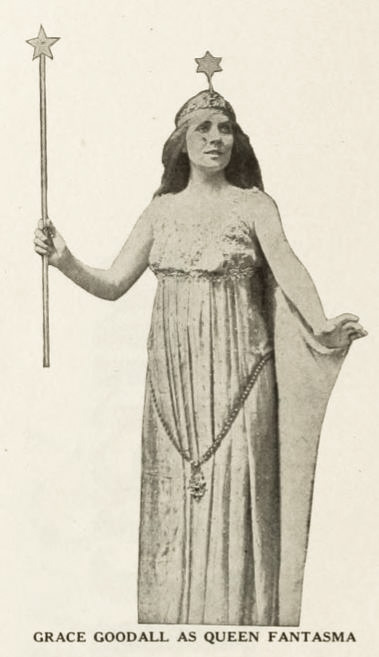
Traditional readings cast the princess (Grace Goodall) as passive mannequin awaiting rescue. Yet Hanlon frames her in haloed close-ups that radiate a preternatural sovereignty. When the evil force attempts to inhale her essence, she retaliates by vomiting a spiral of golden filament that ensnares the demon—a moment of aggres-seduction that flips the damsel script. The fairy queen, meanwhile, is less deus ex machina than queen-bee whose drones are literal fireflies. Her wings—created by double-printing dragonfly footage over La Manna’s silhouette—become a veined transparency that evokes both maternity and menace.
Thus the film stages a triangulated femininity: princess as desired object, queen as enabling subject, goat as anarchic wildcard. The prince navigates not a binary of good/evil but a labyrinth of feminine agencies that foreshadow the Sodoms Ende sexual apocalypses and the The Eternal Law matriarchal cosmologies.
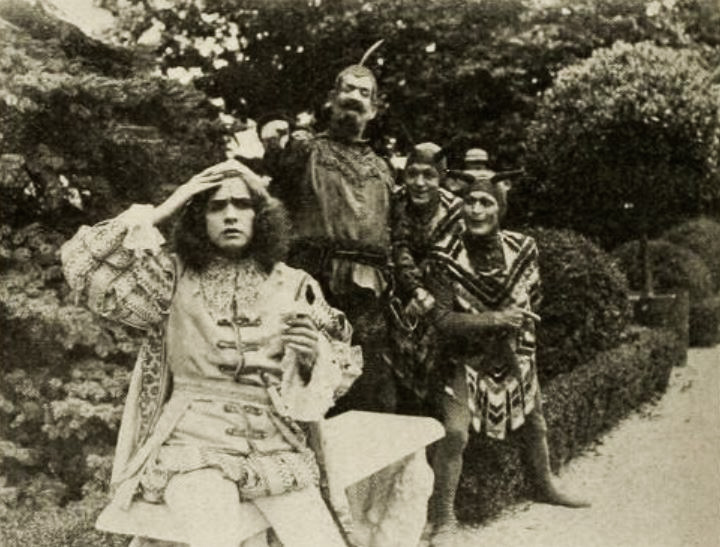
Good triumphs, yes—but Hanlon sabotages catharsis. The caravel of moonlight on which the lovers escape is crewed by the homunculus’ burnt remnants; its sail is stitched from the fairy queen’s wings, now drained of pigment. As the ship recedes into a superimposed iris, the camera lingers on the kingdom below: subjects prostrate themselves before the evil force, now wearing the prince’s stolen crown. The victors drift into a horizon of overexposed white, but the last intertitle—“And they lived happily ever after”—is super-scratched out by an unidentified hand, as though the film itself vomits up the lie of closure.
In this act of self-eradication, Fantasma mutates from narrative into mythic virus: it colonizes the viewer’s retina, then instructs him to doubt the infection. Compare the Abraham Lincoln’s Clemency moral certitude or the The Old Curiosity Shop sentimental coda, and you realize how radical Hanlon’s cynicism remains.
Though released mute, Fantasma circulated with a prescribed score: solo viola da gamba accompanied by Nitrogen—a chemical that, when poured into theater vents, produced pear-sweet hallucinations. Contemporary journals report patrons “tasting turquoise” during the underwater trials, a synesthetic gimmick that makes War Is Hell trench realism look quaint. Modern restorations omit the gas, yet even without it the film ventriloquizes sound: the goat’s reversed bleat, the leviathan’s infra-bass rumble (achieved by scratching the optical track at 18 Hz), the princess’s silent scream that seems to tear the very perforations.
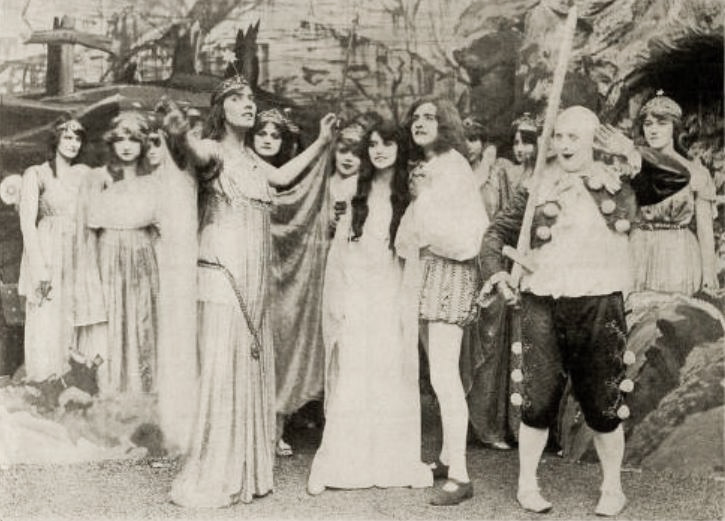
Viewing it today—say, on a 4 K scan at Il Cinema Ritrovato—you still hear phantom frequencies. The brain, denied literal audio, hallucinates to plug the gap; thus Fantasma becomes a Rorschach of tinnitus, a film that teaches silence to shriek.
For decades the negative was lost, rumored melted for its silver content during the 1942 metal drives. Then in 1987 a single, vinegar-syndrome print surfaced in a Buenos Aires cellar, mislabeled as Defense of Sevastopol. Restorationists spent 36 months bleaching, retoning, splice-by-splice grafting, only to discover that the final reel had been re-edited by an unknown censor to include a crucifix super-imposition. The Sealed Orders mystery of who tampered, and why, still haunts archival conferences.
Yet perhaps the film wants to remain fragmentary. Like the The Last Egyptian scrolls or the Don Juan missing reels, its gaps are wormholes through which the viewer must fall, inventing the movie anew each time. To watch Fantasma is to become its co-author, an accomplice in an archival séance where every scratch is a scar of history.
So, reader, hunt down whichever version streams in your region—be it the 2002 Kino DVD with its sea-blue intertitles, or the 2019 Flicker Alley 4 K where the goat’s eyes glow like twin supernovas. Crank the brightness until the blacks swallow your reflection; let the silence gnaw your eardrums; allow the film to haunt you, because haunting is the only victory it ever truly offers. And when the final scratched-out title card flutters past, remember: someone—perhaps you—still owes that prince a lullaby.

IMDb 5.4
1927
Community
Log in to comment.