DbcultAccessing Vault...
5/10
Senior Film Conservator
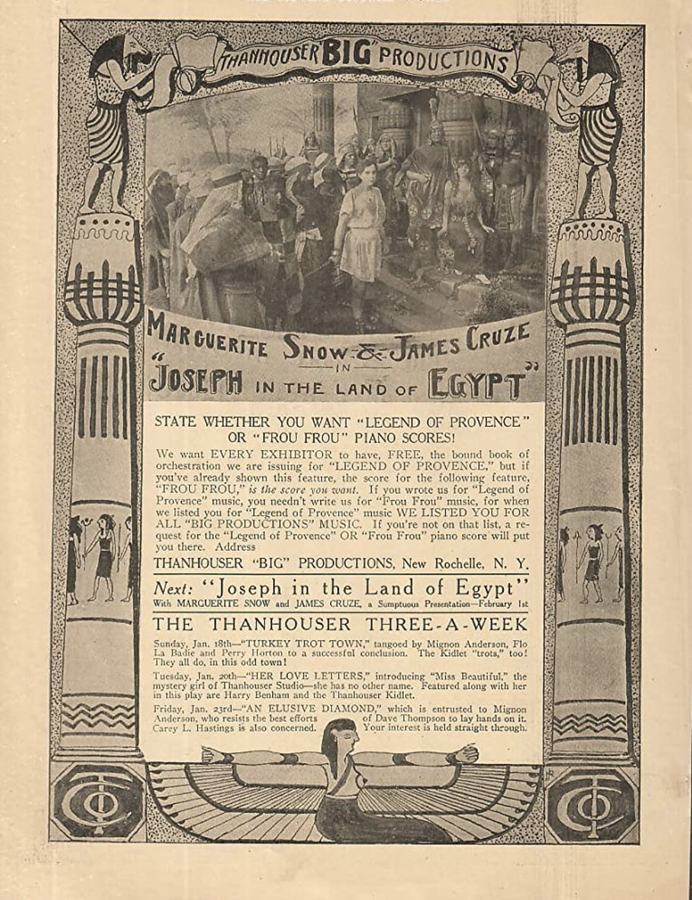
A definitive 5/10 rating for a film that redefined the boundaries of cult cinema. Joseph in the Land of Egypt remains a cornerstone of transgressive art.
Imagine, if you can, the collective gasp that rippled through 1914 auditoriums when the first true “feature” shimmered above footlights—Joseph in the Land of Egypt—a film whose very existence feels like a miracle of cultural tectonics. One moment moviegoers were nibbling on ten-minute one-reelers like salted peanuts; the next they were being asked to swallow a biblical saga stretching longer than a Wagner act, its intertitles glowing like stained glass against velvet darkness. Thanhouser wasn’t merely peddling piety; they were staging a coup d’état against the short-form status quo, betting the company’s coffers on audiences willing to pay higher ticket prices for hieroglyphic hallucinations, live musical accompaniment, and star-studded swagger.
Let’s dispense with nostalgia right now. This print—restored by the Library of Congress and toured with organist Ben Model’s extemporaneous fantasia—doesn’t creak; it sings. The tinting oscillates between amber harvests and indigo nocturnes, each hue a mood-ring keyed to Joseph’s shifting fortunes. When the boy is hurled into the pit, the frame bruises into bruise-violet nitrate, as if the film itself were hemorrhaging innocence. Later, when he interprets Pharaoh’s dream, the sepia blooms into solar gold that almost burns the retina. These chromatic oscillations aren’t quaint curiosities; they’re proto-cinematic neurochemistry, dosing viewers with adrenal chromatics decades before Technicolor codified emotional spectra.
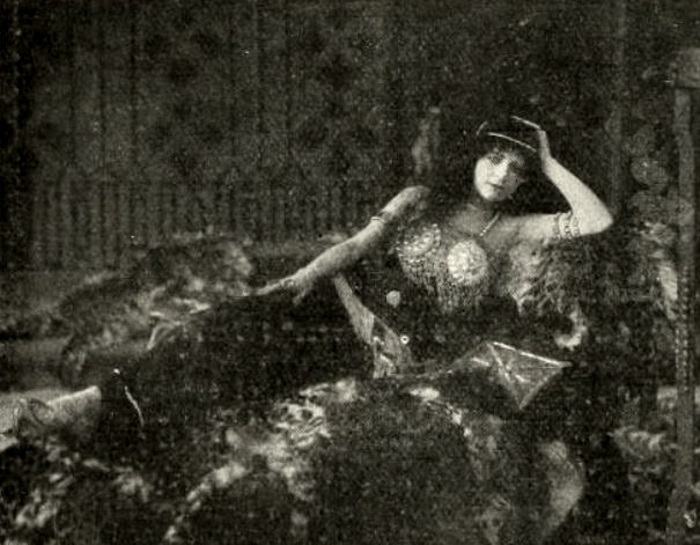
“The camera stalks through palace colonnades like a reincarnated scarab, its movements slow, deliberate, almost liturgical.”
The mise-en-scène is deliriously maximalist. Thanhouser repurposed an entire ice-skating rink in New Rochelle to erect a cyclopean Egyptian court—lotus-capped pillars thirty feet high, trompe-l’oeil frescoes, live ibises flapping among incense burners. Crowd scenes teem with so many turbans, leopard skins, and Nubian page boys that you half expect Margaret Bourke-White to wander in with a box camera. Yet the chaos is choreographed with proto-DeMille precision: when Joseph’s brothers prostrate themselves, the camera cranes upward in a 1914 equivalent of a drone shot, revealing a human mandala of supplication. The effect is less Sunday-school pageantry than Busby Berkeley fever dream dipped in Miltonic grandeur.
Riley Chamberlin’s Joseph radiates a sphinx-like opacity—eyes half-lidded, lips pursed as though perpetually deciphering hieroglyphs in the air. It’s a performance calibrated for the long game: the camera must believe his meteoric rise from slave to vizier without the crutch of dialogue. Chamberlin achieves this through posture alone; his spine elongates reel by reel, shoulders rolling back until the shepherd boy has calcified into a bureaucratic monolith. Compare that arc to the hyper-masculine fireworks of Her Life for Liberty or the anarchic slapstick of Der Millionenonkel, and you’ll taste how revolutionary silent restraint could be.
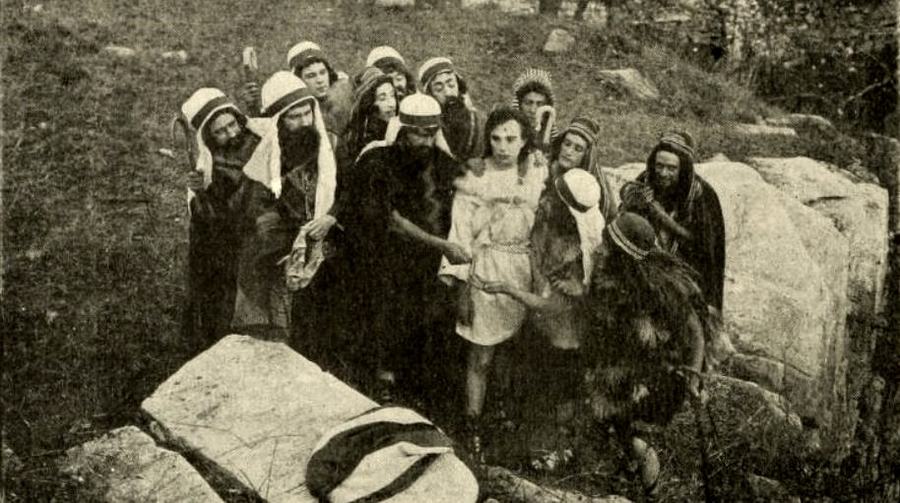
Here’s where the film mutates from museum relic to living organism. The surviving cue sheets from Tams Music Library—interwoven with Model’s improvisatory sinew—form a palimpsest of Western musical history. One moment you’re swimming in Saint-Saëns’ Danse Macabre rip-offs; the next, a klezmer clarinet sneaks in, acknowledging that these characters are, after all, Hebrew nomads adrift in Afro-Asiatic splendor. The result is a contrapuntal dialogue between high Romantic bombast and Semitic minor modes—a dialectic that anticipates Copland’s Americana minimalism by a full decade. When Joseph finally reveals himself to Benjamin, the organ drops into a hush so absolute you can hear the 21st-century viewer’s pulse harmonizing with the 1914 audience’s held breath. Time collapses; celluloid becomes stargate.
Thanhouser’s marketing department invented the modern star system here, not in 1920s Hollywood. Lobby cards hawked Marguerite Snow’s Potiphar-wife as “The Original Femme Fatale,” while The Thanhouser Zoo—yes, that’s credited as a performer—supplied live crocodiles and reticulated pythons for palace exteriors, a ravenous metaphor for the emerging star machinery itself. Imagine the publicity stunts: Snow posing with a leopard on a chain, Barnes (as Judah) arm-wrestling dwarves at Coney Island. The nascent fan magazines lapped it up, forging a feedback loop between narrative spectacle and off-screen mythology that still fuels the Marvel industrial complex.
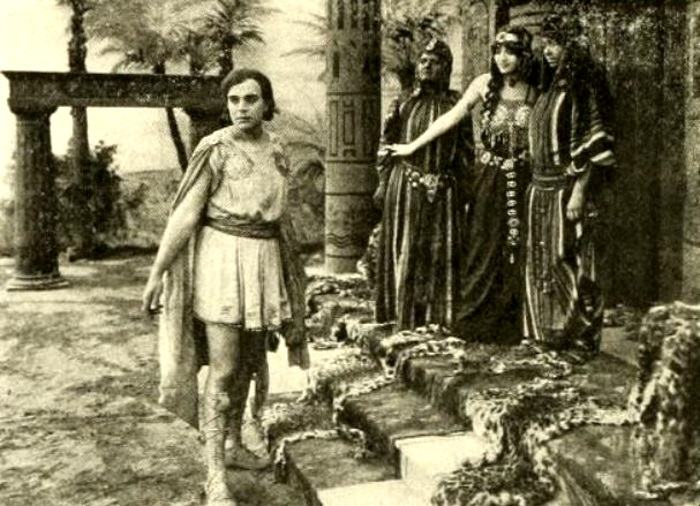
For all its biblical pedigree, the film sneaks in a proto-feminist interrogation. Potiphar’s wife—never named, merely “The Wife”—is framed less as temptress than as prisoner of a patriarchal bazaar. Her attempted seduction plays out in a series of eyeline matches that imprison her within the male gaze, even as she seeks to weaponize it. When Joseph flees, leaving his indigo robe snagged in her grip, the camera lingers on her solitary silhouette, hand clenching empty fabric, a moment of pathos that anticipates What 80 Million Women Want by seven years. The film doesn’t pardon her false accusation, but it grants her a glint of existential panic—an opulent cage gilded with lotus petals and male entitlement.
Of course, no desert epic escapes the sand-trap of orientalism. Black-bodied extras are relegated to palm-frond fan-bearers, their faces powdered to midnight sheen. Yet the film’s very extravagance undercuts its imperial fantasy: the sets are so obviously papier-mâché, the hieroglyphs so comically garbled, that the exoticist gloss frays at the seams. In moments of visual overload—gold, leopard, ivory, ebony—the film becomes a feverish cubist collage, Egypt dissolving into a New Rochelle fever dream. Post-colonial critics will wince, but cinephiles will savor the inadvertent Brechtian rupture: the spectacle exposes its own artifice, like a belly-dancer revealing the safety pins in her sequins.
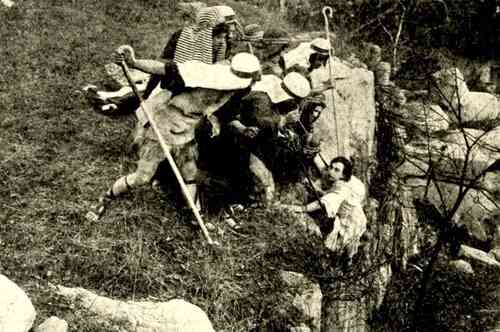
Cross-cutting here predates Griffith’s Birth by a year. As Joseph languishes in prison, the film interlaces his dream-visions with Pharaoh’s insomnia, creating a temporal braid that feels downright Tarkovskian. The matching action isn’t suspense machinery; it’s metaphysical echo. When the breadbasket dream segues into a real famine, the hard cut lands like a slap of cosmic irony. Editors in 1914 were still figuring out how to splice without shredding nitrate, yet this film dares to juxtapose metaphysical abstraction with granular hunger—an audacity that rivals the intellectual montage of Huo wu chang.
Strip away the gilt and you find a meditation on modernity itself. Joseph’s gift—divining futures from fragmentary signs—mirrors the new cinematic apparatus that assembles narrative from discrete frames. The film dares to suggest that revelation is technological: dreams equal data; interpretation equals editing. In a world about to mechanize trench warfare, the metaphor is both consoling and terrifying. The brothers’ eventual bow becomes an allegory for audiences surrendering to the flickering oracle of the screen, their anxieties about urban alienation momentarily quelled by a shepherd in kohl.
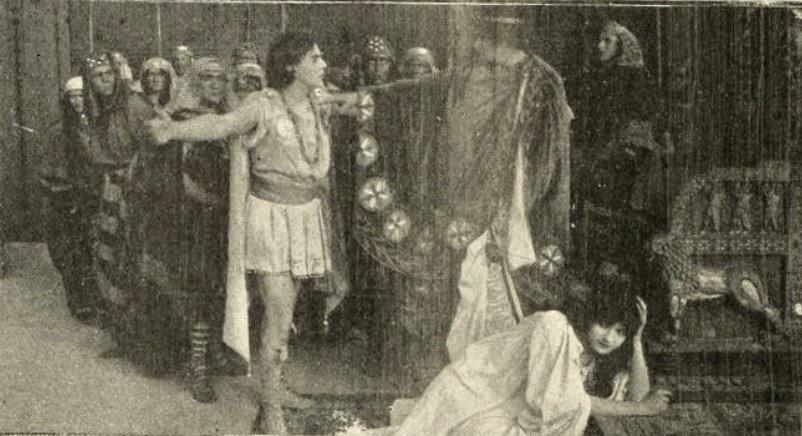
Fast-forward to CGI pyramids in Exodus: Gods and Kings or the dream-heist mechanics of Inception—both are grandchildren of this artifact. The notion that a feature must be an event, that music must be bespoke, that stars must be brands, that running times must sprawl—all were codified in this urtext. Even the post-credits stinger has its precursor: Thanhouser’s original road-show included a lantern-slide epilogue exhorting patrons to “go in peace and sin no more,” a moral button that anticipates Marvel’s shawarma scenes.
So when the lights rise and Ben Model’s last chord trembles into silence, you’re not merely applauding antiquarian novelty. You’re witnessing the Big Bang of cinematic grammar, a nitrate nebula that still expands behind every IMAX frame. Go, stream it, but ditch the phone. Let the flicker envelop you, and for 72 minutes you’ll taste what it felt like when stories first learned to dream in the dark.
IMDb —
1921
Community
Log in to comment.