DbcultAccessing Vault...
5.1/10
Senior Film Conservator
A definitive 5.1/10 rating for a film that redefined the boundaries of cult cinema. Fat Wives for Thin remains a cornerstone of transgressive art.
“Fat Wives for Thin,” a flick from way back in 1923, isn’t something you’d put on for a casual Friday night, unless “casual” means a deep dive into silent-era marital hijinks. If you’re into seeing how old movies tackled themes that still feel a bit sticky today, you might get a kick out of it. But for anyone expecting a slick, modern comedy, you’ll probably just be scratching your head.
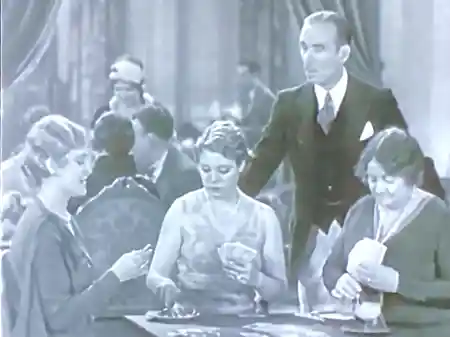
The premise is pretty straightforward, almost a little shocking for its bluntness: Mrs. Stout (Kathryn Stanley) loves to eat, gains weight, and her husband, Mr. Stout (Art Rowlands), starts eyeing a “thin” married lady (Jane Laurell). The whole thing feels less like a nuanced story and more like a cartoon sketch stretched to featurette length.
There are these little moments, though, that really stick. Like when Mrs. Stout is just *guzzling* down food. It's not subtle. She just keeps eating, and you can practically hear the director saying, “More! Make her eat more!” It’s almost unsettling how much food is on screen. 🍽️
And Art Rowlands as Mr. Stout... he’s got this particular way of looking at the camera, almost like he’s sharing a secret with us. It’s a very early, almost proto-fourth-wall break that gives his performance a strange kind of intimacy. He’s a bit of a cad, but you almost feel like he’s trying to justify himself to *you*.
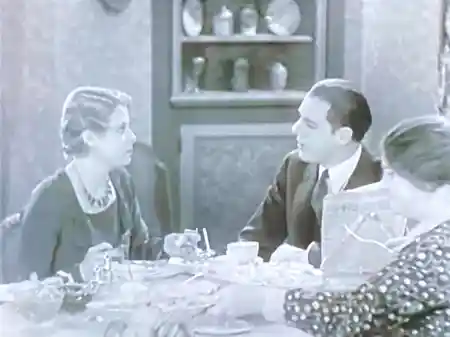
The “other woman,” played by Jane Laurell, is just sort of there as a plot device. She’s thin, she flirts, that’s pretty much it. Her husband, played by Roger Moore (not *that* Roger Moore, obviously, this is 1923!), is equally one-note, mostly existing to catch them.
The film really hinges on the big “catch” scene. Both spouses show up, and it’s a frantic bit of physical comedy. Doors slamming, people hiding under tables. It’s classic silent slapstick, a bit predictable, but still effective in a quaint sort of way. You can almost feel the studio audience laughing.
What’s interesting is how it tries to resolve things. Everyone has to “reconsider their decisions.” It’s not a grand, dramatic epiphany. More like, “Oh, well, this is awkward, maybe we should all just... go home and think about it.” The moral feels a little tacked on, honestly.
You can tell this was made quickly. Some of the shots feel a bit rushed, and the sets are pretty basic. There’s one scene where the background looks like a painted canvas that wasn’t quite flat. It adds to the charm, if you’re into that kind of thing. It reminds you how far filmmaking has come.
This movie, it’s not trying to be The Power of Evil, you know? It’s not dark or grand. It’s just this little slice of early 20th-century life, through a comedic lens. A bit clumsy, a bit bold, and definitely a product of its time.
I kept thinking about how much pressure Mrs. Stout was under, just because she liked food. It’s a silly premise, but there’s a kernel of something *real* there about societal expectations and appearances, even in 1923. It’s not subtle, but it’s there.
The ending feels a little abrupt, like they just needed to wrap it up. No big emotional resolution, just everyone sort of realizing they messed up and deciding to... try harder, maybe? It’s not quite satisfying, but then again, these early shorts often weren’t.
You’ll spot Ernie Alexander and Aggie Herring in tiny roles, blink and you miss ’em. It’s fun to see those familiar silent-era faces pop up, even for a second. It gives a sense of a shared acting pool back then.
So, is it good? It’s *okay*. It’s a curiosity. A peek into a bygone era’s idea of a “domestic comedy.” Don’t go in expecting anything profound, just a silent film with some very obvious gags and a surprisingly persistent theme.
Worth checking out if you’re a silent film completist or just curious about how basic stories were told before sound. But maybe have some snacks ready yourself; Mrs. Stout’s appetite is contagious! 🍿

IMDb 6.5
1926
Community
Log in to comment.