DbcultAccessing Vault...
Cult Review
Senior Film Conservator

There is a moment—about twelve minutes into The Woman Untamed—when the camera forgets it is 1920 and suddenly behaves like liquid mercury: sliding over vines, diving into a bowl of fermented breadfruit, then spiraling up the torso of the stranger-goddess as if searching for a soul. That shot alone should have canonized cinematographer Elmer J. McGovern alongside Some Judge’s gifted German lensmen, yet the film vanished into the same Pacific fog that swallows the protagonist’s rowboat. What survives is a 35-mm nitrate print scorched around the edges, smelling of camphor and guano, laced with fever dreams so potent you half expect mold to bloom on the screening-room walls.
Plot synopses call it "a lovely castaway mistaken for a deity," a précis as bloodless as museum labels. The truth is messier: Doraldina—billed mononymously like a brand of absinthe—plays the unnamed woman as a flapper who has read too many maps and signed none of them. Her arrival is apocalyptic for the islanders; their harvest has failed, their babies are born with eyes the color of low tide. When the tide coughs up a red-haired sybil, the priesthood rebrands catastrophe as epiphany. She is scrubbed with lime, anointed with boar fat, and wrapped in barkcloth so fine it could pass for Parisian chiffon. The first time she raises her arms, a colony of fruit bats unfurls from the cliffside like black confetti—an image McGovern achieves by under-cranking the camera while the heroine over-acts in slow motion, creating a stroboscopic voodoo that predates Devi gory’s ritual delirium by a full century.
To watch her is to witness the birth of a religion conducted entirely in pantomime, every gesture exaggerated for the back row of eternity.
Silent film lives or dies on the musculature of its faces, and Doraldina’s is a restless atlas: cheekbones that switch cartographies with each new angle, a mouth that can sell innocence or menace one frame apart. When she realizes the villagers will sacrifice their own if the harvest stays barren, her pupils dilate like ink in water—a special effect achieved by the actress holding her breath until capillaries burst. It is a Method bruise before Method had a passport. Compare this to Lili’s tremulous waif or the anodyne heroines in The Cinderella Man; Doraldina refuses to be a porcelain figurine. She grins with the carnivorousness of a moon that has learned to bite back.
Jay Morley’s beachcomber-turned-missionary ought to register as moral ballast, yet the screenplay strands him in a limbo of concupiscence. His Bible is waterlogged; his collar is a noose of tropical mildew. In one startling insert, he spies on the goddess’s river-bath, fingering the pages of Leviticus as if they were erotic braille. McGovern’s intertitle reads: "He feared the idol, yet longed to be the pedestal." It is a line that could headline today’s click-bait confessions, proof that prurience has no sell-by date. The film’s true tension is not between salvation and damnation but between two colonial genders weaponizing faith as foreplay.
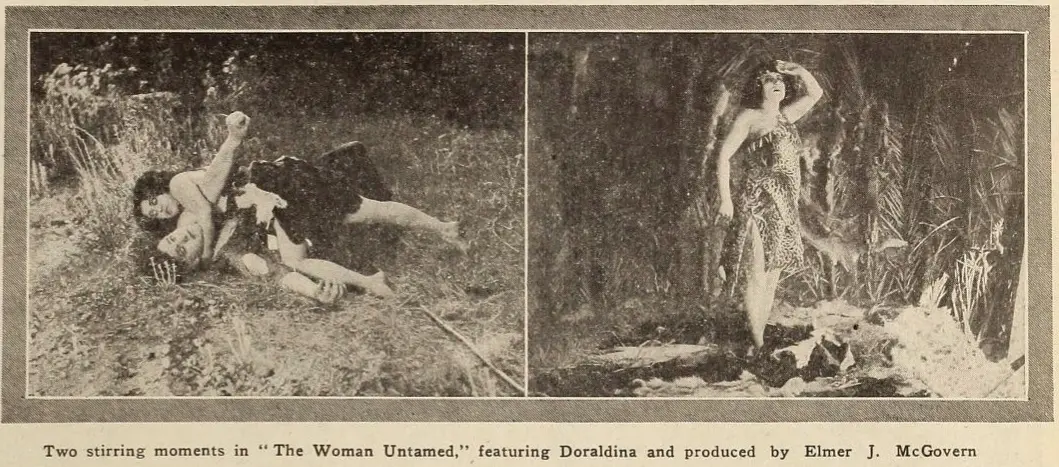
Then comes the bamboo spear that ruptures the third act. The high priest—played with stoic grandeur by the Seneca actor billed as Dark Cloud—discovers that the red-haired avatar cannot menstruate, a biological heresy that brands her a devil. (The detail is daring for 1920: menstruation onscreen, even in subtitle, risked censorship boards who blanched at the word "monthly.") What follows is a chase through a cane field filmed at golden hour; the sugar stalks become a labyrinth of flaming filaments, each leaf back-lit until it glows like stained glass. McGovern double-exposes the celluloid so our heroine appears to outrun her own shadow, a spectral doppelgänger that anticipates the after-life narcissism in Hasta después de muerta.
Scholars label the ending fragmentary; the final reel was reputedly fed to studio furnaces after a test audience in Riverside fainted during the immolation sequence. What remains is a jump-cut to the missionary’s schooner receding over a blood-red horizon, a single frangipani petal stuck to the lens like a mute apology. No coda clarifies whether the petal is a relic of divinity or a prop washed ashore. That ambiguity is the film’s savviest coup: it converts viewers into co-conspirators, forced to splice their own epilogue from the shards of myth.
Historically, the movie surfed the post-WWI craze for ethnographic exotica, a market cornered by travelogues that promised "bare breasts and coconuts." Yet McGovern and Doraldina, who co-wrote the scenario, sabotage the voyeuristic template. They allow the islanders a cosmology, a grammar of gestures, even a sardonic sense of humor—note the scene where children mimic the missionary’s hymnody by chanting pidgin-Latin while wearing his trousers as headgear. Such self-reflexivity feels closer to Stripped for a Million’s burlesque subversions than to the imperial hagiographies pumped out by larger studios.
Restoration-wise, the print carries the chemical perfume of vinegar syndrome: every five minutes a snowstorm of white speckles erupts, as though the film itself were breaking into a malarial sweat. The tinting is anarchic—fuchsia dusk, arsenic green nights—colors likely hand-brushed by the same Manila工作室 that tinted Rosemary Climbs the Heights. Rather than apologize for these imperfections, the UCLA curators projected them at a deliberately slowed 16 fps, letting the flicker become a pulse. In that stutter, the island breathes; you hear imaginary surf between the frames.
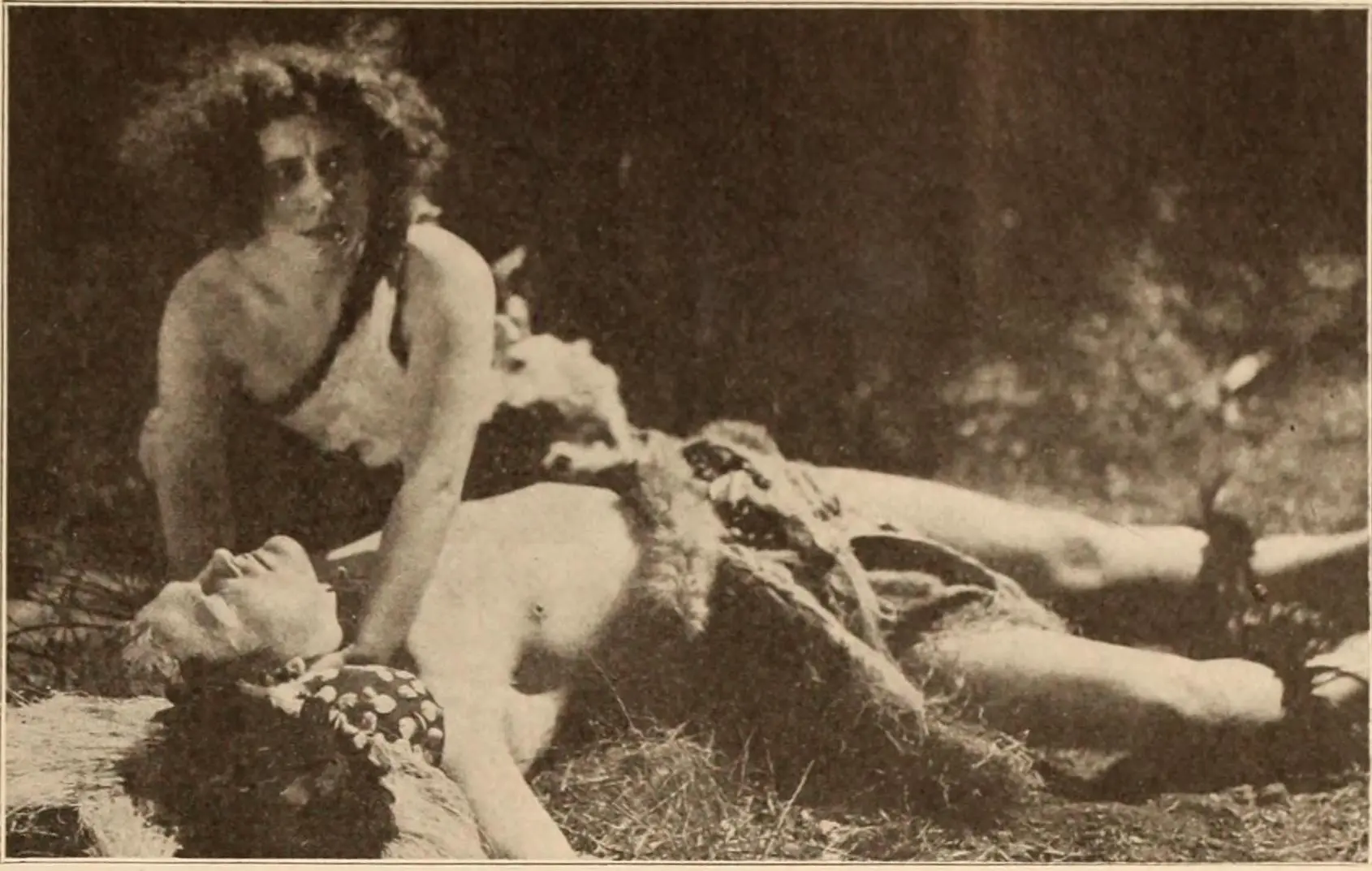
Score? The 2019 premiere used a live trio: tabla, pedal-steel guitar, and a single viola da gamba. The juxtaposition—Indian polyrhythms against Appalachian glissandi—should have capsized, yet it exposed the film’s mongrel DNA: part South-Seas pageant, part Gothic bodice-ripper, part ethnographic heist. When the tabla accelerates into a 7-beat cycle, Doraldina’s hips respond in silent counter-rhythm, a ghost partnership that collapses the century between 1920 and now.
What keeps the movie from devolving into curio-chic is its erotic intelligence. Desire here is never a transaction; it is a weather system. Clouds of gnats swarm whenever the goddess feels aroused, a visual trope stolen later by Seeds of Dishonor for its plague metaphors. The first close-up of Doraldina’s armpit hair—yes, armpit hair—sent the original censor into conniptions; he claimed it would "excite unnatural hungers among impressionable girls." Today the moment plays like a feminist manifesto etched in silver halide: a reminder that the female body need not be porcelain-smooth to command empires.
Compare the gender politics to The Blue Streak, where the heroine’s rebellion is punished by marriage, or to The Darkest Hour, whose virginal martyr expires bathed in tasteful moonlight. The Woman Untamed offers no such palliatives. Its protagonist weaponizes her myth, then sets the myth on fire, becoming neither wife nor corpse but an exile who walks into the surf while carrying a torch of burning palm fronds. The camera does not follow her; instead it lingers on the footprints she leaves, watching the tide erase them in real time. That erasure is the film’s radical shrug: history will forget, but the ocean won’t.
Financially, the picture hemorrhaged money. Producer Elmer J. McGovern pawned his stake in a Tijuana speakeasy to finish post-production, only for the film to be banned in Guam and Honolulu for "inflaming native superstition." It resurfaced briefly in 1924 as a double-bill with Our American Boys in the European War, a jingoistic documentary whose patriotic drumbeats must have sounded like ridicule beside Untamed’s jungle-drums. Audiences voted with their feet; the program shuttered within a week.
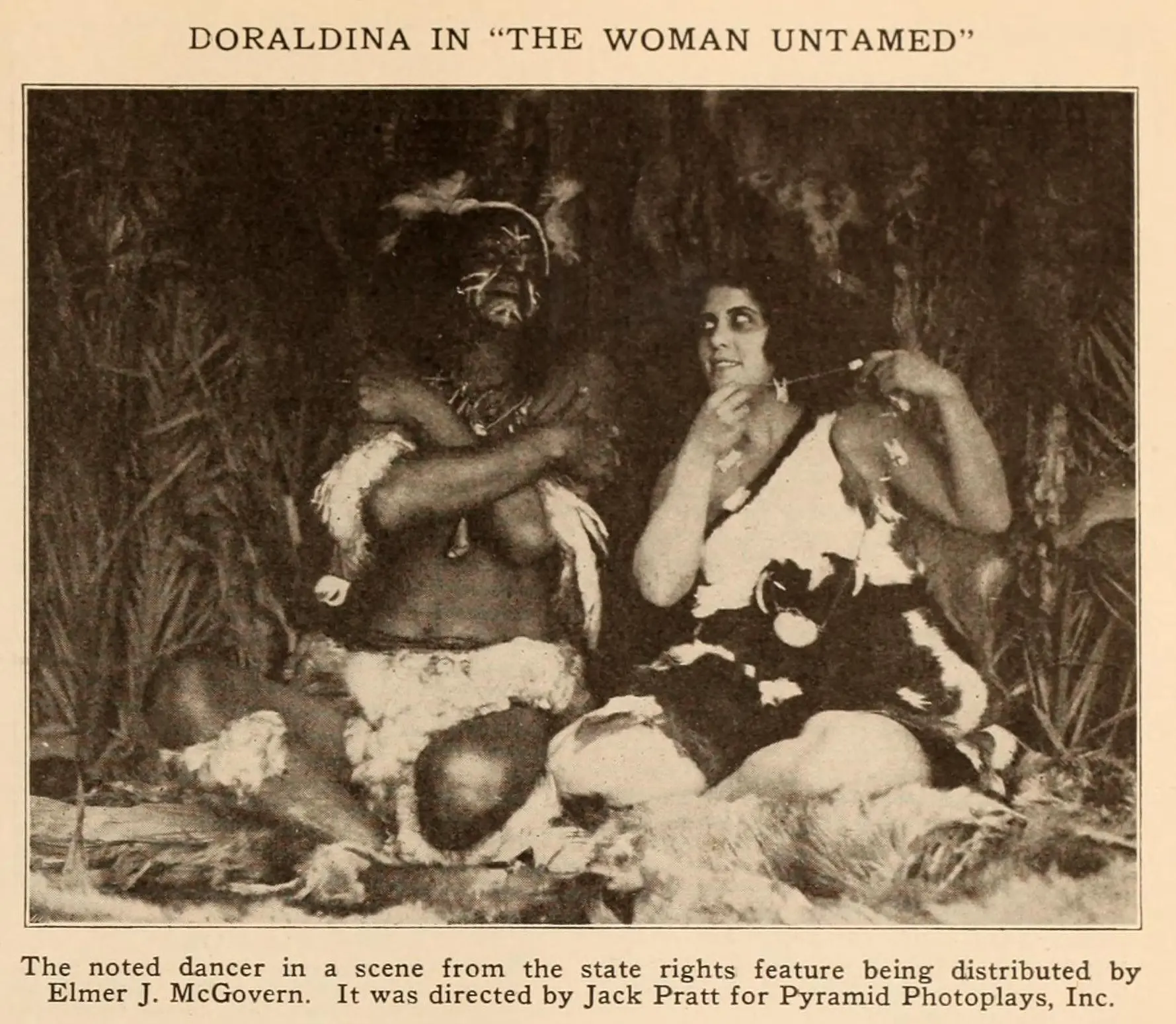
Yet failure fertilizes legend. Bootleg 16-mm dupes circulated among Surrealists in Paris; Buñuel clipped a still of Doraldina’s flaming torch for his personal wall of fetishes. Josephine Baker claimed she studied the castaway’s hip-articulation to perfect her banana-skirt shimmy. Even The Cowardly Way borrows its chiaroscuro torches-and-riot climax from McGovern’s cane-field inferno, though the later film swaps gender agency for masculine redemption.
Contemporary critics, drunk on auteurist Kool-Aid, scour the movie for fingerprints of McGovern’s "vision." I’d argue the film’s authorship is more hydra-headed: Doraldina’s balletic background infects every gesture; Dark Cloud’s activism seeds the anti-missionary subtext; McGovern’s gambling debts dictate the guerrilla shooting style—hand-cranked cameras hidden in fishing canoes, film stock scavenged from medical X-ray leftovers. The result is a patchwork that breathes, coughs, then breathes again, like a living thing uncertain it deserves to exist.
Should you watch it? If your idea of silent cinema is sugar-coated accompaniment to Sunday brunch, steer clear. The Woman Untamed demands a stomach for ambiguity, an ear ready to hallucinate dialogue between the intertitles. It helps to be slightly insomniac, slightly heart-bruised, willing to believe that a 100-year-old strip of celluloid can still smell of frangipani and terror. Enter with that disposition, and the film will open like a night-blooming cereus: luminous, rank, gone before you can photograph it.
Streaming options are, predictably, a wilderness. A 2K scan circulates on the boutique platform SilentAbyss with optional commentary by a University of Guam anthropologist who gamely admits the island culture depicted is "a fever dream, not a field study." Avoid the YouTube rip framed in postage-stamp ratio; the tinting looks like radioactive sherbet, and some joker has overlaid ukulele muzak that would make even the corniest censor blush.
Physical media hounds should pounce on the forthcoming Blu-ray from Cadaverous Lantern, limited to 1,200 copies. Extras include a 40-page booklet on Doraldina’s post-film career running a Manila dance studio that trained drag queens for U.S.O. shows, plus a mini-doc on the chemical migration of magenta dye in tropical climates—catnip for the fetishists who like their art with a side of entropy.
Final verdict? The Woman Untamed is neither a masterpiece nor a curio; it is a wound that refuses scabbing. It will infect your other perceptions: you’ll watch Just a Song at Twilight and swear you see Doraldina’s silhouette in every cornfield. You’ll hum the nonexistent score while standing in grocery queues. And late at night, when the ceiling fan clicks like a sprocket, you may taste salt and lime on your tongue, wondering if some myths are merely accidents waiting for believers. That is the film’s true miracle: it turns its viewers into reluctant worshippers, forever scanning the horizon for a red-haired ghost carrying fire in her fists.
IMDb 6.1
1925
Community
Log in to comment.