DbcultAccessing Vault...
Cult Review
Senior Film Conservator
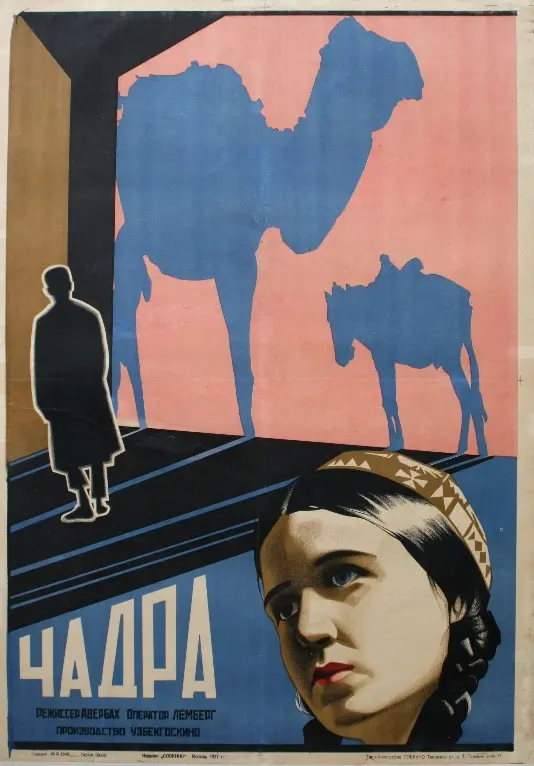
Is Chadra a relic worth digging up in the 21st century? Short answer: yes, but only if you are prepared to confront the uncomfortable intersection of genuine liberation and state-sponsored propaganda. This film is essential viewing for historians and silent cinema enthusiasts, but it is definitely not for those seeking a lighthearted or politically neutral evening of entertainment.
1) This film works because it captures a authentic, visceral sense of place and time that no modern recreation could ever replicate, using the stark landscapes of Central Asia to mirror the internal desolation of its characters.
2) This film fails because it frequently collapses into one-dimensional caricature, painting traditional religious figures as mustache-twirling villains while treating the Soviet state as an infallible savior.
3) You should watch it if you are fascinated by the 'Hujum' period of Soviet history or if you want to see the birth of Central Asian cinema through the lens of one of its first female stars, Safiyat Askarova.
The cinematography in Chadra is a masterclass in utilizing natural light to create emotional weight. In one particularly haunting sequence, the protagonist stands in a doorway, half-shrouded by the veil, while the harsh Uzbek sun bleaches the background into a white void. It’s a striking visual metaphor for her state of being: trapped between a dark past and an uncertain, blinding future. The camera work, led by the vision of writers Viktor Bulach and Mikhail Insarov-Vaks, avoids the frantic montage style of Eisenstein, opting instead for a grounded, almost documentary-like stillness.
Unlike the more theatrical approach seen in Wilhelm Tell, Chadra feels lived-in. You can almost feel the grit of the sand and the heat of the sun on the screen. The directors utilize the architecture of the old city—narrow alleys, high mud walls, and claustrophobic courtyards—to emphasize the protagonist's imprisonment. When she finally steps out without her veil, the open space of the market feels less like freedom and more like a battlefield. This isn't just a movie; it's a recorded struggle of a culture in its death throes.
Safiyat Askarova’s performance is the film's beating heart. In an era where silent acting often leaned into grand gestures and eye-rolling histrionics, Askarova is remarkably restrained. Her defiance isn't shouted; it is felt in the set of her jaw and the way her eyes dart around a room. She carries the film's heavy ideological weight with a grace that suggests she understood the real-world stakes of the role. For an Uzbek woman to appear on screen in 1927 was an act of radical bravery in itself.
Compare her performance to the gender dynamics explored in Adam's Rib. While the latter deals with the domestic politics of the West, Chadra deals with the literal life-and-death consequences of female agency. When Askarova’s character burns her veil, the act feels more violent than any physical fight. It is a total rejection of her social identity. The supporting cast, including Suleyman Khojaev, provides a solid, if somewhat stereotypical, framework for her journey. They represent the archetypes of the 'New Soviet Man' and the 'Old World Zealot' with predictable but effective fervor.
Let’s be honest: Chadra is a tool of the state. It was commissioned to support the Soviet campaign to forcibly secularize the East. This creates a fascinating tension for the modern viewer. We are cheering for the liberation of women, yet we are aware that this liberation is being dictated by an external colonial power. The film doesn't acknowledge this nuance. It presents the Party as a beacon of pure enlightenment, a trope common in films of the era like A Daughter of the Law.
However, the film’s power transcends its political origins. There is a raw, human desperation in the scenes of family betrayal that feels universal. When the protagonist's own father turns against her, it isn't just a political statement; it's a tragedy. The film is at its best when it forgets its message and focuses on the human cost of change. It works. But it’s flawed. The pacing in the second act drags as the film pauses for various 'educational' moments about the benefits of Soviet industry, which feel as out of place as a commercial in the middle of a funeral.
Is Chadra worth your time today? Yes, if you want to understand the roots of Central Asian cinema and the complex history of women's rights in the region. It provides a window into a world that has largely vanished, captured with a level of detail that is both beautiful and terrifying. If you are looking for a standard narrative with a happy, uncomplicated ending, look elsewhere. This is a film of shadows, struggle, and hard-won progress.
Pros:
- Exceptional location shooting that captures the atmosphere of 1920s Uzbekistan.
- A rare glimpse into the early Soviet 'Hujum' campaign.
- Strong visual metaphors and lighting.
- Historical significance as one of the first films of its kind.
Cons:
- Rife with state propaganda that lacks nuance.
- Supporting characters are often two-dimensional.
- Some sequences feel repetitive and overly didactic.
Chadra is a difficult, demanding, and ultimately rewarding piece of cinematic history. It isn't a 'masterpiece' in the traditional sense—it's too compromised by its political mission for that—but it is a vital document. It captures the moment a culture was broken and remade. While it lacks the adventurous spirit of Dangerous Waters, it possesses a gravity that most films of its era lack. It is a beautiful lie that tells a profound truth about the pain of progress. Watch it for the history, stay for Askarova, and keep your critical faculties sharp. It is art used as a weapon, and even a century later, it still has a sharp edge.
IMDb 7.1
1919
Community
Log in to comment.