DbcultAccessing Vault...
Cult Review
Senior Film Conservator
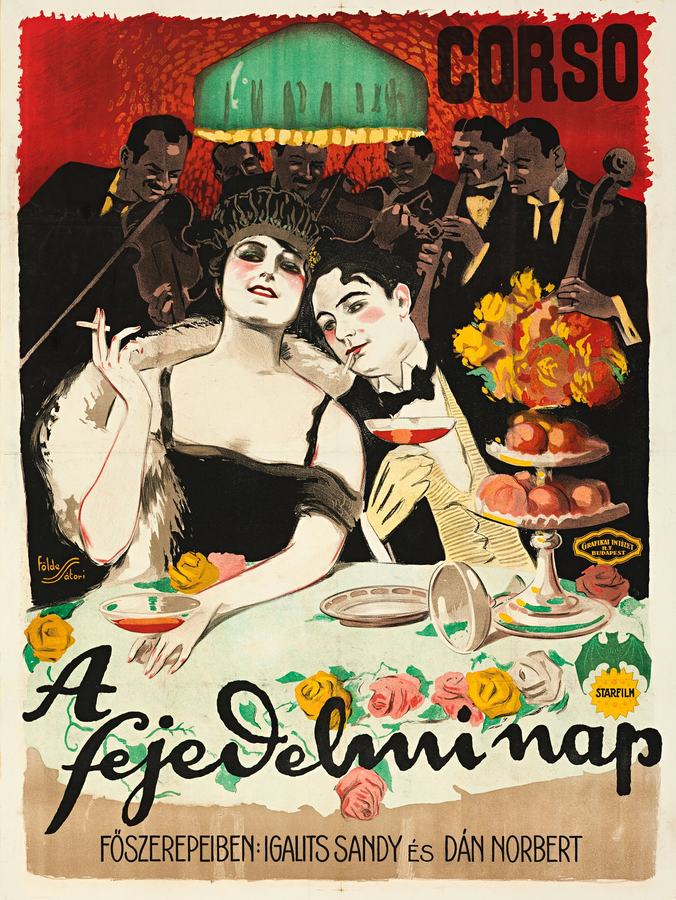
Pál Forró’s “Fejedelmi nap” (Princely Day) arrives as a profound and unsettling cinematic experience, a film that peels back the pastoral veneer of a small Hungarian village to expose the raw, pulsating nerves beneath. Far from a mere slice-of-life narrative, this is an incisive examination of how tradition, when wielded as a weapon, can calcify a community, stifling dissent and burying inconvenient truths under layers of ritual and reverence. The film's brilliance lies in its meticulous construction of Tavasz-alja, a village that initially appears timeless and harmonious, only for its facade to crack under the weight of a single, fateful day.
From its very opening frames, “Fejedelmi nap” establishes an atmosphere steeped in both beauty and unease. The camera lingers on the sun-drenched fields and ancient stone pathways, yet there’s an almost imperceptible tremor in the air, a sense of foreboding that permeates the bucolic landscape. This masterclass in mood-setting is a testament to the film's visual storytelling, which eschews overt exposition in favor of subtle cues and pregnant silences. The annual 'Princely Day' festival, ostensibly a celebration of heritage and communal unity, becomes the dramatic fulcrum around which the village's hidden tensions violently converge. It’s a day marked by elaborate costumes, ancestral dances, and symbolic offerings, each ritualistic gesture designed to reinforce the established order, yet each also serving as a potential spark for the impending conflagration.
At its heart, “Fejedelmi nap” is a searing critique of entrenched power and the perilous allure of collective amnesia. Elder István, portrayed with chilling gravitas by Imre László, embodies the unyielding authority of tradition. His rule isn't merely political; it's spiritual, historical, and deeply personal. He is the living embodiment of Tavasz-alja’s past, its chronicler and its gatekeeper, meticulously curating the village’s narrative to maintain his own unchallenged dominion. László’s performance is a marvel of understated menace, a man whose quiet demeanor conceals an iron will and an almost pathological need for control. His eyes, often narrowed in suspicion, convey volumes about the burdens of his position and the lengths he will go to preserve it.
The catalyst for the village’s awakening is Ferenc, a character brought to life with raw intensity by Norbert Dán. Ferenc’s return is not triumphal; it’s a quiet, almost spectral re-entry into a world that has tried to forget him. Dán masterfully conveys Ferenc’s internal struggle: the bitterness of exile, the weight of a past injustice, and the reluctant courage to confront a system designed to crush individual agency. His presence alone is a disruption, a living embodiment of the inconvenient truth that István has so carefully suppressed. The film brilliantly uses Ferenc not as a conventional hero, but as a mirror, reflecting the village’s complicity and its simmering desire for liberation. His quiet defiance, initially met with suspicion and hostility, gradually ignites sparks of recognition among those who have long suffered in silence. The narrative arc, which sees a solitary figure challenging a seemingly unbreakable establishment, echoes the powerful themes of films like The Fight, where individual conviction clashes against overwhelming societal pressure.
Sandy Igalits delivers a nuanced and deeply affecting performance as Kata, Elder István's granddaughter. Kata is the bridge between the old world and the new, burdened by familial loyalty yet yearning for a different future. Her internal conflict is palpable; she respects her grandfather’s authority but cannot ignore the whispers of injustice that Ferenc’s return brings to the forefront. Igalits portrays Kata’s evolution from dutiful descendant to reluctant truth-seeker with remarkable sensitivity, her expressions conveying a complex tapestry of doubt, fear, and burgeoning resolve. Her journey is perhaps the most relatable, representing the younger generation’s struggle to reconcile tradition with a desire for transparency and moral rectitude. Her character's arc provides a crucial emotional anchor, grounding the more abstract power struggles in a deeply human context. The tension she navigates is reminiscent of the moral quandaries faced by characters in The House of Hate, where family legacy and dark secrets threaten to consume personal integrity.
Pál Forró’s screenplay is a marvel of economy and depth. The dialogue is sparse, yet every word carries immense weight, often hinting at unspoken histories and simmering resentments. The narrative unfolds with a deliberate, almost hypnotic rhythm, allowing the audience to gradually immerse themselves in Tavasz-alja’s unique cultural fabric before subtly introducing the fissures that threaten to tear it apart. Forró understands that true drama often resides in the unsaid, in the lingering glances and the loaded silences, and he masterfully employs these elements to build an almost unbearable tension. The structure of the film, confined largely to the events of a single, pivotal day, amplifies the sense of impending doom and inescapable confrontation. It's a testament to the script's power that the 'Princely Day' rituals, initially presented as quaint folkloric elements, gradually transform into symbolic manifestations of the village's collective delusion and the Elder's manipulative control.
While no director is explicitly credited in the provided information, the film's visual language and pacing suggest a singular, confident artistic vision at the helm. The cinematography is breathtaking, capturing the stark beauty of the Hungarian landscape while simultaneously reflecting the emotional state of its inhabitants. Long takes and artful compositions create a sense of observational realism, drawing the viewer into the characters' most intimate moments of contemplation and despair. The use of natural light and shadow is particularly effective, often mirroring the moral ambiguities at play. The editing maintains a taut, deliberate pace, allowing scenes to breathe and emotions to fully register, rather than rushing towards manufactured climaxes. This measured approach ensures that when the narrative does erupt, its impact is all the more visceral and profound.
The ensemble cast of “Fejedelmi nap” is uniformly excellent, each actor contributing to the rich tapestry of the village community. Norbert Dán’s portrayal of Ferenc is a masterclass in controlled intensity. He rarely raises his voice, yet his presence is a constant, simmering threat to the established order. His eyes, haunted and resolute, convey the deep scars of his past and the quiet determination of his present. He is not a revolutionary shouting from the rooftops, but a persistent, undeniable force of truth that chips away at the foundations of deceit. The subtlety of his performance makes his eventual, albeit understated, moments of confrontation all the more impactful.
Imre László, as Elder István, delivers a performance of chilling authority. He is not a cartoonish villain, but a man deeply convinced of his own righteousness, of his divine right to dictate the village's memory and future. László imbues István with a quiet dignity that makes his tyranny all the more insidious. His control is not exercised through brute force but through the manipulation of history and the unwavering belief in his own infallible judgment. The way he commands respect, even from those who secretly despise him, speaks volumes about the power of tradition and the fear of challenging a long-held status quo. His performance carries echoes of the powerful, yet deeply flawed, patriarchs seen in films like The Widow's Might, where familial and communal power structures are meticulously dissected.
Sandy Igalits, as Kata, is the emotional core of the film. Her performance is a delicate balance of vulnerability and growing strength. She navigates the complex emotional landscape of a granddaughter torn between loyalty and morality, between the comfort of tradition and the discomfort of truth. Igalits's expressions are incredibly articulate, revealing Kata’s inner turmoil with just a glance or a subtle shift in posture. Her character's arc, from a somewhat passive observer to an active participant in the village’s reckoning, is one of the most compelling aspects of the film, providing a glimmer of hope amidst the pervasive gloom. Her portrayal of quiet resilience in the face of overwhelming pressure is reminiscent of protagonists in Sylvi, who must confront difficult personal and societal truths.
“Fejedelmi nap” is undeniably a Hungarian film, imbued with a specific cultural sensibility, yet its themes are profoundly universal. The struggle between progress and tradition, the abuse of power, the weight of collective memory, and the courage required to speak truth to authority are experiences that transcend geographical boundaries. The film speaks to the insidious nature of historical revisionism and the way communities can become complicit in their own oppression when fear outweighs the desire for justice. It’s a powerful meditation on the cyclical nature of history and the enduring human need for authenticity, even when it comes at a great personal cost.
The film's exploration of ritual and its subversion is particularly striking. The 'Princely Day' festival, with its ancient dances and symbolic offerings, initially serves to bind the community. However, as the film progresses, these very rituals become a stage for the unfolding drama, their traditional meanings twisted and exposed as tools of control. The beauty of the folk traditions is contrasted with the ugliness of the secrets they conceal, creating a jarring dissonance that forces the audience to question the very nature of communal identity. This sophisticated interplay between form and content elevates “Fejedelmi nap” beyond a simple village drama, positioning it as a significant work of art cinema.
“Fejedelmi nap” is not an easy watch, nor is it meant to be. It demands patience and thoughtful engagement, rewarding the attentive viewer with a rich, multi-layered narrative and performances that linger long after the credits roll. It is a film that challenges, provokes, and ultimately, resonates with a profound sense of human truth. The film's conclusion, while not offering simplistic resolutions, provides a cathartic release, leaving the audience to ponder the enduring questions it raises about justice, memory, and the cost of silence. It’s a testament to the power of Pál Forró’s writing and the exceptional performances of Norbert Dán, Imre László, and Sandy Igalits that this story of a small village feels so universally relevant and deeply impactful.
In an era often dominated by cinematic spectacle, “Fejedelmi nap” stands as a powerful reminder of the enduring strength of character-driven drama and intelligent storytelling. It's a film that eschews grand gestures for intimate revelations, finding epic scope in the smallest human interactions and the most profound emotional conflicts. For anyone seeking a film that delves deep into the human condition, exploring the complex interplay of tradition, power, and individual conscience, “Fejedelmi nap” is an essential and unforgettable cinematic journey. Its subtle power and thematic richness solidify its place as a significant contribution to contemporary European cinema.
IMDb 6.6
1927
Community
Log in to comment.