DbcultAccessing Vault...
Cult Review
Senior Film Conservator
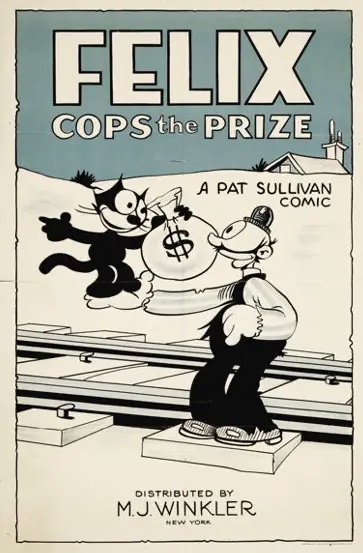
Stepping back into the nascent days of cinematic animation is always a peculiar delight, a journey to a time when the very act of bringing drawings to life was a marvel in itself. Among the pantheon of early cartoon stars, Felix the Cat holds a particularly prominent, almost foundational, position. His adventures, often simple in premise, nevertheless offered a vibrant window into the creative spirit of the 1920s. Felix Cops the Prize, a delightful romp from 1923, exemplifies much of what made Felix a global sensation and continues to resonate with its blend of slapstick, ingenuity, and a surprising undercurrent of social commentary, even if unintentional. It's not merely a historical artifact; it's a testament to the enduring power of visual storytelling and the sheer inventiveness of its creator, Otto Messmer.
The narrative, deceptively straightforward, unfurls with a profound sense of the era's economic realities. We are introduced to a tramp, a figure emblematic of hardship and marginalization, whose desperation for a meal drives the plot. His solution is both audacious and endearing: entering his beloved, albeit ordinary, stray cat, Felix, into a local pet show. The prize money isn't just a bonus; it's the difference between sustenance and starvation. This immediate establishment of stakes, however simple, imbues the ensuing antics with a tangible sense of purpose. It sets Felix Cops the Prize apart from mere frivolous entertainment, hinting at the raw struggle beneath the animated gags.
What follows is a classic comedic setup: the underdog, or in this case, the under-cat, attempting to navigate a system designed for pedigree. Felix, with his signature mischievous grin and rubber-hose limbs, is the perfect vehicle for this kind of subtle subversion. His initial disqualification isn't due to a lack of charm or inherent cuteness, but rather a rather unfortunate, yet entirely plausible, case of flea infestation. The judges, embodying the rigid standards and perhaps even the class snobbery of such institutions, react with predictable indignation, casting Felix and, by extension, his tramp owner, out into the cold. This moment, though played for laughs, subtly critiques the superficiality of judgment and the arbitrary nature of 'worthiness' in a competitive environment. One might even draw parallels to the subtle class distinctions explored in films like Hick Manhattan, where social status and appearance often dictate one's fate, albeit in a more dramatic, human-centric context.
The ensuing chase scene is a masterclass in early animation's kinetic energy. The tramp, fueled by a mixture of anger and shattered hope, pursues Felix, whose agile escapes are a testament to his cartoonish resilience. It's during this chaotic flight that the film introduces its central, most iconic visual gag: Felix's plunge into a vat of white paint. This accidental transformation is not just a plot device; it's a moment of pure visual alchemy. The stark contrast of the white paint against his traditionally black fur, followed by the acquisition of two perfectly circular black 'eyes,' redefines his entire persona. He is no longer just Felix; he is a blank canvas upon which a new identity is accidentally etched. This visual metamorphosis is both humorous and surprisingly profound, speaking to themes of disguise, perception, and the malleability of identity. It's a simple trick, yet incredibly effective, demonstrating Messmer's genius for visual storytelling that transcends dialogue.
The brilliance of the film culminates in Felix's re-entry into the pet show. The judges, utterly oblivious to the ruse, are captivated by this 'new' cat, showering it with accolades and, ultimately, the grand prize. This narrative arc, from rejection to triumph through deception, is a classic comedic trope, but in the hands of Messmer and Felix, it feels fresh and innovative. It celebrates ingenuity over inherent 'quality,' and offers a satisfying, if morally ambiguous, victory for the downtrodden. The film subtly suggests that sometimes, the only way to beat a rigged system is to play by different rules, or perhaps, to wear a different face. This kind of clever subversion is a hallmark of many silent-era comedies, where visual gags often carried deeper, unspoken meanings about societal norms.
From a technical perspective, Felix Cops the Prize showcases the pioneering animation techniques of the era. Otto Messmer's fluid, expressive lines for Felix, his characteristic 'walk,' and the dynamic use of simple backgrounds demonstrate a sophisticated understanding of movement and character personality. Felix's ability to detach his tail, use question marks as thought bubbles, or literally walk on air were revolutionary for the time, pushing the boundaries of what animation could depict. This film, like many other Felix shorts, was instrumental in establishing the visual language of cartoons, influencing countless animators who followed. The animation, while primitive by today's standards, possesses an undeniable charm and vitality that remains captivating. It's a stark reminder of the foundational work that paved the way for the intricate animations we see today, much like how early narrative films such as John Heriot's Wife laid the groundwork for complex storytelling in live-action cinema.
The enduring appeal of Felix lies not just in his visual gags but in his personality. He is a survivor, a trickster, and an everyman (or everycat) who always finds a way to come out on top, often through sheer wit and a dash of impudence. In Felix Cops the Prize, his transformation is not just physical but symbolic. He literally 'paints' a new path for himself, bypassing the arbitrary judgments of a system that initially rejected him. This resonates deeply, appealing to anyone who has ever felt overlooked or undervalued. The film's simple message—that appearances can be deceiving, and ingenuity can overcome adversity—is timeless.
Comparing Felix Cops the Prize to other films of its era highlights its unique blend of humor and narrative drive. While films like Builders of Castles might focus on human drama and social climbing through more conventional means, Felix achieves a similar sense of aspiration and struggle through exaggerated, animated action. It shares a certain spirit of resilience with other tales of overcoming odds, such as Willy Reilly and His Colleen Bawn, though translated into a purely comedic, fantastical register. The film's compact storytelling, delivering a complete arc within a short runtime, is also characteristic of early cinema, where every frame had to count.
The absence of spoken dialogue, characteristic of silent films, forces the animation to be exceptionally clear and expressive. Every gesture, every facial contortion (even on a simple character like Felix), and every visual gag must convey meaning without verbal cues. Messmer excelled at this, ensuring that the humor and narrative progression were universally understandable. This visual clarity is a hallmark of the silent era, a skill that later sound films sometimes lost in their rush to embrace dialogue. It's a reminder of the power of pure visual communication, a lesson that modern animators still draw upon.
The film's impact on popular culture cannot be overstated. Felix the Cat was a merchandising juggernaut long before Mickey Mouse, appearing on toys, comics, and all manner of paraphernalia. Felix Cops the Prize contributed to this phenomenon by offering another memorable adventure that solidified his trickster persona. It wasn't just a cartoon; it was a cultural touchstone, a symbol of playful rebellion and the triumph of the underdog. The simple premise of winning a prize, achieved through clever disguise, resonated with audiences who often saw themselves in similar struggles against larger, more formidable systems.
Reflecting on the film today, one can appreciate its historical significance while still enjoying its inherent entertainment value. It's a snapshot of a bygone era, yet its themes of desperation, deception, and the quest for recognition remain eternally relevant. The film doesn't preach; it simply presents a scenario and allows the visual comedy to unfold, leaving the audience to ponder the implications. The tramp's motivations are clear, Felix's actions are driven by instinct and circumstance, and the judges are caricatures of authority. This simplicity is its strength, allowing for universal appeal.
In an age where animation often strives for hyper-realism or complex narrative structures, there's a refreshing honesty in the straightforward charm of Felix Cops the Prize. It reminds us that sometimes, the most profound stories can be told with the simplest tools: a black cat, a pot of white paint, and an imaginative mind. It's a foundational piece in the tapestry of animation history, a film that, despite its age, still makes you smile and perhaps even think a little about the arbitrary nature of judgment and the power of a good disguise. It stands as a testament to Otto Messmer's enduring legacy and Felix's indelible mark on the world of cartoons, proving that sometimes, all it takes is a little bit of paint to change everything.
The artistry of Messmer is evident in every frame, from the way Felix's tail wags with personality to the exaggerated reactions of the judges. This early form of animation, often dubbed 'rubber hose' animation, allowed for incredible fluidity and elasticity, enabling characters to stretch, squash, and distort in ways that defied reality, creating a distinct visual language. This style was not just a technical limitation; it was a deliberate artistic choice that imbued Felix with his unique, almost surreal, charm. It’s a stark contrast to the more grounded, though still fantastical, narratives found in films like Wild, which explores human nature through a different lens.
The film's impact on subsequent animated characters and storylines is undeniable. One can trace elements of Felix's mischievousness and ability to manipulate his environment through to later iconic figures. His cleverness in using his environment, even accidentally, to his advantage, is a recurring theme in many cartoons that followed. The very idea of an animal character outsmarting humans or an established system became a beloved trope, perfected by characters like Bugs Bunny and Tom and Jerry. Felix Cops the Prize is a crucial part of this lineage, a foundational text in the grammar of cartoon comedy and character development.
Moreover, the film's commentary on appearances and superficiality remains relevant. In a world often obsessed with external validation, Felix's story serves as a playful reminder that true worth isn't always recognized at first glance, and sometimes, a little rebranding (or a lot of white paint) is all it takes to shift perception. The judges, who initially scorn Felix for his commonness and fleas, are completely swayed by his altered appearance, highlighting the superficiality of their judgment. This thematic thread is surprisingly sophisticated for a short animated film of its time, adding layers to what could otherwise be a simple slapstick comedy. It speaks to a broader human tendency to judge books by their covers, a theme sometimes explored in dramatic fashion in films like Bella Donna, where societal perceptions dictate destiny.
The sheer joy derived from watching Felix navigate his absurd predicament is infectious. The pacing is brisk, the gags are well-timed, and the resolution, though a little cheeky, is ultimately satisfying. It's a film that understands its audience and delivers exactly what it promises: a good laugh and a clever story. Its legacy is not just in its historical importance but in its continued ability to entertain. For anyone curious about the roots of animation, or simply looking for a dose of classic cartoon charm, Felix Cops the Prize is an absolute must-see. It's a vibrant, imaginative piece of cinema that proves that even in the earliest days, animation was a powerful medium for storytelling and social observation, wrapped up in a package of delightful visual comedy.
The film’s simple yet effective narrative demonstrates a fundamental understanding of comedic timing and escalation. The initial rejection, the desperate chase, the accidental transformation, and the triumphant return form a perfect comedic arc. Each step logically, albeit humorously, leads to the next, building momentum towards the satisfying conclusion. This structural integrity is a hallmark of Messmer’s work, ensuring that even the most outlandish scenarios feel coherent within Felix’s world. It’s a masterclass in concise storytelling, a skill that often eludes even contemporary filmmakers attempting to craft compelling narratives within limited runtimes. One can observe a similar dedication to narrative economy in other period pieces, though with different thematic focuses, such as Eine weisse unter Kannibalen, which also tells a complete story in a succinct manner.
Ultimately, Felix Cops the Prize transcends its status as a mere historical curiosity. It is a vibrant, engaging piece of cinematic art that continues to speak to audiences with its universal themes and timeless humor. It stands as a powerful reminder of the ingenuity of early animators and the foundational role Felix the Cat played in shaping the medium. The film is a joyous celebration of wit, resilience, and the unexpected twists of fate, all rendered with Messmer’s inimitable style. It’s a prize-winning film in more ways than one, leaving an indelible mark on the annals of animation history and continuing to charm viewers nearly a century later.
IMDb 2.8
1934
Community
Log in to comment.