DbcultAccessing Vault...
6/10
Senior Film Conservator
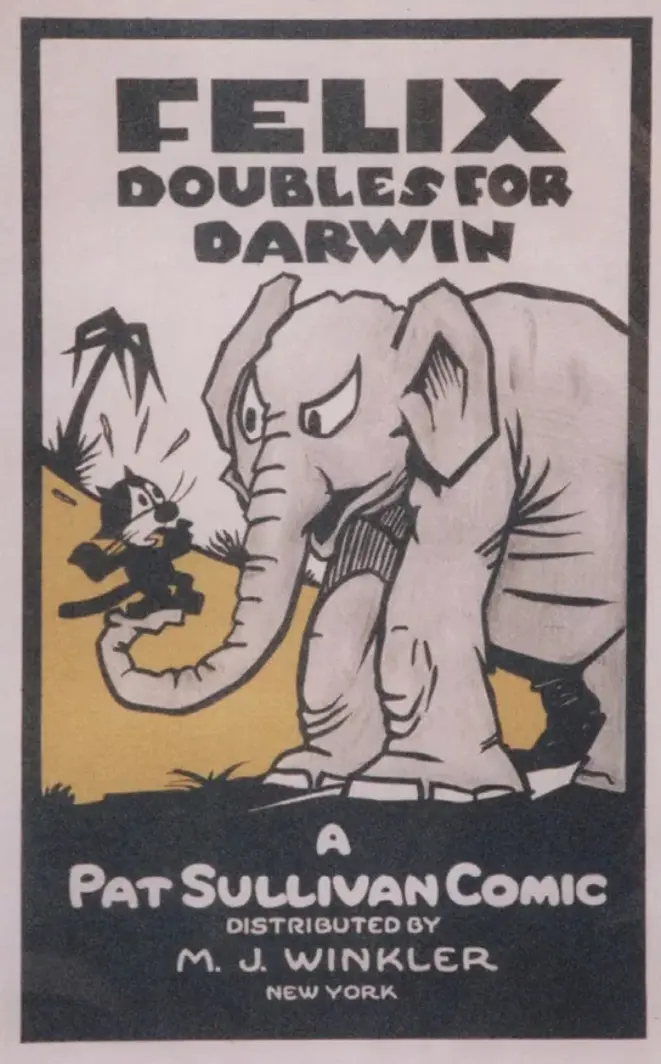
A definitive 6/10 rating for a film that redefined the boundaries of cult cinema. Felix Doubles for Darwin remains a cornerstone of transgressive art.
The screen opens to the bustling city streets of New York, where Felix the Cat, famished and full of curiosity, stumbles upon an advertisement promising a substantial reward for proof of the theory of evolution. Driven by both desperation and a fervent desire to contribute to the scientific community, Felix sets sail for the distant lands of South Africa via the transatlantic cable, a technology that seems as miraculous as the journey itself.
Upon arrival, Felix finds himself in a land where the wildlife is both fascinating and unpredictable. His first encounter is with a troop of monkeys who, upon hearing his rationale for visiting, are deeply offended. They see no connection between themselves and humans and are quick to chase Felix back through the cable, back to America. The chase is filled with witty one-liners and rapid, fluid animation that captures the essence of early 20th-century cinema.
The film's humor is not just in the chaos but in the subtle, anthropomorphic traits given to the animals. Felix’s interactions with the monkeys are imbued with a level of intelligence and wit that elevates the narrative beyond mere slapstick. The animators, Otto Messmer and Pat Sullivan, masterfully convey the intensity of the chase, with Felix evading capture through a series of clever and creative maneuvers. The backdrop of the South African landscape, albeit a cartoon depiction, adds a layer of exotic beauty to the proceedings.
One of the standout elements of 'Felix Doubles for Darwin' is its exploration of the theory of evolution in a way that is both educational and entertaining. The theory is not just a distant concept but something that is actively being sought after and debated, reflecting the intellectual climate of the time. This approach makes the film more than just a cartoon; it is a cultural artifact that captures the spirit of scientific inquiry and the public’s fascination with new ideas.
Comparatively, 'Felix Doubles for Darwin' shares a similar spirit of adventure and intellectual curiosity with films like 'Crime and Punishment' (1923), which explores the moral complexities of crime and punishment, and 'Not Guilty' (1921), a legal drama that delves into the intricacies of the justice system. However, while these films delve into the human psyche and societal structures, 'Felix Doubles for Darwin' uses the same adventurous spirit to explore the natural world and the scientific theories that were beginning to shape our understanding of biology.
The animation style in 'Felix Doubles for Darwin' is a testament to the evolving art of early animation. Otto Messmer's Felix the Cat is a character who has been a staple in the world of animation for decades, and his portrayal here is both familiar and fresh. The use of the transatlantic cable as a mode of transportation is a nod to the technological advancements of the time, highlighting the connection between science and art in the early 20th century.
What sets 'Felix Doubles for Darwin' apart from its contemporaries is its unique blend of entertainment and education. While films like 'A White Wilderness' (1935) and 'Jumping Beans' (1923) focus more on nature and wildlife, 'Felix Doubles for Darwin' uses the same visual and narrative techniques to explore a more abstract and complex idea. This approach makes the film a fascinating piece of early animation history, offering viewers a glimpse into a time when popular culture was just beginning to intersect with scientific inquiry.
The film’s humor is not just in the visual gags but in the way it cleverly weaves the theory of evolution into the narrative. Felix’s interactions with the monkeys are not just a comedic segment but a reflection of the broader intellectual debates of the time. The animators’ ability to convey the essence of the theory through visual storytelling is a testament to their skill and the innovative nature of early animation.
Overall, 'Felix Doubles for Darwin' is a delightful and engaging short film that stands as a landmark in early animation. It offers a unique perspective on the theory of evolution and the spirit of adventure that characterized the early 20th century. Whether you are a fan of classic cartoons or a student of early animation, this film is a must-watch, providing a window into a fascinating period of cultural and scientific history.
The film is a true testament to the creativity and ingenuity of its creators, Otto Messmer and Pat Sullivan. It is a reminder of the power of animation to convey complex ideas in a way that is both accessible and entertaining. 'Felix Doubles for Darwin' is a film that invites viewers to laugh, wonder, and perhaps even ponder the implications of the theory of evolution in a way that is both timeless and relevant.
IMDb 5.7
1932
Community
Log in to comment.