DbcultAccessing Vault...
5.4/10
Senior Film Conservator
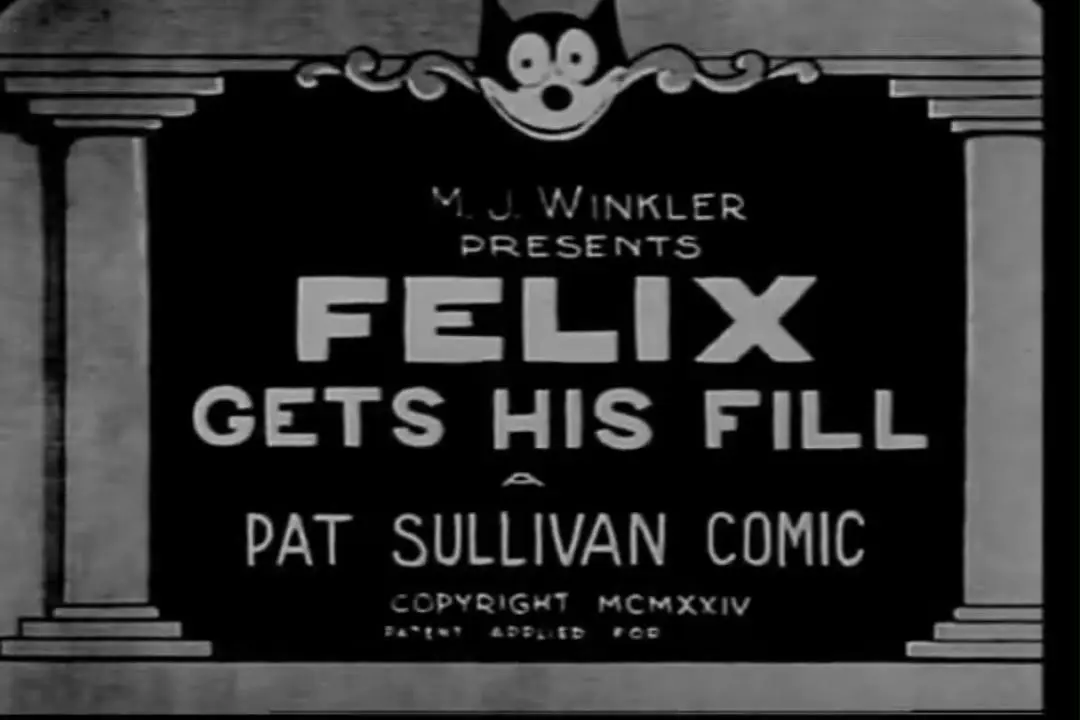
A definitive 5.4/10 rating for a film that redefined the boundaries of cult cinema. Felix Gets His Fill remains a cornerstone of transgressive art.
Should you spend your afternoon revisiting a hundred-year-old cartoon about a starving cat? Short answer: No, unless you are an animation historian or someone who enjoys dissecting the primitive roots of visual comedy.
This film is specifically for those who want to understand the DNA of character animation and the evolution of the 'funny animal' trope. It is absolutely not for anyone who requires high-stakes drama, modern pacing, or high-definition visual fidelity.
1) This film works because it showcases the sheer efficiency of Otto Messmer’s line work and the surrealist logic that allowed Felix to be more than just a drawing.
2) This film fails because its central conflict is resolved through a gag that feels incredibly dated and lacks the punch needed for a modern audience.
3) You should watch it if you are researching the Pat Sullivan studio or the transition of animation from newspaper strips to the silver screen.
No. For the casual viewer, Felix Gets His Fill offers very little in the way of genuine entertainment. The humor is rooted in a cultural context that has long since evaporated. While it is historically significant, it lacks the universal slapstick appeal found in the works of Buster Keaton or the later Disney shorts. It is a museum piece. It belongs in a lecture, not on a Friday night watchlist.
In the early 1920s, Felix the Cat was not just a character; he was a global phenomenon. Unlike the melodramatic protagonists of live-action films like Alone in London, Felix operated in a world where the laws of physics were merely suggestions. In Felix Gets His Fill, we see the character at his most primal: he is hungry. This is a recurring theme in the early shorts, reflecting a post-war anxiety that resonated with audiences of the time.
The plot is lean. Felix hears there is food in the South and he goes. There is a brutal simplicity to this. It reminds me of the stark narratives found in Assunta Spina, though obviously through a much more distorted lens. Felix isn't looking for love or redemption; he’s looking for a chicken dinner. This honesty is refreshing, even if the execution is primitive.
The central gag involves Felix picking cotton to earn his meal. This setup is inherently problematic when viewed through a modern lens, as it leans into Southern tropes that were common in 1923 but feel uncomfortable today. However, if we look strictly at the animation, Messmer’s genius is evident. The way Felix moves through the field is fluid, almost hypnotic. The 'rubber-hose' style allows his body to stretch and compress in ways that live-action stars of the era, such as those in The Four Horsemen of the Apocalypse, could only dream of.
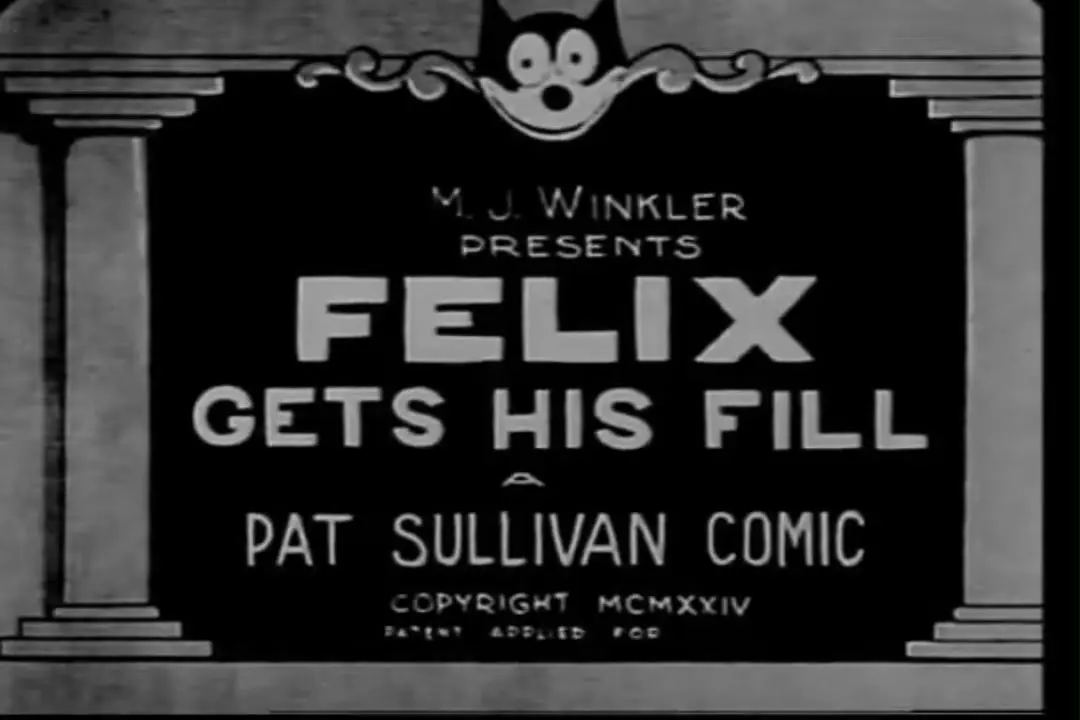
Then comes the beard. Felix mistakes an old man's beard for a cotton plant. It is a visual pun that relies on the audience's ability to accept a world where textures are indistinguishable. The moment he starts pulling, the film shifts from a labor-comedy to a chase-comedy. It is a predictable pivot. It works. But it’s flawed.
While films like Shattered Idols were pushing the boundaries of narrative complexity, Messmer was perfecting the art of the 'bit.' In Felix Gets His Fill, the 'bit' is the entire movie. There is no subtext. There is no character arc. There is only the cat and his stomach. This minimalism is what made Felix so exportable. You didn't need to speak English to understand a hungry cat.
However, when compared to other shorts of the era like Beaches and Peaches, this specific Felix entry feels a bit thin. The pacing is a bit staggered. There are moments where the screen feels empty, a symptom of the low-budget, high-output nature of the Sullivan studio. They were churning these out like sausages. Sometimes, you get a prime cut; other times, you get the scraps. This is the scraps.
The cinematography—if you can call it that in animation—is static. The camera doesn't move; the world moves in front of the camera. This creates a stage-like atmosphere that is common in early cinema, such as in Exile. The backgrounds are sparse, consisting of a few lines to indicate a horizon or a cotton bush. This lack of detail forces the viewer to focus entirely on Felix’s silhouette. It is an exercise in brand management before the term existed.
I find the character's tail to be the most expressive part of the film. It detaches, it becomes a tool, it expresses emotion. It is more versatile than the lead actors in Chickie. This is where the 'humanization' of Felix occurs. He isn't just a cat; he is a collection of shapes that react to misfortune with a recognizable human frustration.
Pros:
Cons:
One thing that struck me while watching Felix Gets His Fill is how much Felix resembles a precursor to the 1930s 'Tramp' archetype. He is an itinerant worker, moving from place to place, driven by basic needs, and constantly thwarted by the established order (in this case, the old man with the beard). While we usually associate this with Chaplin, Messmer was doing it with ink. Felix is a proletarian hero, albeit one who is easily confused by facial hair.
"Felix isn't just a cat; he is the embodiment of the 1920s struggle, wrapped in a black-and-white silhouette and fueled by the promise of a chicken dinner."
Felix Gets His Fill is a fascinating artifact but a mediocre film. It lacks the polish of later animation and the narrative depth of silent features like The Sporting Venus. If you want to see the birth of an icon, watch it. If you want to laugh, look elsewhere. It is a sketch, a rough draft of the greatness that character animation would eventually achieve. The cat is hungry, the gag is old, and the film is over before it really begins. It’s not a waste of time, but it’s certainly not a priority.
IMDb 8
1935
Community
Log in to comment.